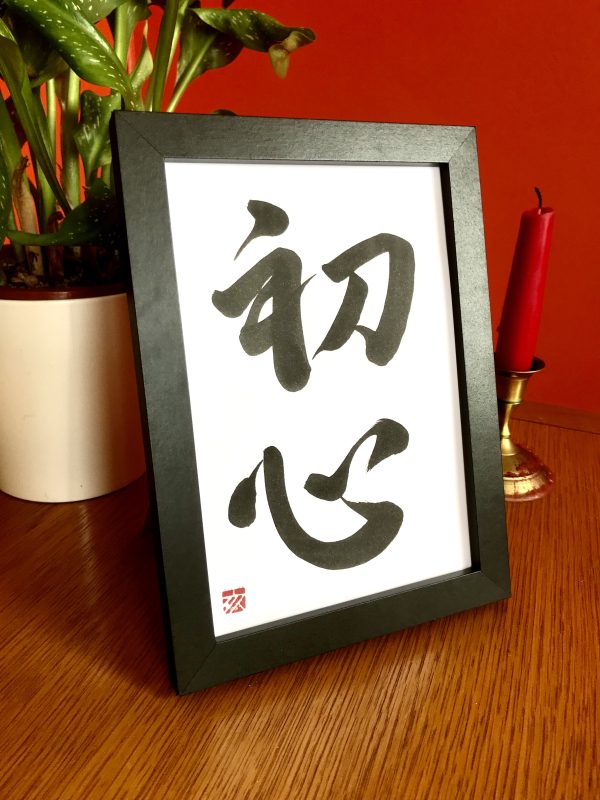
初 = for the first time, in the beginning 心 = heart, mind Having a “Beginner’s Mind” means viewing a situation from a fresh perspective, staying humble, and understanding that there is always more to learn. This original calligraphy artwork is available for purchase on my Etsy site
Category Archives: Buddhism
禅 Zen
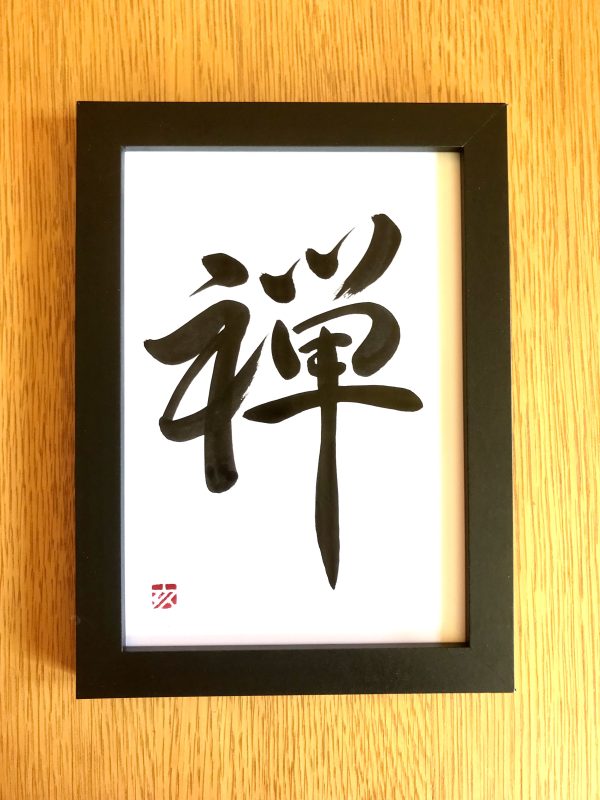
“There is no way to enlightenment; enlightenment is the way”. – Thich Nhat Hanh, Zen Master This original calligraphy artwork is available for purchase on my Etsy site.
The Story of the Three Vinegar-Tasters
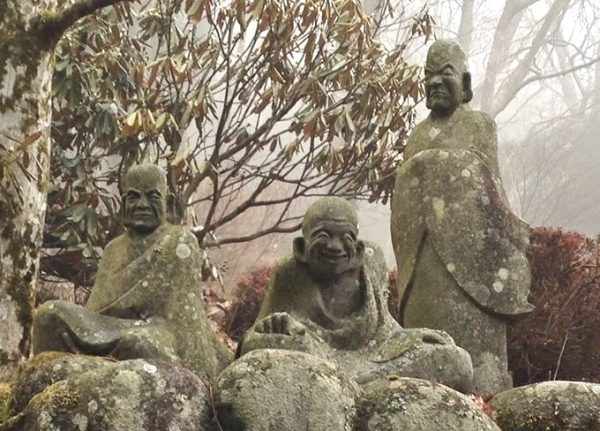
Three elderly gentlemen stood around a large bowl of vinegar. The first man dipped his finger in and brought it to his mouth. He made a face as if he had just sucked a lemon. “The vinegar is sour,” he pronounced. The second man dipped his finger in the vinegar, brought it to his mouth,ContinueContinue reading “The Story of the Three Vinegar-Tasters”
痛みは避けられない… (pain is inevitable, but suffering depends on you!)
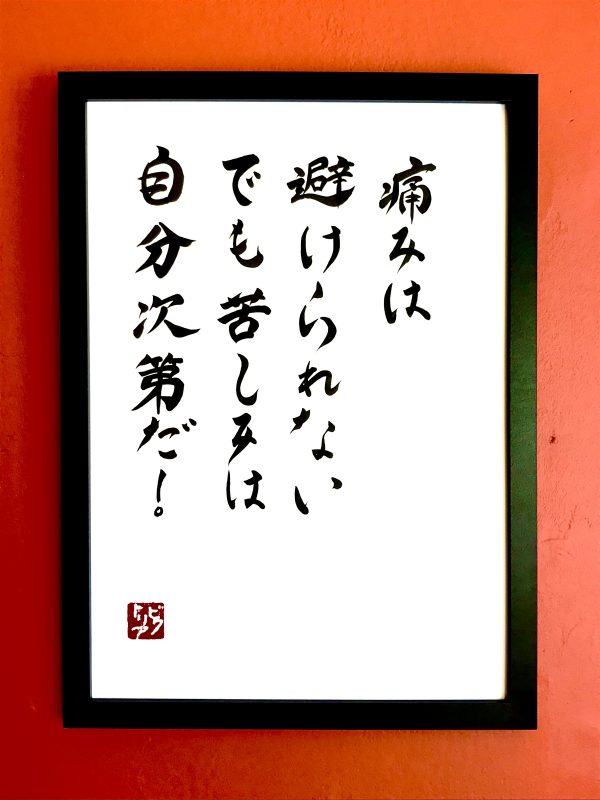
痛みは 避けられない でも苦しみは 自分次第だ! Pain is inevitable but suffering depends on you! This Buddhist-inspired quote is by the famous Japanese novelist Haruki Murakami, from his book on how he uses Buddhist teachings to live a good life. It’s one of my housemate’s favourite phrases. This work was my birthday present to him a few yearsContinueContinue reading “痛みは避けられない… (pain is inevitable, but suffering depends on you!)”
春分 (shun-bun) “Spring Equinox”
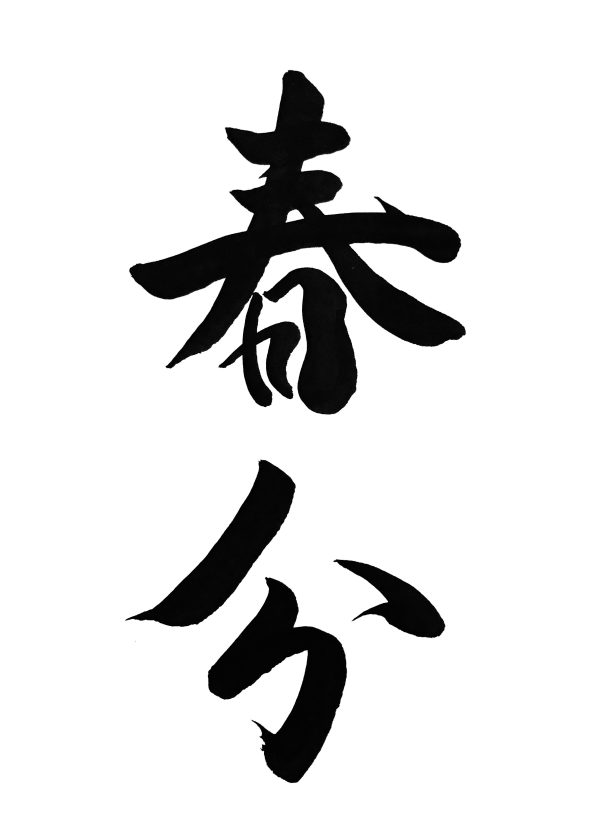
In Japan, 春分 (shun-bun) spring equinox is a national holiday. The week which contains spring equinox is called “o-higan”. This has connections with Buddhism, and on this day many people visit spend time with their families and visit their family grave. “Bota-mochi” (rice cake covered in sweet bean paste) is traditionally eaten on this day.
禅 Zen
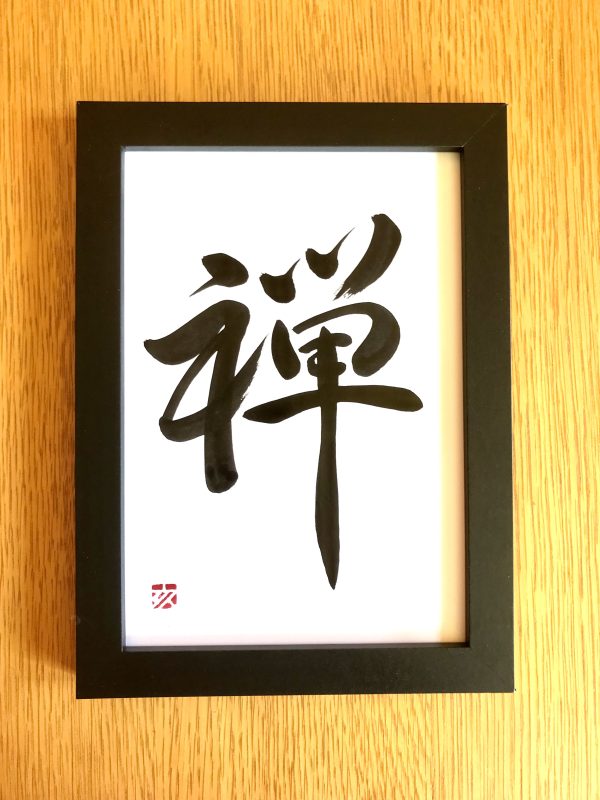
“There is no way to enlightenment; enlightenment is the way”. – Thich Nhat Hanh, Zen Master This one-off calligraphy work is available on my Etsy store here
初心 (shoshin) “beginner’s mind”
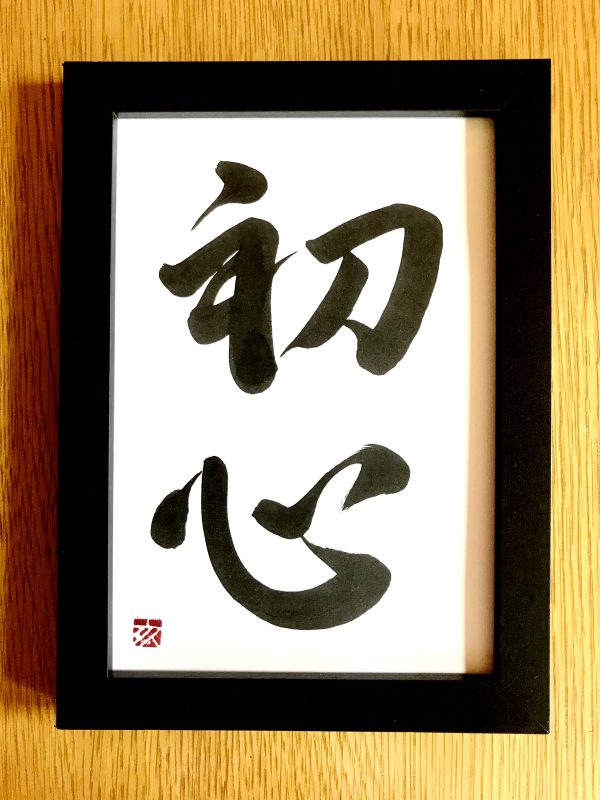
初 = for the first time, in the beginning. (This is the same kanji as 初め hajimé, meaning “for the first time”, as in the common Japanese greeting 初めまして hajimémashité.) 心 = heart, mind Having a “Beginner’s Mind” means viewing a situation from a fresh perspective, staying humble, and understanding that there is always moreContinueContinue reading “初心 (shoshin) “beginner’s mind””
喫茶去 (kissako) “Please have a cup of tea”
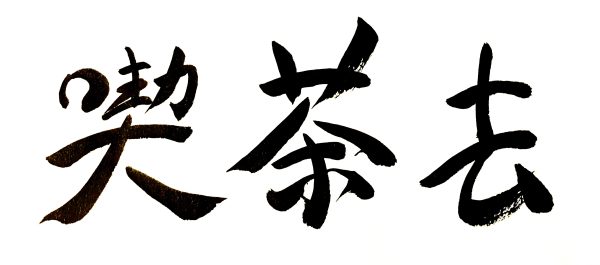
喫 = drink 茶 = tea 去 = leave “Drink tea and leave”? Not exactly. The intention of this 3-character idiom isn’t to tell someone to go away after they’ve drunk some tea, but rather to welcome all guests to have a cup of tea before they leave. This idiom comes from a Chinese ZenContinueContinue reading “喫茶去 (kissako) “Please have a cup of tea””
無心 (mu-shin) “no-mind” or “nothingness mind”
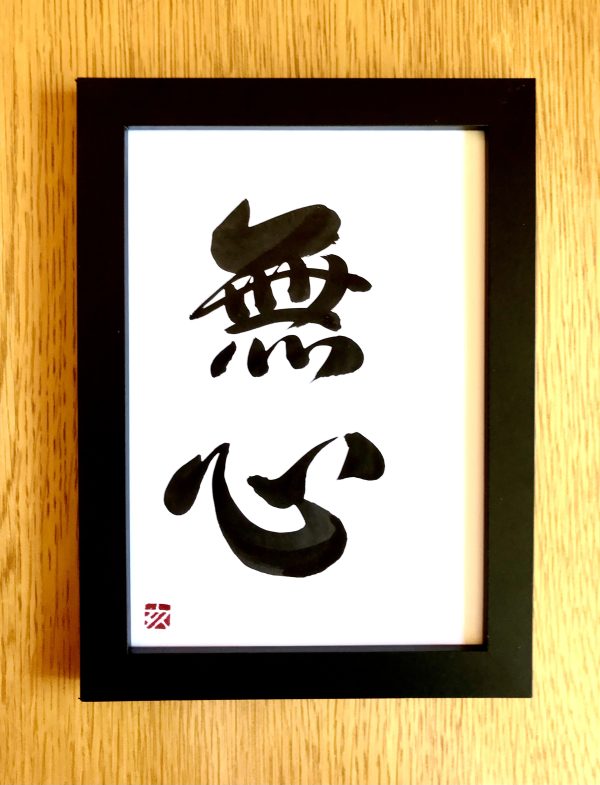
An important concept in meditation and martial arts. If you have mu-shin, your mind is free from thoughts, desires and assumptions. As the Buddhist nun Reverend Jiyu-Kennett once said: “It’s nothing… but it’s the fullest kind of nothing there ever was!” When your mind is clear, and you are free from ego and can actContinueContinue reading “無心 (mu-shin) “no-mind” or “nothingness mind””
迷悟一如 (mei-go-ichi-nyo)

The kanji: 迷 being lost, confused, considering 悟 enlightenment 一 one 如 same So… “being confused and being enlightened are one and the same” In traditional Japanese culture, it is considered ethical to take a long time to reach a decision and come to a conclusion. Quick decisions are seen as rash and may leadContinueContinue reading “迷悟一如 (mei-go-ichi-nyo)”

