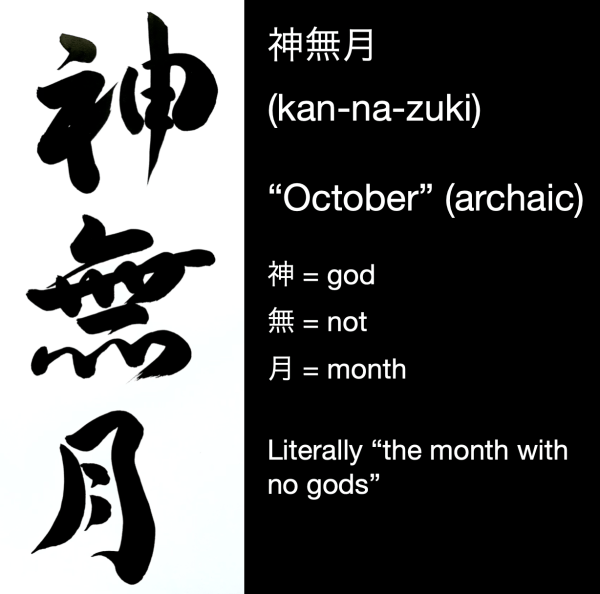
神 = god 無 = not 月 = month The modern Japanese word for October is 十月 (literally “10th Month), however in the old-fashioned calendar it was known as 神無月, or “the month with no gods”. In October, all the gods in Japan (there are believed to be 8 million of them) go to IzumoContinueContinue reading “神無月 (kan-na-zuki) “October” (archaic)”
Tag Archives: 書道
月 (tsuki) “moon”
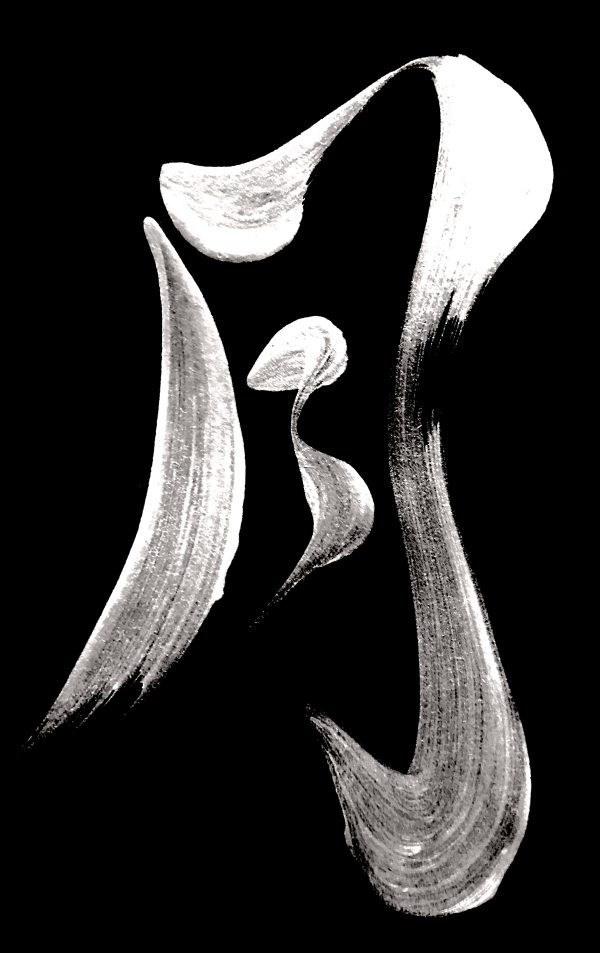
Next week is Moon Viewing Day (Night?) in many East Asian countries, including Japan. The first full moon in September is considered particularly clear and beautiful, much like the idea of a “harvest moon”. In Japan people celebrate this event by admiring the moon whilst eating white mochi dumplings.
秋 (aki) “autumn”
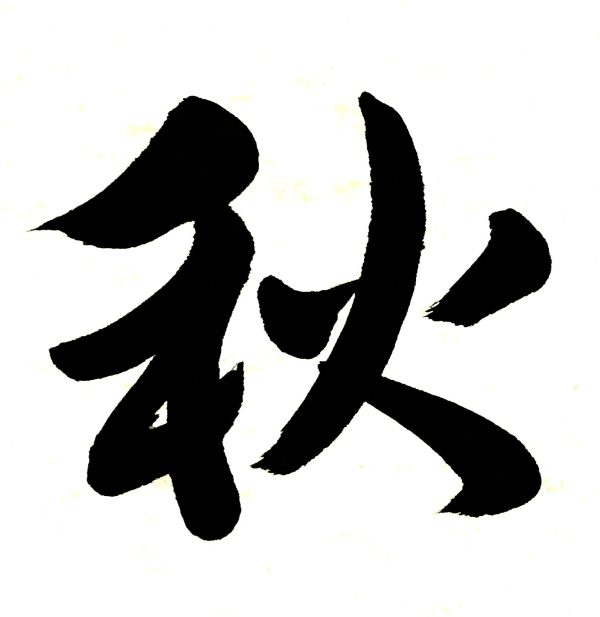
Next week is “Silver Week” in Japan. Like the more famous “Golden Week”, this is a period of consecutive national holidays. Autumn Equinox (one of the two days when daylight hours and night hours are equal) is one of these national holidays.
長月 (Nagatsuki) “September” (archaic)
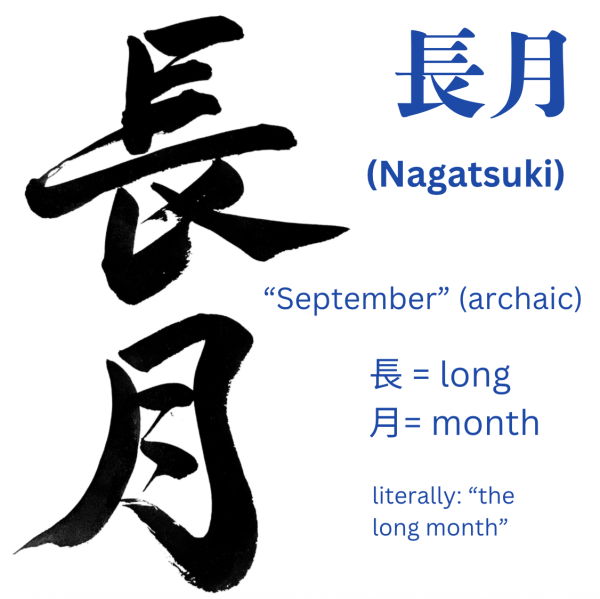
Like many countries, Japan uses a 12-month calendar. The names are very simple. January is literally “Month one”, February is “Month two”, etc: 一月 = January 二月 = February However, before the Meiji Restoration (mid-1800s) it was common to use an older 12-month system. These months’ names referenced the weather and the seasons (similar toContinueContinue reading “長月 (Nagatsuki) “September” (archaic)”
言霊 (koto-dama) “word-spirit”
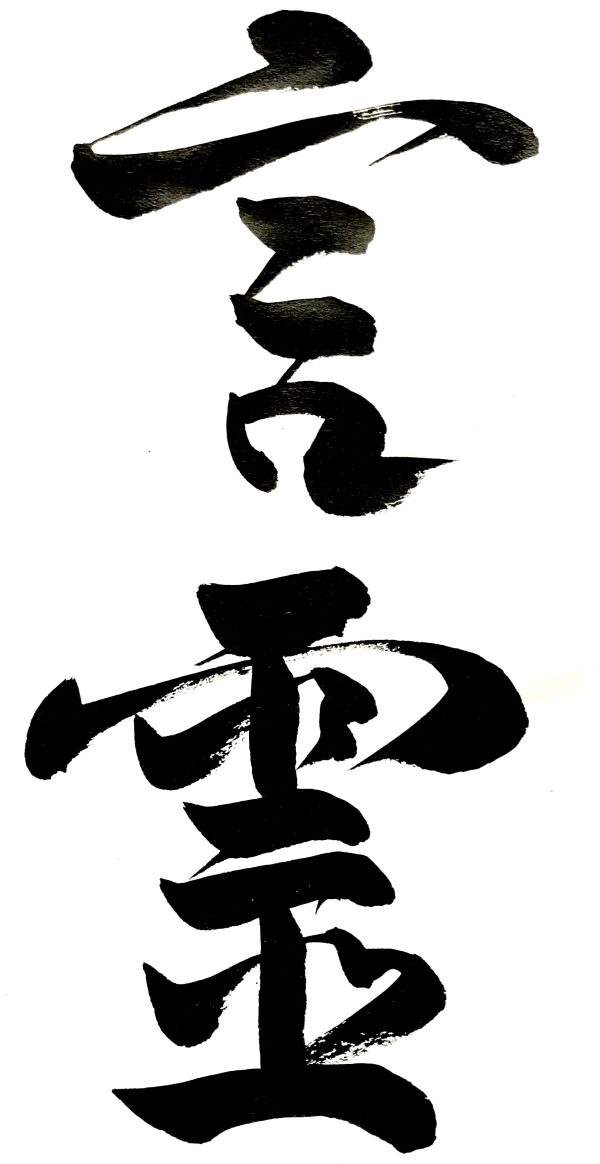
“Koto-dama” (literally “word/speech spirit”) is a traditional belief that mystical powers dwell in words and names. Just like martial arts practitioners giving out a shout when they make a strike (“ki-ai!” – literally “meeting of spirit”) it is believed that sounds can affect our body, mind and soul.
夢 (yumé) “dream”
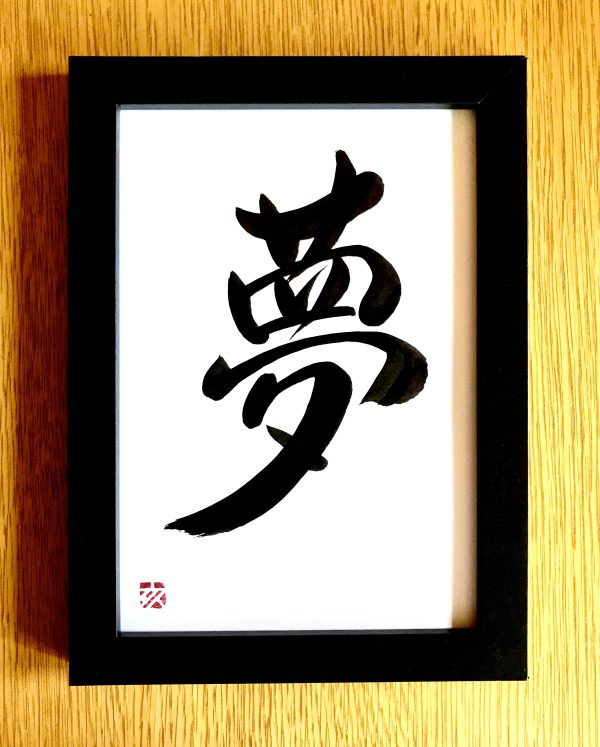
Do you remember your dreams? According to Japanese tradition, the things you dream about in your first dream of the new year can foretell what’s going to happen in the coming year. It is believed that the 3 most auspicious things to dream of are: Mount Fuji 🗻 A hawk 🦅 An eggplant / aubergineContinueContinue reading “夢 (yumé) “dream””
積読 (tsun-doku) “The habit of acquiring books but letting them pile up unread” 📚
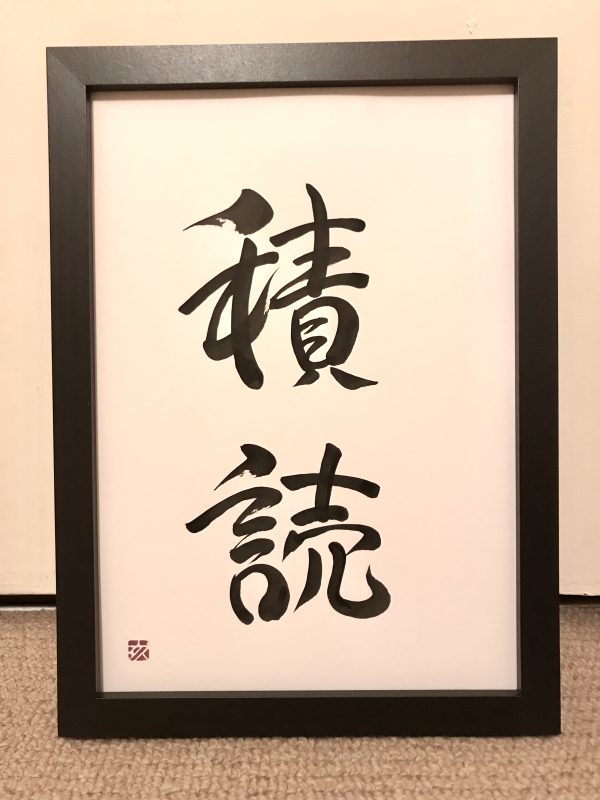
積読 (tsun-doku) is a recent Japanese phrase meaning something like “buying loads of books and letting them pile up without reading them”. The kanji: 積 (tsun) Comes from 積んでおく(tsundéoku), meaning “to let something pile up”. 読 (doku) Comes from 読書 (dokusho), meaning “reading”. The above artwork was a commission for a book-lover 📚
富士 Fuji 🗻

This week it was Mountain Day in Japan – a national holiday dedicated to some of Japan’s most impressive natural features. Of course the most impressive of these has to be the famous 富士山Mount Fuji. The kanji for the tallest and most famous mountain in Japan are suitably distinguished: 富 = riches, wealth, fortune 士ContinueContinue reading “富士 Fuji 🗻”
初心 (sho-shin) “beginner’s mind”
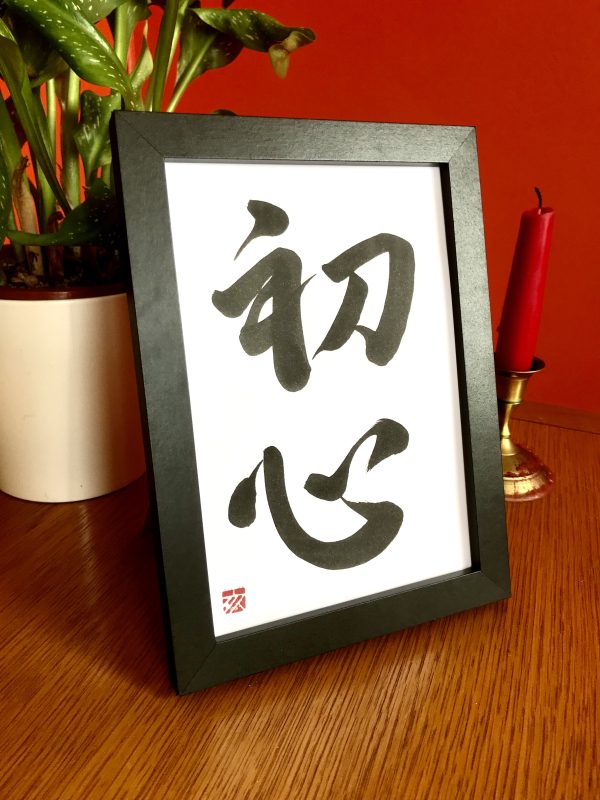
初 = for the first time, in the beginning 心 = heart, mind Having a “Beginner’s Mind” means viewing a situation from a fresh perspective, staying humble, and understanding that there is always more to learn. This original calligraphy artwork is available for purchase on my Etsy site
禅 Zen
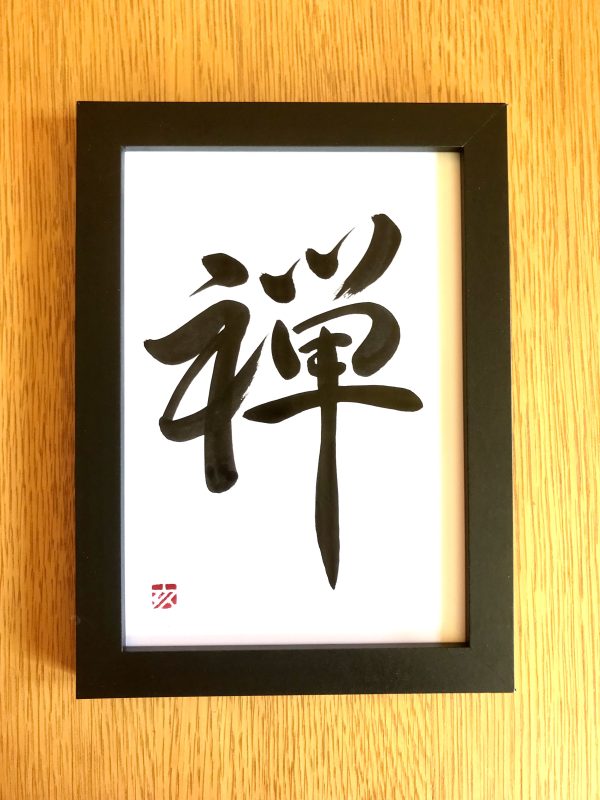
“There is no way to enlightenment; enlightenment is the way”. – Thich Nhat Hanh, Zen Master This original calligraphy artwork is available for purchase on my Etsy site.

