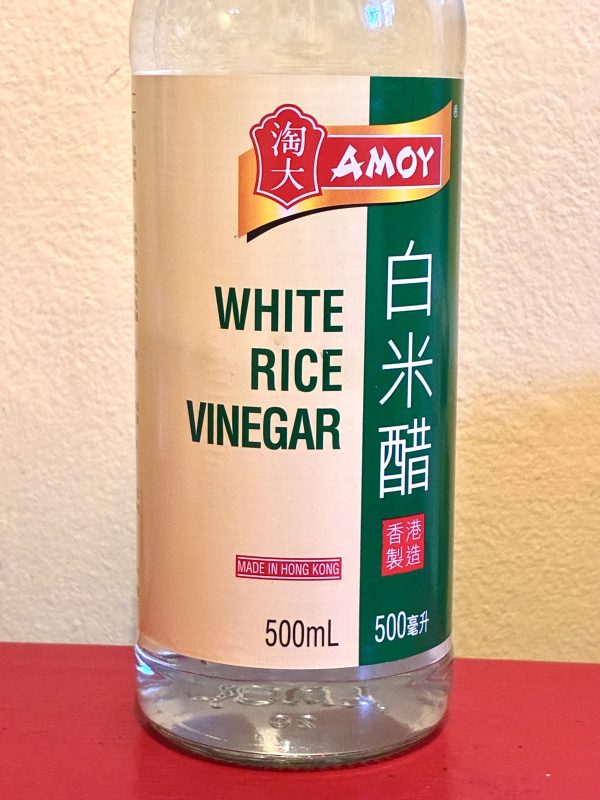
Three elderly gentlemen stood around a large bowl of vinegar.
The first man dipped his finger in and brought it to his mouth. He made a face as if he had just sucked a lemon.
“The vinegar is sour,” he pronounced.
The second man dipped his finger in the vinegar, brought it to his mouth, and immediately frowned.
“The vinegar is bitter,” was his judgement.
Then it was the third man’s turn. Upon tasting the vinegar his face broke out into a broad smile.
“The vinegar is sweet!” he exclaimed.
The three gentleman in this story are three great philosophers: Confucius, the Buddha, and Lao Tzu.
According to Confucius, human nature has become twisted, corrupted, soured.
The second gentleman is the Buddha, who famously said “Life is Suffering” – it’s hard and bitter.
The final philosopher is Lao Tzu, the author of the Tao Te Ching. According to him, life is simple, pure and sweet.
Of course, the three gentlemen were tasting exactly the same vinegar.
Rather than only one being “the truth”, all three philosophies are useful at different times and in different situations.
Confucianism is concerned with the outside world – with people and their place in it. For a society to be harmonious and uncorrupt, we must follow strict rules that govern every aspect of our lives.
Buddhism is concerned the self – with one’s individual development. The solution to life’s bitterness is to wholeheartedly accept that life is suffering. In this way we can understand and transcend the many obstacles that life puts in our way.
According to Taoism, the Tao (or “the Way”) is everything, is in everything, and is the source of everything. To live our best lives, we need only to attune ourselves to this great cosmic spiritual force and “go with the flow”.
The three philosophies are very different, but not contradictory. It has even been said that they one and the same.