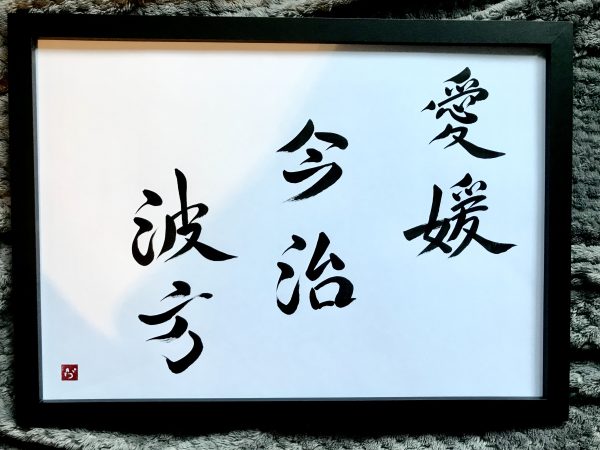
This was a commission for client who spent a wonderful year living in Japan and wanted to remember the place where she lived. She lived in the small town of 波方 Namikata, which is in the municipality of 今治 Imabari, which is in the prefecture of 愛媛 Ehime. Japanese addresses are written with the largestContinue reading "Three Japanese place names"
芒種 (bō-shu) “Grain beards and seeds”
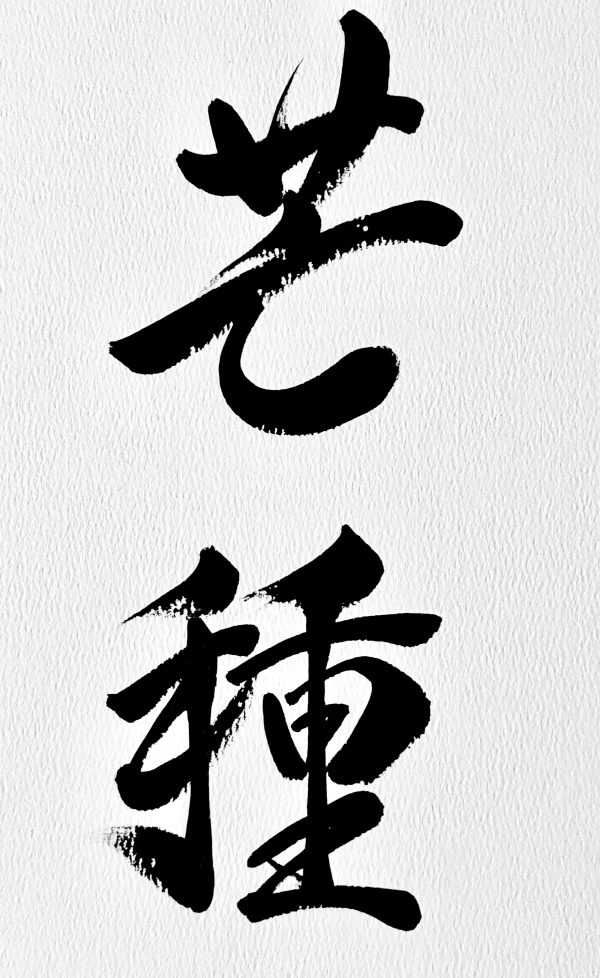
As well as having 4 seasons (spring, summer, autumn, winter), in Japan the year can also be divided into 24 節気 (sekki), or solar terms. The solar terms include terms that are familiar to English-speakers, such as the solstices and equinoxes. They also include references to the weather, the temperature, and the beginning of theContinue reading "芒種 (bō-shu) “Grain beards and seeds”"
自動販売機 (ji-dō-han-bai-ki) vending machine
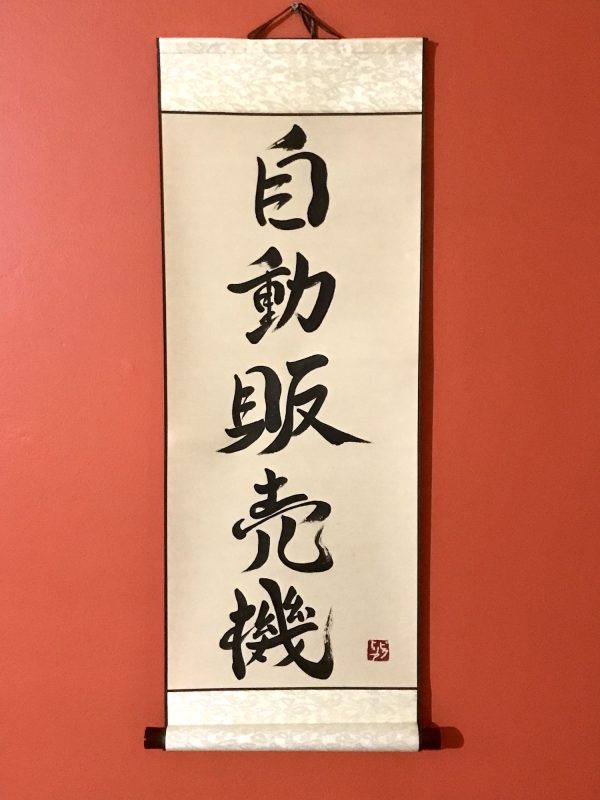
This was a commission for the customer to give as a gift to his wife as a memory of their vacation in Japan. Needless to say, Japanese vending machines made a big impression on them! Which is not surprising because Japan takes vending machines to a whole other level. Things you can buy from aContinue reading "自動販売機 (ji-dō-han-bai-ki) vending machine"
水無月 (mi-na-tsuki) “The month of water”
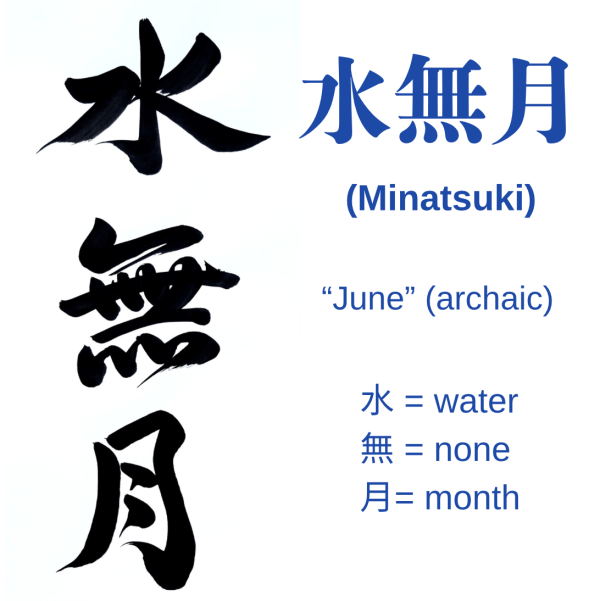
Like many countries, Japan uses a 12-month calendar. The names are very simple. January is 一月 (ichi-gatsu, literally "Month one"), February is 二月 (ni-gatsu, "Month two"), etc. However, before the Meiji Restoration (mid-1800s) it was common to use an older 12-month system. These months’ names referenced the weather and the seasons (similar to the FrenchContinue reading "水無月 (mi-na-tsuki) “The month of water”"
渋味 (shibumi) “elegant simplicity”
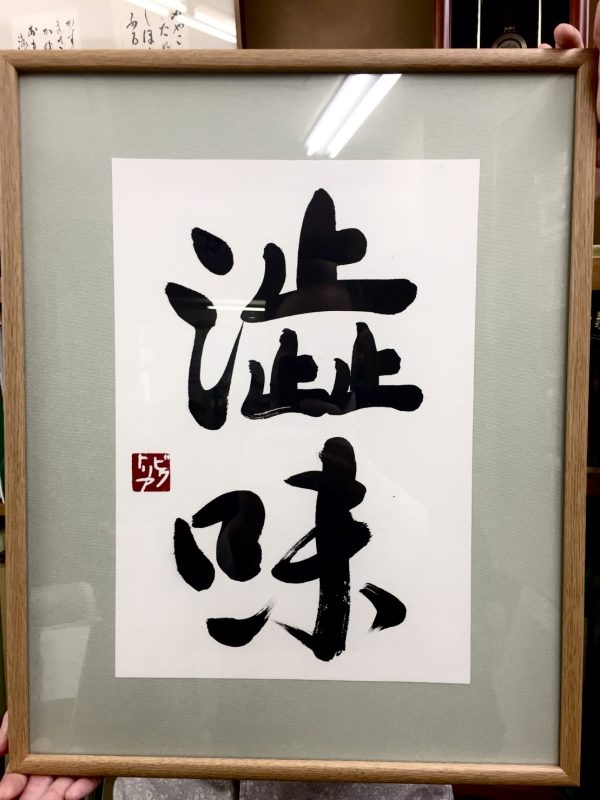
渋味 (shibumi) is a word which is a little difficult to translate directly. It's more of a vibe than a meaning. My dictionary says: "austere elegance; elegant simplicity; subdued style; quiet taste; refinement". It's also the name of a Florence-based men's fashion boutique, where this artwork is displayed. This was my very first commission. YouContinue reading "渋味 (shibumi) “elegant simplicity”"
The Story of the Three Vinegar-Tasters
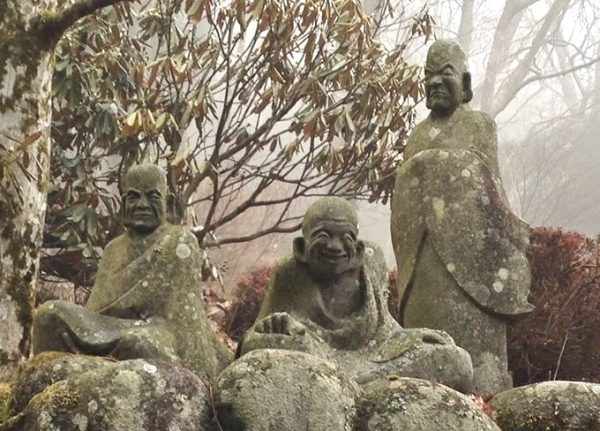
Three elderly gentlemen stood around a large bowl of vinegar. The first man dipped his finger in and brought it to his mouth. He made a face as if he had just sucked a lemon. “The vinegar is sour,” he pronounced. The second man dipped his finger in the vinegar, brought it to his mouth,Continue reading "The Story of the Three Vinegar-Tasters"
縁 (en) “destined (to be together)”
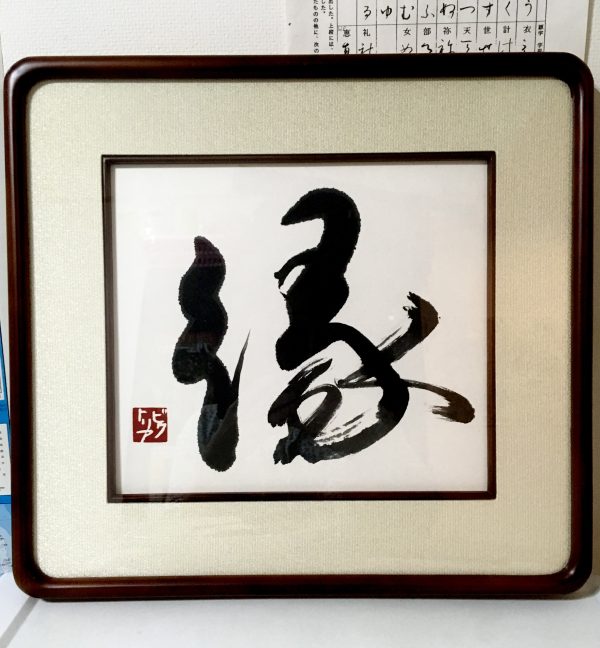
縁 (en) can refer to destiny in general, but it often has romantic connotations.... something like "star-crossed lovers", destined to be together for all eternity. This work was a wedding gift.
紅花栄 (Benibana sakau) “Safflowers bloom”
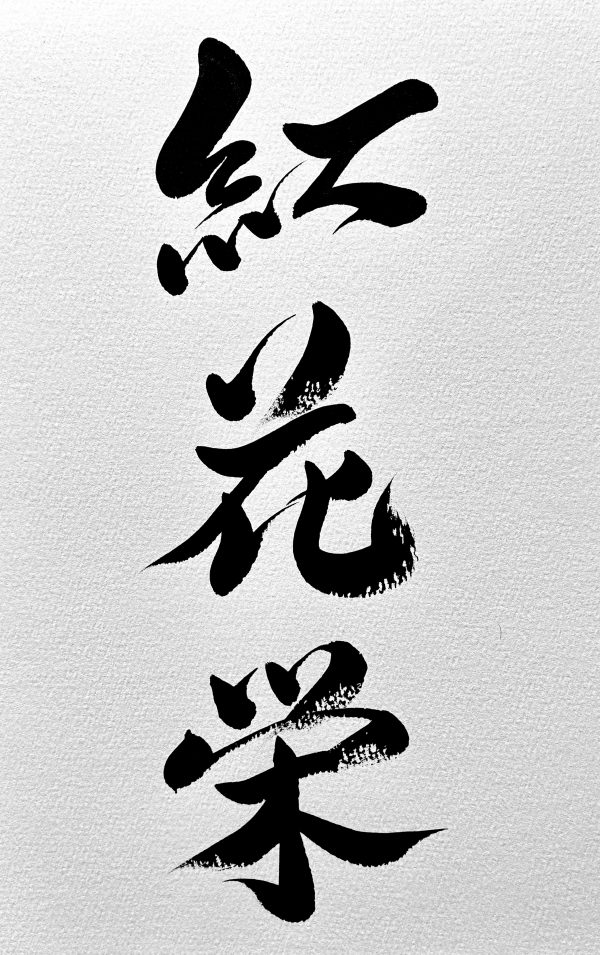
Like many countries, Japan has 4 seasons. It also has 72 micro-seasons! Traditionally the Japanese year was divided into 72 seasons of roughly 5 days each. Each of these micro-seasons was named after the changes in the natural world that could be observed at the time, or the current agricultural activities. Next week (from MayContinue reading "紅花栄 (Benibana sakau) “Safflowers bloom”"
偶然 (gū-zen) “coincidence”
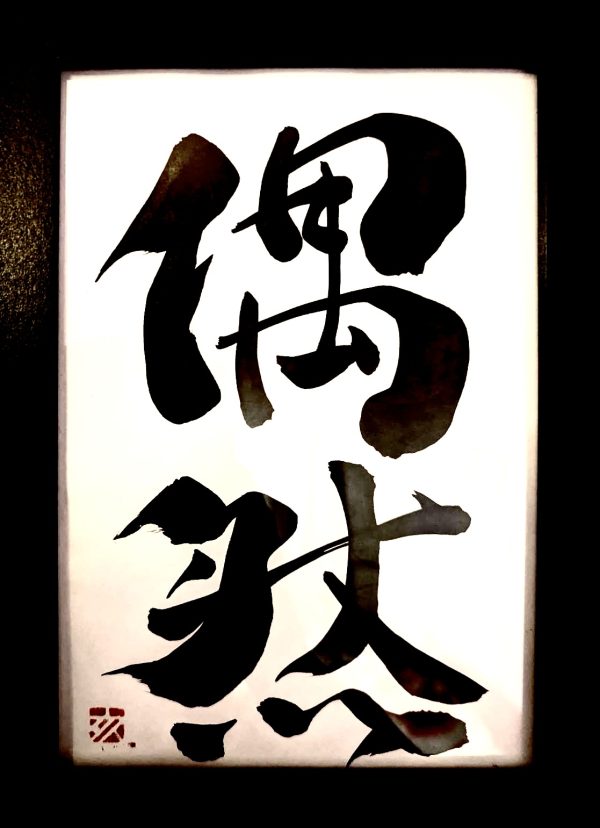
A calligraphy commission for a friend who very much believes in fate. If you would like to commission a unique Japanese calligraphy work, feel free to check out my Purchase a Work page to take a look at the options and prices.
Kanji: the building blocks of written Japanese
a recent commissioned work of 5 kanji characters The Japanese language uses multiple writing systems combined. The most well-known of these is kanji. These are logographic characters; each one is like a little picture which represents an object an or an idea. This article is a very basic introduction to kanji. Kanji originated in ancientContinue reading "Kanji: the building blocks of written Japanese"
 Calligraphy by Vicky