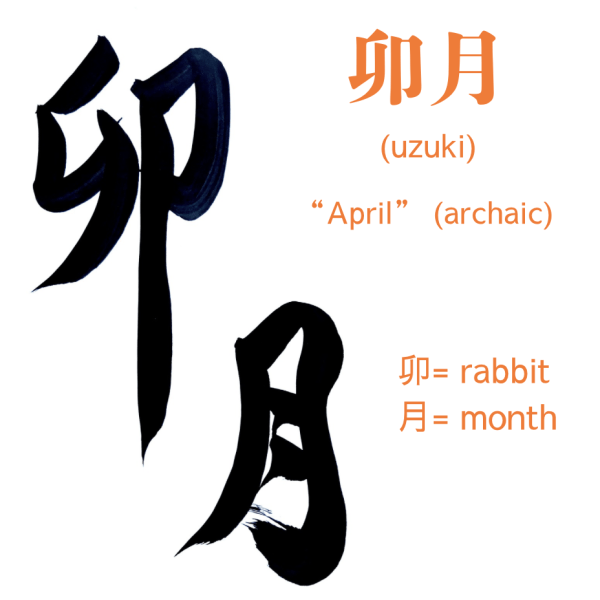
Like many countries, Japan uses a 12-month calendar. The names are very simple. January is literally “Month One”, February is “Month Two”, etc: 一月 = January 二月 = February However, before the Meiji Restoration (mid-1800s) it was common to use an older 12-month system. These months’ names referenced the weather and the seasons (similar toContinueContinue reading “卯月(uzuki) “April” (archaic)”
Category Archives: Japanese concepts
🌸 桜 (sakura) “cherry blossoms” 🌸
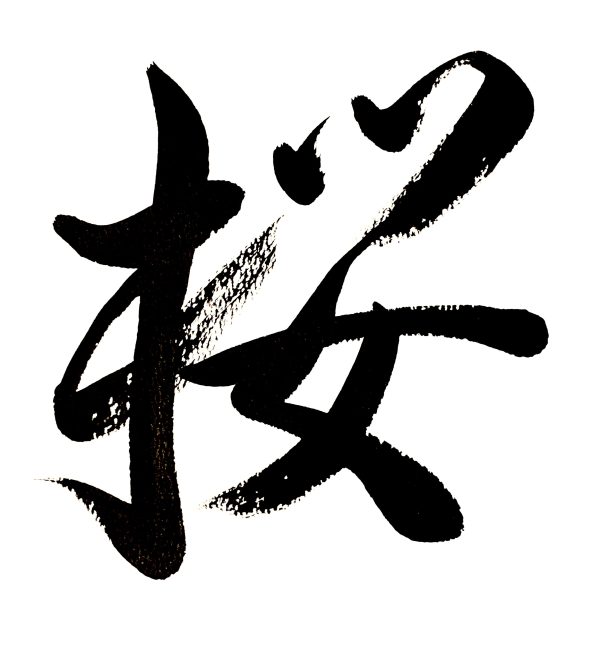
It’s cherry blossom season in (parts of) Japan! Cherry blossoms are arguably the most beloved of Japanese flowers, and even feature on the 100 coin. In springtime many Japanese people like to do 花見 (Hanami) “viewing cherry blossoms”, sometimes taking the excuse to have a party and drink under the trees.
陰陽 (in-yō) “yin-yang”
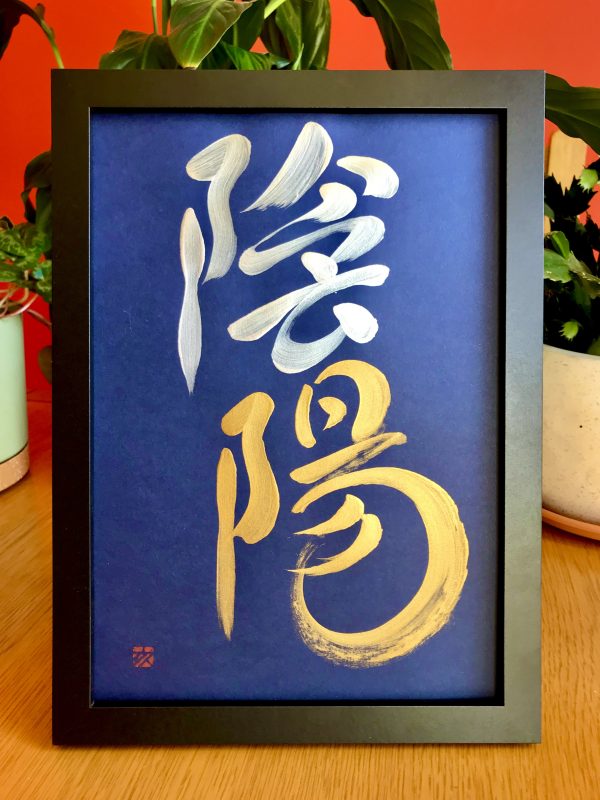
Yin is dark, cold, receptive, magnetic. Yang is light, hot, giving, active. Both are present in everything. Rather than being opposites, they are two sides of the same coin. A cup is Yang, but the empty space inside is Yin. Daoists believe that everything contains the seed of its opposite; in this way Yin andContinueContinue reading “陰陽 (in-yō) “yin-yang””
弥生 (yayoi) “March” (archaic)
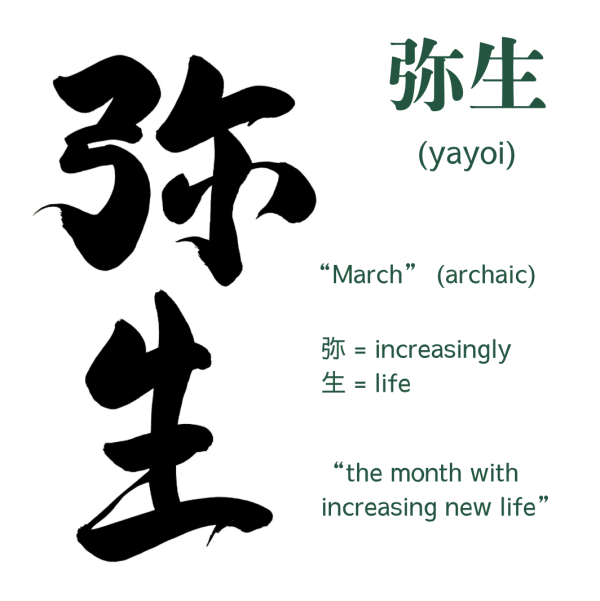
Like many countries, Japan uses a 12-month calendar. The names are very simple. January is literally “Month one”, February is “Month two”, etc. However, before the Meiji Restoration (mid-1800s) it was common to use an older 12-month system. These months’ names referenced the weather and the seasons (similar to the French Revolutionary calendar). March is:ContinueContinue reading “弥生 (yayoi) “March” (archaic)”
熊蟄穴 When bears begin to hibernate

The Japanese year used to be divided into 72 “micro-seasons”. These seasons were based on natural events such as the weather and the appearance of various plants and animals. Next week is the start of 熊蟄穴. The kanji: 熊 = bear 蟄 = hibernation 穴 = hole, den = the time when bears start theirContinueContinue reading “熊蟄穴 When bears begin to hibernate”
縁 (en) “destined (to be together)”
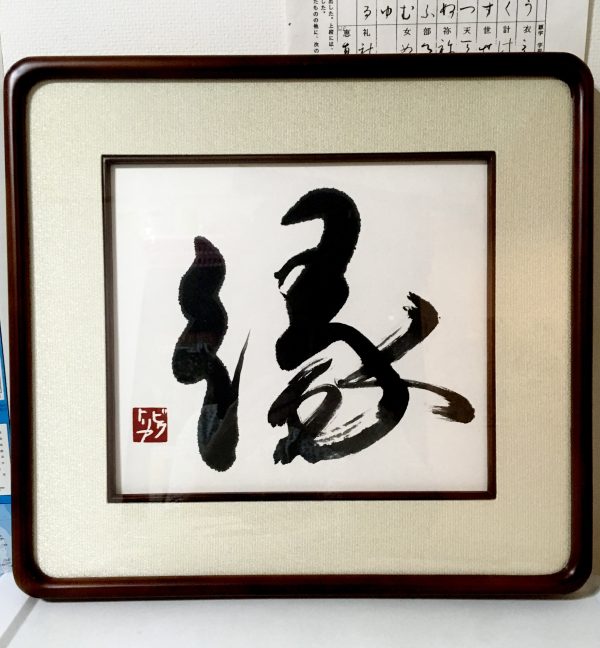
This work was a wedding gift. 縁 (en) can refer to destiny in general, but it often has romantic connotations…. something like “star-crossed lovers”, destined to be together for all eternity.
物の哀れ (mono-no-awaré)
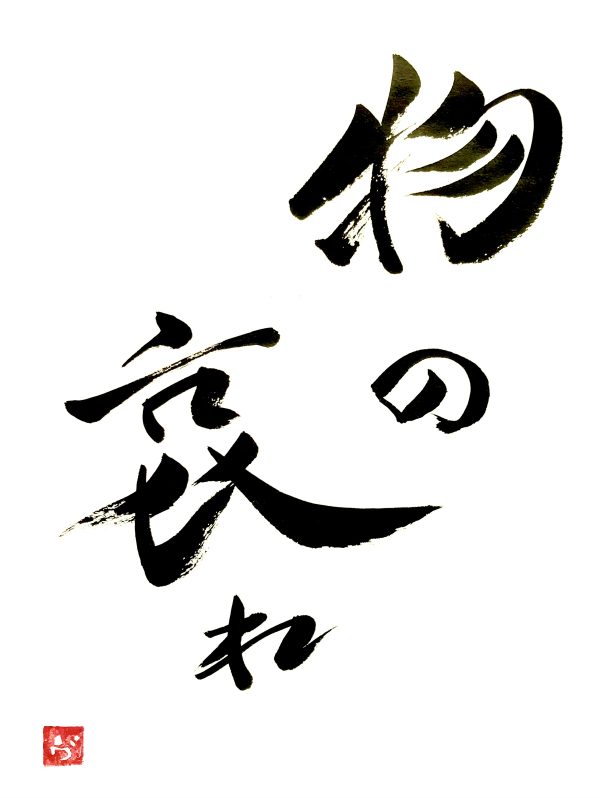
“the bittersweet realisation of the ephemeral nature of all things” A very Japanese phrase 🙂
積読 (tsun-doku) “The habit of acquiring books but letting them pile up unread” 📚
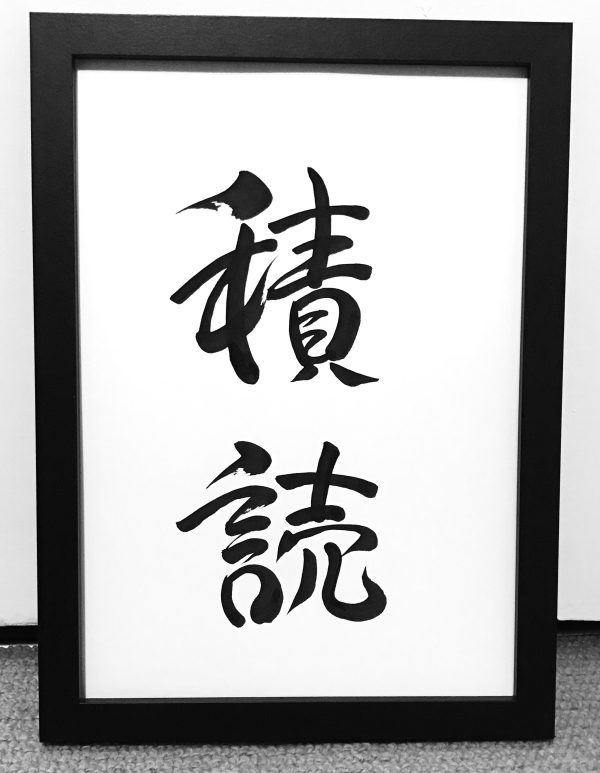
The kanji: 積 Comes from 積んでおく(tsundéoku), meaning “to let something pile up”. 読 Comes from 読書 (dokusho), meaning “reading”. The above artwork was a commission for a book-lover 📚
福 (fuku) “Good fortune”
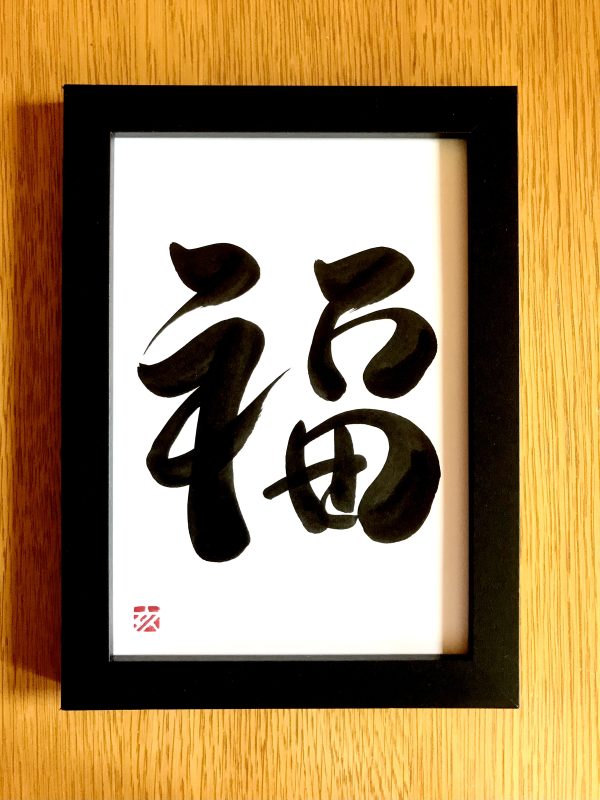
福 “Good fortune” A very popular kanji! It appears in the name of the famous 東福寺 Tō-fuku-ji temple in Kyoto. It’s also in the names of many Japanese towns and cities, including Fukuoka 福岡 and Fukushima 福島 . The above artwork is an original Japanese calligraphy work. It’s available from my Etsy store here. It’sContinueContinue reading “福 (fuku) “Good fortune””
温故知新 (おんこちしん)”learning from the past to gain new knowledge”
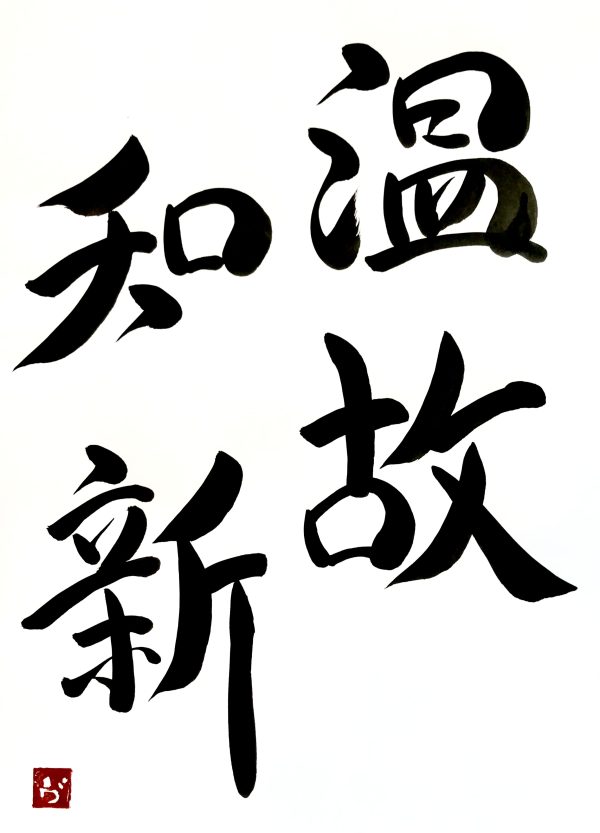
The kanji: 温 = warm 故 = circumstance 知 = knowledge 新 = new This 4-character idiom means “learning from the past to gain new knowledge”. “Knowledge” is represented by the third kanji 知, as in the Japanese verb 知る (shiru) “to know”. “New” is represented by the fourth kanji 新, as in the JapaneseContinueContinue reading “温故知新 (おんこちしん)”learning from the past to gain new knowledge””
 Calligraphy by Vicky