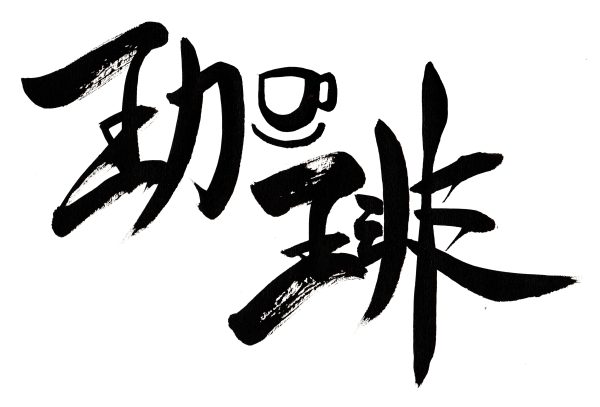
Image by Rebecca (client) Japanese language students will know that “coffee” is usually written in katakana: コーヒー However it does have a kanji! (Or rather, it’s made of 2 kanji): 珈琲 These kanji are what is known as ateji – kanji which are used to phonetically represent foreign loan words. In many cases, the atejiContinueContinue reading “珈琲 (kōhī) “coffee””
Tag Archives: Japanese language
日進月歩 (nisshin geppō) “steady progress” 🐢

Tried to do something different from my usual style here. It was challenging but I like the result.The kanji in this idiom:日 = day (or sun)進 = progress月 = month (or moon)歩 = walking / steps 日進月歩 is a special kind of Japaneses idiom known as a 四字熟語 (よじじゅくご、yo-ji-juku-go), or 4-character idiom. As the nameContinueContinue reading “日進月歩 (nisshin geppō) “steady progress” 🐢”
笑門来福 (shōmonraifuku)”Good fortune comes to a happy home”
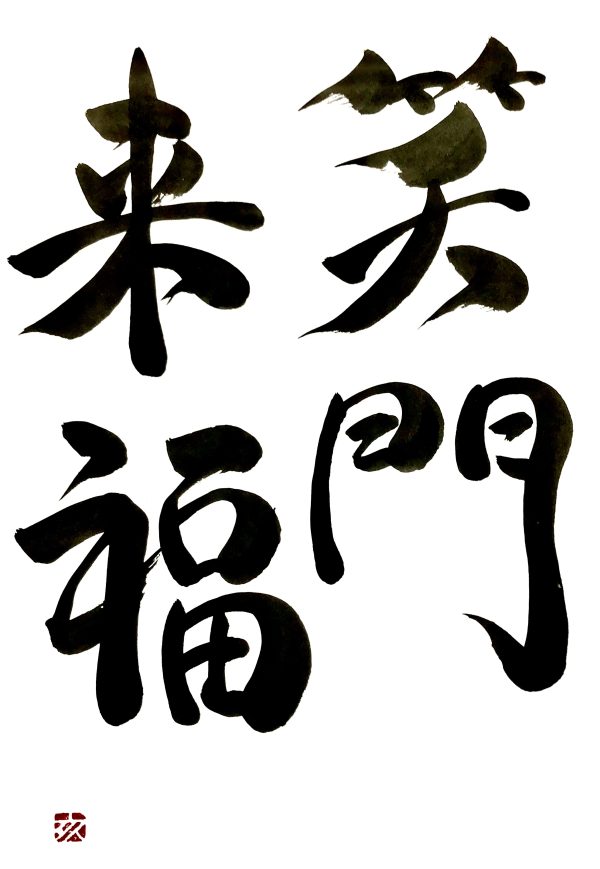
The kanji in this phrase are: 笑 = laughing, smiling 門 = gate, door 来 = comes 福 = good luck In other words, good luck will come to the door of those who are smiling. This phrase is an abbreviation of 笑う門には福来る (warau mon ni wa fuku kuru). Shortened to 笑門来福, it becomes aContinueContinue reading “笑門来福 (shōmonraifuku)”Good fortune comes to a happy home””
無常 (mujō) “impermanence”
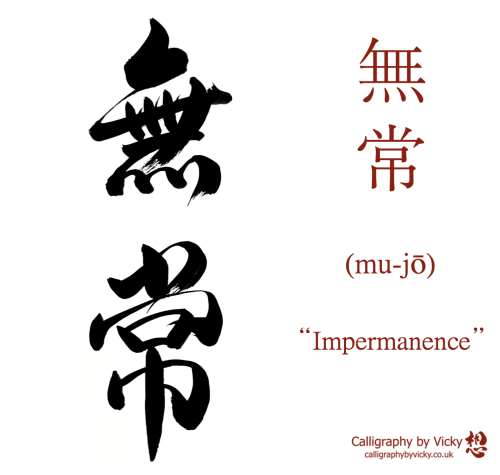
“Western aesthetics is sometimes familiar with simplicity, asymmetry and suggestion, but the idea that beauty lies in its own vanishing is an idea much less common. Perishability remains, however, what [Donald] Keene has called the ‘the most distinctively Japanese aesthetic ideal’. It is certainly among the earliest, being based on the Buddhist concept of “mujō”…ContinueContinue reading “無常 (mujō) “impermanence””
心 (kokoro) “heart/mind”
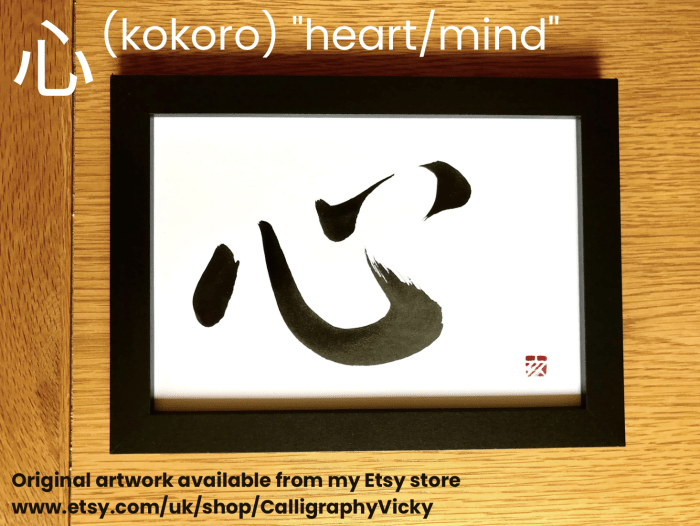
Unlike in English, where “heart” and “mind” are typically separated (emotion vs. logic), 心 kokoro refers to both feelings and thoughts, and even one’s will or intent. It combines thoughts, feelings, intentions and even morality in a way that the English word “heart” does not, which is probably why the translators of Natsume Soseki’s famous novel Kokoro chose to leaveContinueContinue reading “心 (kokoro) “heart/mind””
一生懸命 (is-shō-ken-mei) “to do something to the utmost of one’s ability”
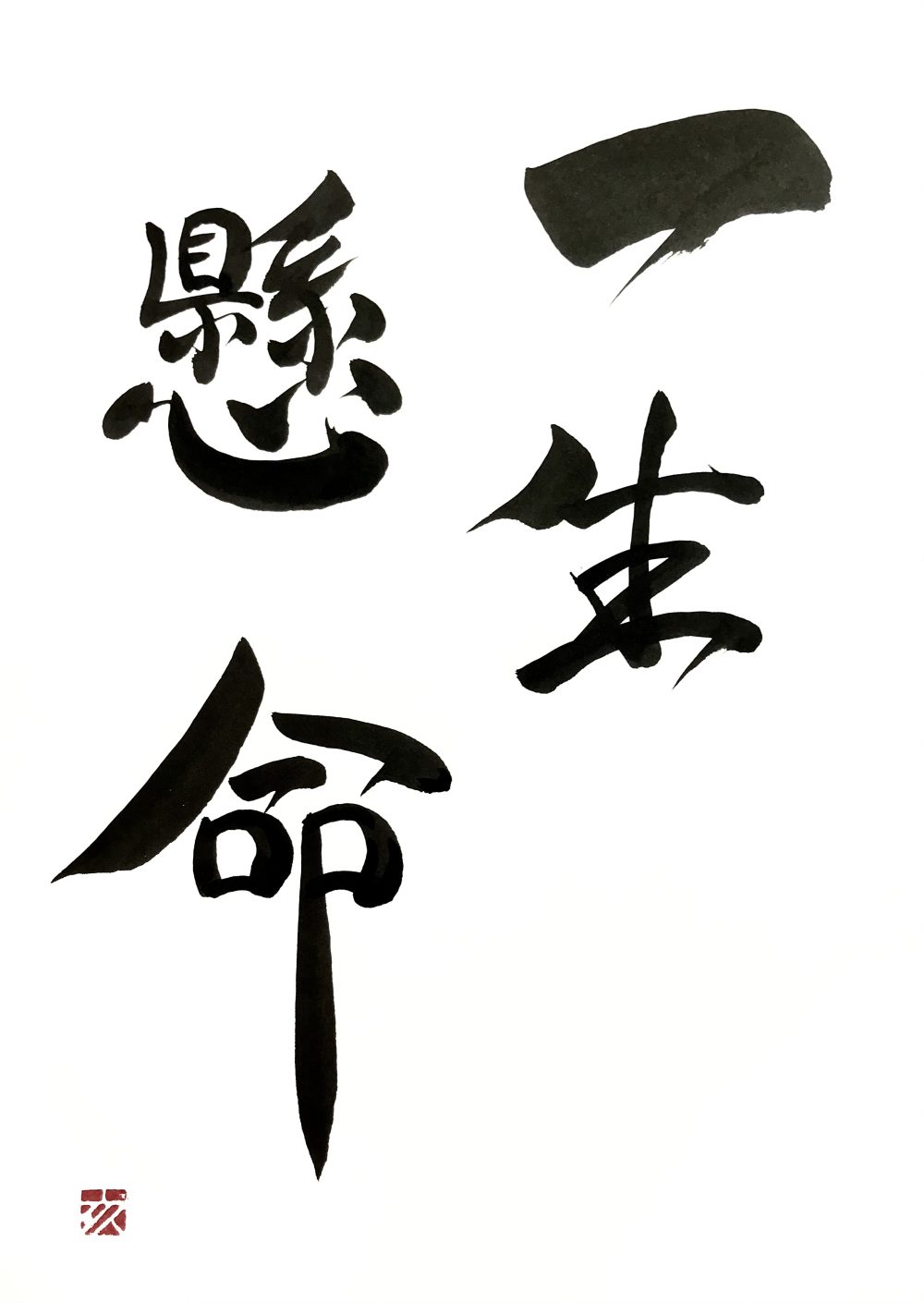
一生懸命 (is-shou-ken-mei) is usually translated as something like “with utmost effort”. The kanji are: 一 = one 生 = life 懸 = depends (amongst other meanings…) 命 = fate A more literal translation might be: “doing something as if your life depends on it”. Fun fact, 一生懸命 is actually a 四字熟語 (yo-ji-juku-go), or 4-character idiom! This isContinueContinue reading “一生懸命 (is-shō-ken-mei) “to do something to the utmost of one’s ability””
言霊 (koto-dama) “word-spirit”
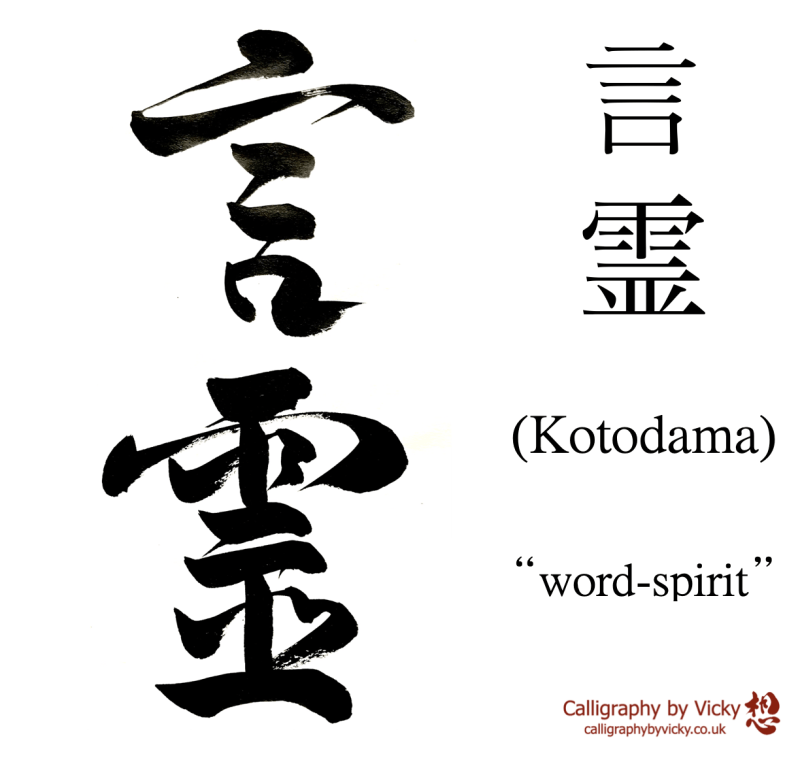
Koto-dama 言霊 is a traditional belief that mystical powers dwell in words and names. Just like martial arts practitioners giving out a shout when they make a strike (“ki-ai!” – literally “meeting of spirit”) it is believed that sounds can affect our body, mind and soul.
積読 / 積ん読 tsundoku “The act of buying books and letting them pile up unread” 📚
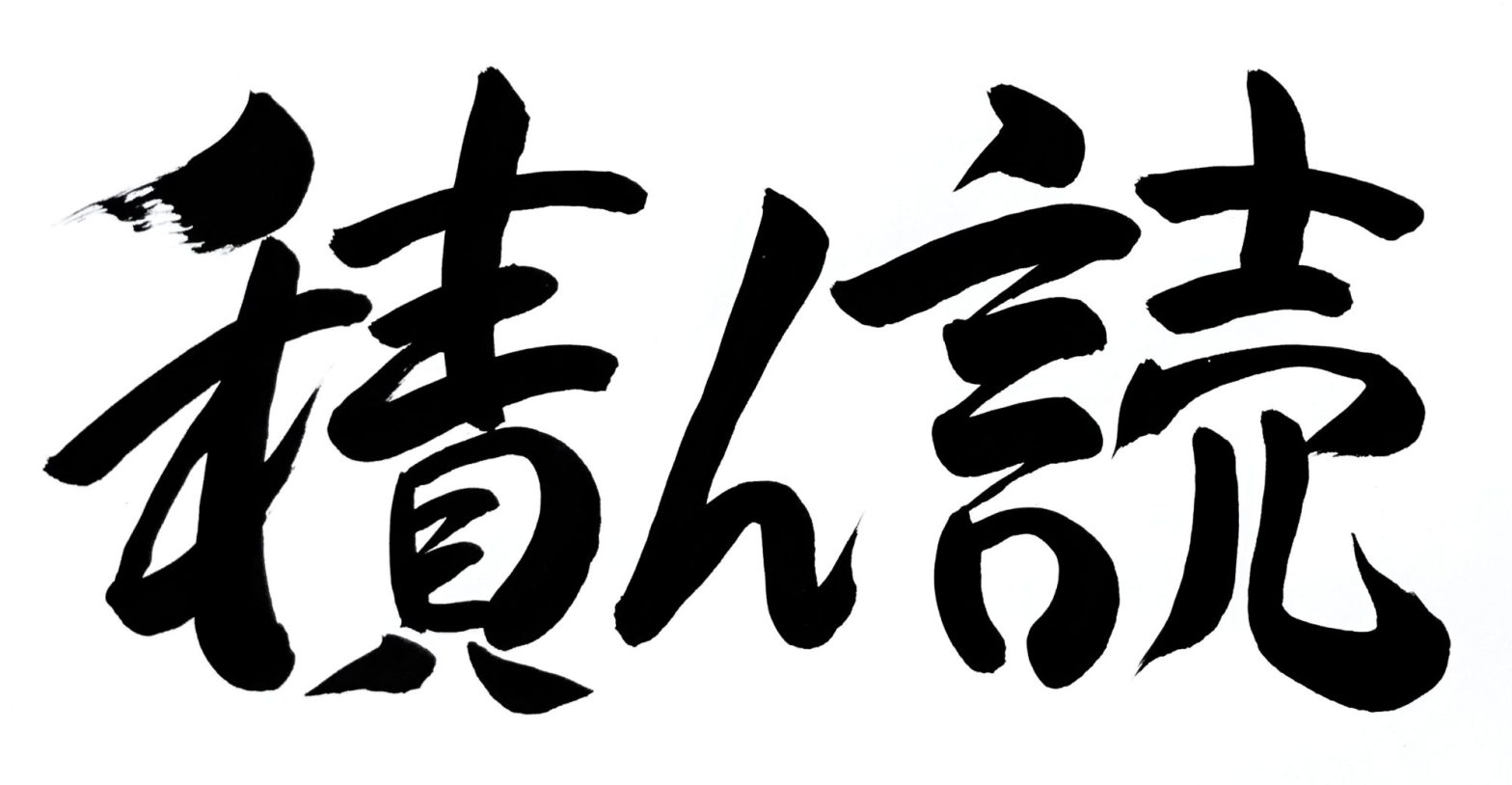
Another case of “the Japanese language has a word for that”! The 2 kanji in this useful word are: 積 This comes from the word 積んでおく, meaning “to let something pile up”. 読 Which comes from the noun 読書 (dokusho), meaning “reading”. Japanese learners will recognise this kanji from 読む (yomu) “to read”.
美 “beauty”
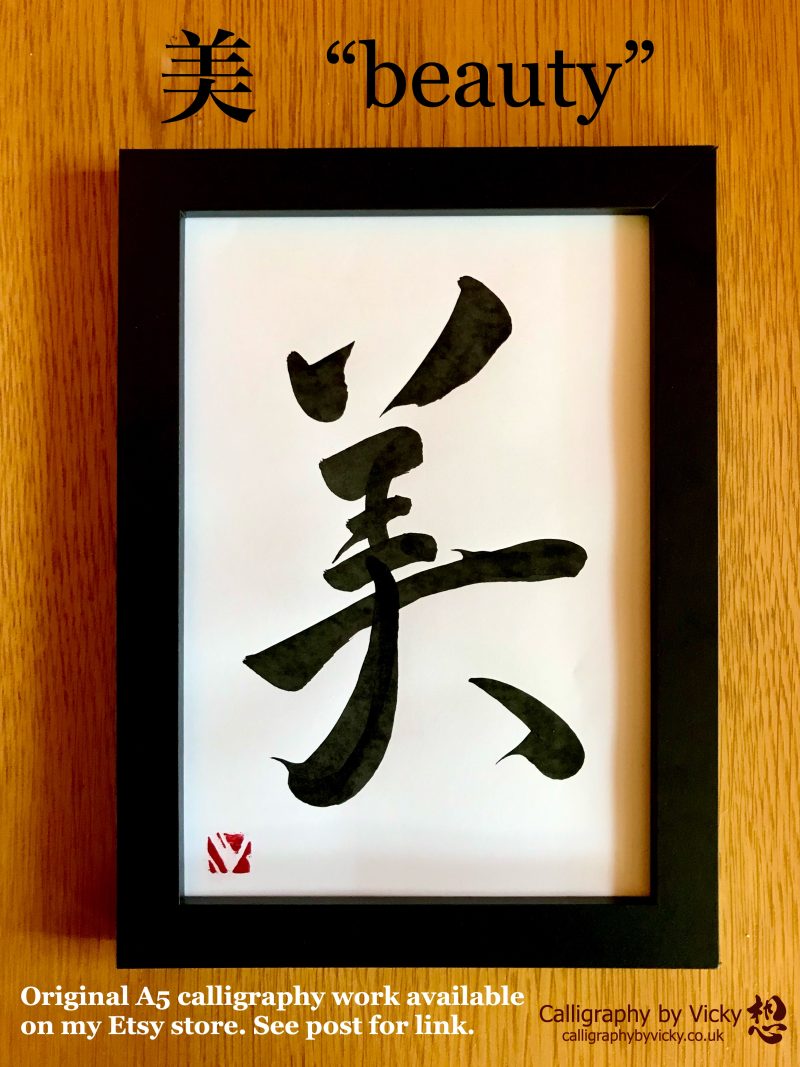
The English word “calligraphy” is derived from the Greek word Kalos, meaning “beautiful”. Beauty is also valued in Japanese calligraphy. Some Japanese aesthetic principles which are important to Japanese calligraphy are: 不均整 (Fukinsei) “Asymmetry or irregularity” 渋味 (Shibumi) “Understated elegance” 幽玄 (yūgen) “subtlety” or “suggestion” 静寂 (Seijaku) “Tranquility” or an “energized calm” This original artworkContinueContinue reading “美 “beauty””
関 (seki) “barrier, connection”
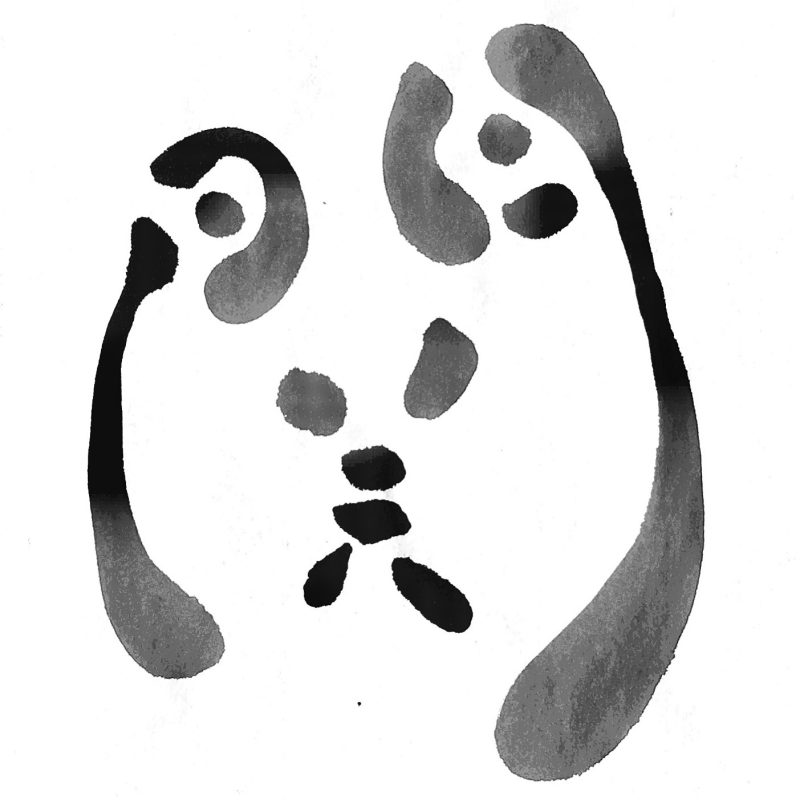
Rarely used on its own, this kanji is often found used in combination. Arguably the most famous examples are 関西 (Kansai) and 関東 (Kanto). Since ancient times there has been a road from Tokyo (the current capital) to Kyoto (the former capital). At the mid-way point there used to be a large barrier. This led toContinueContinue reading “関 (seki) “barrier, connection””
 Calligraphy by Vicky