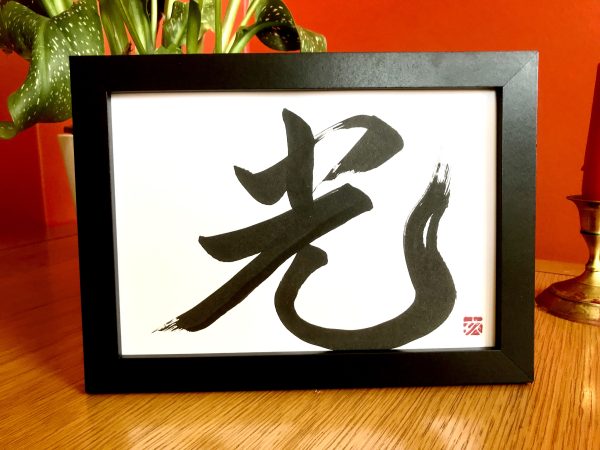
The above artwork is an original Japanese calligraphy work. It’s available from my Etsy store here. It’s A5 size and comes framed.
Tag Archives: 書道
秋 (aki) autumn
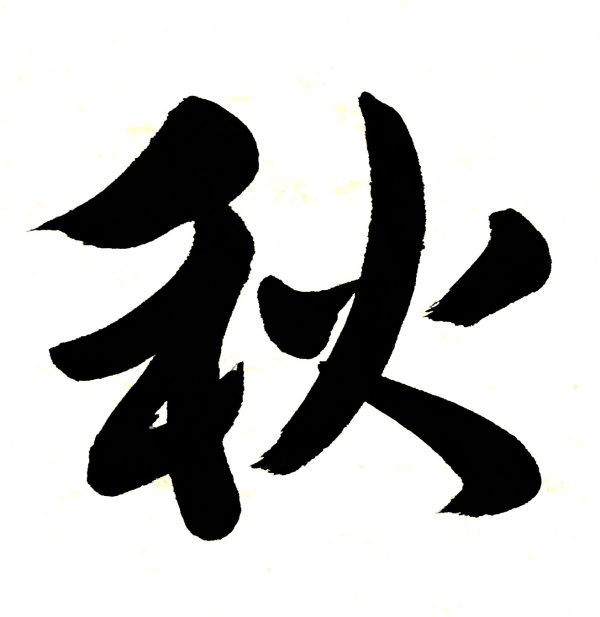
Anyone who’s lived in Japan will know that they have many, many national holidays. The autumn and spring equinoxes are national holidays too. Japanese people seem to really like acknowledging the changing of the seasons. Restaurant menus (even cheap places) will have autumn-themed menus with pumpkin, chestnuts and mushrooms, and many people enjoy going toContinueContinue reading “秋 (aki) autumn”
暑中見舞い (sho-chū-mi-mai) “Summer greetings”
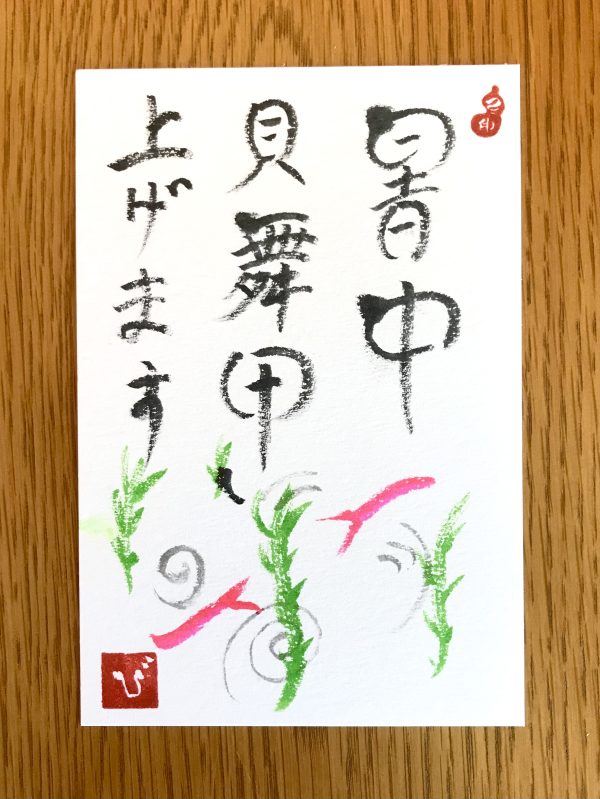
In Japan there is a tradition to send gifts and cards in mid-summer, to let your loved ones know that you are thinking of them during the oppressively hot summer days. These cards are called 暑中見舞い (sho-chū-mi-mai) cards, which is usually translated as “summer greetings”. Japanese learners will know that 見舞い (mi-mai) refers to visitingContinueContinue reading “暑中見舞い (sho-chū-mi-mai) “Summer greetings””
心技体 (shin-gi-tai) “mind, body, spirit”
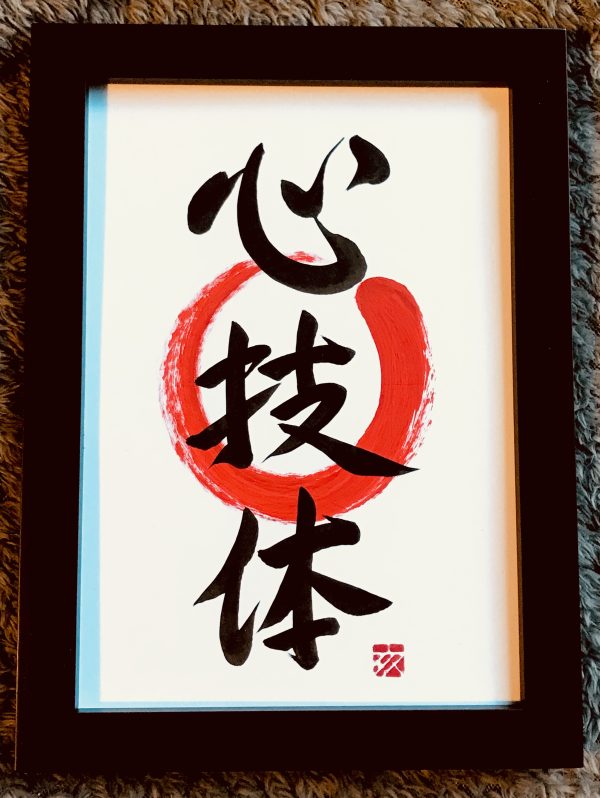
A calligraphy commission for a martial arts practitioner to use as a wall decoration and also as a tattoo design. Students of Japanese will notice that it doesn’t exactly say “mind, body, spirit”. This is because although this phrase is common in English, it’s a little different in Japanese. Happily there is a similar phraseContinueContinue reading “心技体 (shin-gi-tai) “mind, body, spirit””
感謝 (kansha) “gratitude”

This work is in a new kind of calligraphy style called 己書 onoré-sho . 己 Onoré = I/me As Japanese language learners will know, Japanese has A LOT of ways of referring to oneself, all with slightly different nuances. “onoré” is old-fashioned, rough, and rather self-centred. 書 Sho = writing So 己書 “onoré-sho” means somethingContinueContinue reading “感謝 (kansha) “gratitude””
翔 “to soar”
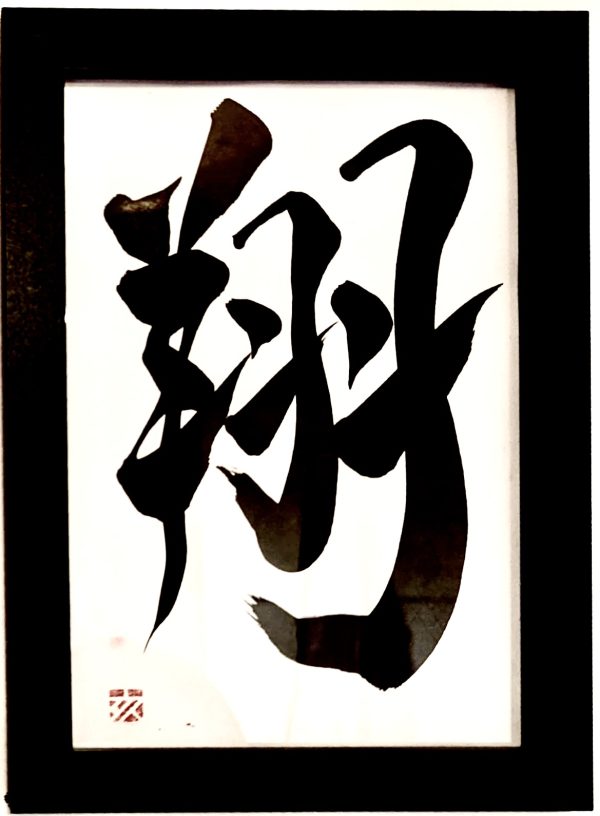
A commission for a friend who enjoys gliding 🛬 If you know someone who would like a unique gift, feel free to contact me about commissioning a calligraphy artwork. You can find more details on my “purchase a work” page.
月見 (Tsukimi) “moon-viewing”
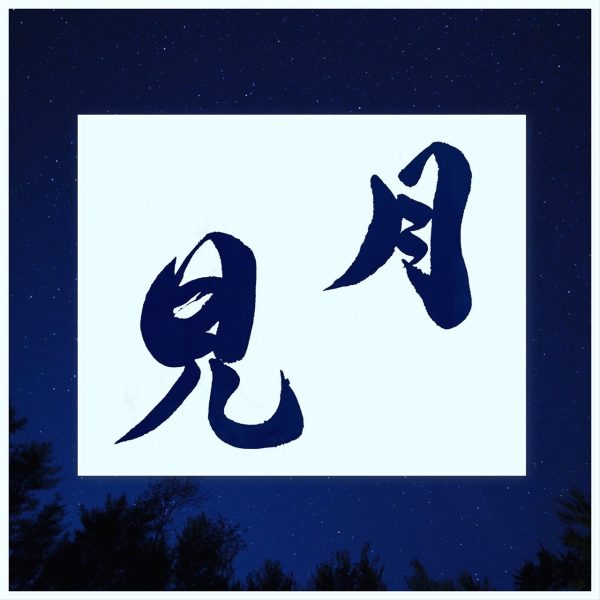
Monday was Moon Viewing Day in Japan. The full moon in autumn is considered particularly clear and beautiful, much like the idea of a “harvest moon”. 🎑 🌕 In Japan, Moon Viewing Day is celebrated by eating white dumplings. In China it is celebrated by eating mooncakes – pastries filled with lotus paste and aContinueContinue reading “月見 (Tsukimi) “moon-viewing””
月 (tsuki) “moon”
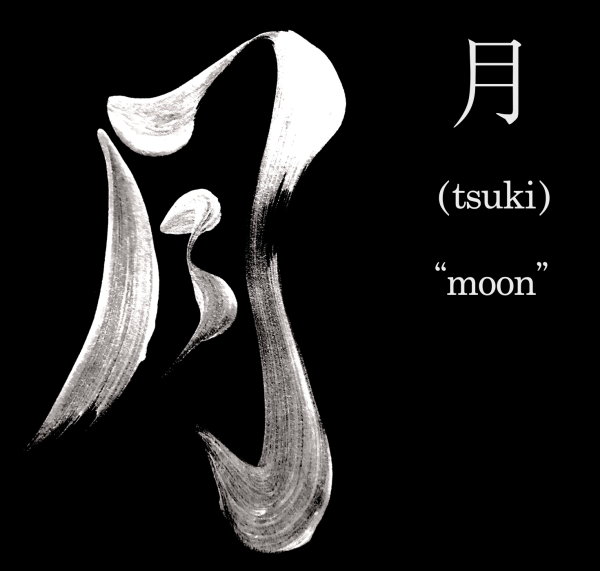
This Monday will be Moon Viewing Day in Japan. The autumn full moon is considered particularly clear and beautiful, much like the idea of a “harvest moon”. 🎑 🌕
福 (fuku) “Good fortune”
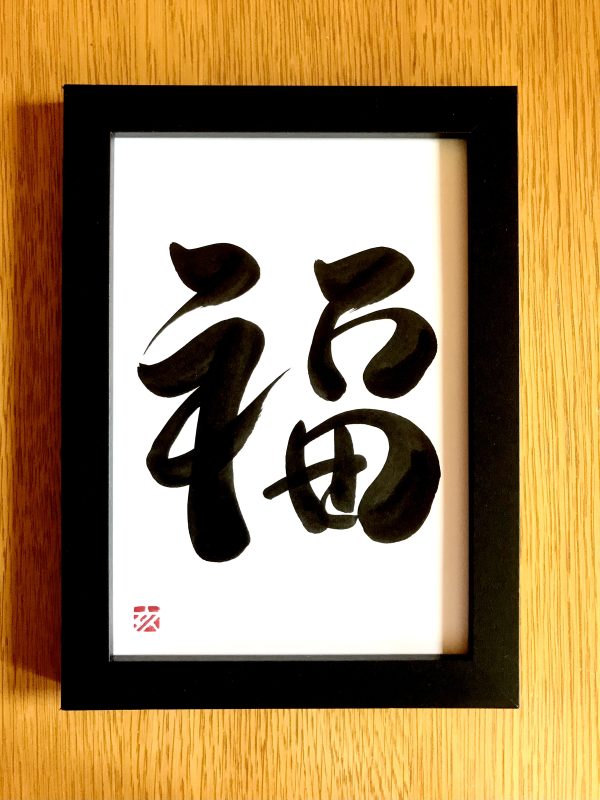
福 “Good fortune” A very popular kanji! It appears in the name of the famous 東福寺 Tō-fuku-ji temple in Kyoto. It’s also in the names of many Japanese towns and cities, including Fukuoka 福岡 and Fukushima 福島 . The above artwork is an original Japanese calligraphy work. It’s available from my Etsy store here. It’sContinueContinue reading “福 (fuku) “Good fortune””
神無月 (kan-na-zuki) “October” (archaic)
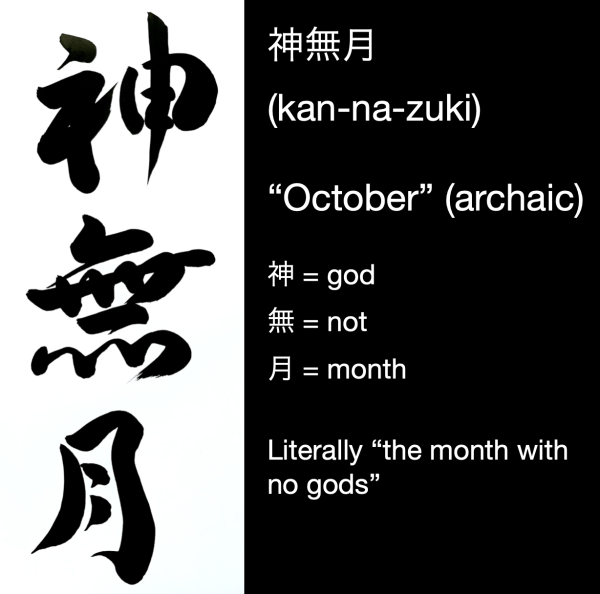
神 = god 無 = not 月 = month The modern Japanese word for October is 十月 (literally “10th Month), however in the old-fashioned calendar is was known as 神無月, or “the month with no gods”. In October, all the gods in Japan (there are believed to be 8 million of them) go to IzumoContinueContinue reading “神無月 (kan-na-zuki) “October” (archaic)”
 Calligraphy by Vicky