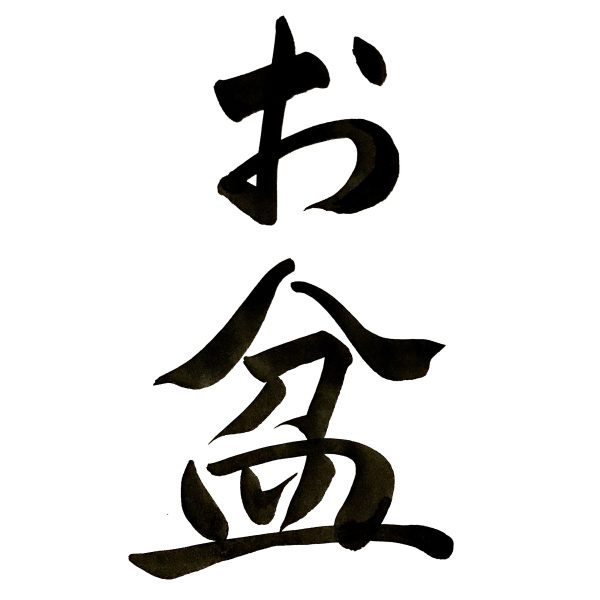
Every August Japan celebrates o-bon, the time of year when ancestors return to the world of the living. People celebrate by lighting fires, holding special dances in the town square, and visiting their family graves.
Tag Archives: 書道アート
道 (dō) “Way”, “Route”, “The Tao”
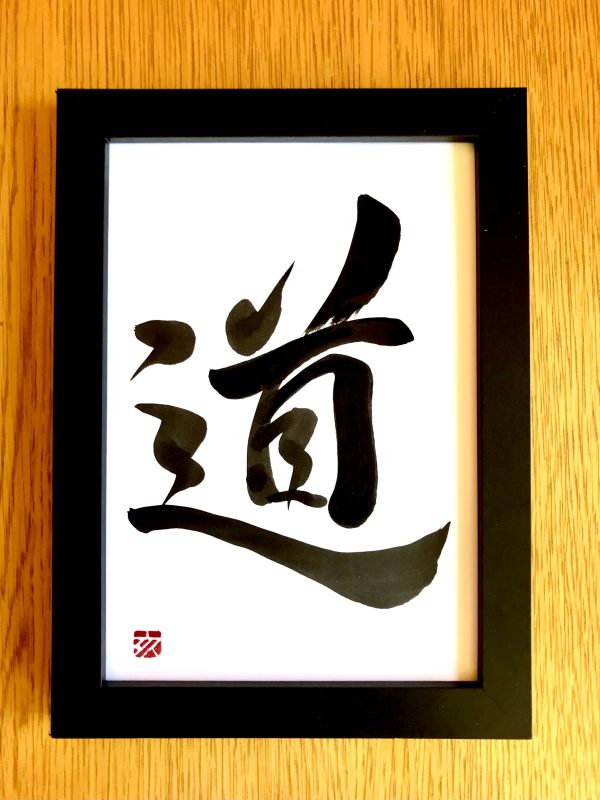
This is the “-dō” in the Japanese martial arts of judō, kendō and aikidō, as well as shodō (calligraphy), sadō (tea ceremony) and many others. Loosely translated, it means “way”, “route”, “path” or “doctrine”. My calligraphy teacher said that studying a Japanese art is considered similar to taking a journey up a mountain. The summitContinueContinue reading “道 (dō) “Way”, “Route”, “The Tao””
葉月 (hazuki) “August” (archaic)

Like many countries, Japan uses a 12-month calendar. The names are very simple. January is literally “Month one”, February is “Month two”, etc: 一月 = January 二月 = February However, before the Meiji Restoration (mid-1800s) it was common to use an older 12-month system. These months’ names referenced the weather and the seasons (similar toContinueContinue reading “葉月 (hazuki) “August” (archaic)”
陰陽 (in-yō) “yin-yang”

Yin is dark, cold, receptive, magnetic. Yang is light, hot, giving, active. Yin and Yang are relative. The element of water is usually considered very Yin, but fast-moving water is Yang compared to still water. Both are present in everything. Rather than being opposites, they are two sides of the same coin. A cup isContinueContinue reading “陰陽 (in-yō) “yin-yang””
重い魂… “A heavy soul…”
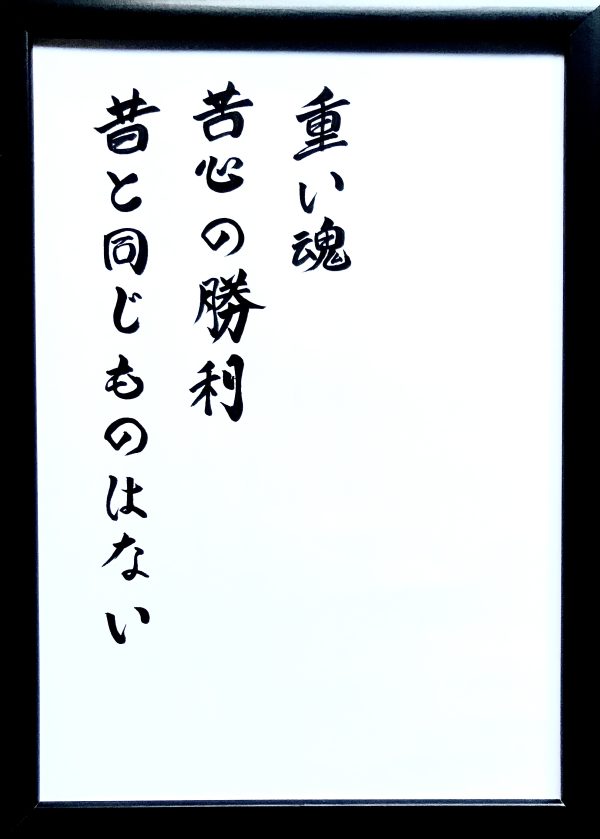
重い魂 / A heavy soul 苦心の勝利 / A hard-fought victory 昔と同じものはない / Nothing’s the same as it used to be This was a commission for a client to give to his beloved as a Christmas present. It’s three lines from their favourite song. The song is originally in English, so before I wrote it IContinueContinue reading “重い魂… “A heavy soul…””
喫茶去 (kissako) “Please have a cup of tea”
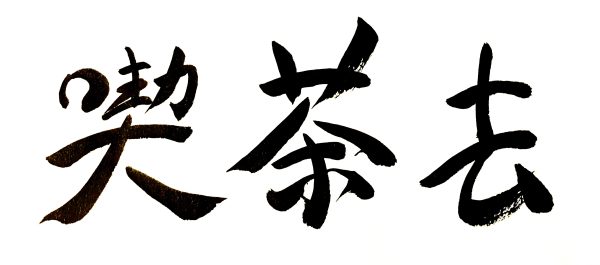
喫 = drink 茶 = tea 去 = leave “Drink tea and leave”? Not exactly. The intention of this 3-character idiom isn’t to tell someone to go away after they’ve drunk some tea, but rather to welcome all guests to have a cup of tea before they leave. This idiom comes from a Chinese ZenContinueContinue reading “喫茶去 (kissako) “Please have a cup of tea””
守破離 (shu-ha-ri) “Follow the rule, break the rule, be the rule!”
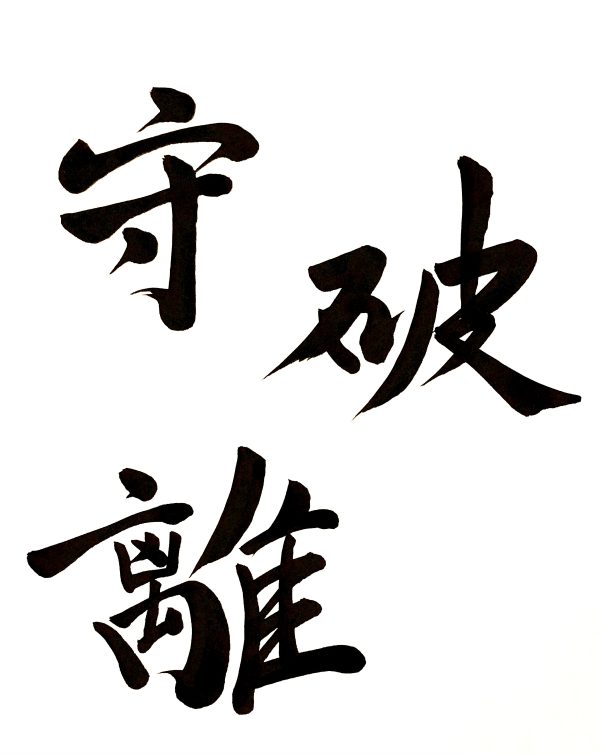
守破離 “Shu-ha-ri” describes the 3-stage process of learning a skill or discipline. This 3-character idiom was originally a martial arts concept, but can apply to pretty much any discipline. The 3 stages are as follows: Stage 1: 守 = follow This is the beginning stage, when the student is learning the techniques. This stage isContinueContinue reading “守破離 (shu-ha-ri) “Follow the rule, break the rule, be the rule!””
茶 (cha) “tea”
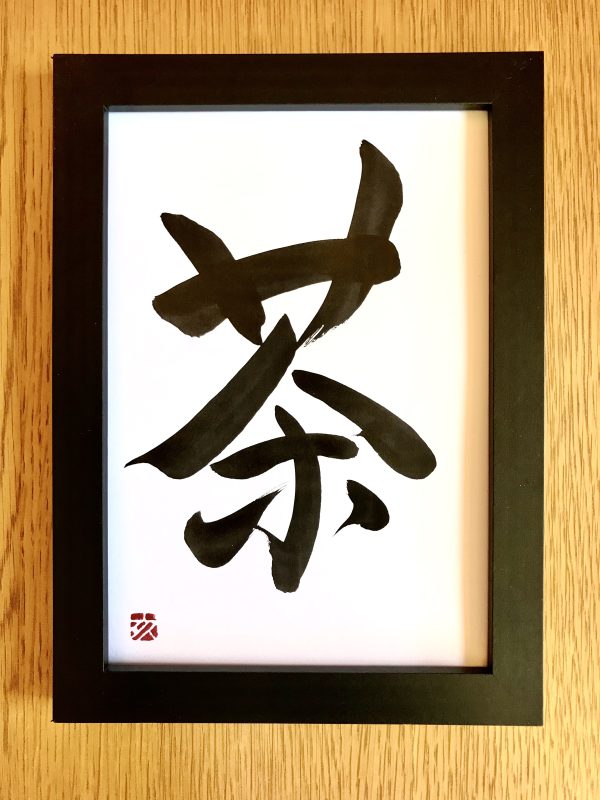
As in my home country of the UK, tea is an important part of Japanese culture and everyday life. The Japanese tea master Sen no Rikyū developed the traditional Japanese tea ceremony, elevating the tea-drinking and the tea room to a philosophy and an art form: “The simplest object, framed by the controlled simplicity ofContinueContinue reading “茶 (cha) “tea””
まこ “Mako”
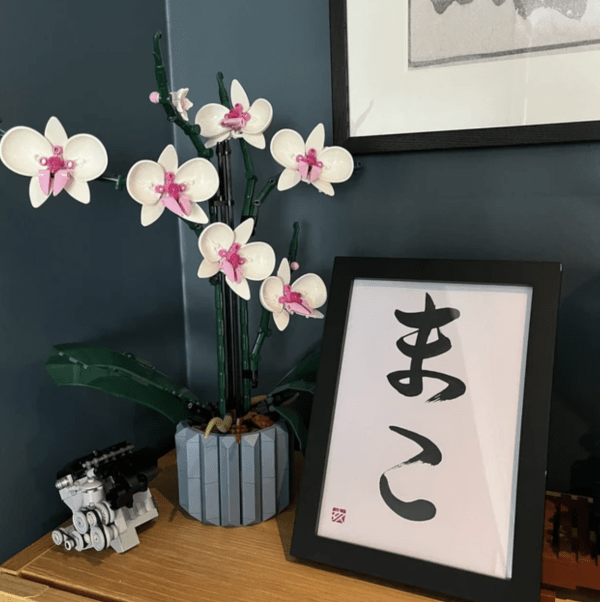
I was very honoured to receive a commission to create this artwork. “Mako” is the name of the client’s beloved cat, named after the Japanese actor Makoto Iwamatsu.
夏雲奇峰 (natsu-gumo-ki-hou) “Summer clouds shaped like strange mountains”
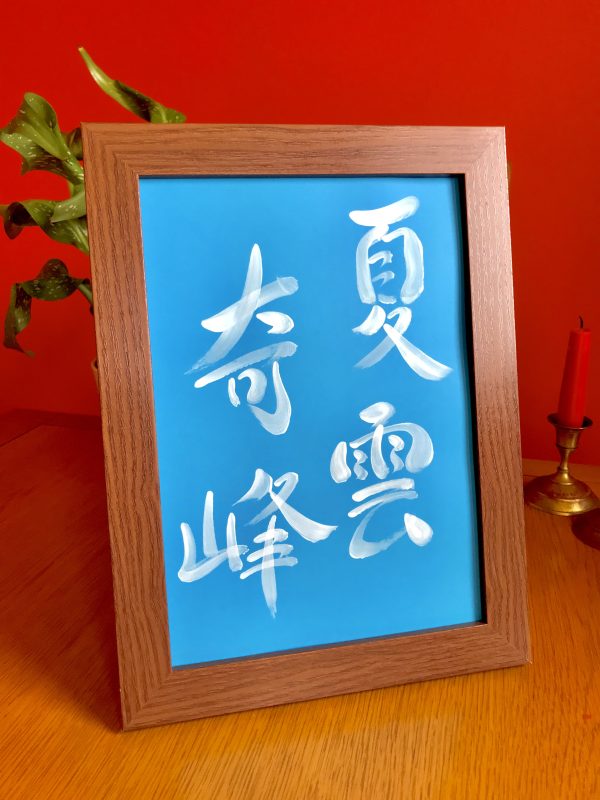
Some seasonal calligraphy specially for summertime! The kanji are: 夏 = summer 雲 = cloud(s) 奇 = strange 峰 = peak It references the white fluffy clouds of summer which take many different shapes, including strange mountains! This phrase is a special kind of Japaneses idiom known as a 四字熟語 (よじじゅくご、yo-ji-juku-go), or 4-character idiom. AsContinueContinue reading “夏雲奇峰 (natsu-gumo-ki-hou) “Summer clouds shaped like strange mountains””
 Calligraphy by Vicky