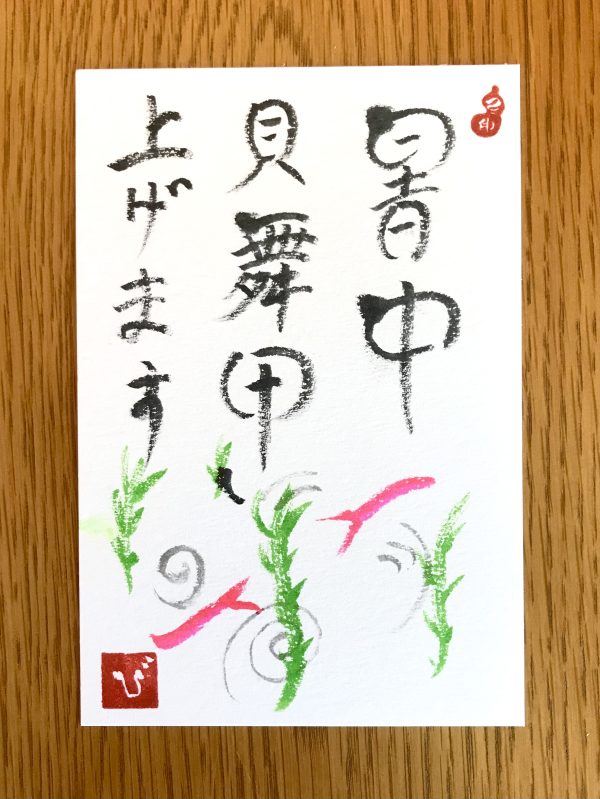
In Japan there is a tradition to send gifts and cards in mid-summer, to let your loved ones know that you are thinking of them during the oppressively hot summer days. These cards are called 暑中見舞い (sho-chū-mi-mai) cards, which is usually translated as “summer greetings”. Japanese learners will know that 見舞い (mi-mai) refers to visitingContinueContinue reading “暑中見舞い (sho-chū-mi-mai) “Summer greetings””
Category Archives: Months and Seasons
月見 (Tsukimi) “moon-viewing”
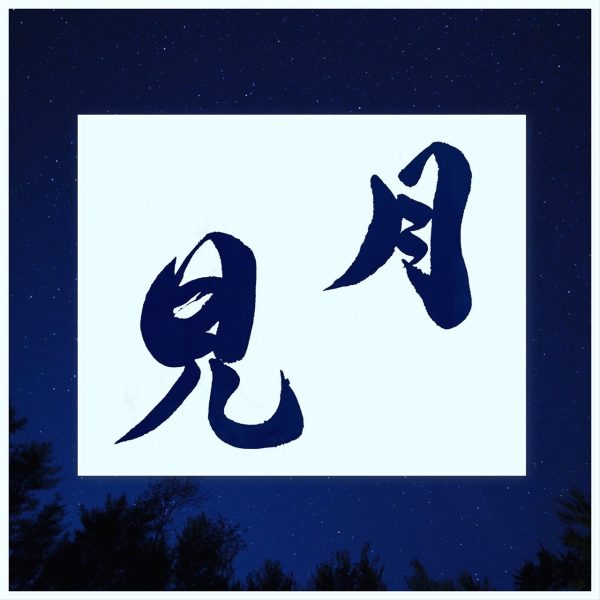
Monday was Moon Viewing Day in Japan. The full moon in autumn is considered particularly clear and beautiful, much like the idea of a “harvest moon”. 🎑 🌕 In Japan, Moon Viewing Day is celebrated by eating white dumplings. In China it is celebrated by eating mooncakes – pastries filled with lotus paste and aContinueContinue reading “月見 (Tsukimi) “moon-viewing””
月 (tsuki) “moon”
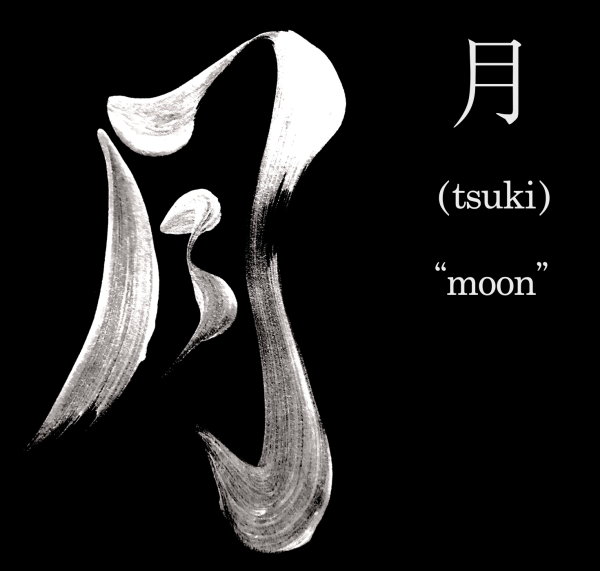
This Monday will be Moon Viewing Day in Japan. The autumn full moon is considered particularly clear and beautiful, much like the idea of a “harvest moon”. 🎑 🌕
神無月 (kan-na-zuki) “October” (archaic)
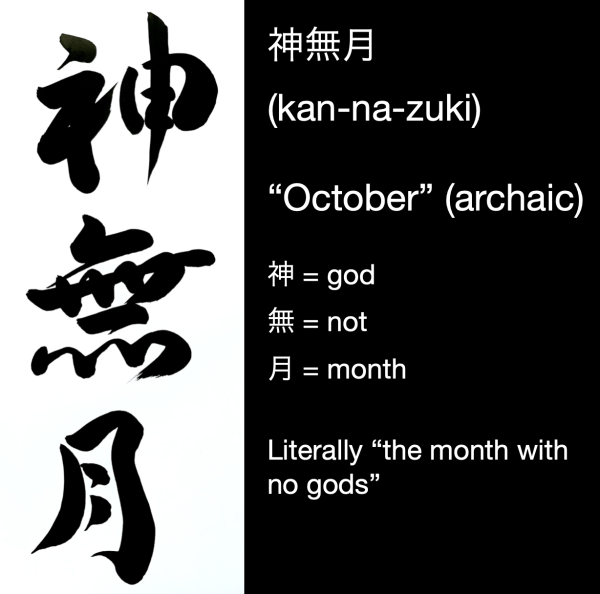
神 = god 無 = not 月 = month The modern Japanese word for October is 十月 (literally “10th Month), however in the old-fashioned calendar is was known as 神無月, or “the month with no gods”. In October, all the gods in Japan (there are believed to be 8 million of them) go to IzumoContinueContinue reading “神無月 (kan-na-zuki) “October” (archaic)”
長月 (Nagatsuki) “September” (archaic)
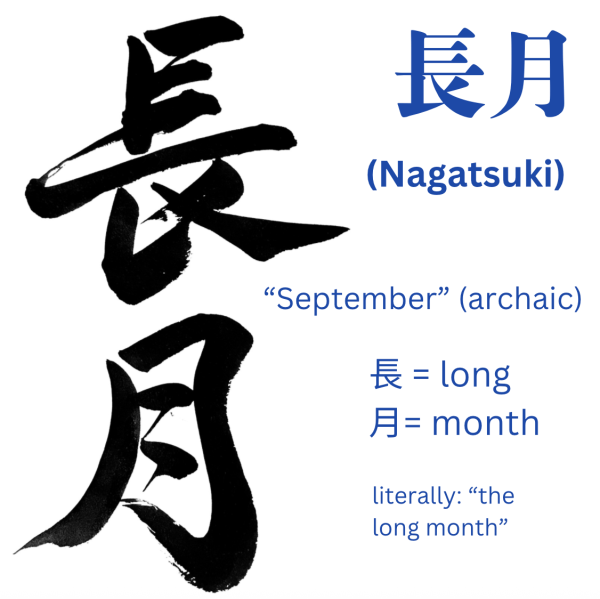
Like many countries, Japan uses a 12-month calendar. The names are very simple. January is literally “Month one”, February is “Month two”, etc: 一月 = January 二月 = February However, before the Meiji Restoration (mid-1800s) it was common to use an older 12-month system. These months’ names referenced the weather and the seasons (similar toContinueContinue reading “長月 (Nagatsuki) “September” (archaic)”
お盆 (o-bon)
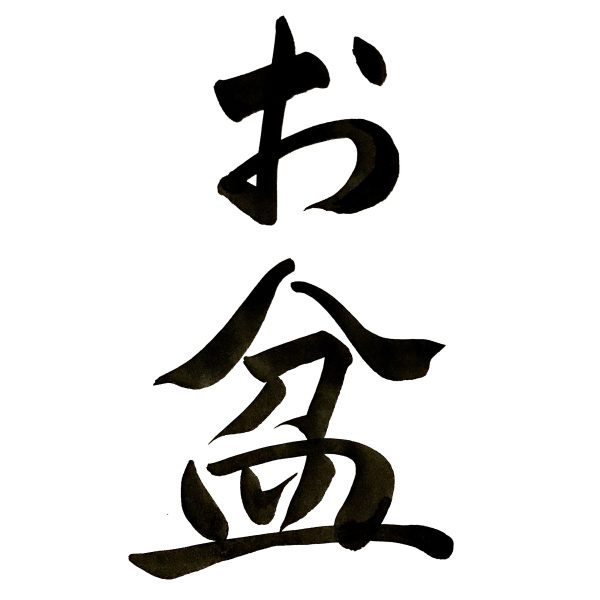
Every August Japan celebrates o-bon, the time of year when ancestors return to the world of the living. People celebrate by lighting fires, holding special dances in the town square, and visiting their family graves.
葉月 (hazuki) “August” (archaic)

Like many countries, Japan uses a 12-month calendar. The names are very simple. January is literally “Month one”, February is “Month two”, etc: 一月 = January 二月 = February However, before the Meiji Restoration (mid-1800s) it was common to use an older 12-month system. These months’ names referenced the weather and the seasons (similar toContinueContinue reading “葉月 (hazuki) “August” (archaic)”
夏雲奇峰 (natsu-gumo-ki-hou) “Summer clouds shaped like strange mountains”
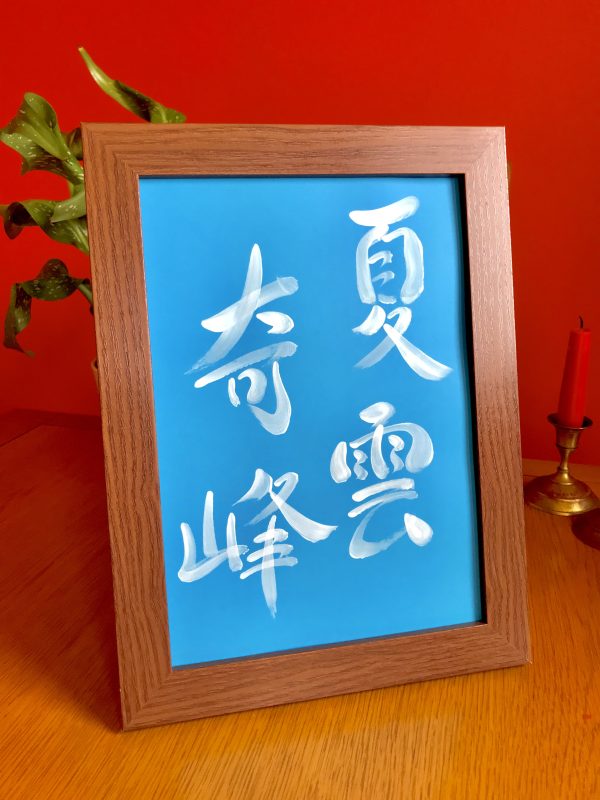
Some seasonal calligraphy specially for summertime! The kanji are: 夏 = summer 雲 = cloud(s) 奇 = strange 峰 = peak It references the white fluffy clouds of summer which take many different shapes, including strange mountains! This phrase is a special kind of Japaneses idiom known as a 四字熟語 (よじじゅくご、yo-ji-juku-go), or 4-character idiom. AsContinueContinue reading “夏雲奇峰 (natsu-gumo-ki-hou) “Summer clouds shaped like strange mountains””
文月 (fumizuki) “July” (archaic)
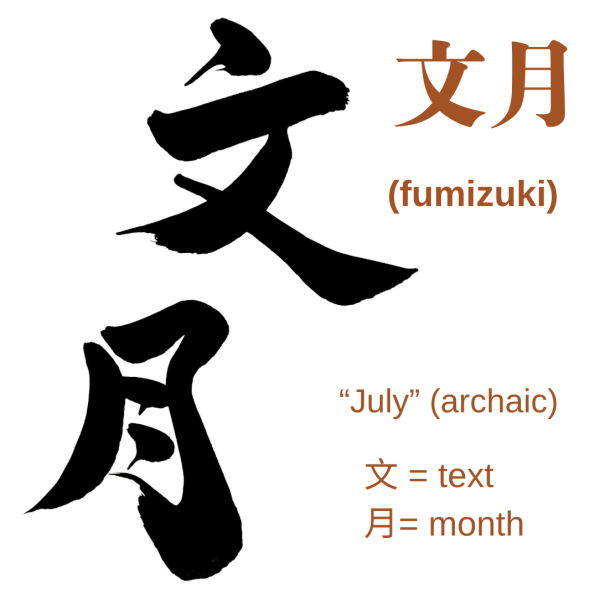
Like many countries, Japan uses a 12-month calendar. The names are very simple. January is literally “Month One”, February is “Month Two”, etc: 一月 = January 二月 = February However, before the Meiji Restoration (mid-1800s) it was common to use an older 12-month system. These months’ names referenced the weather and the seasons (similar toContinueContinue reading “文月 (fumizuki) “July” (archaic)”
菖蒲華 (Ayame hana saku) “Irises bloom”
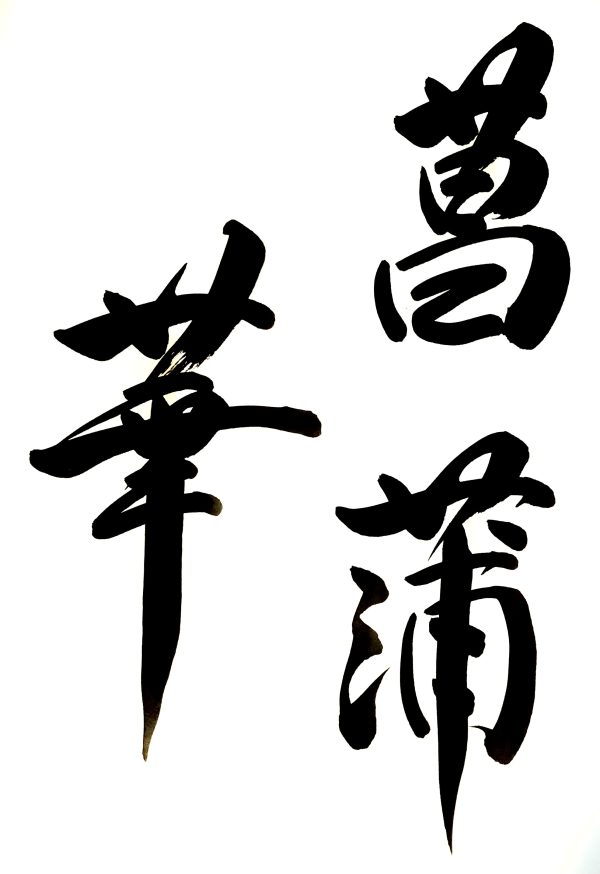
In ancient times Japanese people divided the year into 72 “micro-seasons”. These seasons were based on natural events such as the weather and appearance of various flora and fauna. Later this month it will be 菖蒲華, marking period when irises begin to bloom. You can find out more about Japanese micro-seasons here.
 Calligraphy by Vicky