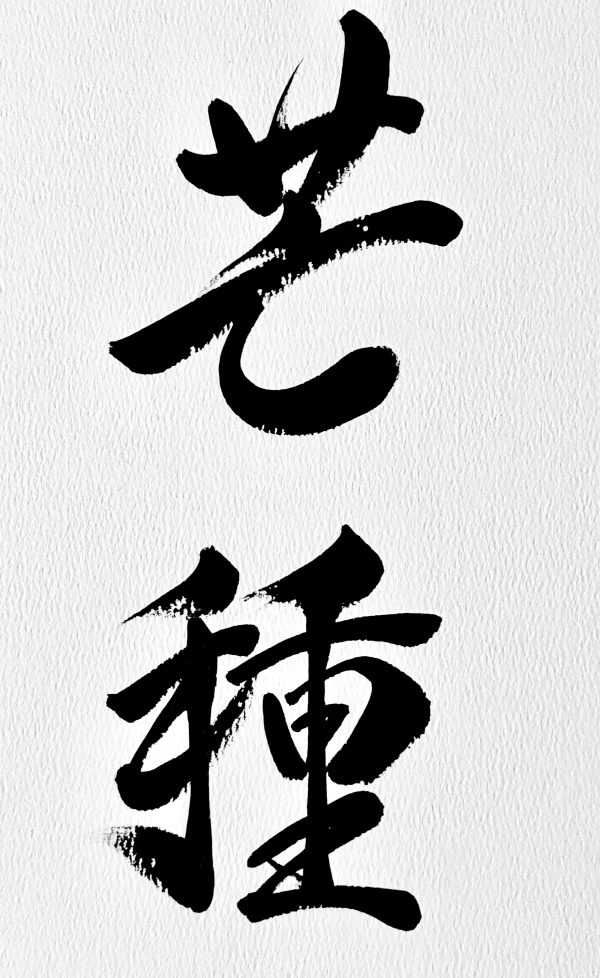
As well as having 4 seasons (spring, summer, autumn, winter), in Japan the year can also be divided into 24 節気 (sekki), or solar terms.
The solar terms include terms that are familiar to English-speakers, such as the solstices and equinoxes. They also include references to the weather, the temperature, and the beginning of the 4 seasons.
Some solar terms describe plant activity, such as this one:
芒 = little hairs that appear on grains (sometimes called “beards” in English)
種 = seeds
This means that it’s now time to plant rice seedings, a very important activity in a country where rice is the staple food.
You can find more information about the 節気 (sekki) solar terms here:
 Calligraphy by Vicky