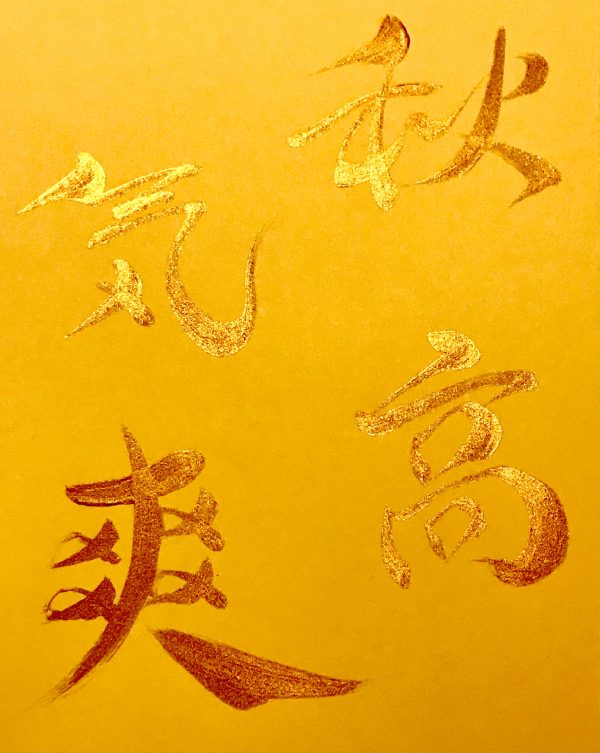
秋 = autumn 高 = high (refers to the sky here) 気 = air 爽 = refreshing
Category Archives: Nature
一葉知秋 (ichi-yō-chi-shū) “from just one leaf one can know that autumn has come”
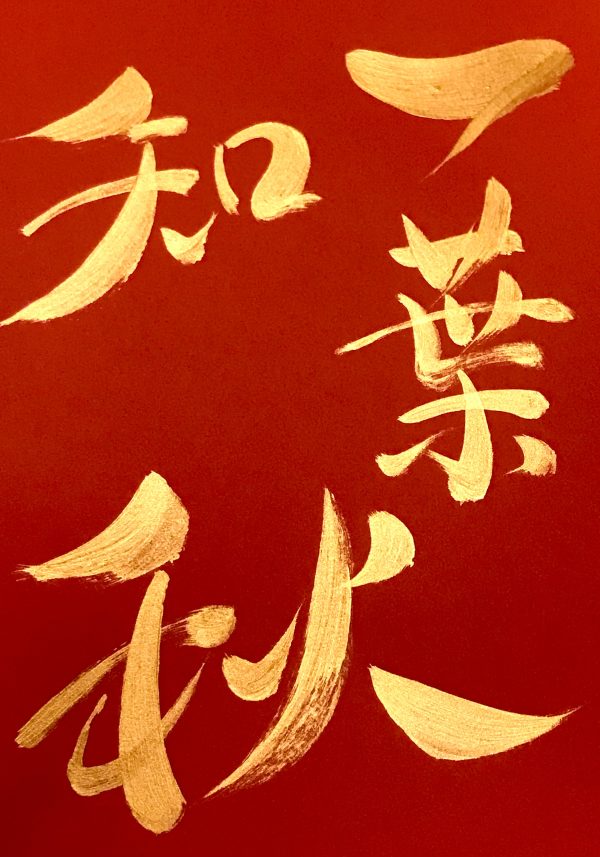
一 = one 葉 = leaf 知 = to know 秋 = autumn This phrase is about understanding the essence, changes, or decline of things from noticing slight signs or phenomena. It refers to realising the arrival of autumn by observing a single leaf fall.
霜月 (shimotsuki) “November” (archaic) (literally “the month of frost”)
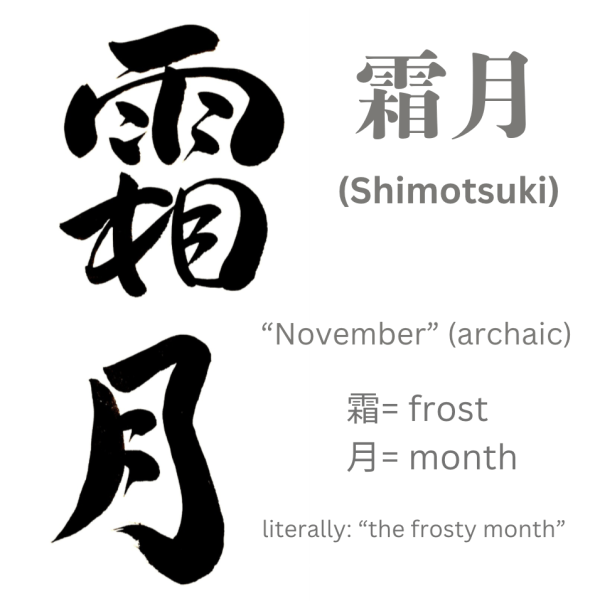
Like many countries, Japan uses a 12-month calendar. The names are very simple. January is literally “Month one”, February is “Month two”, etc: 一月 = January 二月 = February However, before the Meiji Restoration (mid-1800s) it was common to use an older 12-month system. These months’ names referenced the weather and the seasons (similar toContinueContinue reading “霜月 (shimotsuki) “November” (archaic) (literally “the month of frost”)”
秋 (aki) autumn
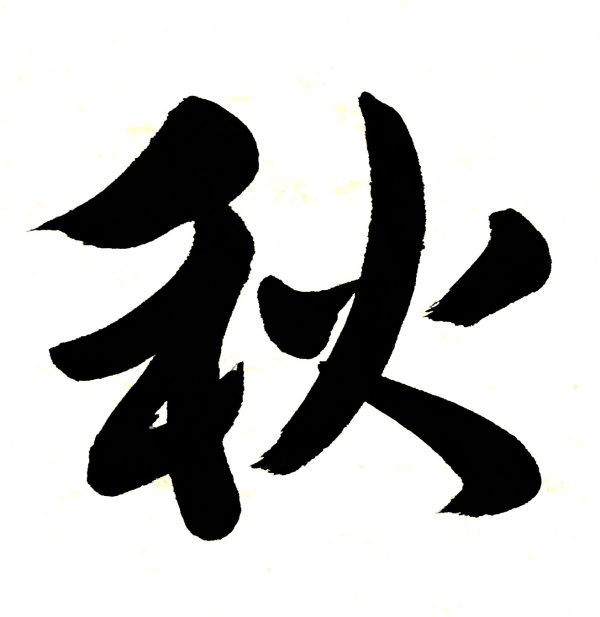
Anyone who’s lived in Japan will know that they have many, many national holidays. The autumn and spring equinoxes are national holidays too. Japanese people seem to really like acknowledging the changing of the seasons. Restaurant menus (even cheap places) will have autumn-themed menus with pumpkin, chestnuts and mushrooms, and many people enjoy going toContinueContinue reading “秋 (aki) autumn”
月 (tsuki) “moon”
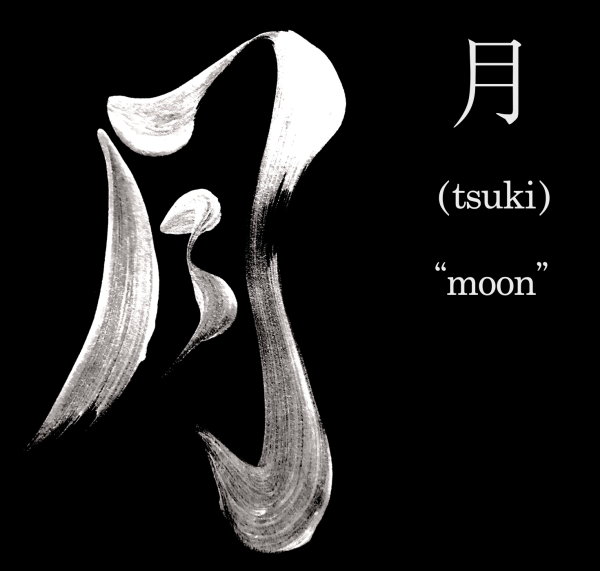
This Monday will be Moon Viewing Day in Japan. The autumn full moon is considered particularly clear and beautiful, much like the idea of a “harvest moon”. 🎑 🌕
森林浴 (shin-rin-yoku) “forest-bathing”

森林 = forest (look at all the 木 trees in these 2 kanji!) 浴 = bathing Literally translating as “forest-bathing”, 森林浴 shin-rin-yoku refers to spending time in a forest for mental and physical relaxation.
葉月 (hazuki) “August” (archaic)

Like many countries, Japan uses a 12-month calendar. The names are very simple. January is literally “Month one”, February is “Month two”, etc: 一月 = January 二月 = February However, before the Meiji Restoration (mid-1800s) it was common to use an older 12-month system. These months’ names referenced the weather and the seasons (similar toContinueContinue reading “葉月 (hazuki) “August” (archaic)”
夏雲奇峰 (natsu-gumo-ki-hou) “Summer clouds shaped like strange mountains”
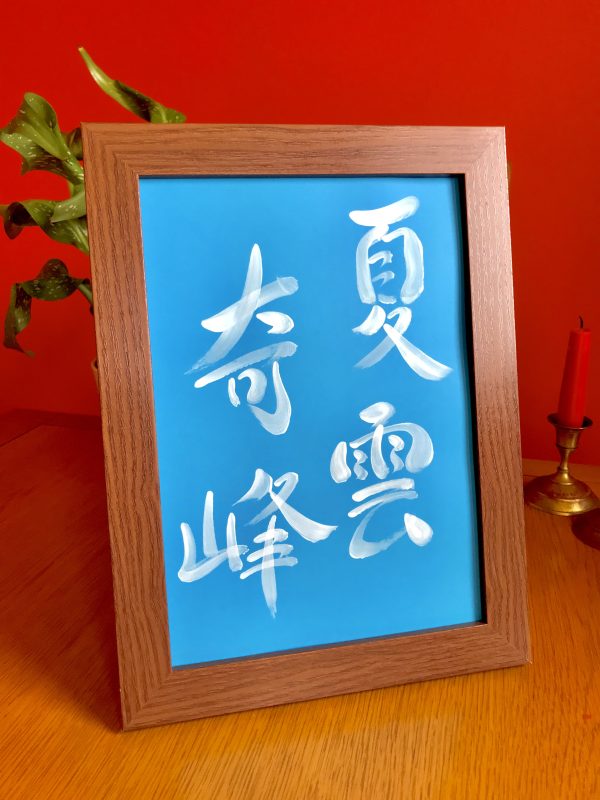
Some seasonal calligraphy specially for summertime! The kanji are: 夏 = summer 雲 = cloud(s) 奇 = strange 峰 = peak It references the white fluffy clouds of summer which take many different shapes, including strange mountains! This phrase is a special kind of Japaneses idiom known as a 四字熟語 (よじじゅくご、yo-ji-juku-go), or 4-character idiom. AsContinueContinue reading “夏雲奇峰 (natsu-gumo-ki-hou) “Summer clouds shaped like strange mountains””
菖蒲華 (Ayame hana saku) “Irises bloom”
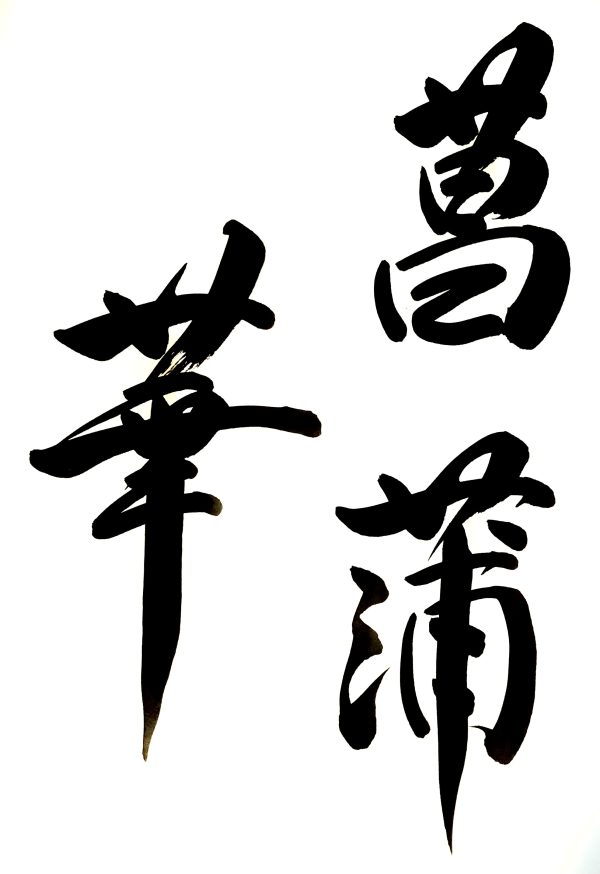
In ancient times Japanese people divided the year into 72 “micro-seasons”. These seasons were based on natural events such as the weather and appearance of various flora and fauna. Later this month it will be 菖蒲華, marking period when irises begin to bloom. You can find out more about Japanese micro-seasons here.
春雨 (harusamé) “gentle spring rain”
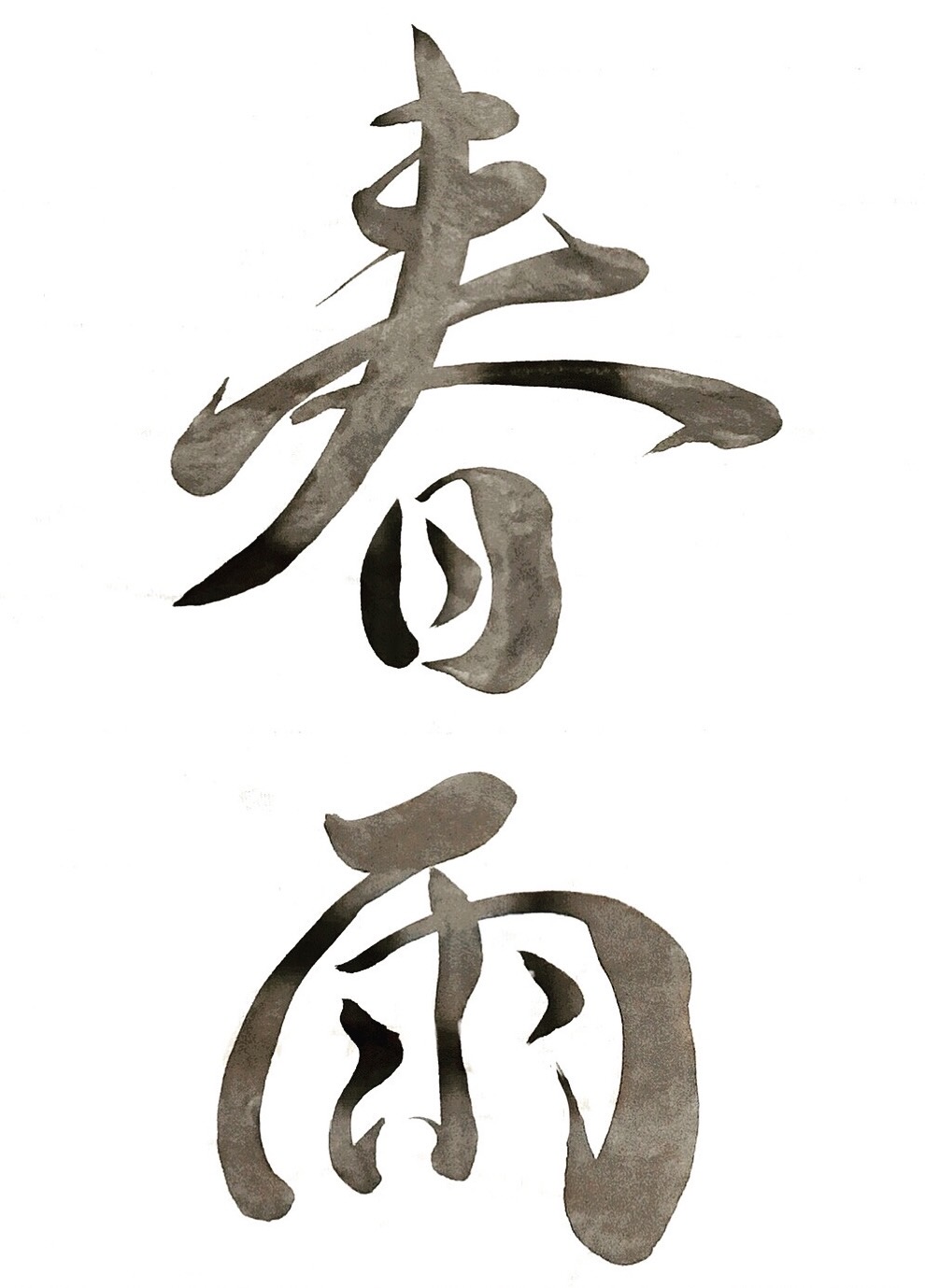
April is a rainy month in my home country of the UK.
 Calligraphy by Vicky