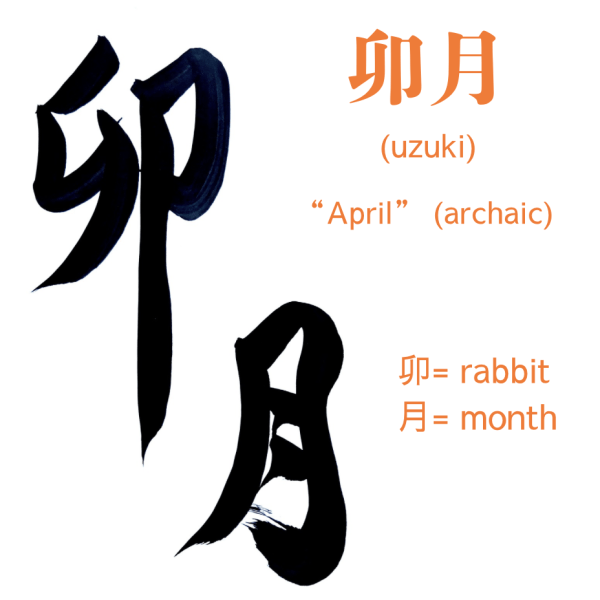
Like many countries, Japan uses a 12-month calendar. The names are very simple. January is literally “Month One”, February is “Month Two”, etc: 一月 = January 二月 = February However, before the Meiji Restoration (mid-1800s) it was common to use an older 12-month system. These months’ names referenced the weather and the seasons (similar toContinueContinue reading “卯月(uzuki) “April” (archaic)”
Category Archives: Nature
🌸 桜 (sakura) “cherry blossoms” 🌸
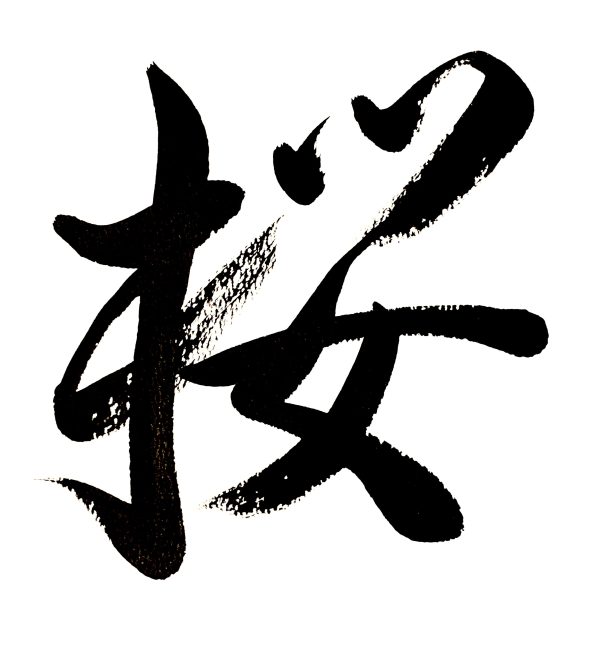
It’s cherry blossom season in (parts of) Japan! Cherry blossoms are arguably the most beloved of Japanese flowers, and even feature on the 100 coin. In springtime many Japanese people like to do 花見 (Hanami) “viewing cherry blossoms”, sometimes taking the excuse to have a party and drink under the trees.
弥生 (yayoi) “March” (archaic)
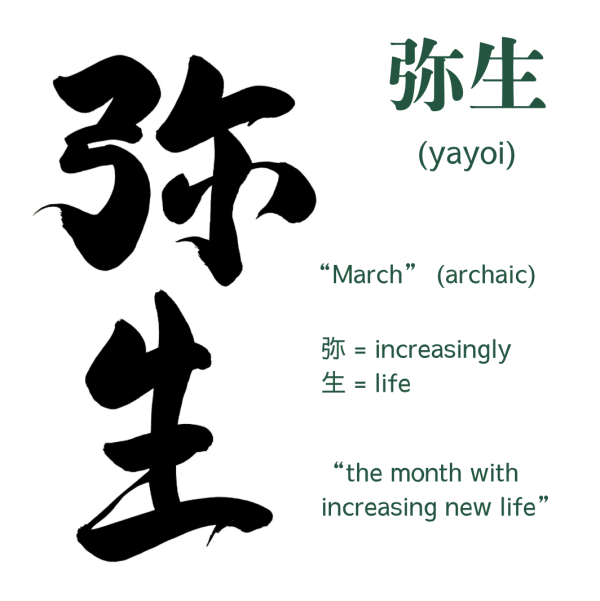
Like many countries, Japan uses a 12-month calendar. The names are very simple. January is literally “Month one”, February is “Month two”, etc. However, before the Meiji Restoration (mid-1800s) it was common to use an older 12-month system. These months’ names referenced the weather and the seasons (similar to the French Revolutionary calendar). March is:ContinueContinue reading “弥生 (yayoi) “March” (archaic)”
梅 (umé) plum
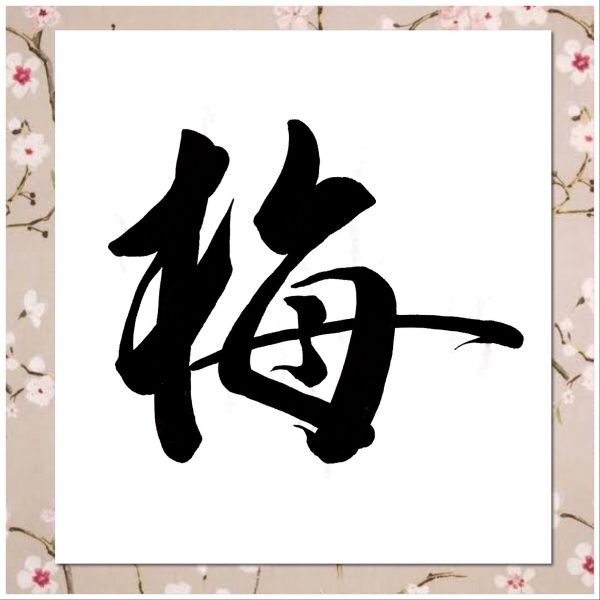
It will soon be blossom season in Japan! By far the most famous of Japanese blossoms are cherry blossoms, but they’re not the first spring flower to bloom. Plum blossom usually start appearing as early as mid-February. Although not as dramatic as the more-famous cherry blossoms, they are well-loved for their subtle beauty. The imageContinueContinue reading “梅 (umé) plum”
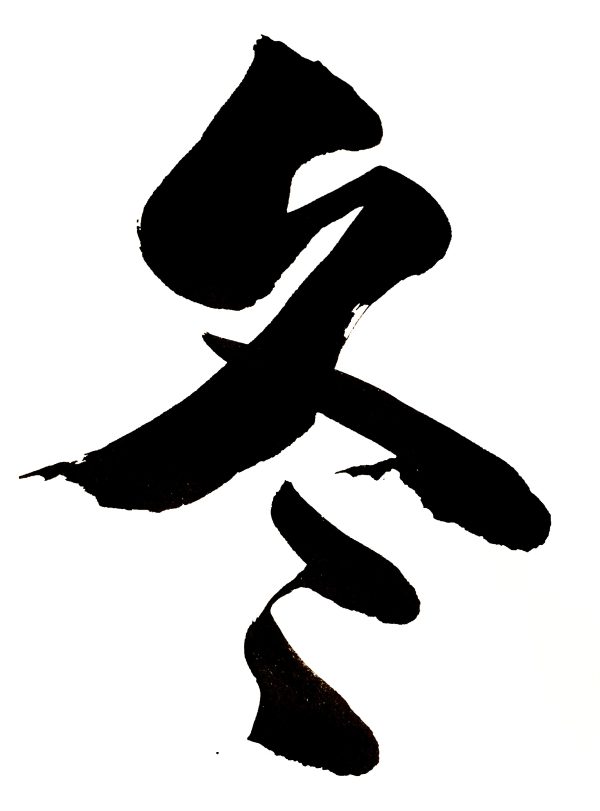
冬 (fuyu) “winter”
熊 (kuma) “bear” (kanji of the year 2025)
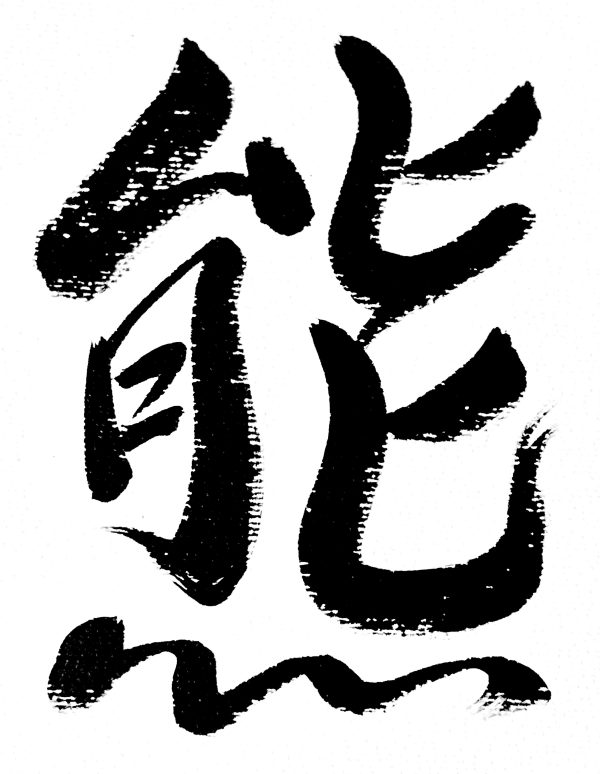
At the end of each year, one kanji is chosen to be “kanji of the year”. The winning kanji represents that year’s current events. 2025’s kanji was “bear” (kuma) 熊. 2025 saw a marked increase in the number of wild bear attacks on Japanese citizens, due to environmental changes leading them to abandon their naturalContinueContinue reading “熊 (kuma) “bear” (kanji of the year 2025)”
書初め (kakizomé) The First Calligraphy of the New Year
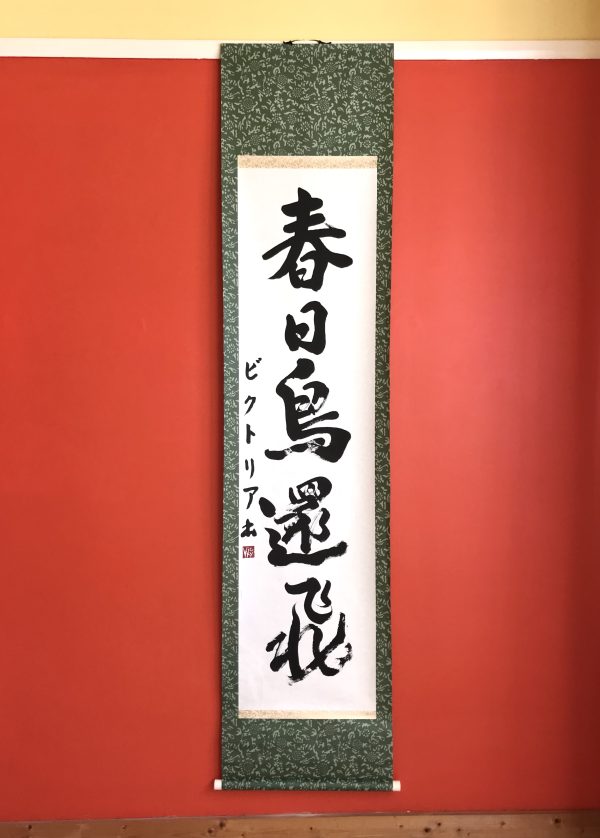
New Year’s is the biggest festival in Japan. As a time for new beginnings, it is often observed by doing activities “for the first time in the new year”. The first calligraphy of the new year is called 書初め (kakizomé). The kanji: 書 = writing (as in 書道 – Japanese calligraphy, or “the way ofContinueContinue reading “書初め (kakizomé) The First Calligraphy of the New Year”
熊蟄穴 When bears begin to hibernate

The Japanese year used to be divided into 72 “micro-seasons”. These seasons were based on natural events such as the weather and the appearance of various plants and animals. Next week is the start of 熊蟄穴. The kanji: 熊 = bear 蟄 = hibernation 穴 = hole, den = the time when bears start theirContinueContinue reading “熊蟄穴 When bears begin to hibernate”
雪 (yuki) “snow”
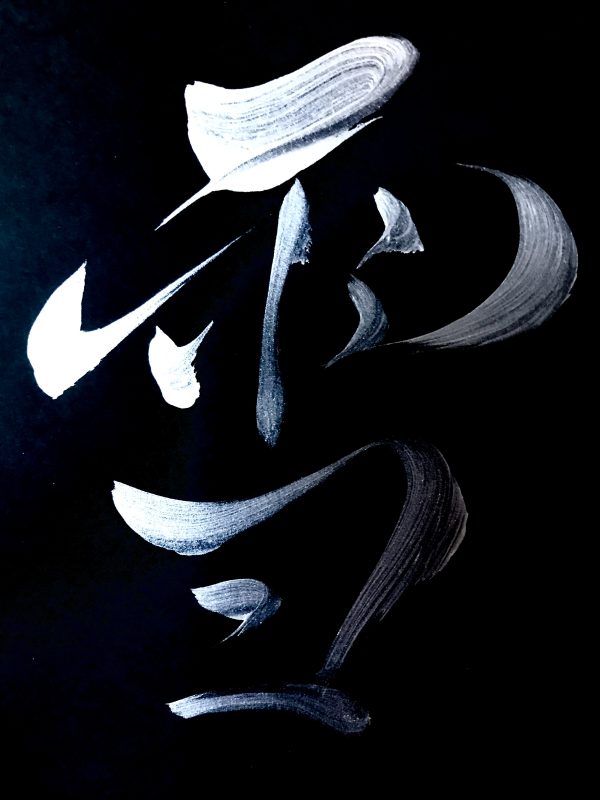
In my country it started snowing last week!
紅葉 (kō-yō) “Red autumn leaves”
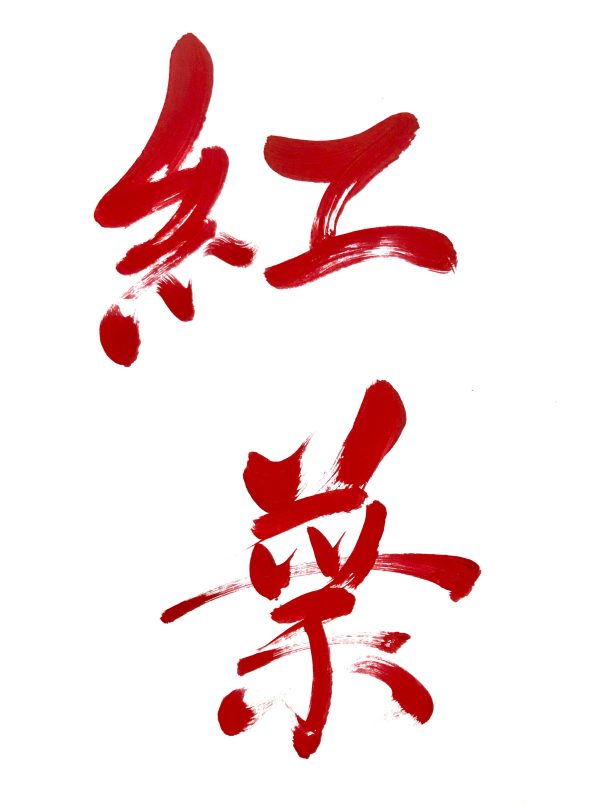
Japan is famous for its annual “cherry blossom season”. 🌸 Less well known is that autumn leaves are also widely celebrated. 🍁 Many people take trips to famous temples and shrines, parks and forests, in order to see the beautiful autumn colours. 🍂
 Calligraphy by Vicky