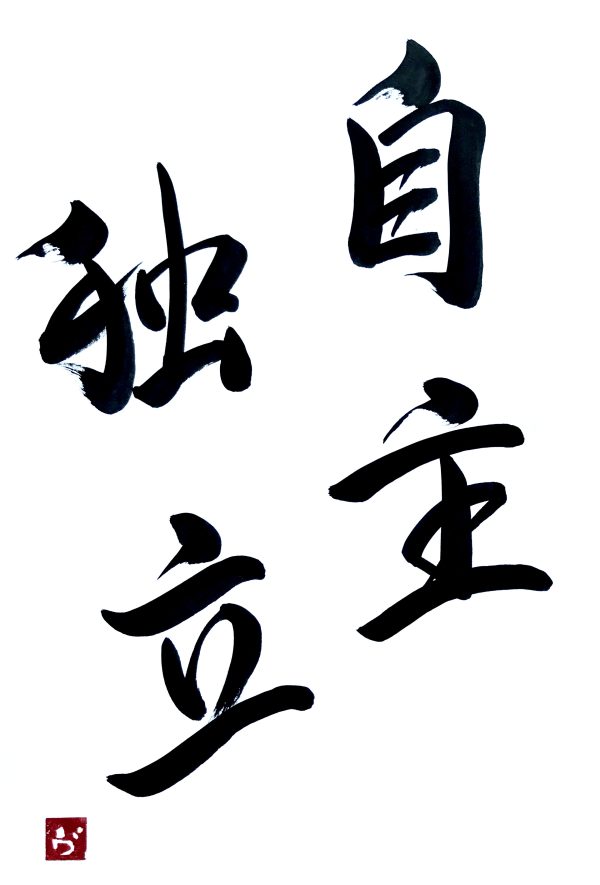
The kanji: 自 = oneself 主 = main 独 = alone 立 = standing This is a special kind of Japaneses idiom known as a 四字熟語 (よじじゅくご、yo-ji-juku-go), or 4-character idiom. As the name suggests, these are idiomatic phrases made of 4 kanji characters. They often contain a small life lesson or moral message, similar toContinueContinue reading “自主独立 (ji-shu-doku-ritsu) “Success through one’s own efforts””
Category Archives: 4-character idioms
十人十色 (jū-nin-tō-iro) “Each to their own”
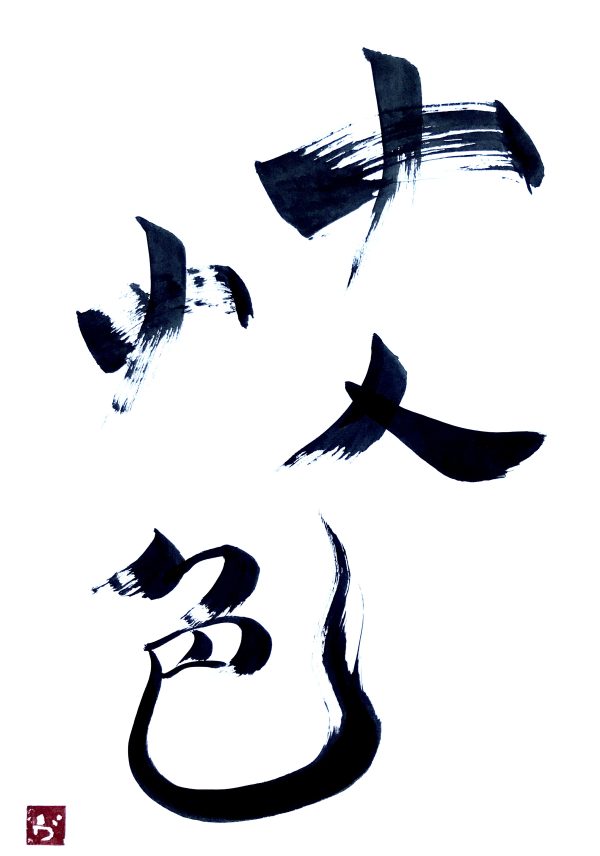
The kanji in this well-known Japanese idiom are: 十 = ten 人 = people 十 = ten 色 = colour(s) So literally: “ten people, ten colours”
秋高気爽 (shū-kō-ki-sō) “fresh autumn breeze”
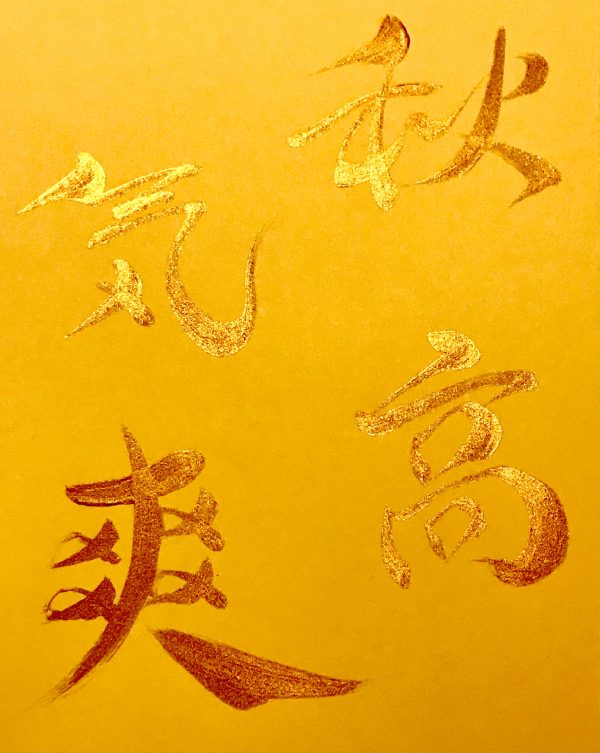
秋 = autumn 高 = high (refers to the sky here) 気 = air 爽 = refreshing
一葉知秋 (ichi-yō-chi-shū) “from just one leaf one can know that autumn has come”
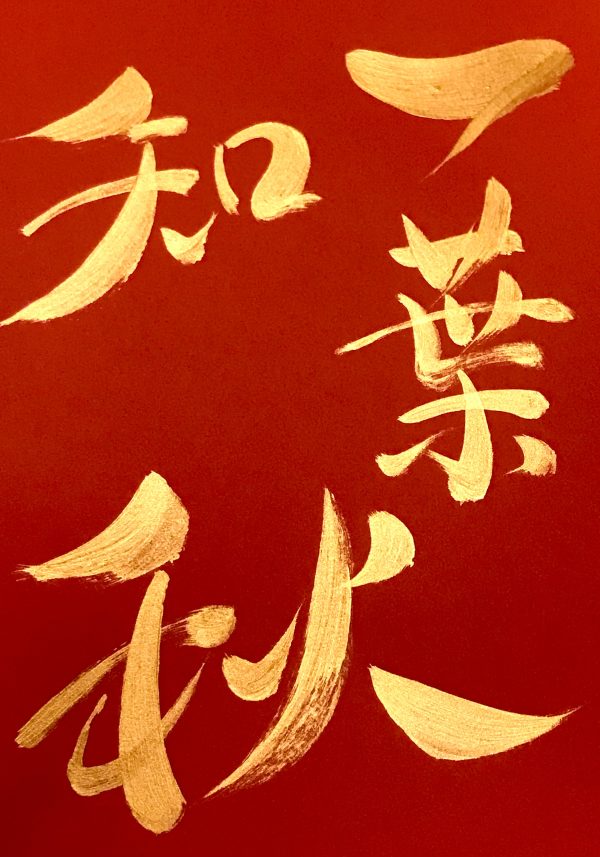
一 = one 葉 = leaf 知 = to know 秋 = autumn This phrase is about understanding the essence, changes, or decline of things from noticing slight signs or phenomena. It refers to realising the arrival of autumn by observing a single leaf fall.
温故知新 (おんこちしん)”learning from the past to gain new knowledge”
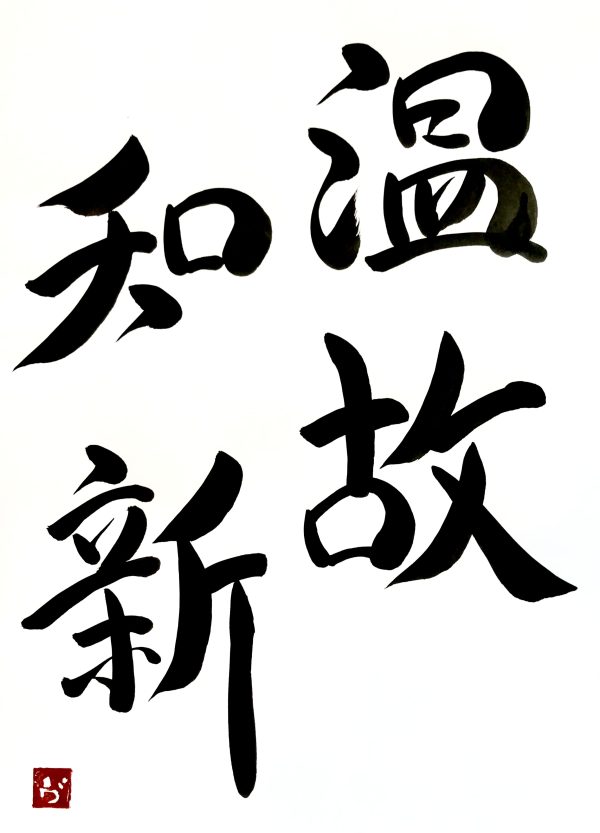
The kanji: 温 = warm 故 = circumstance 知 = knowledge 新 = new This 4-character idiom means “learning from the past to gain new knowledge”. “Knowledge” is represented by the third kanji 知, as in the Japanese verb 知る (shiru) “to know”. “New” is represented by the fourth kanji 新, as in the JapaneseContinueContinue reading “温故知新 (おんこちしん)”learning from the past to gain new knowledge””
以心伝心(i-shin-den-shin)“communication without words”
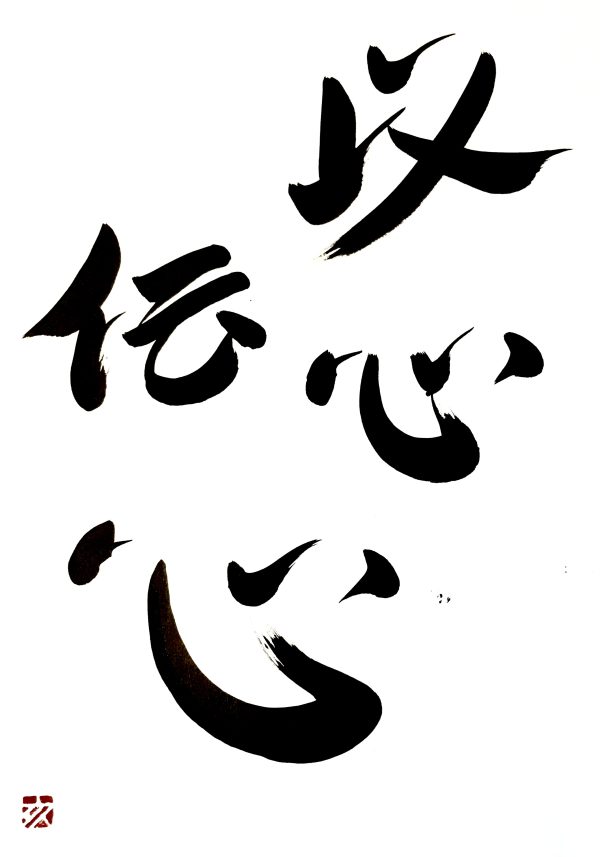
The kanji: 以 = by 心 = heart 伝 = to communicate 心 = heart This idiom refers to heart-to-heart communication; speaking without words. It is often said that the typical Japanese communication style has a tendency to leave certain things unsaid, to not say every word, and to read between the lines. “i-shin-den-shin” capturesContinueContinue reading “以心伝心(i-shin-den-shin)“communication without words””
一日一歩 (ichi-nichi-ip-po) “Moving forwards, one step every day”

一 = one 日 = day 一 = one 歩 = step This is a special kind of Japaneses idiom known as a 四字熟語 (よじじゅくご、yo-ji-juku-go), or 4-character idiom. As the name suggests, these are idiomatic phrases made of 4 kanji characters. They often contain a small life lesson or moral message, similar to English sayingsContinueContinue reading “一日一歩 (ichi-nichi-ip-po) “Moving forwards, one step every day””
晴耕雨読 (sei-kō-u-doku) “in fine weather do work; when it’s rainy, read”
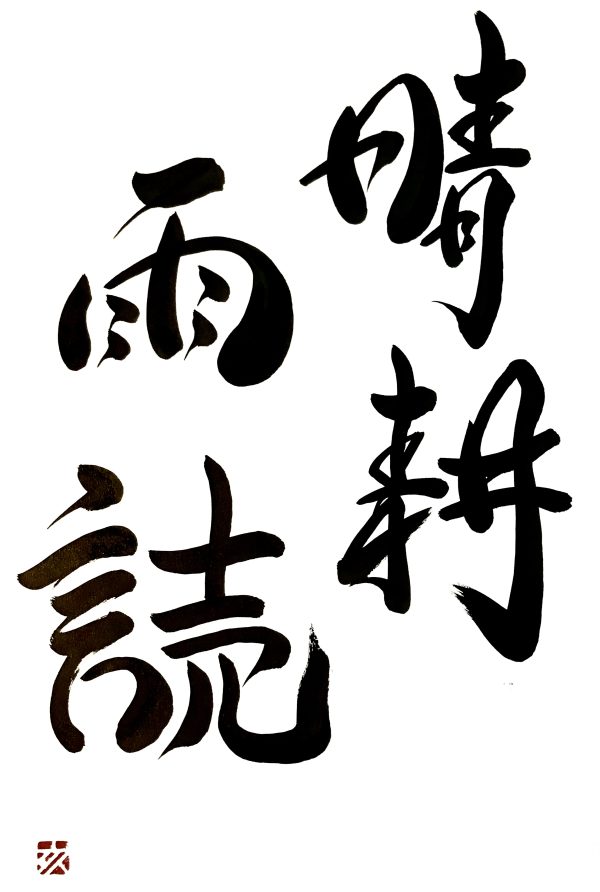
晴 = sunny 耕 = ploughing 雨 = rainy 読 = reading The message here seems to be to do everything at its proper time. Work when it’s sunny, and rest when it rains. This is a special kind of Japaneses idiom known as a 四字熟語 (よじじゅくご、yo-ji-juku-go), or 4-character idiom. As the name suggests, theseContinueContinue reading “晴耕雨読 (sei-kō-u-doku) “in fine weather do work; when it’s rainy, read””
夏雲奇峰 (natsu-gumo-ki-hou) “Summer clouds shaped like strange mountains”
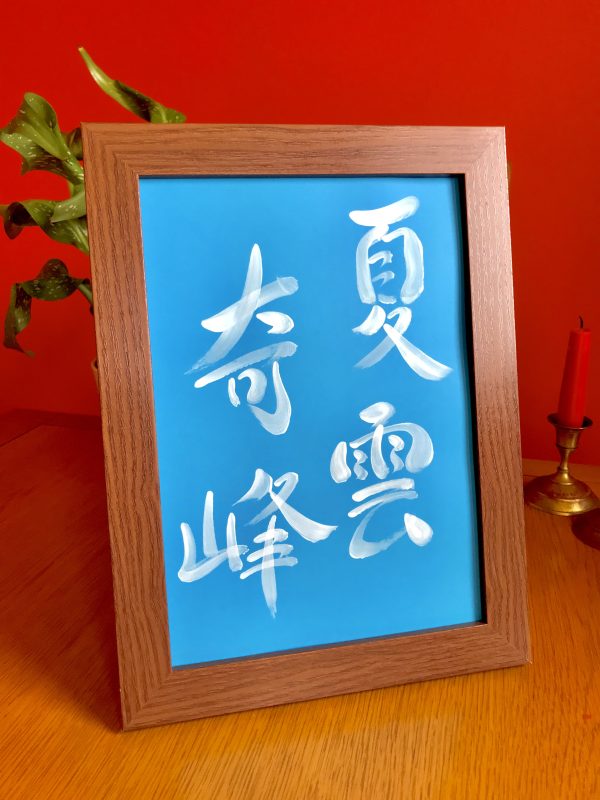
Some seasonal calligraphy specially for summertime! The kanji are: 夏 = summer 雲 = cloud(s) 奇 = strange 峰 = peak It references the white fluffy clouds of summer which take many different shapes, including strange mountains! This phrase is a special kind of Japaneses idiom known as a 四字熟語 (よじじゅくご、yo-ji-juku-go), or 4-character idiom. AsContinueContinue reading “夏雲奇峰 (natsu-gumo-ki-hou) “Summer clouds shaped like strange mountains””
外柔内剛 (gai-jū-nai-go) “Soft outside, hard inside”
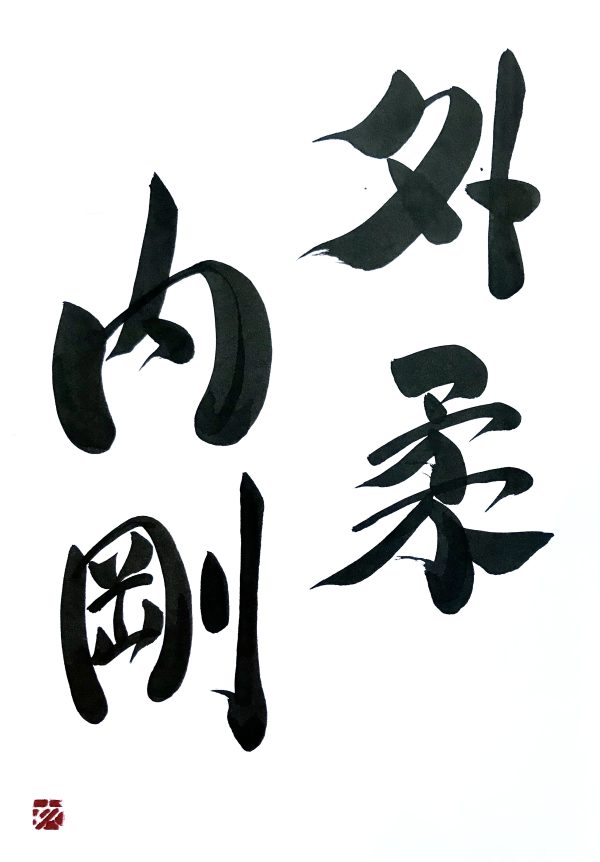
This expression refers to someone who is soft and gentle on the outside, but inwardly tough and resilient. Similar to the English expression “steel in a velvet glove”. This is a special kind of Japaneses idiom known as a 四字熟語 (よじじゅくご、yo-ji-juku-go), or 4-character idiom. As the name suggests, these are idiomatic phrases made of 4ContinueContinue reading “外柔内剛 (gai-jū-nai-go) “Soft outside, hard inside””
 Calligraphy by Vicky