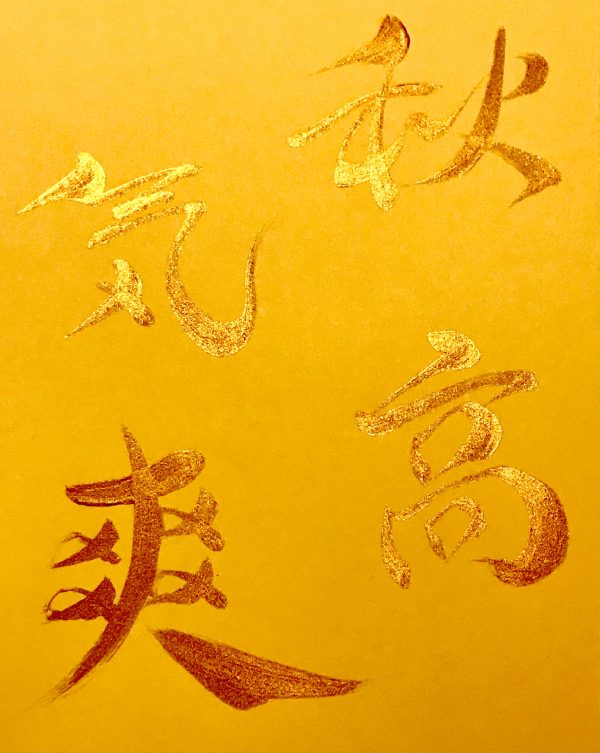
秋 = autumn 高 = high (refers to the sky here) 気 = air 爽 = refreshing
Tag Archives: Japanese language
一葉知秋 (ichi-yō-chi-shū) “from just one leaf one can know that autumn has come”
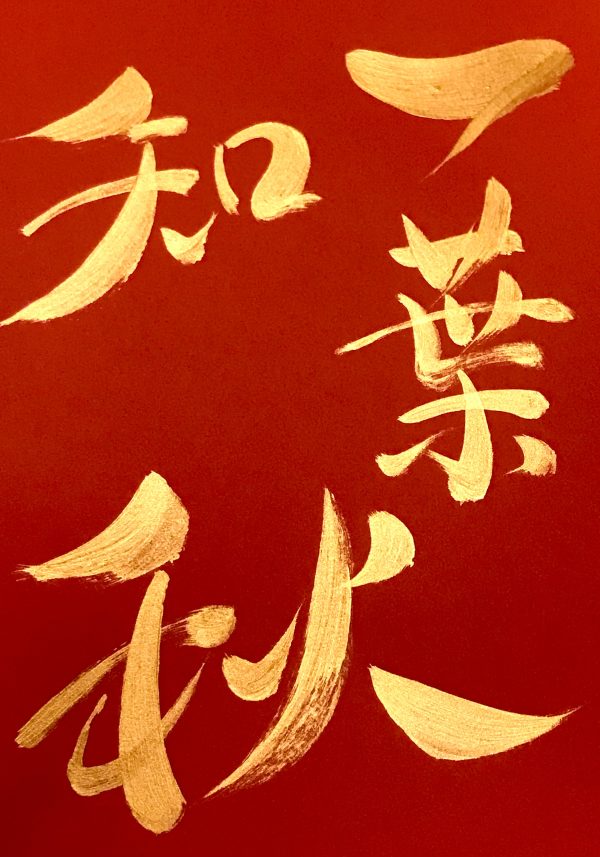
一 = one 葉 = leaf 知 = to know 秋 = autumn This phrase is about understanding the essence, changes, or decline of things from noticing slight signs or phenomena. It refers to realising the arrival of autumn by observing a single leaf fall.
霜月 (shimotsuki) “November” (archaic) (literally “the month of frost”)
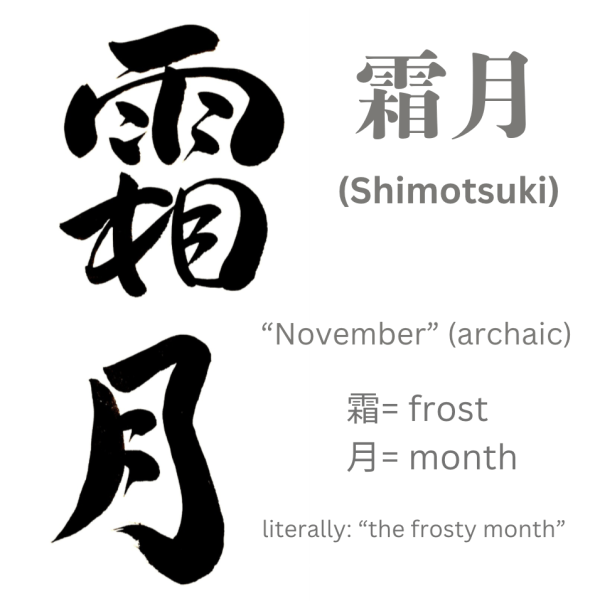
Like many countries, Japan uses a 12-month calendar. The names are very simple. January is literally “Month one”, February is “Month two”, etc: 一月 = January 二月 = February However, before the Meiji Restoration (mid-1800s) it was common to use an older 12-month system. These months’ names referenced the weather and the seasons (similar toContinueContinue reading “霜月 (shimotsuki) “November” (archaic) (literally “the month of frost”)”
花火(hanabi) “fireworks”
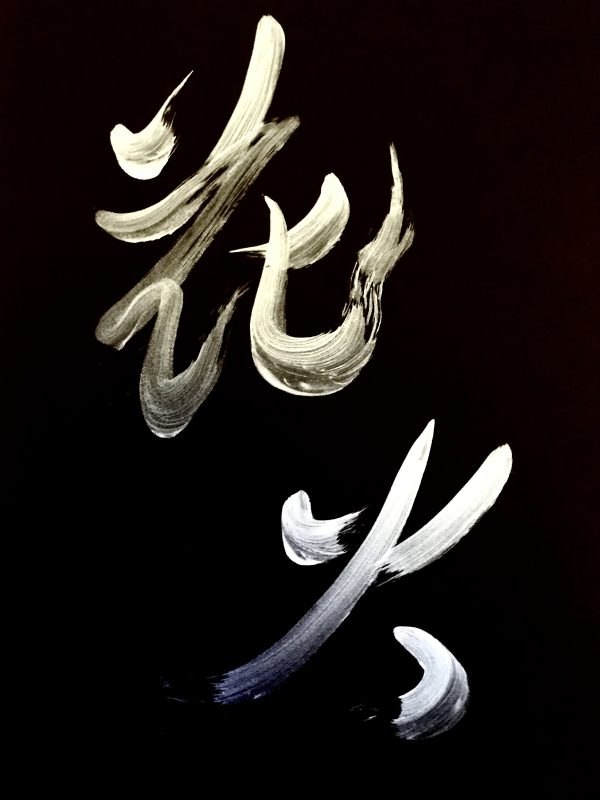
Like many celebrations across the world, fireworks often play a part in Japanese festivities. In Japan, they are most commonly associated with summer festivals. I chose to write this word because in my home country of the UK it was Bonfire Night (Guy Fawkes’ Night) on November 5th. This night marks the anniversary of aContinueContinue reading “花火(hanabi) “fireworks””
文化 (bunka) “culture”
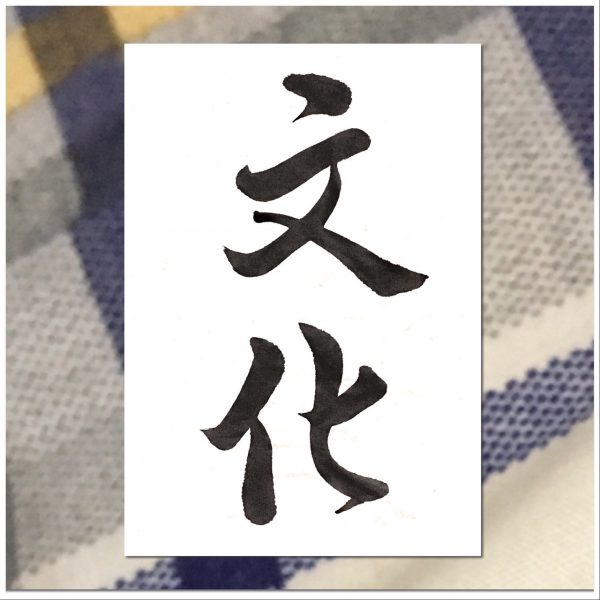
November 3rd is “Culture Day” in Japan. Japan has roughly 20 national holidays, which is about double the number in other developed nations. The holidays range from seasonal (Spring and Autumn Equinoxes are observed as holidays) to the societal (“Respect for the Elderly Day”), the Imperial (the Emperor’s birthday), the Patriotic (“Japanese National Foundation Day”)ContinueContinue reading “文化 (bunka) “culture””
ウサギちゃん (usagi-chan) “bunny” 🐰(actually “bnuy”…. or maybe “bnuny”…???)
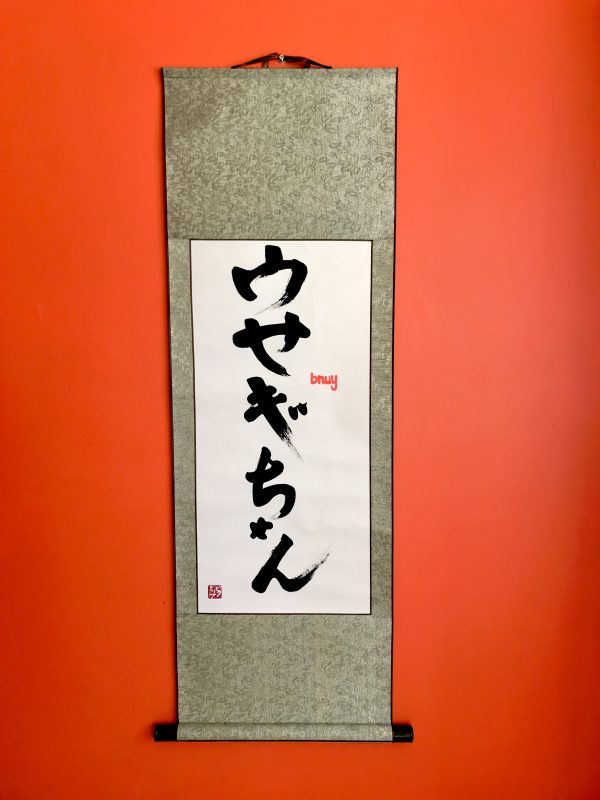
This was a commission for the client to give as a gift to a friend who likes the word “bunny”… but often intentionally misspells it “bnuy” or “bnuny”. I had to think how to interpret an English misspelling in Japanese. Eventually I came up with the following solution: “rabbit” = 「ウサギ」 (“usagi”) 2. Putting 「ちゃん」ContinueContinue reading “ウサギちゃん (usagi-chan) “bunny” 🐰(actually “bnuy”…. or maybe “bnuny”…???)”
物の哀れ (mono-no-awaré)
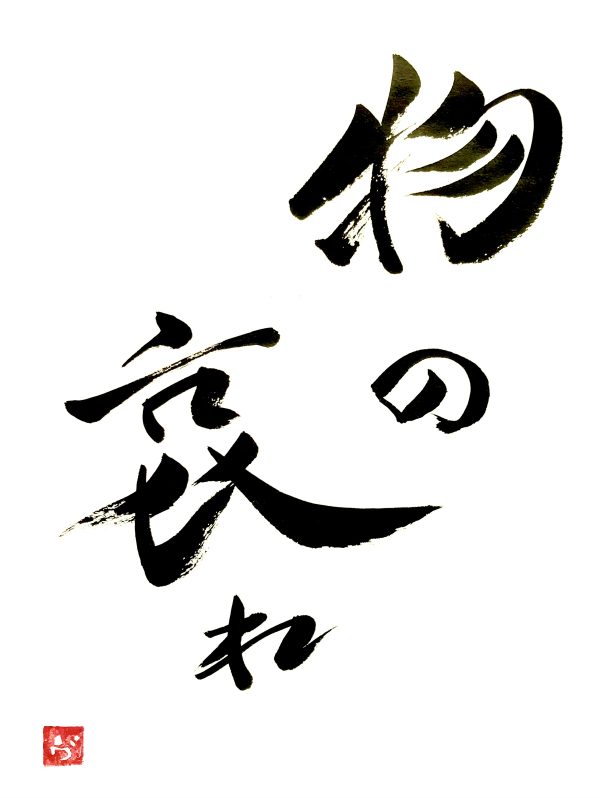
“the bittersweet realisation of the ephemeral nature of all things” A very Japanese phrase 🙂
積読 (tsun-doku) “The habit of acquiring books but letting them pile up unread” 📚
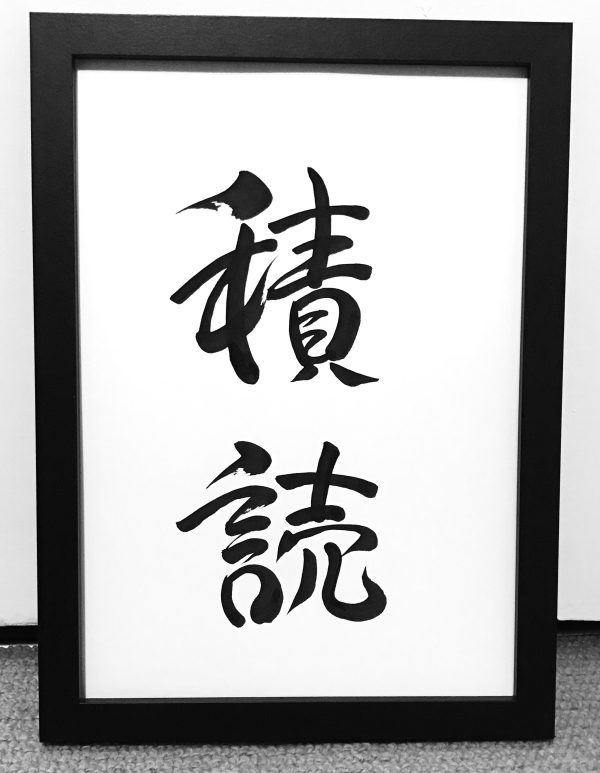
The kanji: 積 Comes from 積んでおく(tsundéoku), meaning “to let something pile up”. 読 Comes from 読書 (dokusho), meaning “reading”. The above artwork was a commission for a book-lover 📚
光 (hikari) “light”
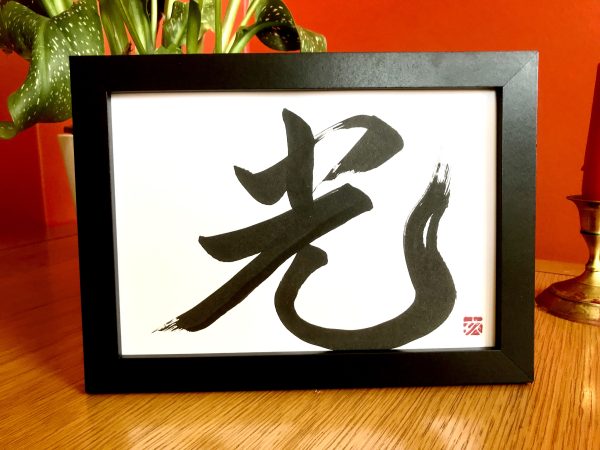
The above artwork is an original Japanese calligraphy work. It’s available from my Etsy store here. It’s A5 size and comes framed.
秋 (aki) autumn
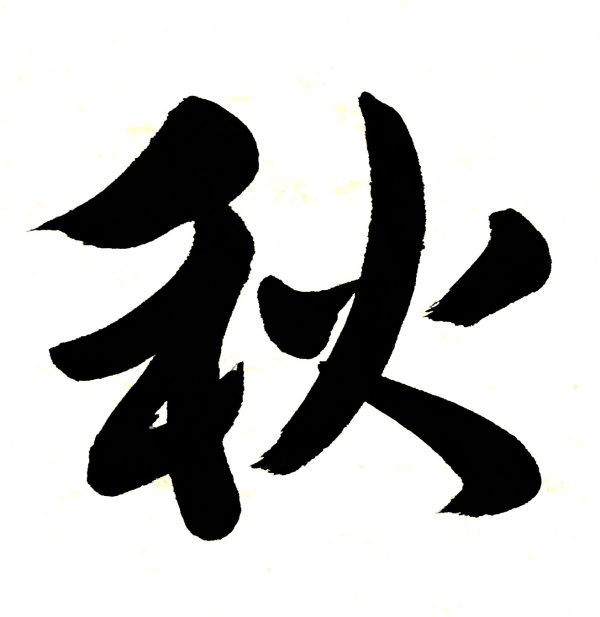
Anyone who’s lived in Japan will know that they have many, many national holidays. The autumn and spring equinoxes are national holidays too. Japanese people seem to really like acknowledging the changing of the seasons. Restaurant menus (even cheap places) will have autumn-themed menus with pumpkin, chestnuts and mushrooms, and many people enjoy going toContinueContinue reading “秋 (aki) autumn”
 Calligraphy by Vicky