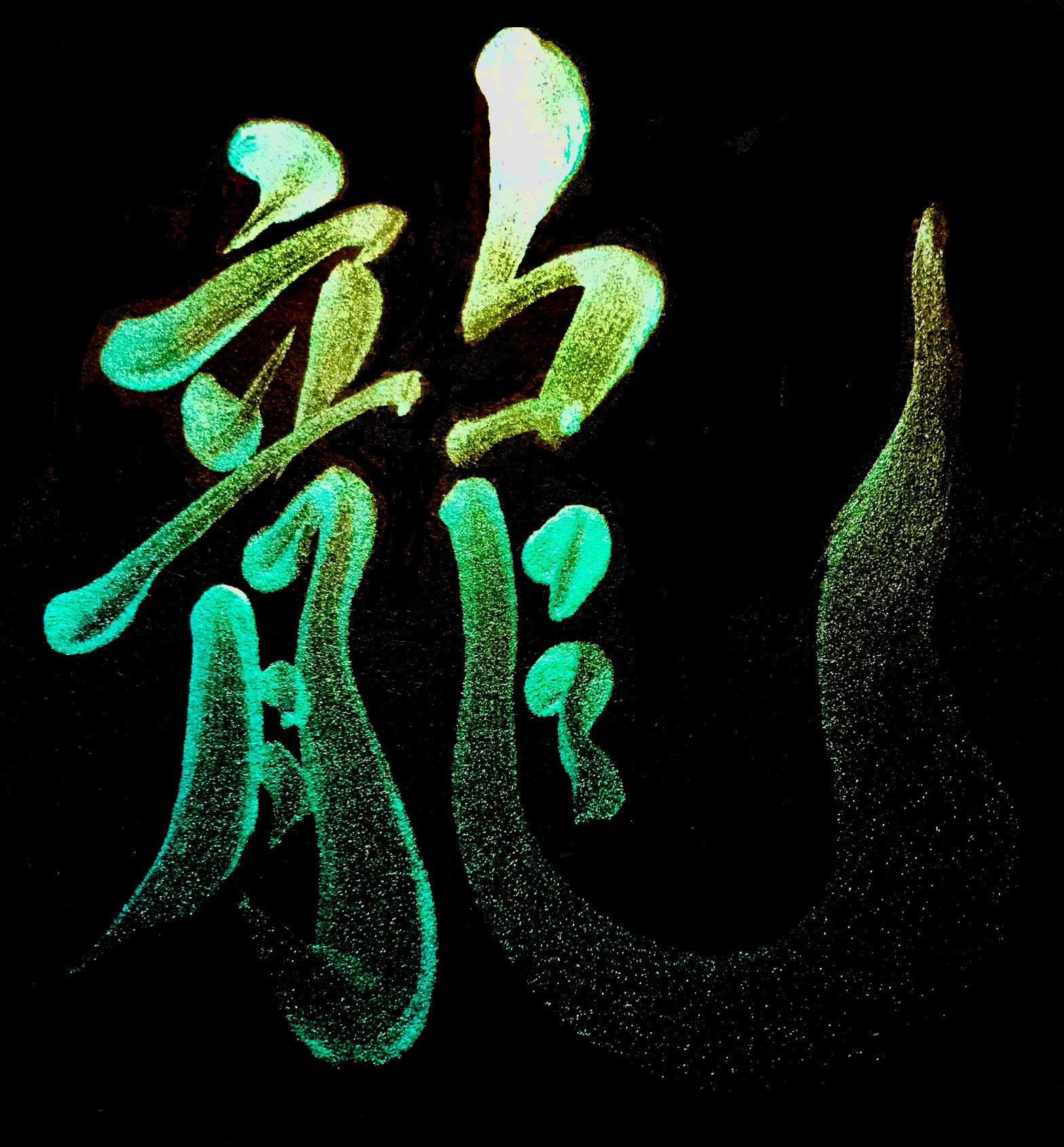
If you visit a shrine or temple in Japan, look up at the ceiling of the main room. Often there will be a painting of a dragon. One reason is that dragons represent the virtue of courage. Another, more superstitious, reason is that dragons are associated with the element of water, and so are aContinueContinue reading “龍 (ryū) “dragon””
Tag Archives: japanese culture
恵 (megumi) “blessed”

“Megumi” is often used to describe a situation that is full of something positive. For example, “a field full of flowers” could be said like this: 「花に恵まれたこの野」 (literally, “a field blessed with flowers”). It’s also a fairly common girls’ name. The above artwork is available on my Etsy shop here. WordPress users get 15% offContinueContinue reading “恵 (megumi) “blessed””
恵 (megumi) “blessed”

“Megumi” is often used to describe a situation that is full of something positive. For example, “a field full of flowers” could be said like this: 「花に恵まれたこの野」 (literally, “a field blessed with flowers”). It’s also a fairly common girls’ name.
ウサギちゃん bunny (actually “bnuy”…. or maybe “bnuny”…???)
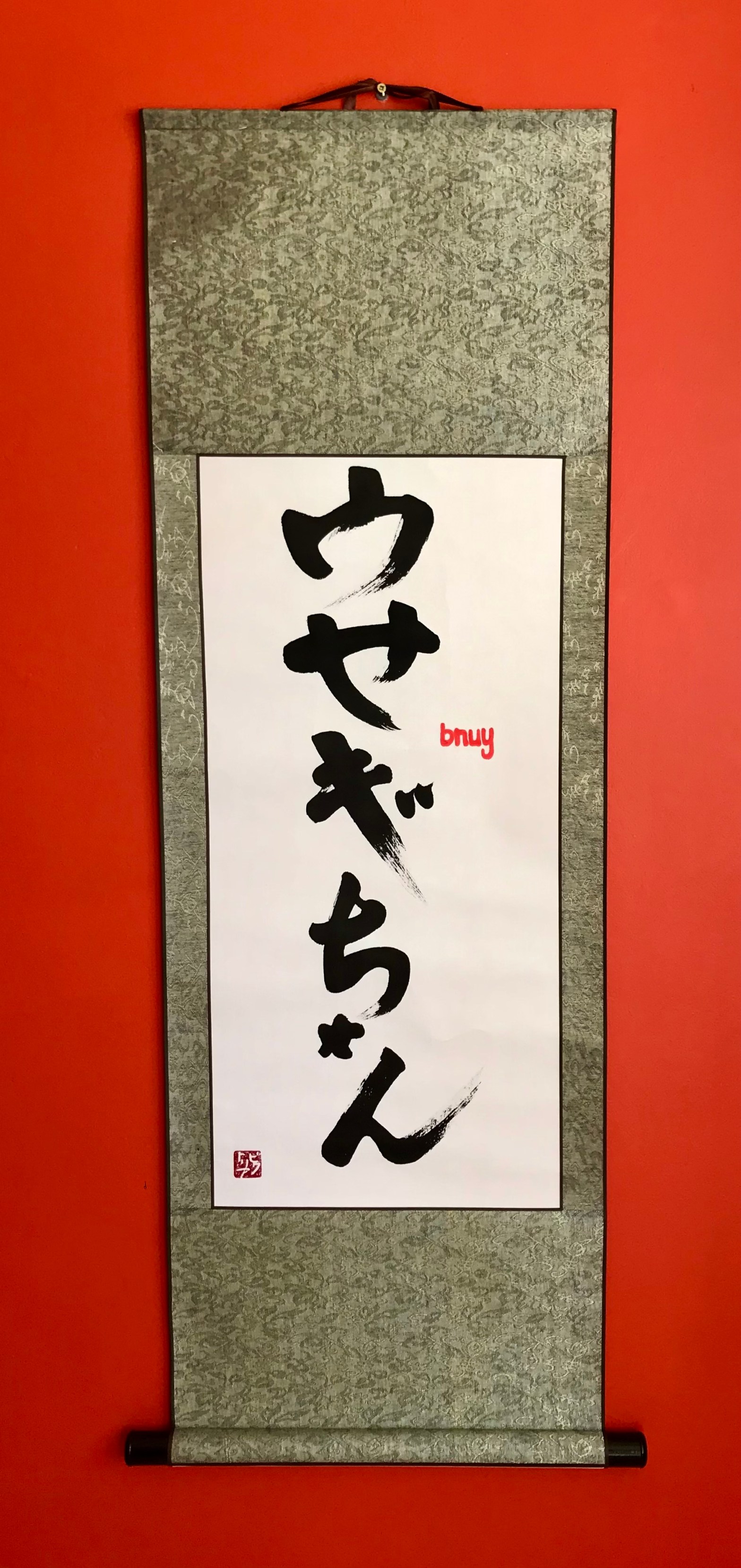
A friend commissioned me to create a Japanese calligraphy piece as a gift for someone who likes the word “bunny”, but always intentionally misspells it “bnuy” or “bnuny”. The question is, how to interpret an English misspelling in Japanese? My solution is as follows: “rabbit” = 「ウサギ」 (“usagi”) 2. Putting 「ちゃん」 (“chan”) after it makesContinueContinue reading “ウサギちゃん bunny (actually “bnuy”…. or maybe “bnuny”…???)”
忠義 (chūgi) “responsibility” – the seventh virtue of 武士道 (bushidō)
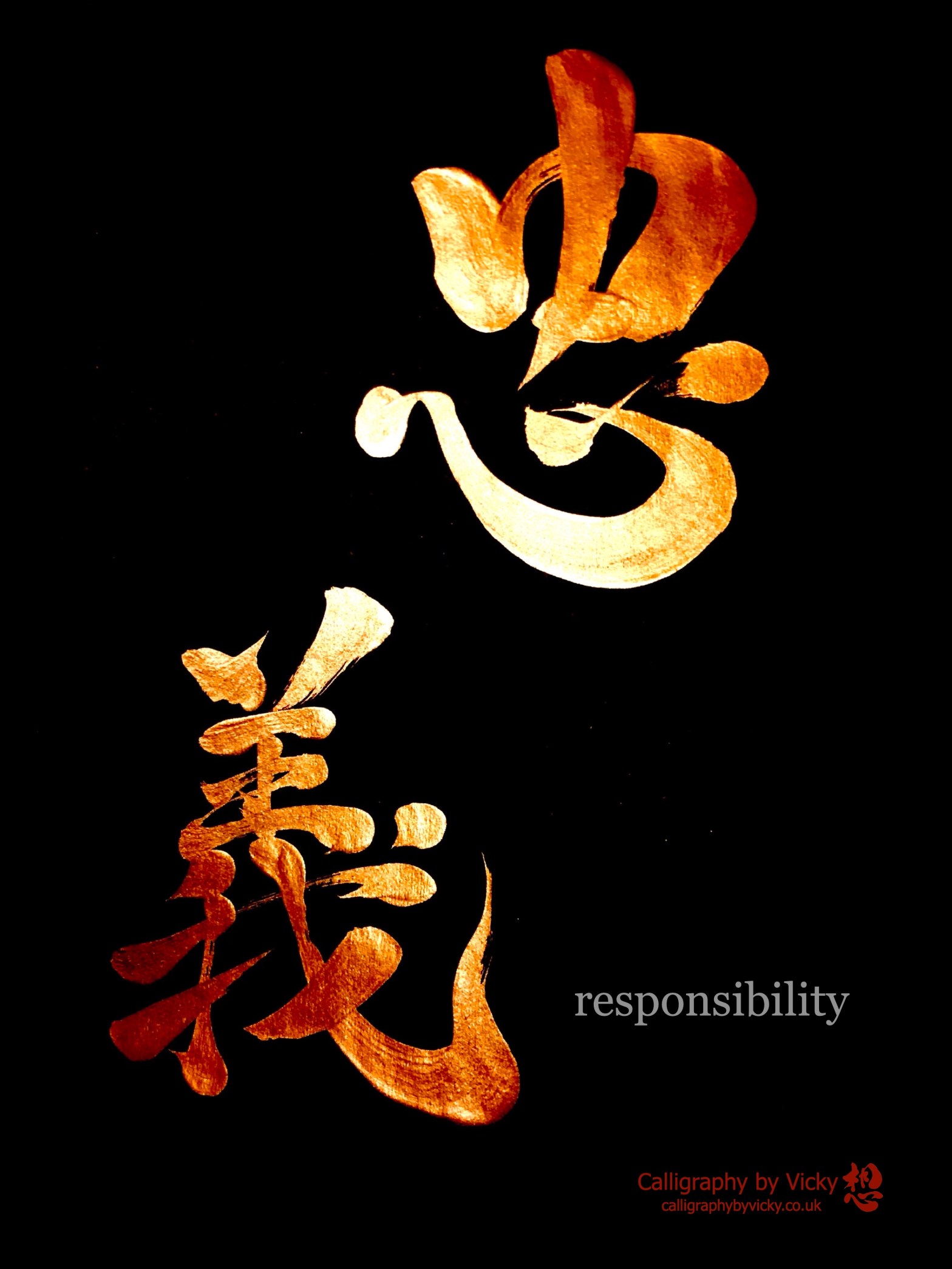
The seventh virtue is “The Duty of Loyalty”, which I have translated as “responsibility”.
In its simplest form, “the Duty of Loyalty” refers to the fierce loyalty that samurai had to their lords and their clan.
I have translated this as “responsibility” because this implies far more than just standing by one’s superiors and coworkers.
We are all part of something bigger than ourselves, be it a family group, a company, or wider society. We all have responsibilities to others. “Responsibility” also means being responsible to oneself and any projects or undertakings that one has agreed to.
名誉 (meiyo) “reputation” – the sixth virtue of 武士道 (bushidō)
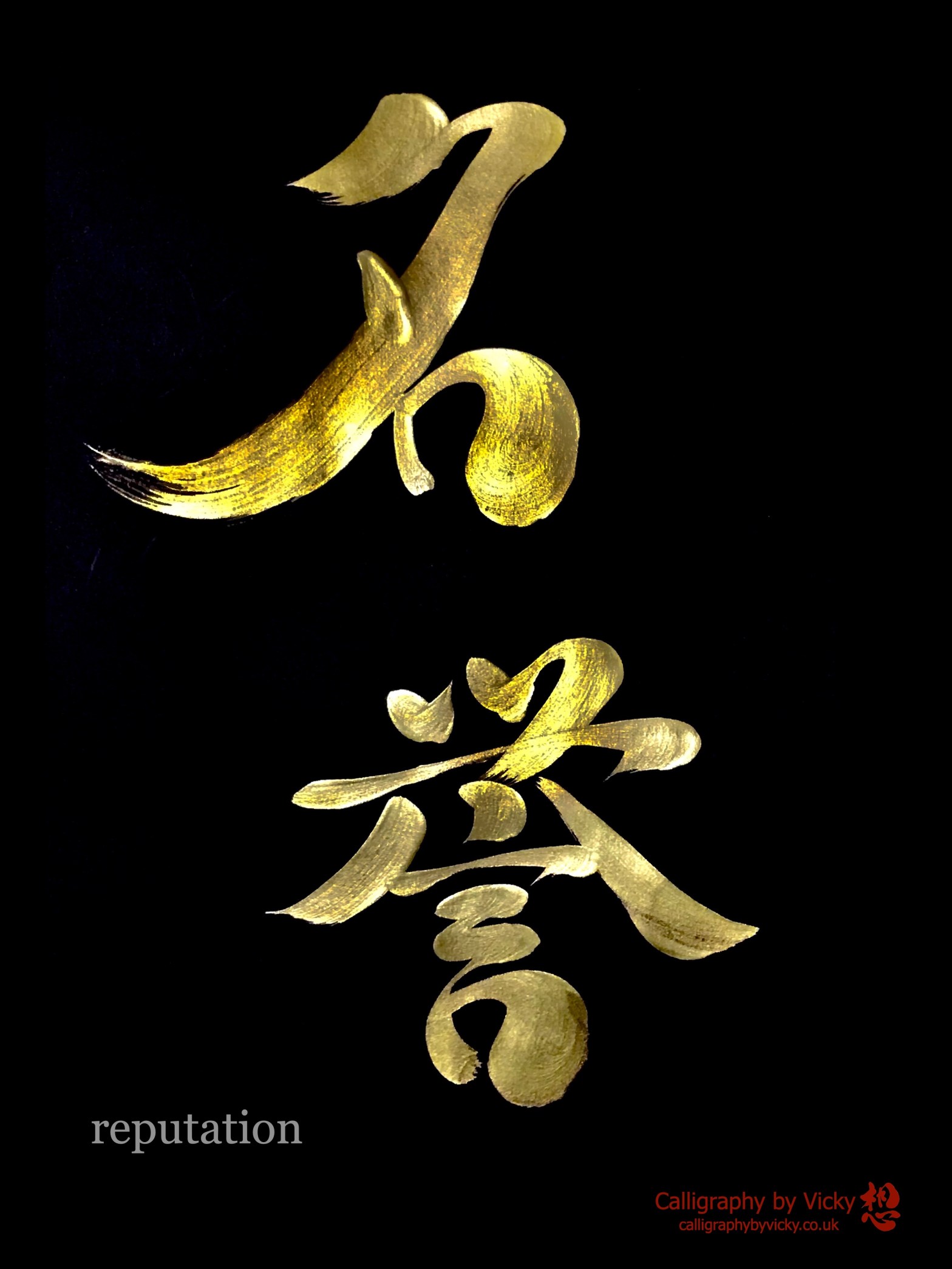
The sixth virtue is “Honour”, which I have translated as “reputation”.
In popular fiction, samurai value honour over life itself. If a samurai was captured in battle, the story goes, he was expected to kill himself rather than suffer the shame of defeat.
Even in modern Western societies, how we are viewed in the eyes of others is integral for successful friendships, business relationships, and other types of human connection.
I have “translated” this virtue as “reputation”, because this is more realistic and nuanced than dividing actions into either “honourable” or “shameful”.
誠 (makoto) “sincerity” – the fifth virtue of 武士道 (bushidō)
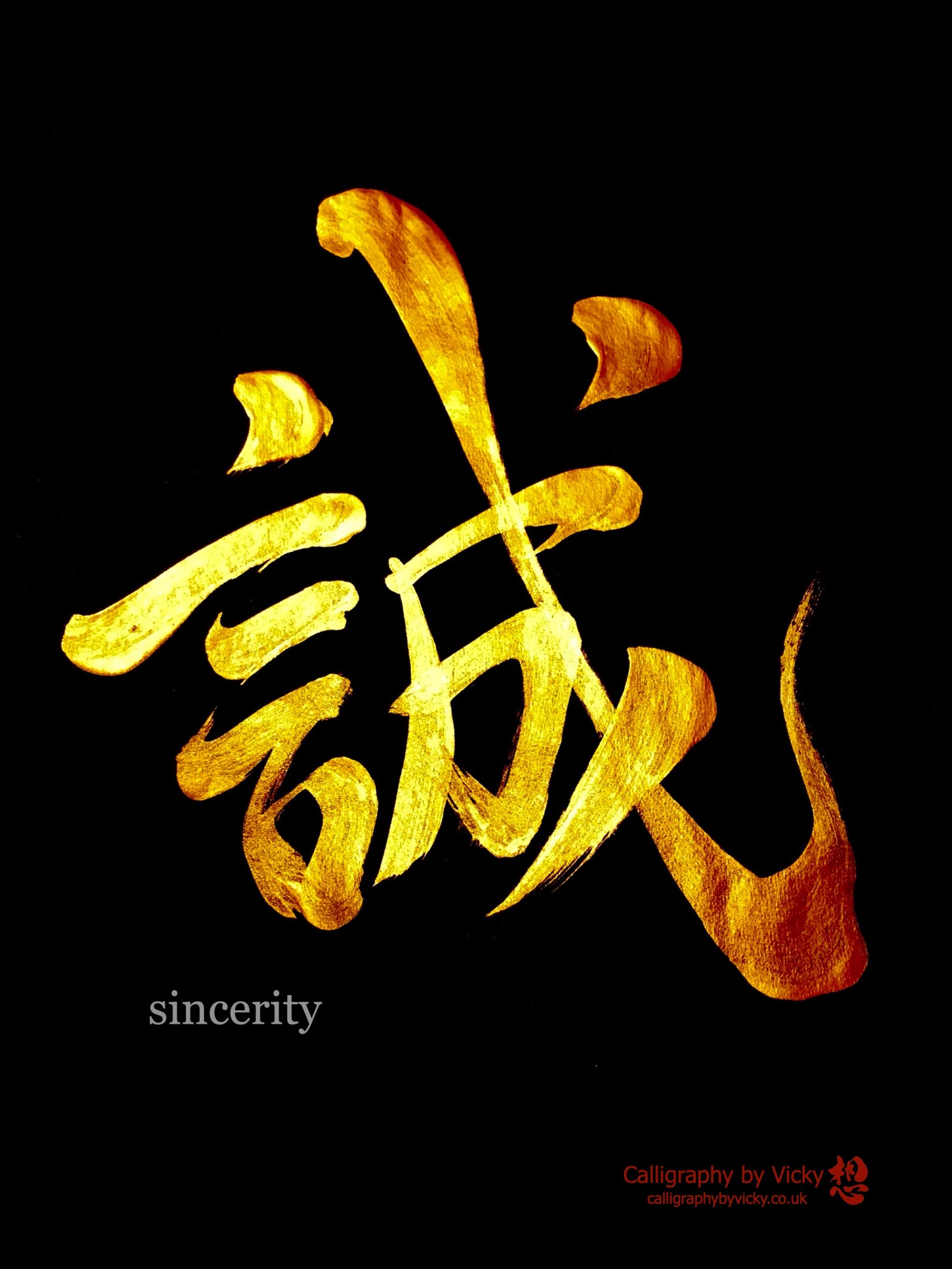
The fifth virtue is “Veracity or Truthfulness”, which I have translated as “sincerity”, for reasons explained below.
These 8 virtues were first mentioned in Nitobe Inazao’s 1899 book “Bushido: the Soul of Japan”.
Nitobe writes: “Lying or equivocation were deemed equally cowardly…. Bushi no ichi-gon—the word of a samurai…. was sufficient guaranty of the truthfulness of an assertion. His word carried such weight with it that promises were generally made and fulfilled without a written pledge, which would have been deemed quite beneath his dignity.”
I have “translated” this as “sincerity”, which has the nuance of not only being honest per se but also of having honest intentions. Living so honestly that “keeping your word” is not even an issue requires consciously acting with sincerity. In this way all of your words and actions are coloured with 礼 (rei) respect (see the previous entry).
礼 (rei) “respect” – the fourth virtue of 武士道 (bushidō)
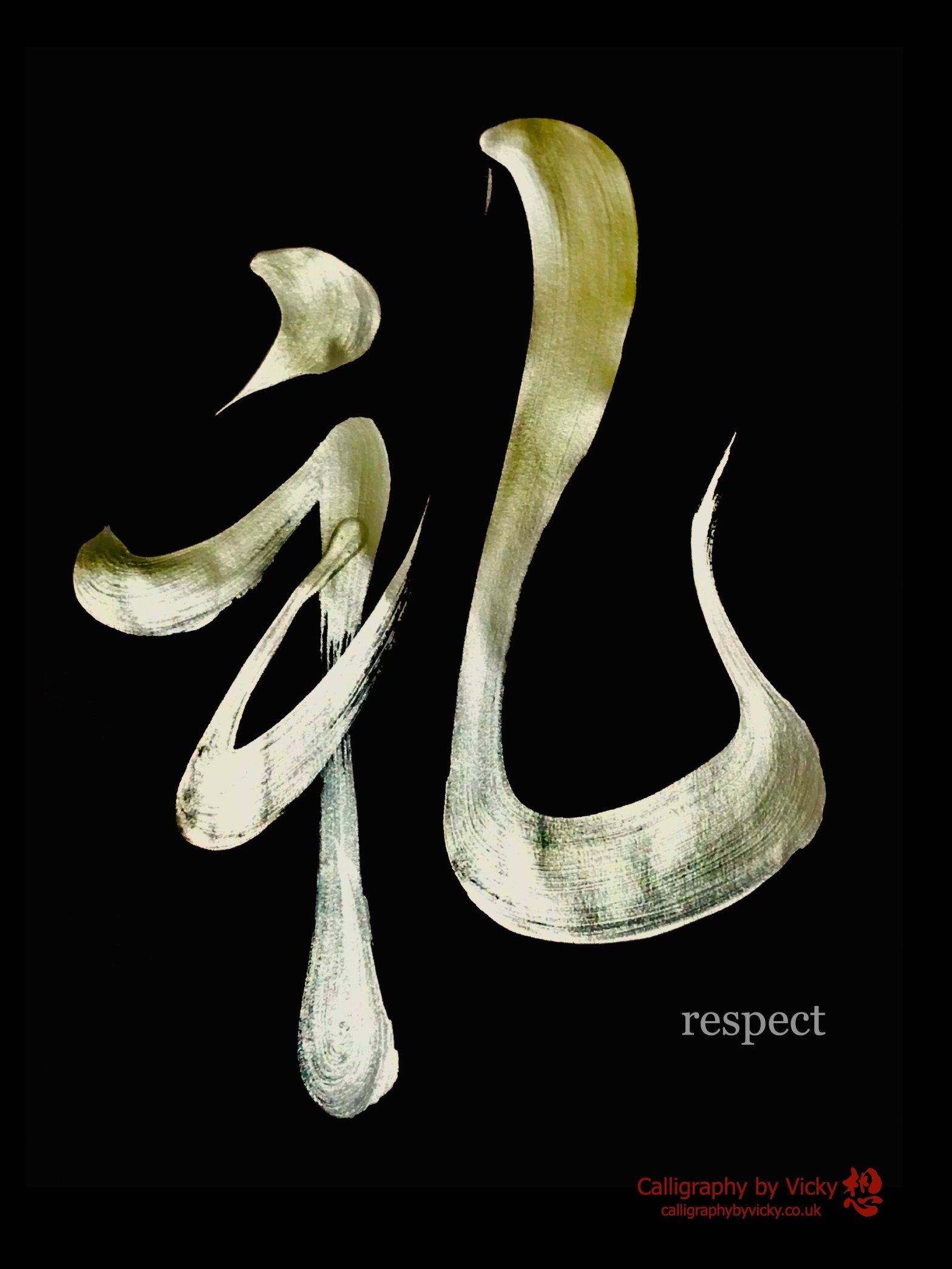
The fourth virtue is “Politeness”, which I have translated as “respect”, for reasons explained below.
These 8 virtues were first mentioned in Nitobe Inazao’s 1899 book “Bushido: the Soul of Japan”.
Nitobe states that the “courtesy and urbanity of manners which has been noticed by every foreign tourist as a marked Japanese trait” is often criticised by foreigners as “absorbing too much of our thought and in so far a folly to observe strict obedience to it.”
He defends his countrymen by asserting that “Politeness will be a great acquisition, if it does no more than impart grace to manners; but its function does not stop here. For propriety, springing as it does from motives of benevolence and modesty, and actuated by tender feelings toward the sensibilities of others, is ever a graceful expression of sympathy.”
Hence, “politeness” is considered a way of showing sympathy and 仁 (jin) compassion (see the previous entry). In modern Western society, this would be termed “respect”, and indeed Nitobe says “Modesty and complaisance, actuated by respect for others’ feelings, are at the root of politeness”. (Italics mine).
仁 (jin) “compassion” – the third virtue of 武士道 (bushidō)
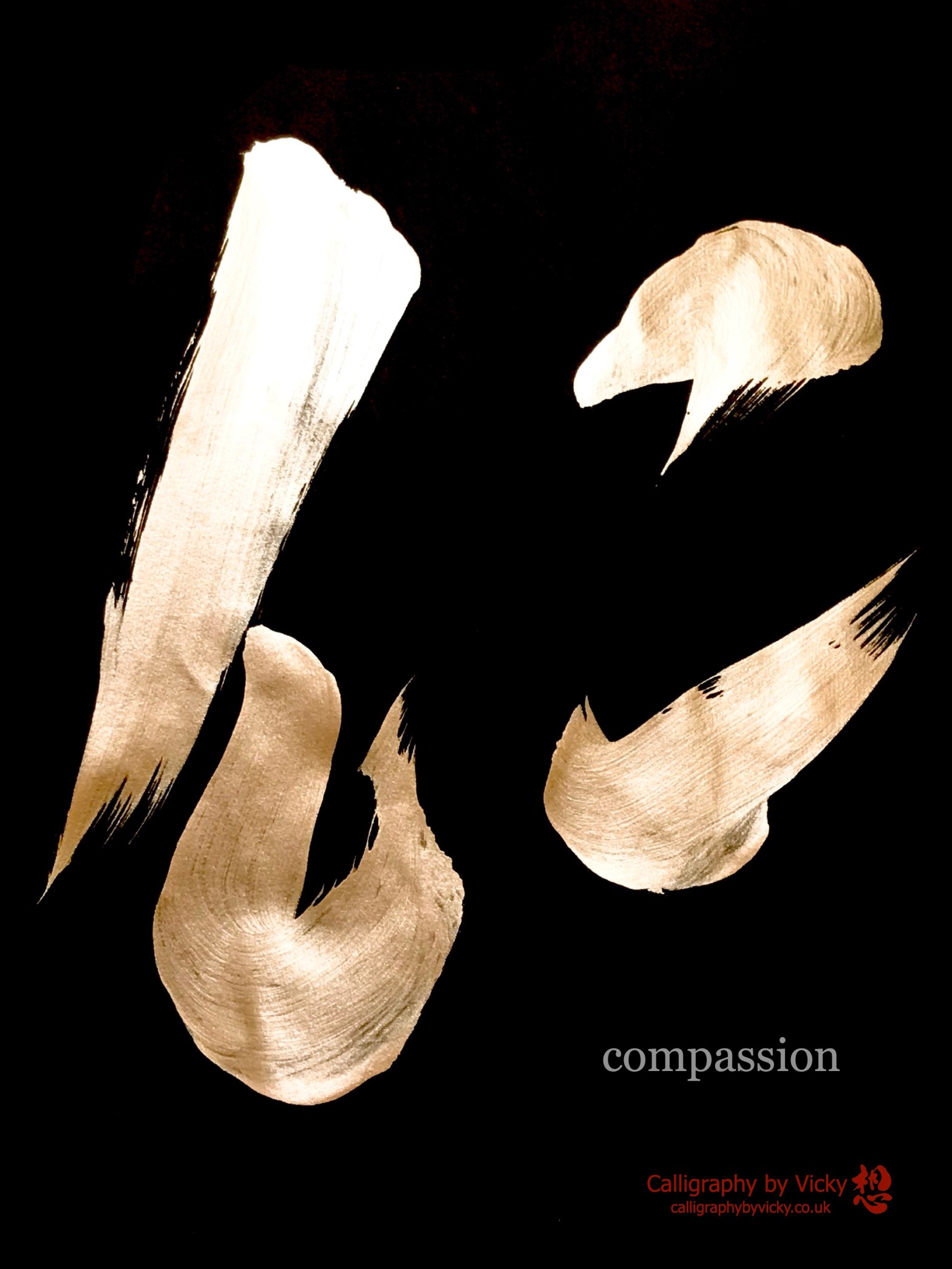
The third virtue is “Benevolence, the Feeling of Distress”, which I have translated as “Compassion”.
These 8 virtues were first mentioned in Nitobe Inazao’s 1899 book “Bushido: the Soul of Japan”.
Nitobe writes: “Benevolence to the weak, the downtrodden or the vanquished, was ever extolled as peculiarly becoming to a samurai.” He illustrates this by recounting an event from the 12th century in which a warrior slays an adolescent (he’s pretty much compelled to because if he doesn’t do it, his comrades will), and feels so bad about it afterwards that he becomes a wandering monk.
Make of this what you will, but it does illustrate that “benevolence” is more complex than mere kindness. For this reason I have translated this virtue as “compassion”, which is more than kindness; it also requires seeing the “larger picture”, and understanding the world from others’ points of view.
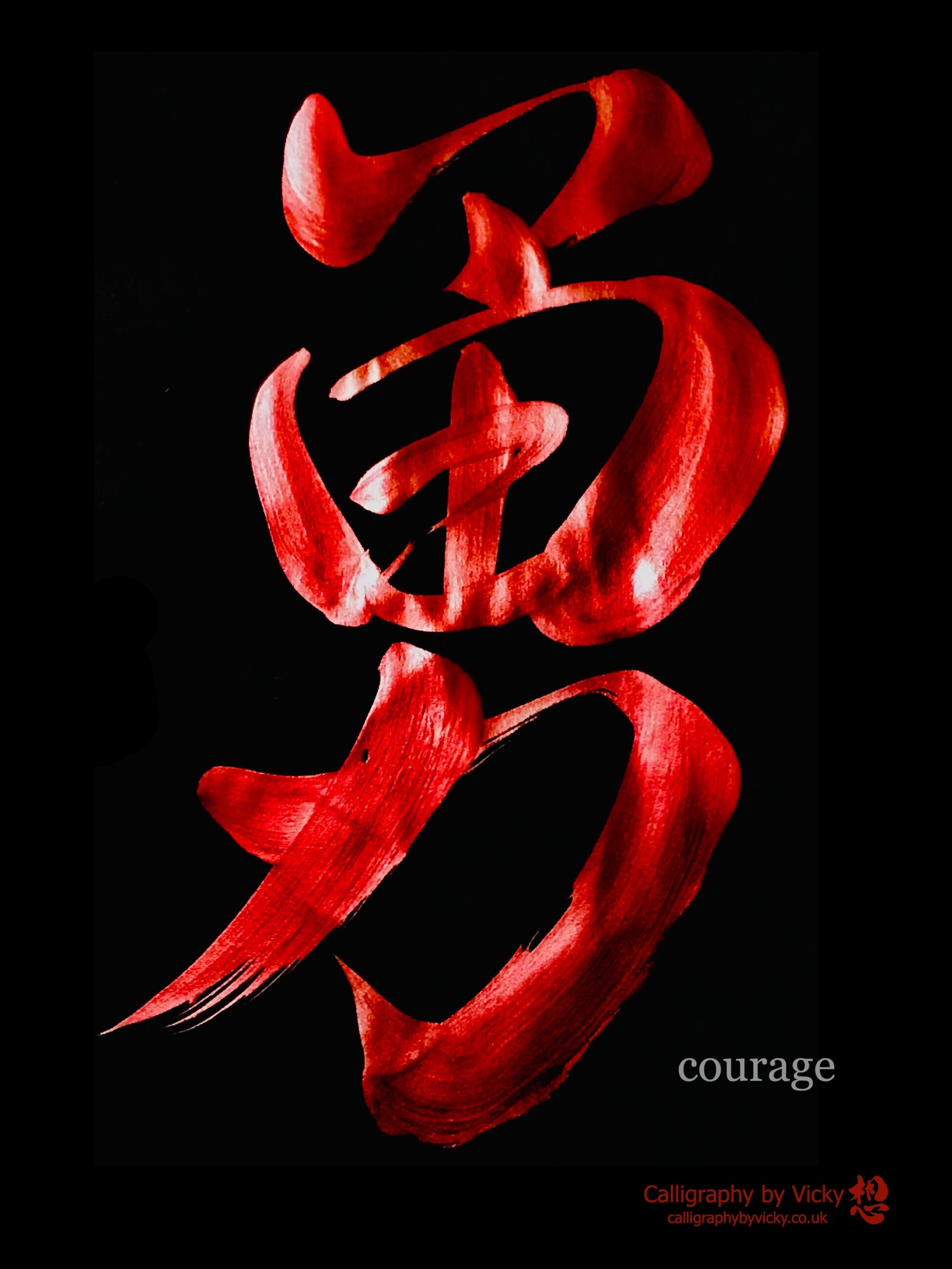
勇 (yū) “courage” – the second virtue of 武士道 (bushidō)
Bushidō comes with a handy list of 8 virtues that one can follow to lead one’s best and most noble life. You may not have been born a samurai, but you can still live like one by following this code.
The second virtue is “Courage, the spirit of Daring and Bearing”.
These 8 virtues were first mentioned in Nitobe Inazao’s 1899 book “Bushido: the Soul of Japan”.
He describes “courage” as “bearing” as well as “daring”, which suggests that courage has a broader meaning than merely courage in battle; it also includes enduring difficult situations.
He goes on to say: “Courage was scarcely deemed worthy to be counted among virtues, unless it was exercised in the cause of Righteousness.” This implies that true courage comes from knowing what is right, having the clear-sightedness to understand one’s own values and to hold by them, whatever the situation. It is necessary for courage to be informed by 義 (gi) integrity .
 Calligraphy by Vicky