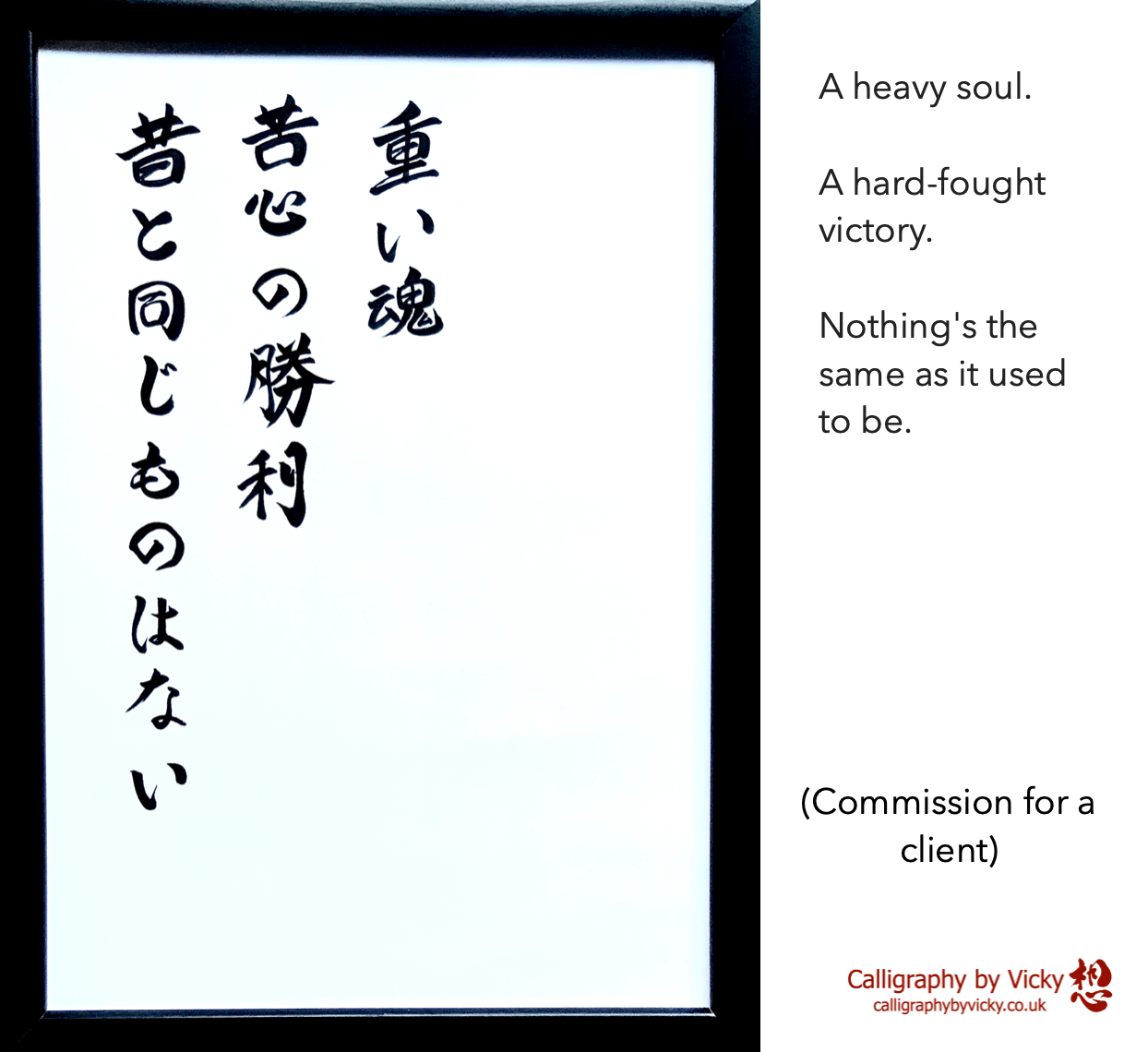
This was a commission for a client to give to his beloved as a Christmas present. It’s three lines from their favourite song. The song is originally in English, so before I wrote it I had the task of translating it into Japanese. I wanted my translation to: sound natural have the same “feel” asContinueContinue reading “重い魂… “A heavy soul…””
Tag Archives: 書道アート
菖蒲華 (Ayame hana saku) “Irises bloom”
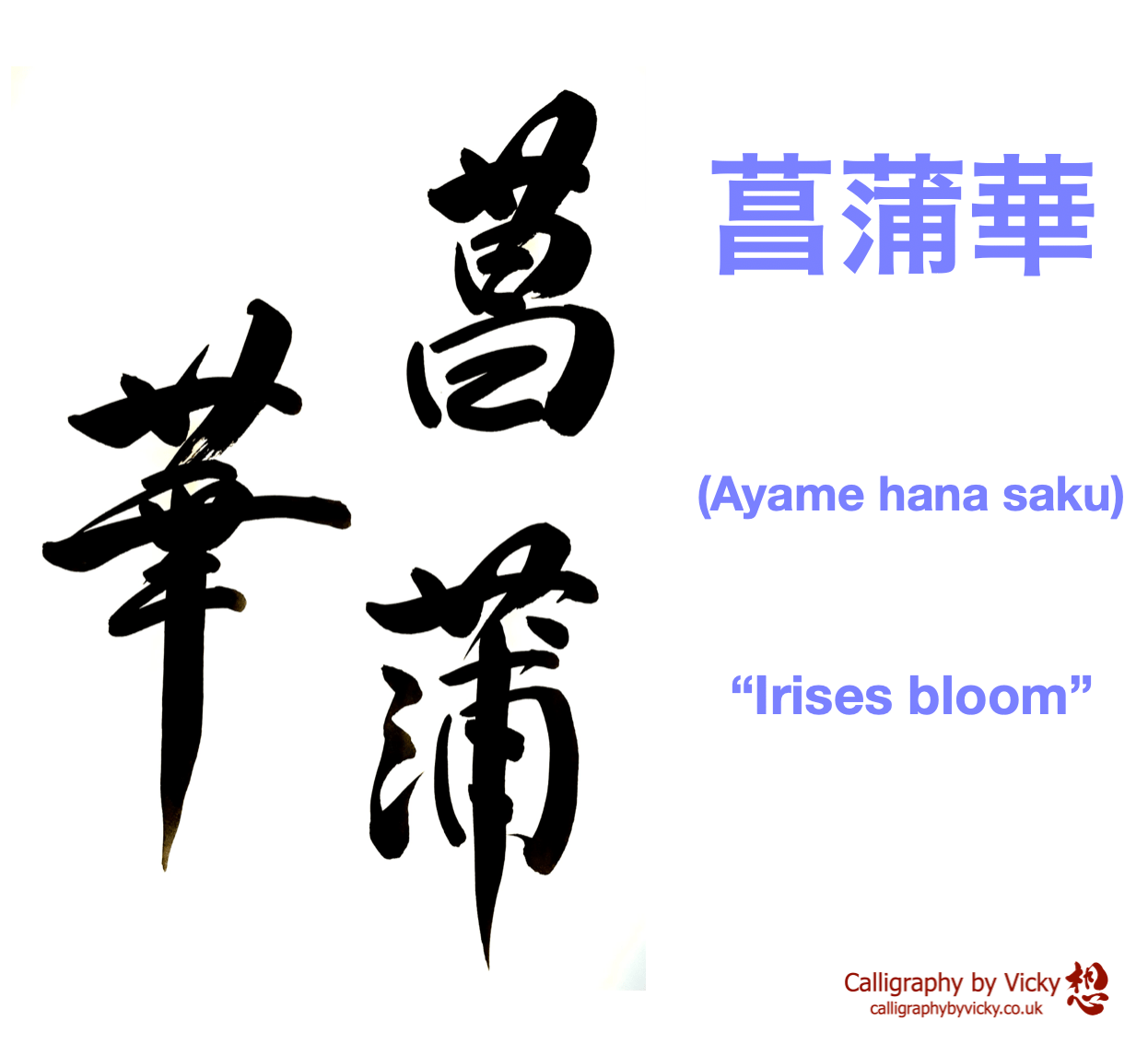
In ancient times Japanese people divided the year into 72 “micro-seasons”. These seasons were based on natural events such as the weather and appearance of various flora and fauna. Later this month it will be 菖蒲華, marking period when irises begin to bloom. You can find out more about Japanese micro-seasons here.
水無月 (mi-na-zuki) “The month of water”
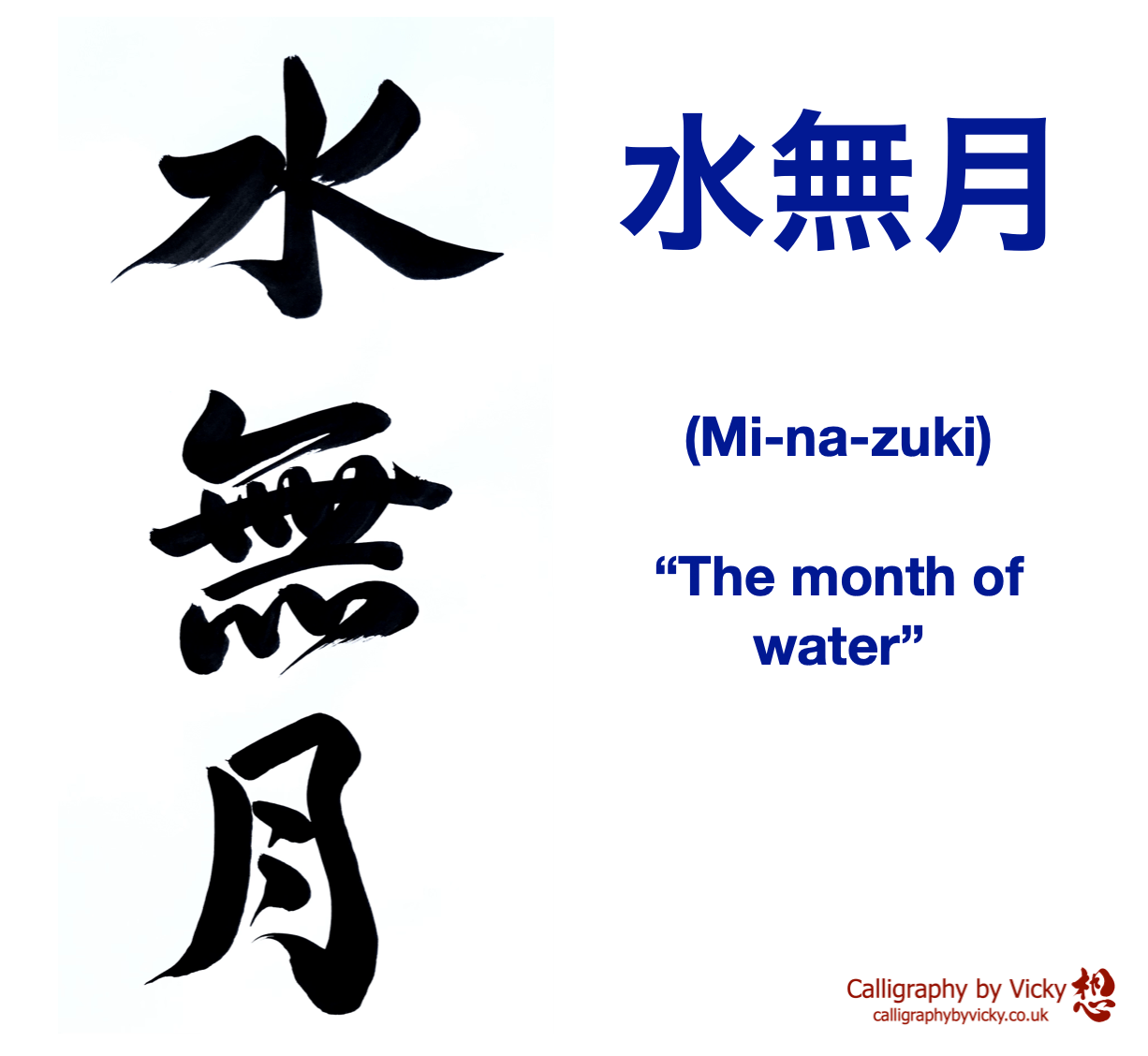
水 = water 無 = not any 月 = month I know, 無 means “not any”, not “of”. So why doesn’t this mean “the month with no water”? According to wikipedia, this 無 is used purely as an ateji, which is a kanji used for its pronunciation rather than its meaning. 無 is pronounced “na”,ContinueContinue reading “水無月 (mi-na-zuki) “The month of water””
皐月 (sa-tsu-ki) “May”
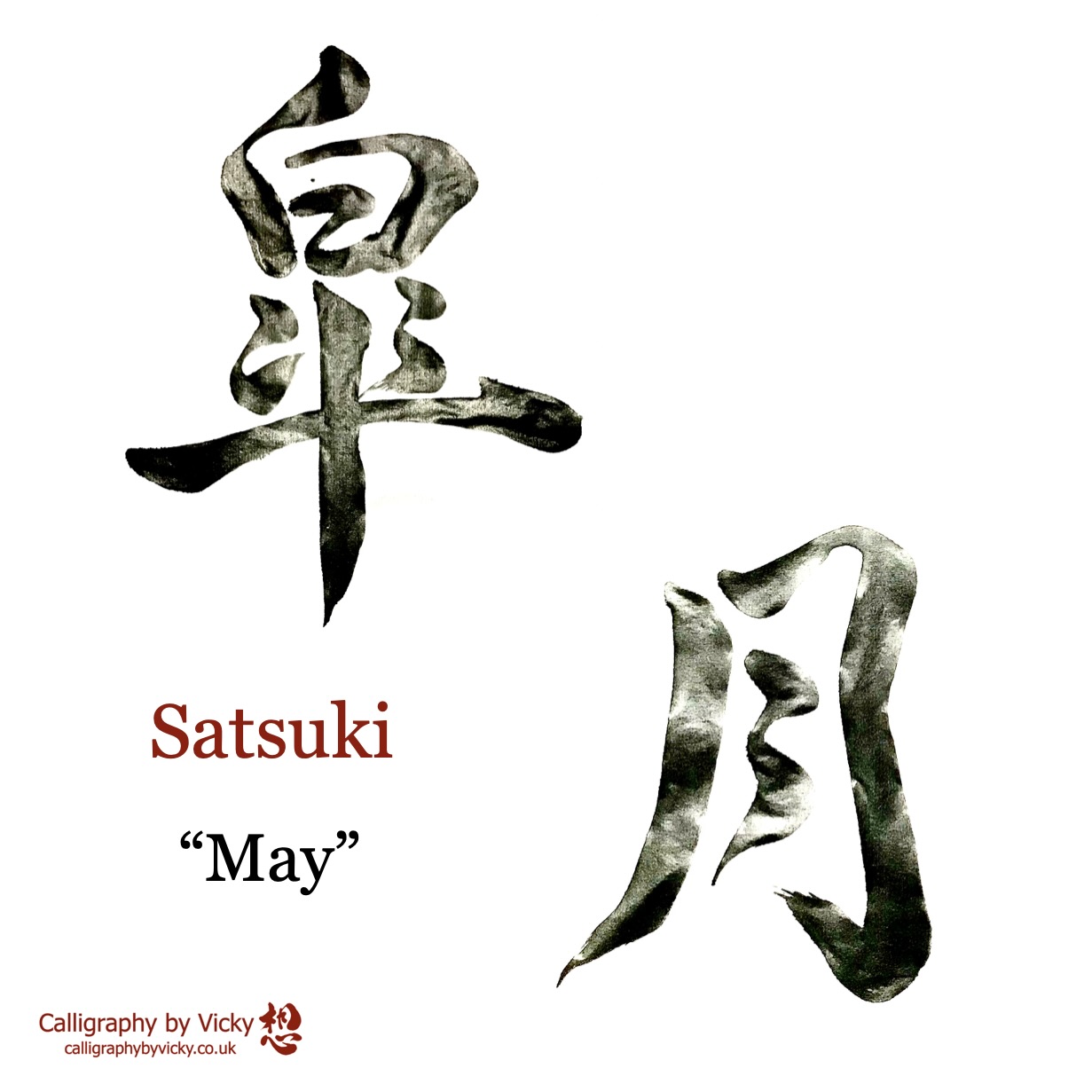
Like many countries, Japan uses a 12-month calendar. The names are very simple. January is 一月 (ichi-gatsu, literally “Month one”), February is 二月 (ni-gatsu, “Month two”), etc. However, before the Meiji Restoration (mid-1800s) it was common to use an older 12-month system. These months’ names referenced the weather and the seasons (similar to the FrenchContinueContinue reading “皐月 (sa-tsu-ki) “May””
臥虎藏龍 Crouching Tiger, Hidden Dragon
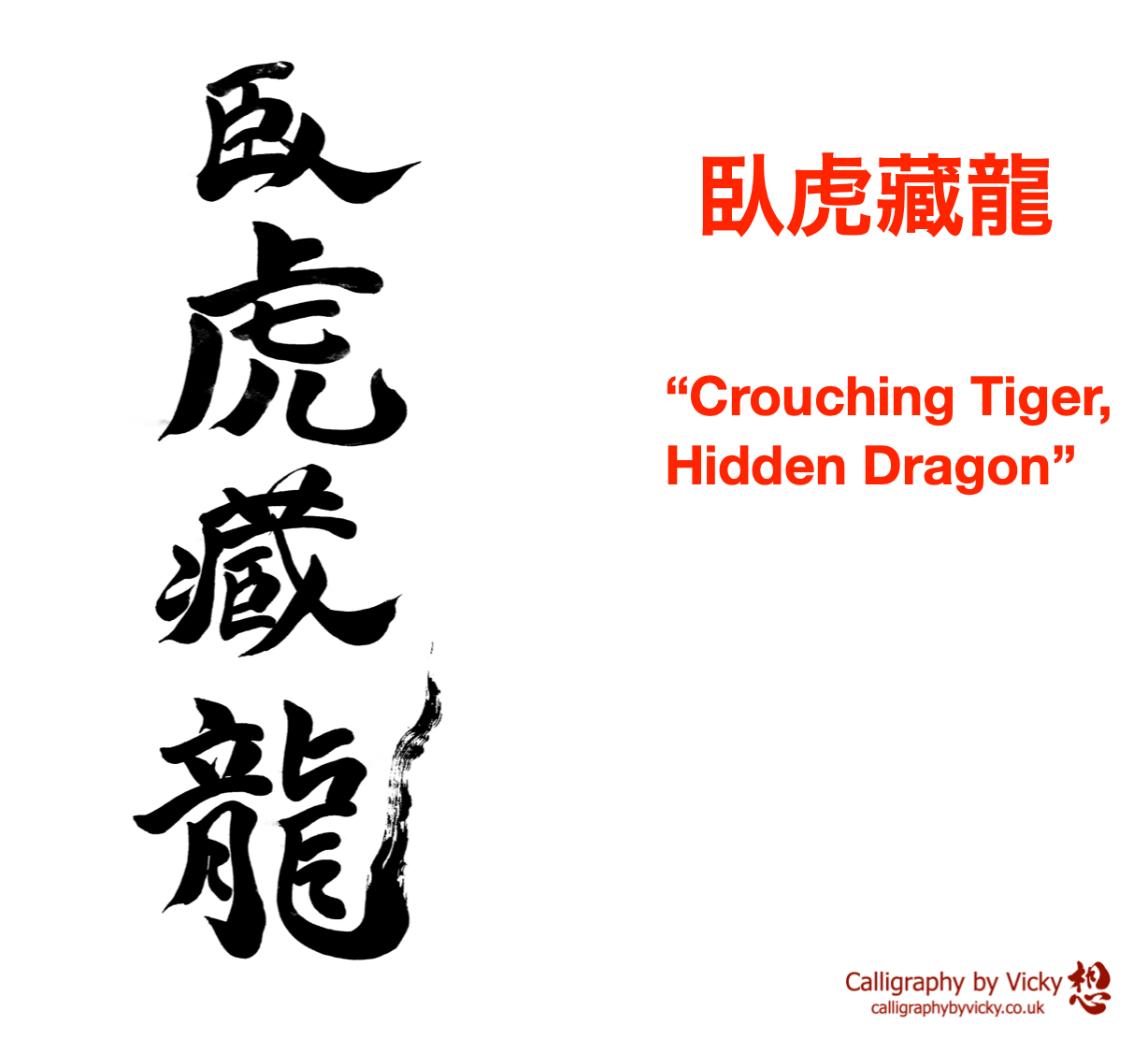
This is a Chinese idiom which describes a place that is full of talented or extraordinary people who remain hidden and undiscovered. It’s also the name of the 2000 Chinese martial arts movie starring the amazing Michelle Yeoh.
まこ “Mako”
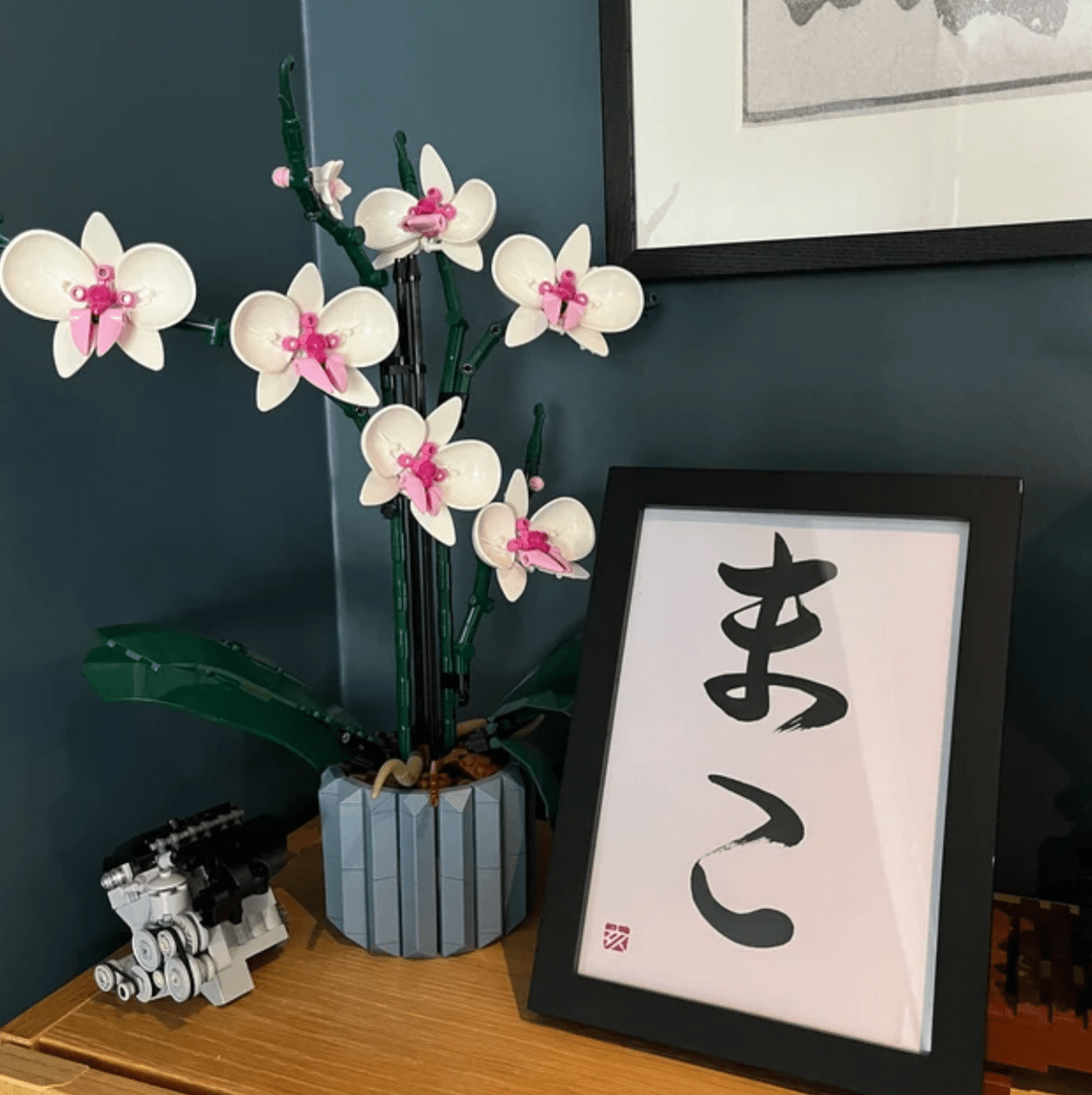
(image by client) I was very honoured to receive a commission to create this artwork. “Mako” is the name of the client’s beloved cat. I love cats >^^< The name “Mako” is the nickname of the Japanese actor Makoto Iwamatsu. Because it is a Japanese name, I decided to render it in hiragana. Hiragana isContinueContinue reading “まこ “Mako””
桜梅桃李 (o-bai-to-ri) “never compare yourself to others”
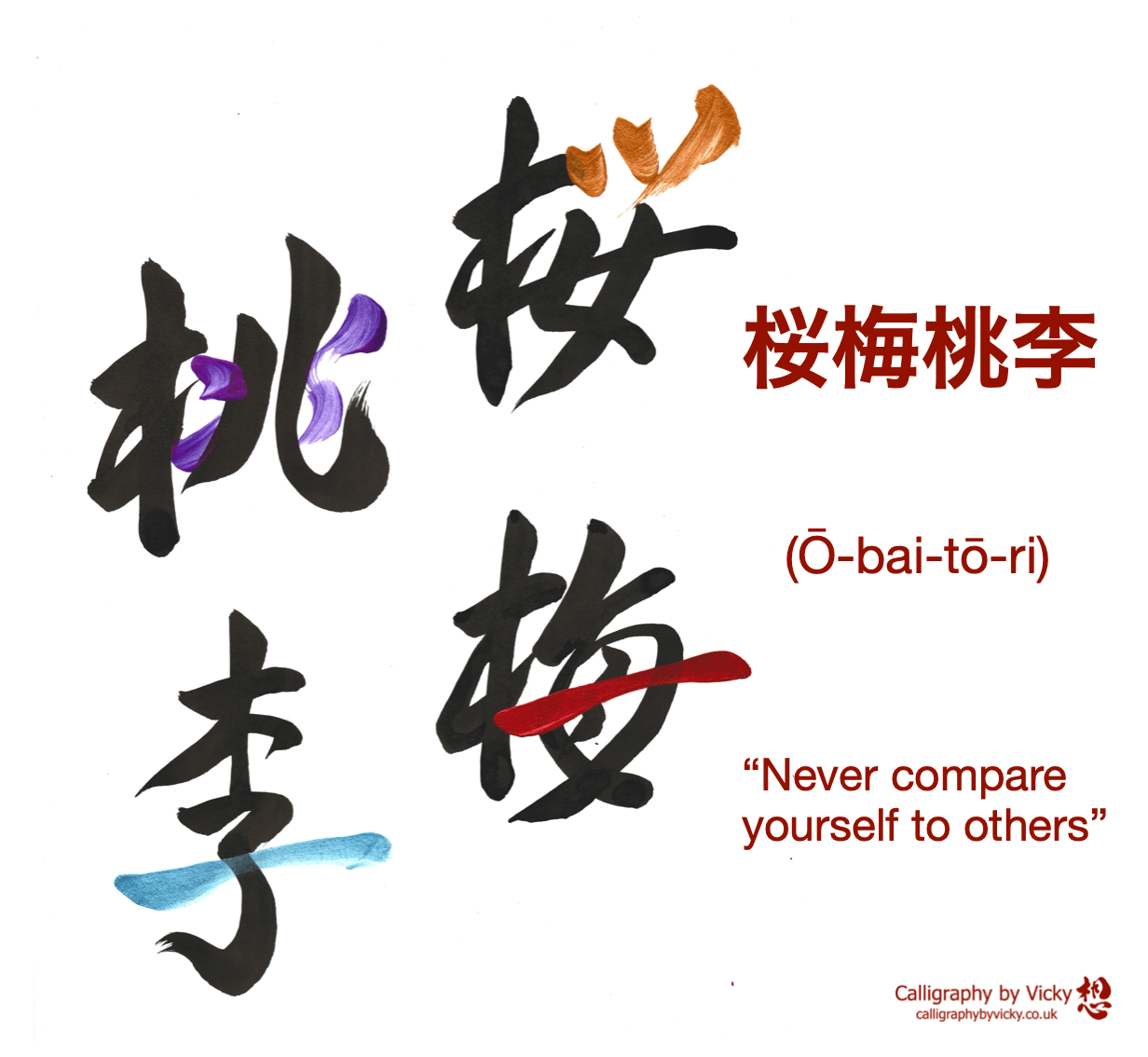
This yo-ji-juku-go (Japanese 4-character idiom) is comprised of 4 beloved Japanese trees. They are: 桜 = cherry (sakura) 梅 = apricot (ume) 桃 = peach (momo) 李 = plum (sumomo) Each of these iconic trees blossoms in its own time and in its own unique way. 桜 (sakura) are of course the cherry blossom treesContinueContinue reading “桜梅桃李 (o-bai-to-ri) “never compare yourself to others””
卯月(uzuki) “April” (archaic)
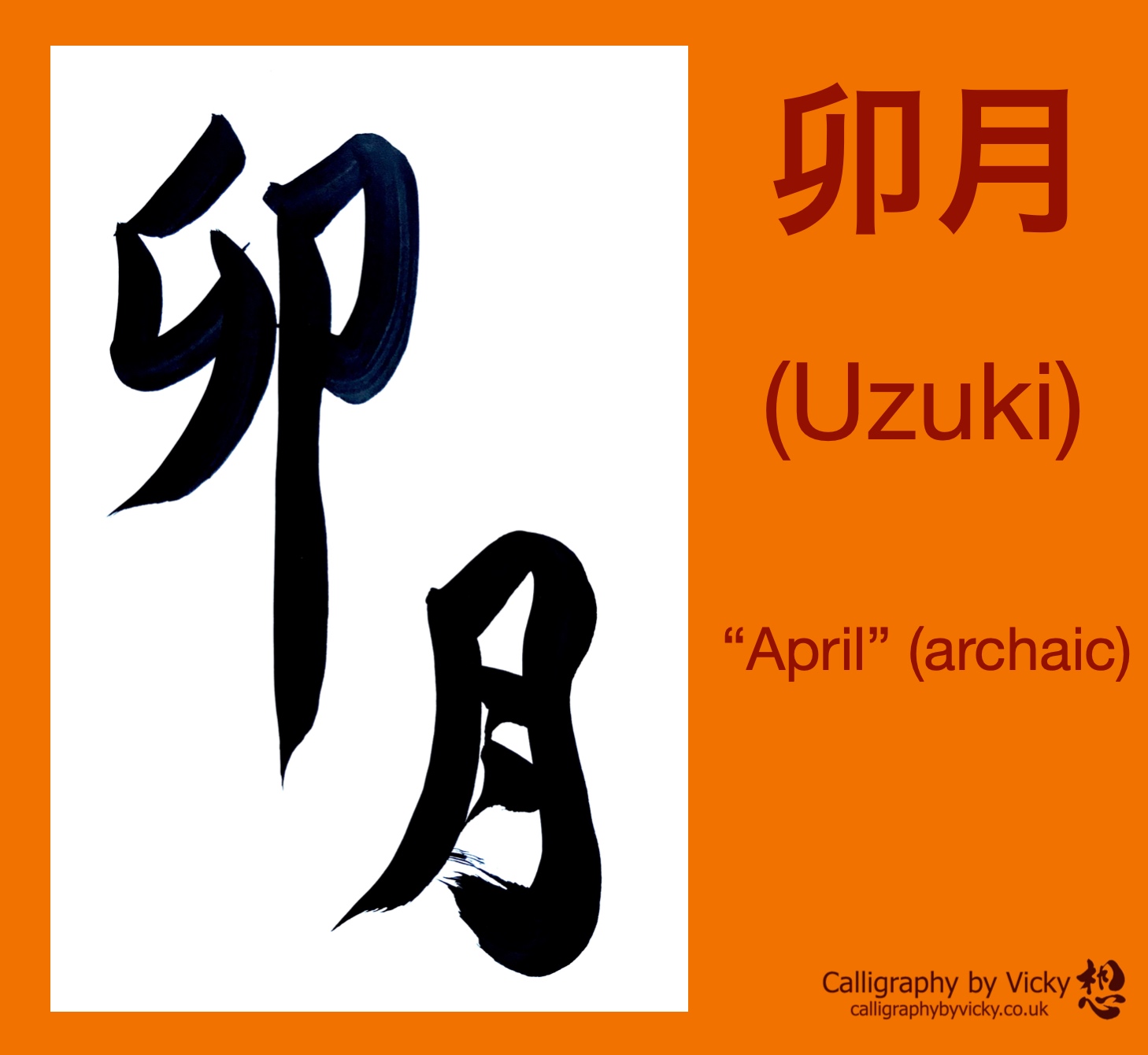
Like many countries, Japan uses a 12-month calendar. The names are very simple. January is literally “Month one” 一月, February is “Month two” 二月, etc. However, before the Meiji Restoration (mid-1800s) it was common to use an older 12-month system. These months’ names referenced the weather and the seasons (similar to the French Revolutionary calendar).ContinueContinue reading “卯月(uzuki) “April” (archaic)”
春分 (shun-bun) “Spring Equinox”
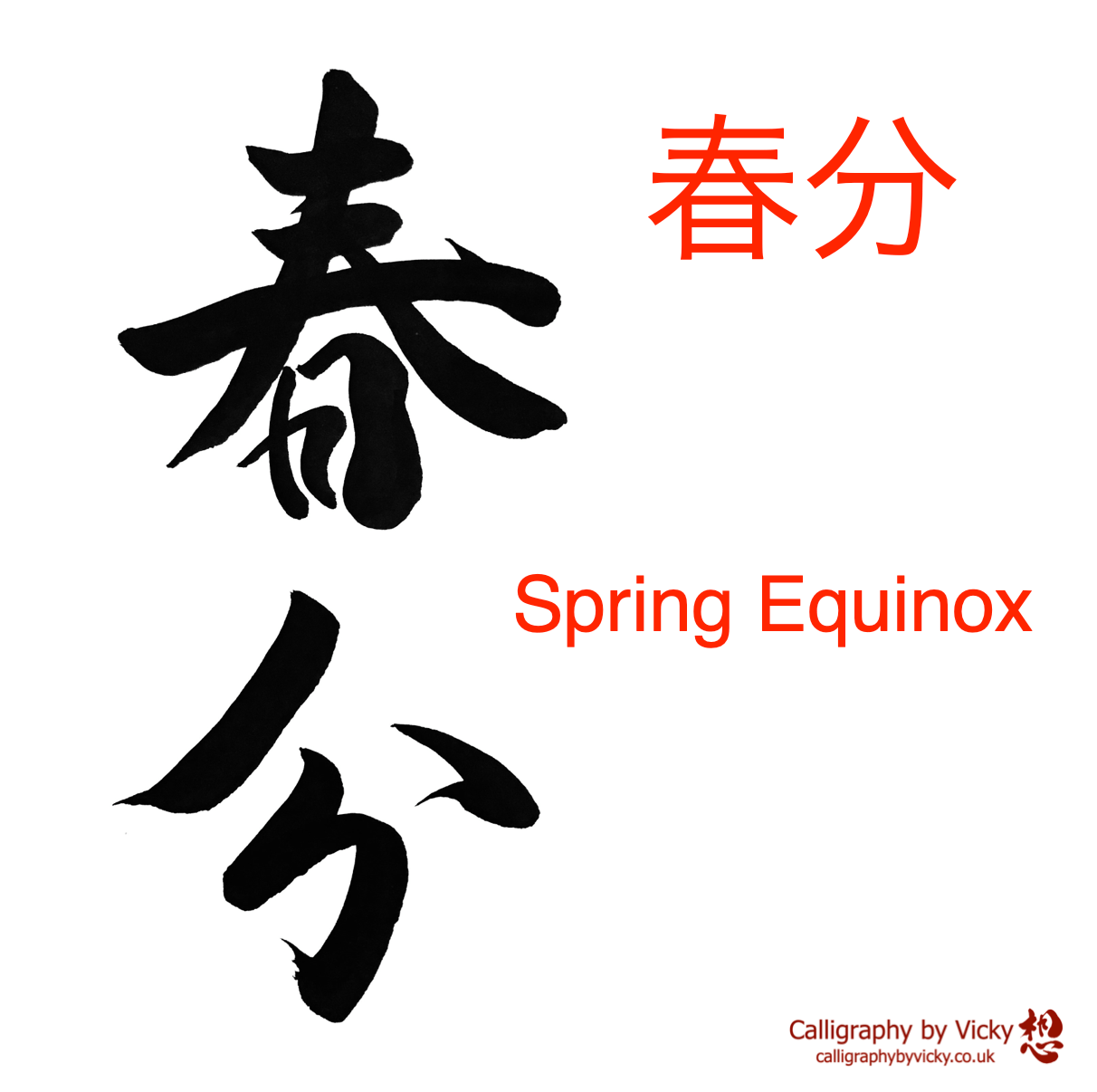
In Japan, Spring Equinox is a national holiday. The week which contains Spring Equinox is called “o-higan”. This has connections with Buddhism, and on this day many people visit spend time with their families and visit their family grave. “Bota-mochi” (rice cake covered in sweet bean paste) is traditionally eaten on this day.
関 (seki) “barrier, connection”

This kanji character is rarely used on its own, but is often found combined with other characters. For example, 関西 (Kansai) and 関東 (Kanto). Since ancient times there has been a road from Tokyo (the current capital) to Kyoto (the former capital). At the mid-way point there used to be a large gate. This led toContinueContinue reading “関 (seki) “barrier, connection””
 Calligraphy by Vicky