
This Sunday will be Moon Viewing Day in Japan. The first full moon in September is considered particularly clear and beautiful, much like the idea of a “harvest moon”. 🎑 🌕 In Japan, Moon Viewing Day is celebrated by eating white dumplings. In China it is celebrated by eating mooncakes – pastries filled with lotusContinueContinue reading “月見 (Tsukimi) “moon-viewing””
Tag Archives: 書道アート
月 (tsuki) “moon”
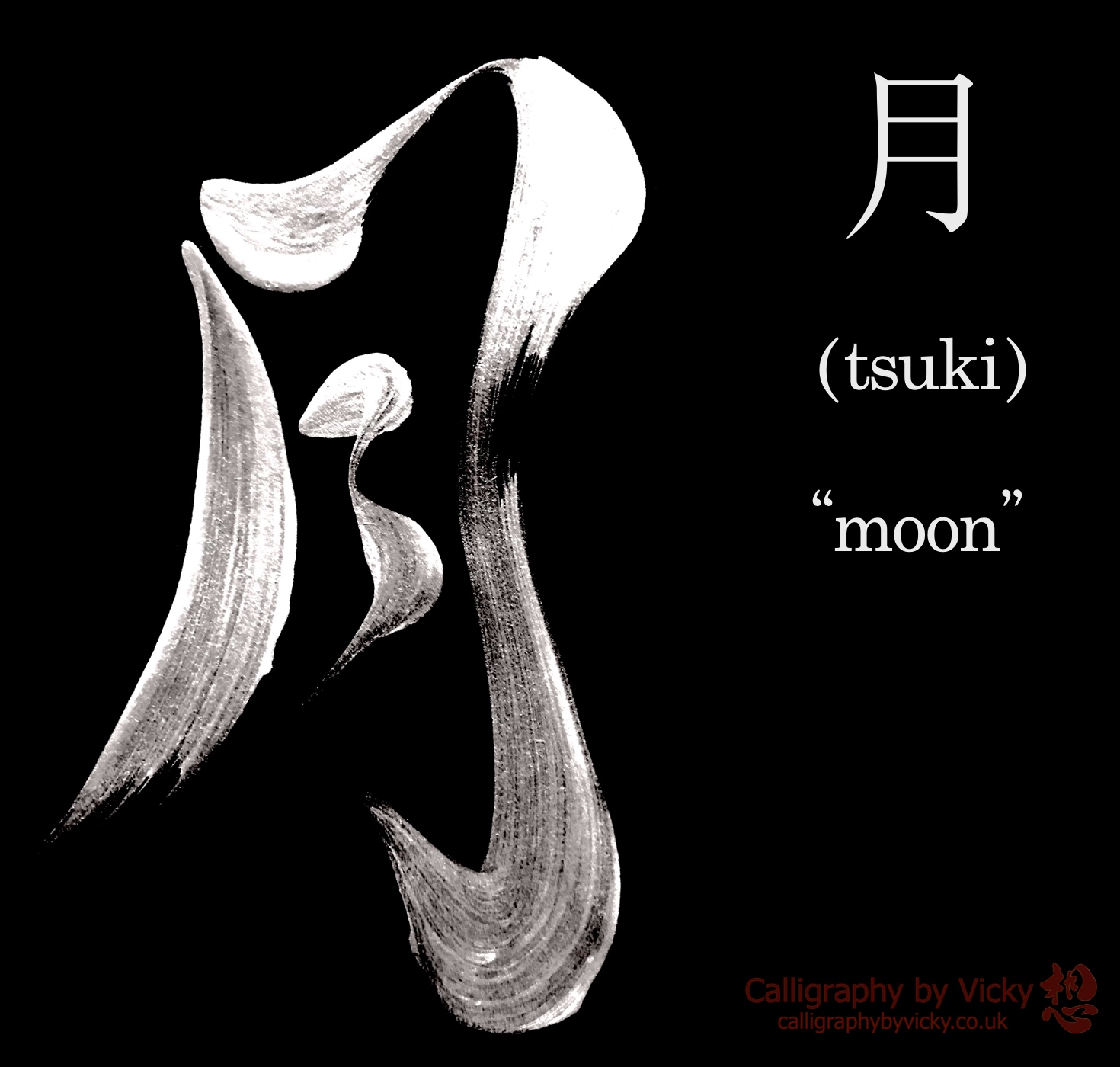
This Sunday will be Moon Viewing Day in Japan. The first full moon in September is considered particularly clear and beautiful, much like the idea of a “harvest moon”. 🎑 🌕
長月 (Nagatsuki) “September” (archaic)
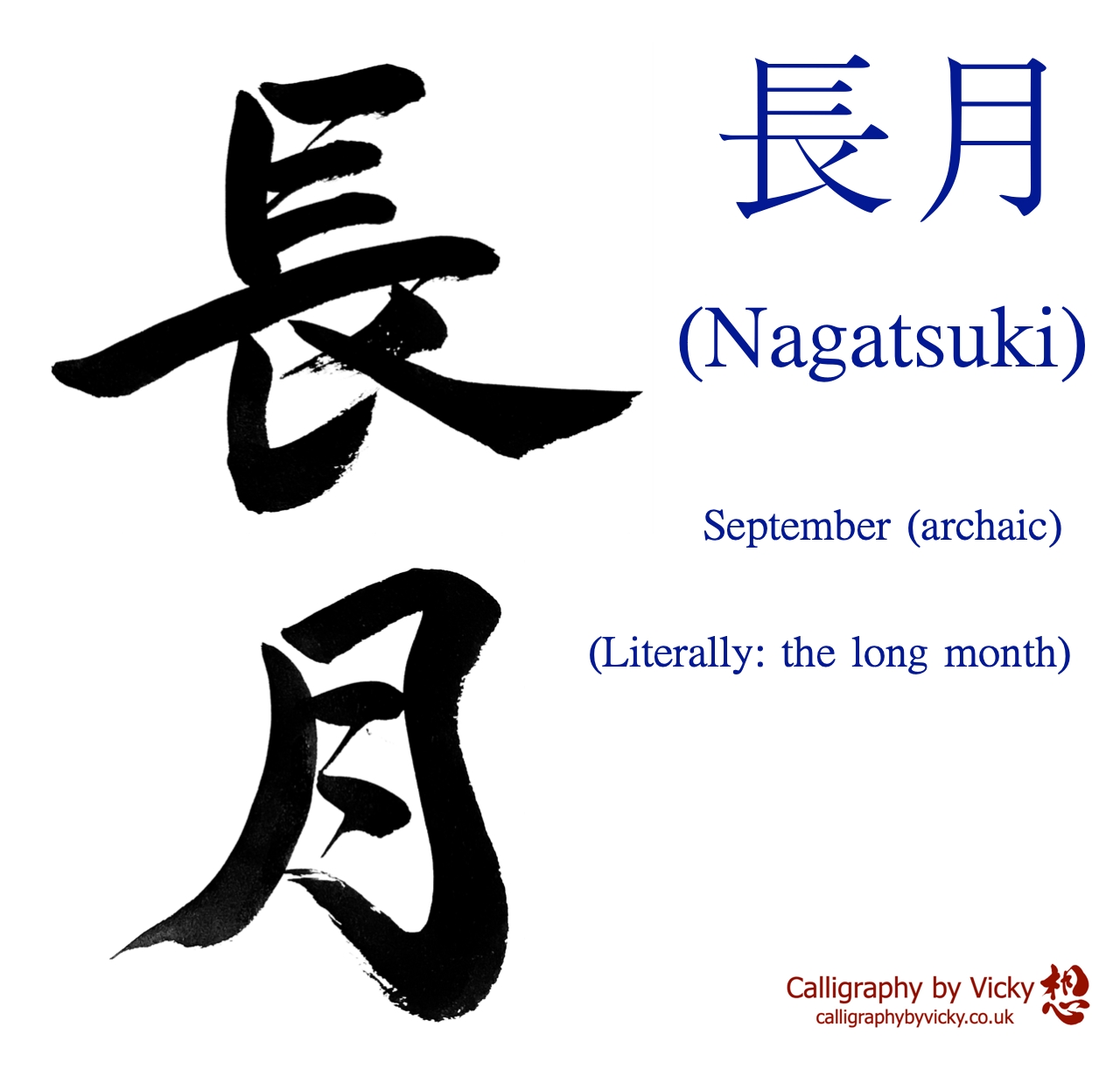
Like many countries, Japan uses a 12-month calendar. The names are very simple. January is literally “Month one”, February is “Month two”, etc: 一月 = January 二月 = February However, before the Meiji Restoration (mid-1800s) it was common to use an older 12-month system. These months’ names referenced the weather and the seasons (similar toContinueContinue reading “長月 (Nagatsuki) “September” (archaic)”
美 “beauty”

The English word “calligraphy” is derived from the Greek word Kalos, meaning “beautiful”. In Japanese the word for calligraphy is shodō. This literally means “the way of writing”, emphasising calligraphy as a philosophical and spiritual pursuit. Nevertheless, beauty is valued in Japanese calligraphy. Some Japanese aesthetic principles which are important to shodō are: 不均整 (Fukinsei)ContinueContinue reading “美 “beauty””
お盆 (o-bon)

Every August Japan celebrates o-bon, the time of year when ancestors return to the world of the living. People celebrate by lighting fires, holding special dances in the town square, and visiting their family graves.
絆 (ki-zu-na) “bonds”
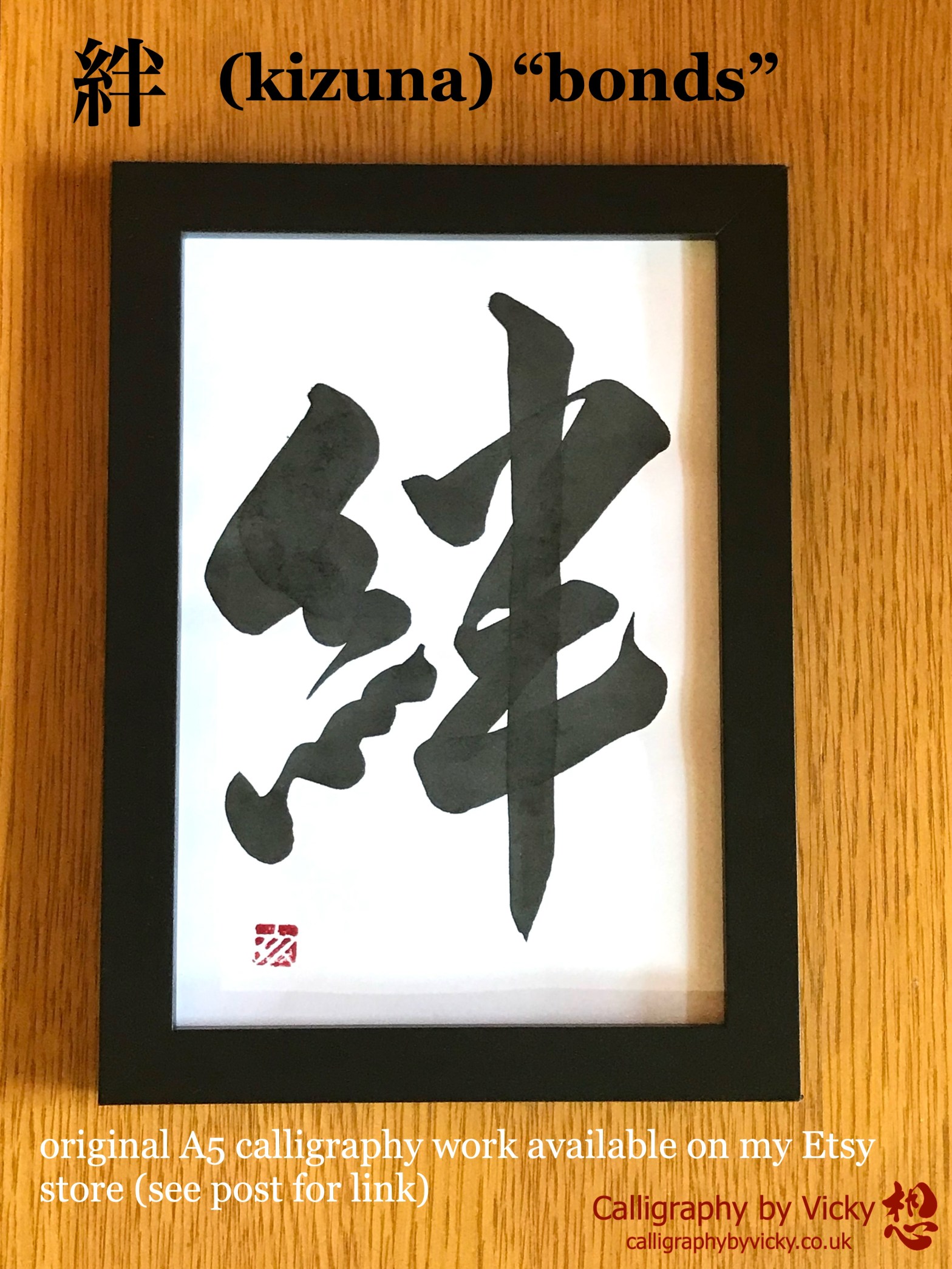
“Kizuna” can refer to any kind of bond, but it usually refers to the bonds that structure human relationships. Although the term “bond” sounds inflexible and unforgiving, in Japan it usually has a positive nuance when used to describe human relationships. Even if the nature of a human relationship leads to a reduction in humanContinueContinue reading “絆 (ki-zu-na) “bonds””
間 (ma) “emptiness, space, interval”
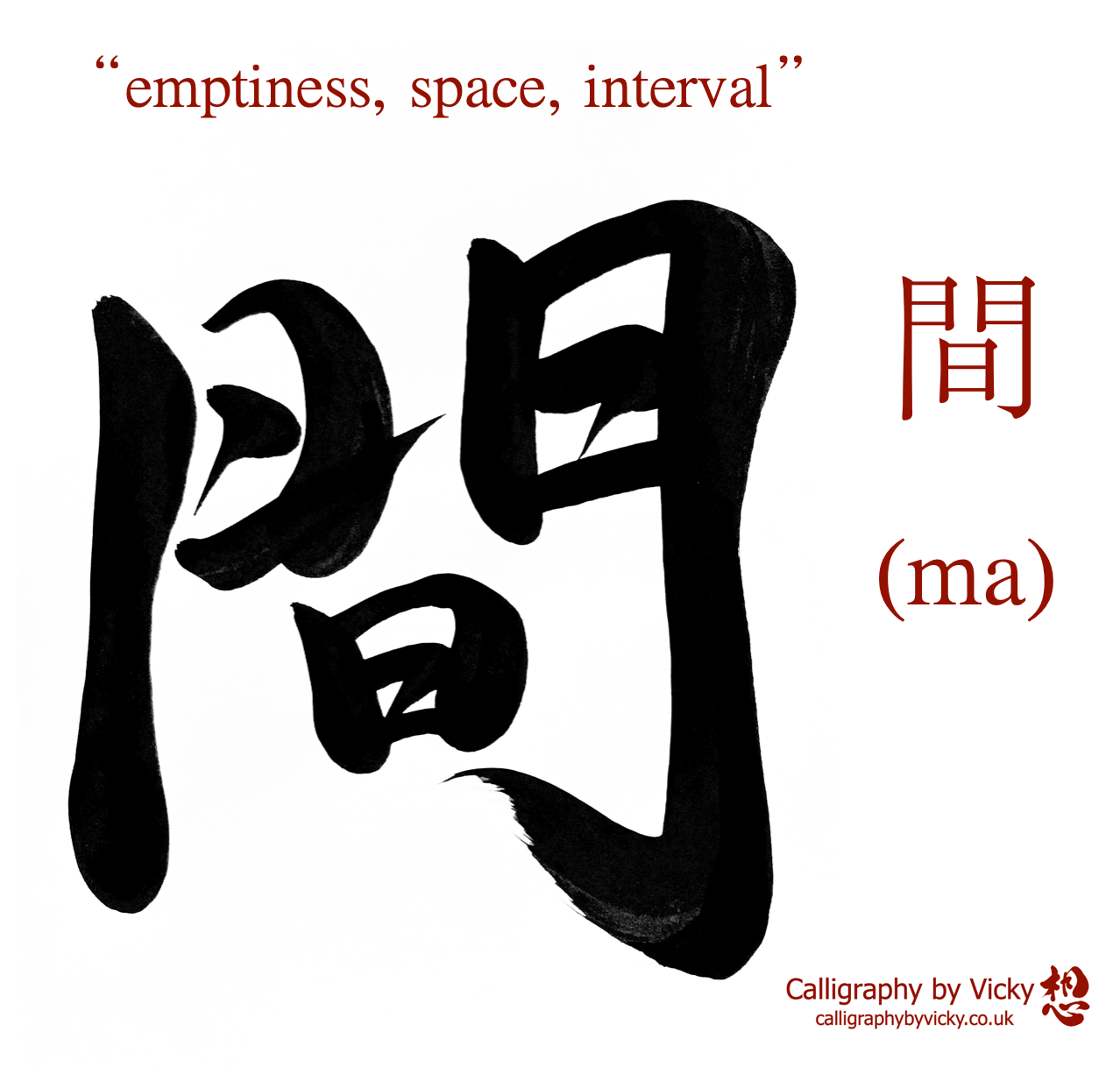
“Though thirty spokes may form the wheel, it is the hole within the hub which gives the wheel utility. It is not the clay the potter throws, which gives the pot its usefulness, but the space within the shape, from which the pot is made. Without a door, the room cannot be entered, and withoutContinueContinue reading “間 (ma) “emptiness, space, interval””
和 (wa) peace
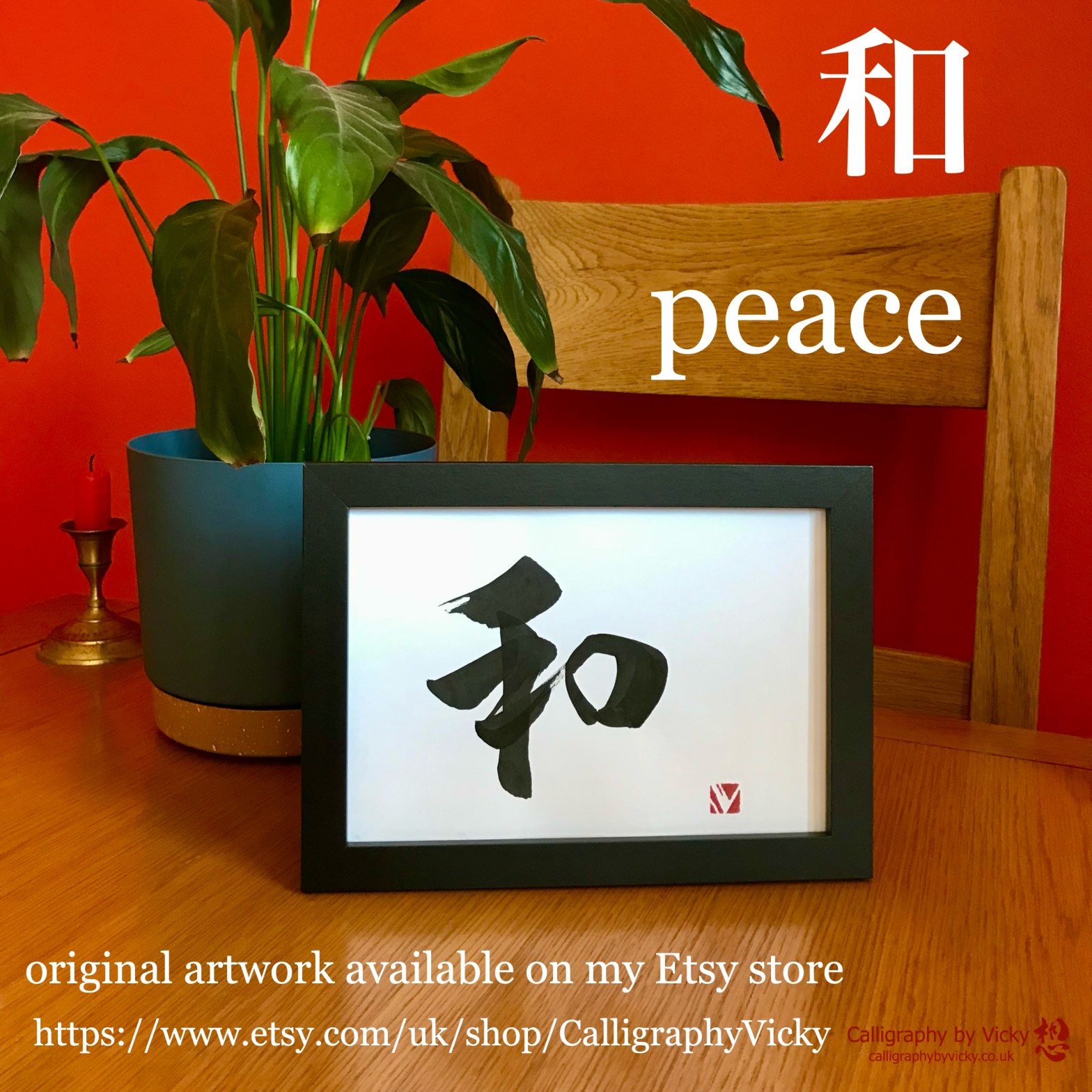
Original shodo (Japanese calligraphy) artwork available here on my Etsy store
文月 (fumizuki) July (archaic)
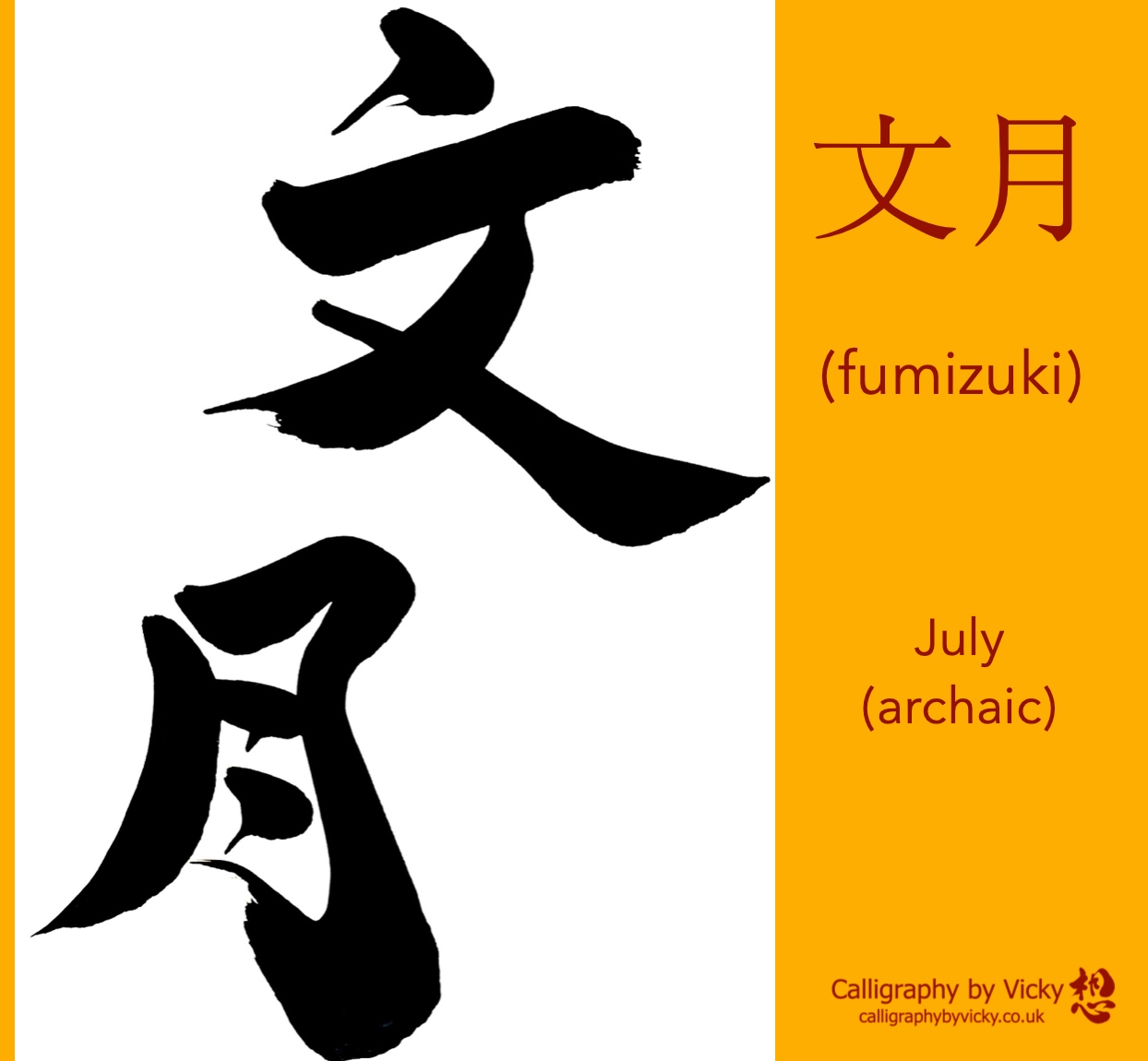
Like many countries, Japan uses a 12-month calendar. The names are very simple. January is literally “Month one”, February is “Month two”, etc. However, before the Meiji Restoration (mid-1800s) it was common to use an older 12-month system. These months’ names referenced the weather and the seasons (similar to the French Revolutionary calendar). July isContinueContinue reading “文月 (fumizuki) July (archaic)”
七夕 (Tanabata) The Japanese star festival
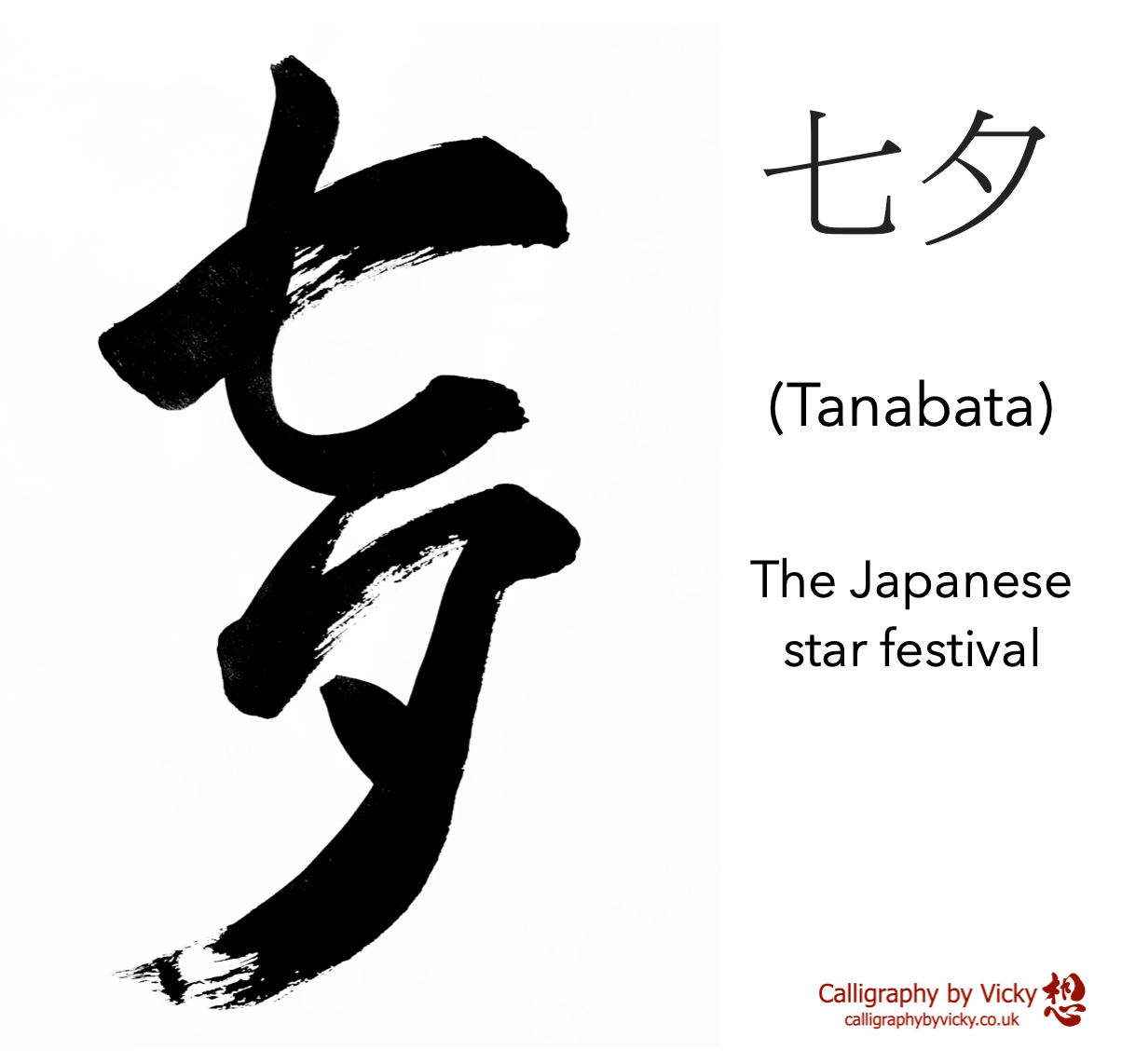
Often translated into English as the “Star Festival”, Tanabata celebrates the annual meeting of the stars Vega and Altair, believed to be separated lovers who are permitted by the gods to meet only once a year. People celebrate this festival by writing wishes on small coloured pieces of paper and tying them to bamboo plants.ContinueContinue reading “七夕 (Tanabata) The Japanese star festival”
 Calligraphy by Vicky