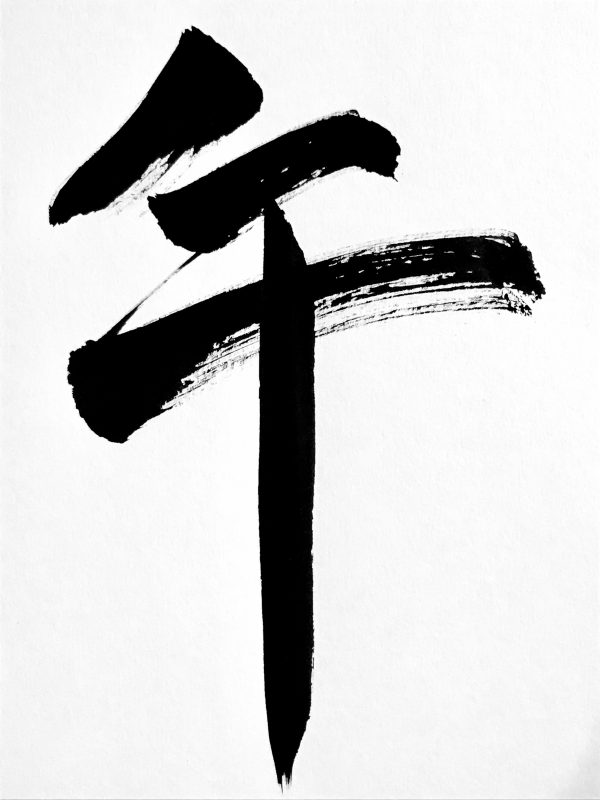
The usual kanji for horse is 馬, so does this mean there are two ways of writing “horse”? Kind of! Japan uses the Chinese Zodiac system in which each year is assigned one of 12 animals. When referring to these animals in the context of the Chinese Zodiac (and not as just regular animals), aContinueContinue reading “午 = “Horse”???? 🐎”
Category Archives: Months and Seasons
馬 (uma) “horse” 🐴
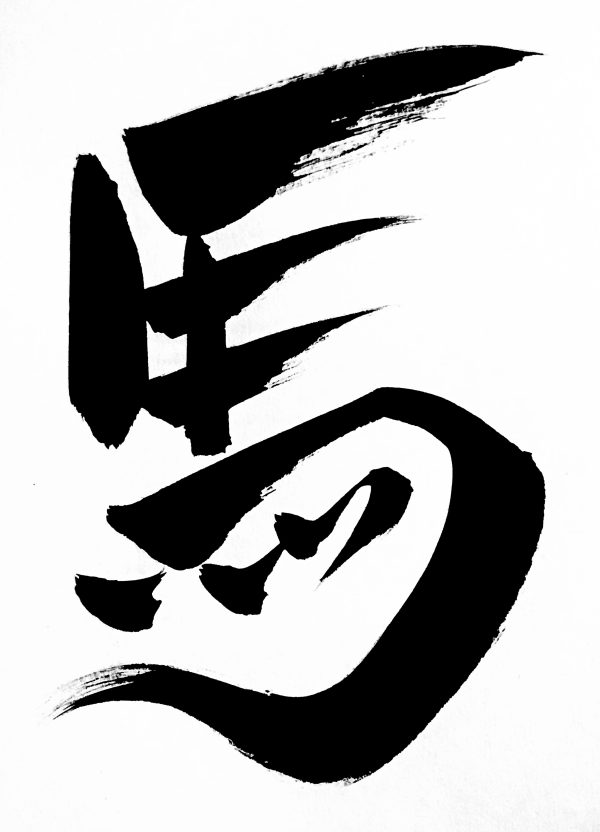
Japan uses the Chinese Zodiac system in which each year is assigned one of 12 animals. 2026 is the Year of the Horse 🐴
書初め (kakizomé) The First Calligraphy of the New Year
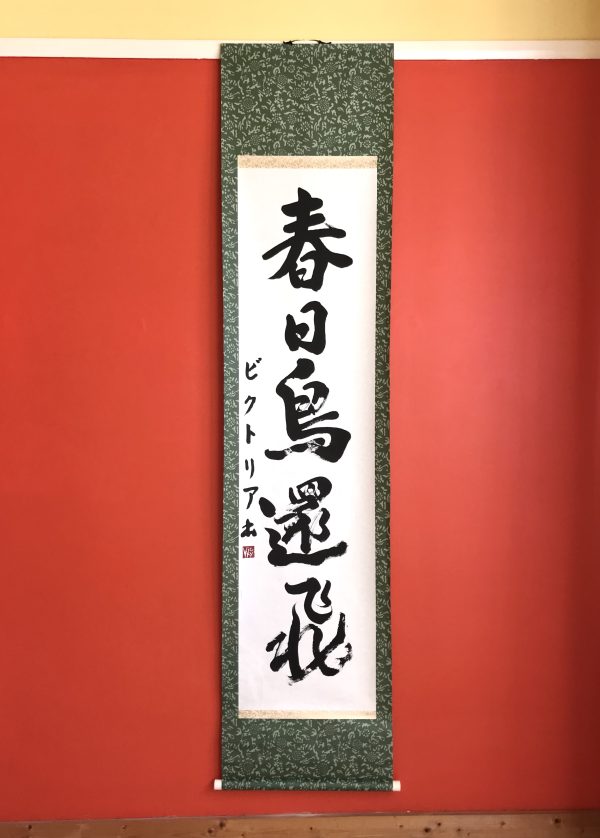
New Year’s is the biggest festival in Japan. As a time for new beginnings, it is often observed by doing activities “for the first time in the new year”. The first calligraphy of the new year is called 書初め (kakizomé). The kanji: 書 = writing (as in 書道 – Japanese calligraphy, or “the way ofContinueContinue reading “書初め (kakizomé) The First Calligraphy of the New Year”
熊蟄穴 When bears begin to hibernate

The Japanese year used to be divided into 72 “micro-seasons”. These seasons were based on natural events such as the weather and the appearance of various plants and animals. Next week is the start of 熊蟄穴. The kanji: 熊 = bear 蟄 = hibernation 穴 = hole, den = the time when bears start theirContinueContinue reading “熊蟄穴 When bears begin to hibernate”
師走 (shiwasu) “December” (archaic)
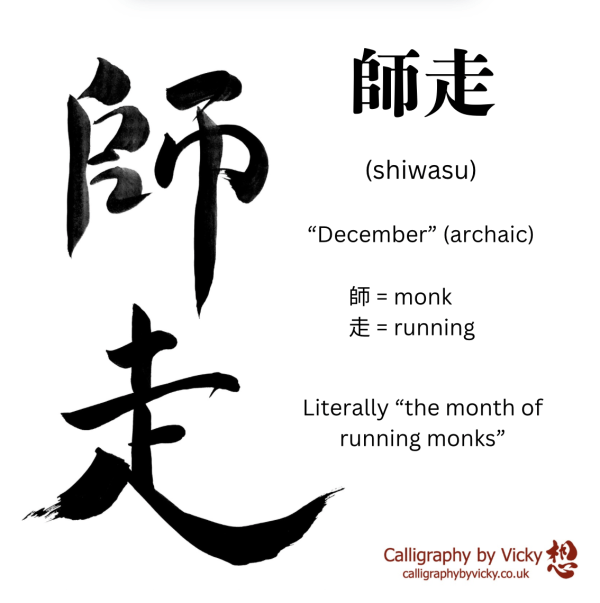
Like many countries, Japan uses a 12-month calendar. The names are very simple. January is literally “Month one” 一月, February is “Month two” 二月, etc. However, before the Meiji Restoration (mid-1800s) it was common to use an older 12-month system. These months’ names referenced the weather and the seasons (similar to the French Revolutionary calendar).ContinueContinue reading “師走 (shiwasu) “December” (archaic)”
紅葉 (kō-yō) “Red autumn leaves”
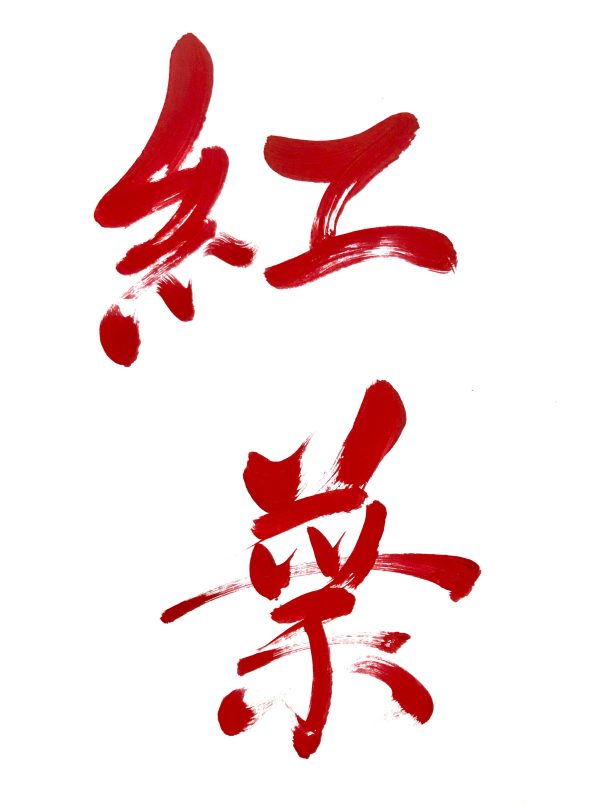
Japan is famous for its annual “cherry blossom season”. 🌸 Less well known is that autumn leaves are also widely celebrated. 🍁 Many people take trips to famous temples and shrines, parks and forests, in order to see the beautiful autumn colours. 🍂
秋高気爽 (shū-kō-ki-sō) “fresh autumn breeze”
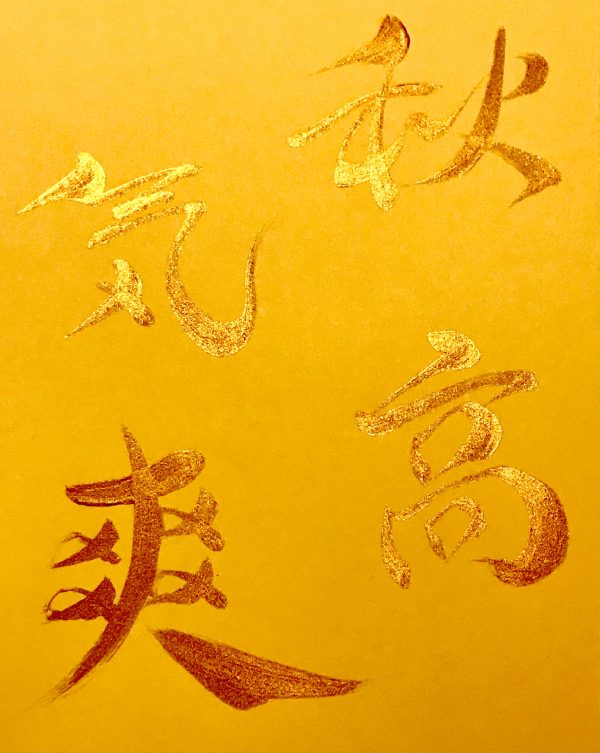
秋 = autumn 高 = high (refers to the sky here) 気 = air 爽 = refreshing
一葉知秋 (ichi-yō-chi-shū) “from just one leaf one can know that autumn has come”
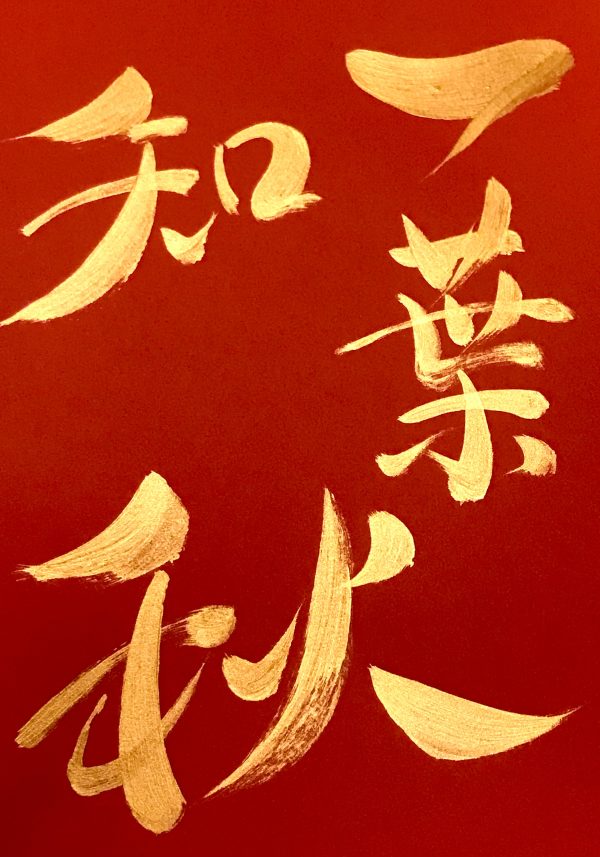
一 = one 葉 = leaf 知 = to know 秋 = autumn This phrase is about understanding the essence, changes, or decline of things from noticing slight signs or phenomena. It refers to realising the arrival of autumn by observing a single leaf fall.
霜月 (shimotsuki) “November” (archaic) (literally “the month of frost”)
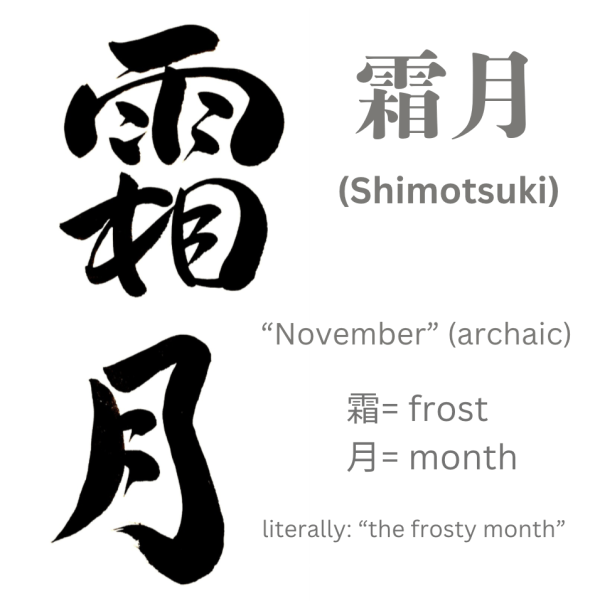
Like many countries, Japan uses a 12-month calendar. The names are very simple. January is literally “Month one”, February is “Month two”, etc: 一月 = January 二月 = February However, before the Meiji Restoration (mid-1800s) it was common to use an older 12-month system. These months’ names referenced the weather and the seasons (similar toContinueContinue reading “霜月 (shimotsuki) “November” (archaic) (literally “the month of frost”)”
秋 (aki) autumn
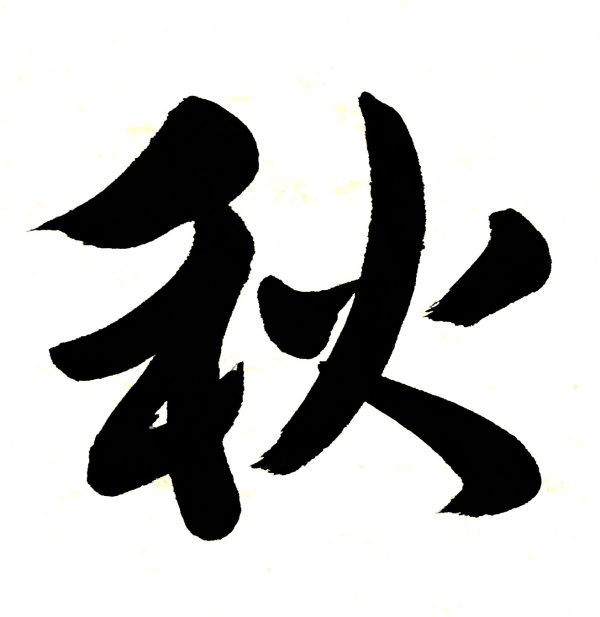
Anyone who’s lived in Japan will know that they have many, many national holidays. The autumn and spring equinoxes are national holidays too. Japanese people seem to really like acknowledging the changing of the seasons. Restaurant menus (even cheap places) will have autumn-themed menus with pumpkin, chestnuts and mushrooms, and many people enjoy going toContinueContinue reading “秋 (aki) autumn”
 Calligraphy by Vicky