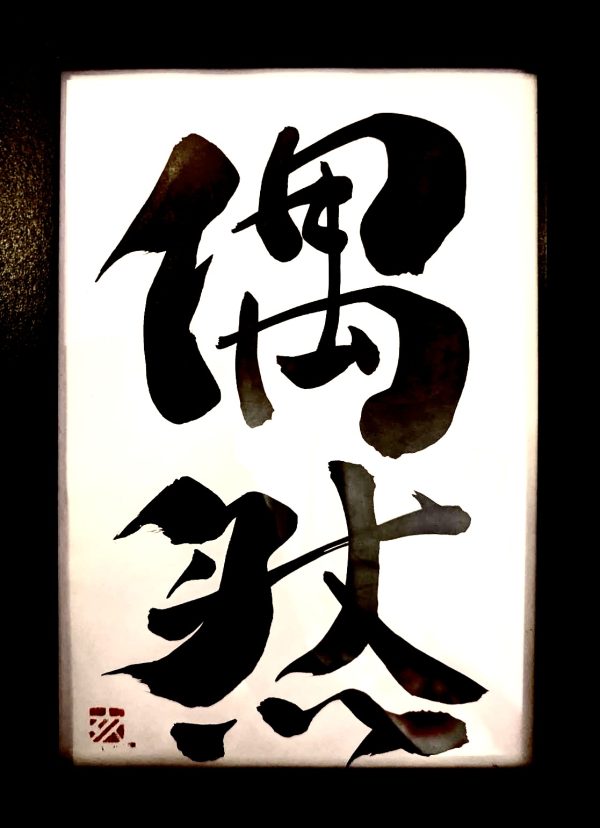
A calligraphy commission for a friend who very much believes in fate. Is there a certain word or phrase that you would like to see as a Japanese calligraphy work? If so, feel free to contact me to discuss commissioning a unique work for you, with absolutely no obligation to place an order. Check out myContinueContinue reading “偶然 (gū-zen) “coincidence””
Tag Archives: Japanese words
文月 (fumizuki) “July” (archaic)
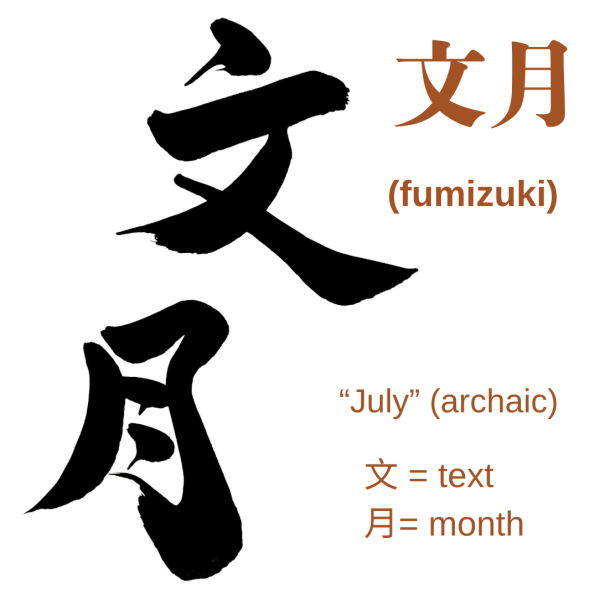
Like many countries, Japan uses a 12-month calendar. The names are very simple. January is literally “Month One”, February is “Month Two”, etc: 一月 = January 二月 = February However, before the Meiji Restoration (mid-1800s) it was common to use an older 12-month system. These months’ names referenced the weather and the seasons (similar toContinueContinue reading “文月 (fumizuki) “July” (archaic)”
あおいうみ、さかなつり (aoi umi, sakana tsuri) “blue sea, catching fish”
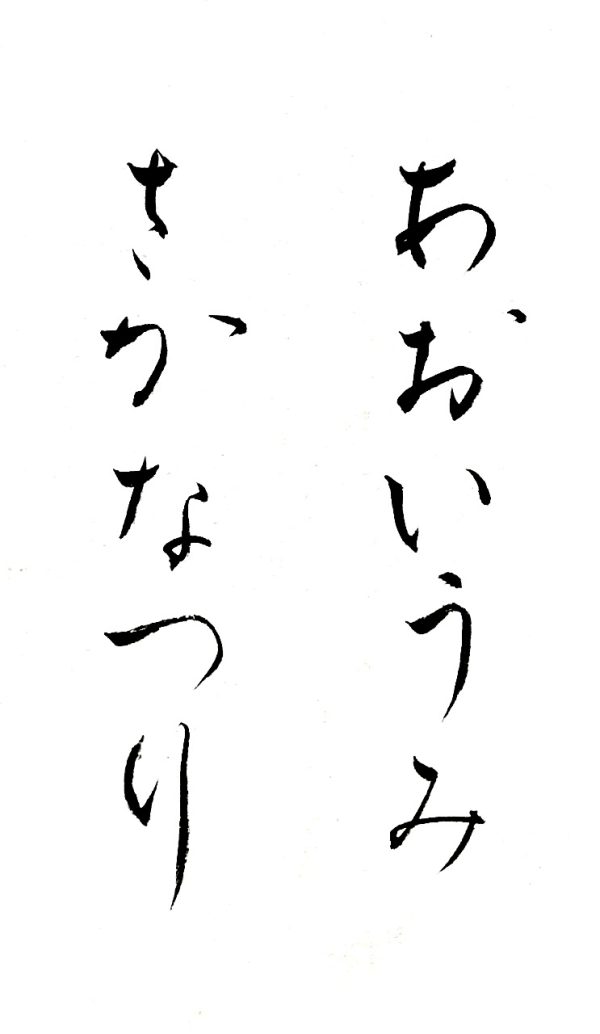
Usually I write Japanese calligraphy in kanji, a logographic script in which each complex character has a meaning. The above characters are hiragana, another Japanese script. Hiragana is a syllabary – each character represents a sound, but has no meaning by itself. Kanji was invented in China, but hiragana is a purely Japanese invention. HiraganaContinueContinue reading “あおいうみ、さかなつり (aoi umi, sakana tsuri) “blue sea, catching fish””
Some more calligraphy practice
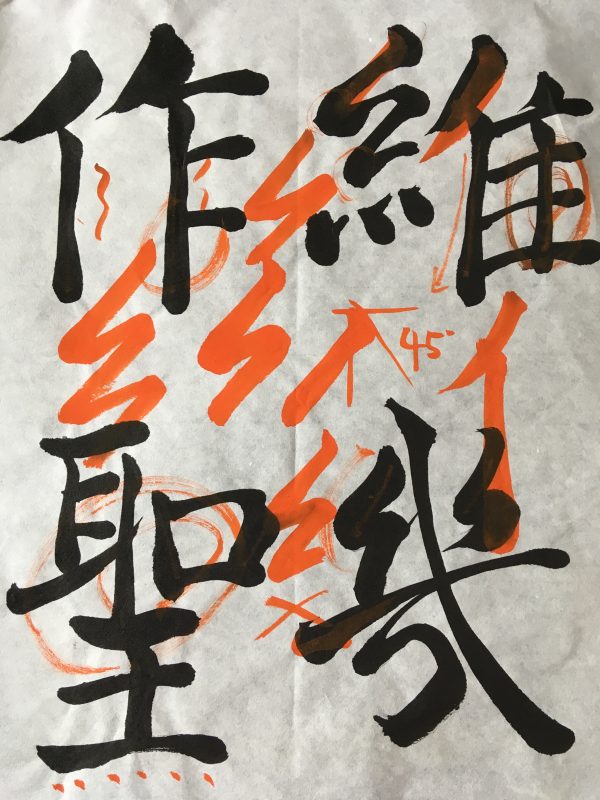
Although Japanese calligraphy is usually written in black ink, calligraphy teachers traditionally use an orange-red colour ink when marking their students’ work. The photo is my work from about 8 years ago. The black is my writing and the orange-red is my teacher’s corrections. Circles mean I did a good job 🙂
生き甲斐 (iki-gai) “reason for living”
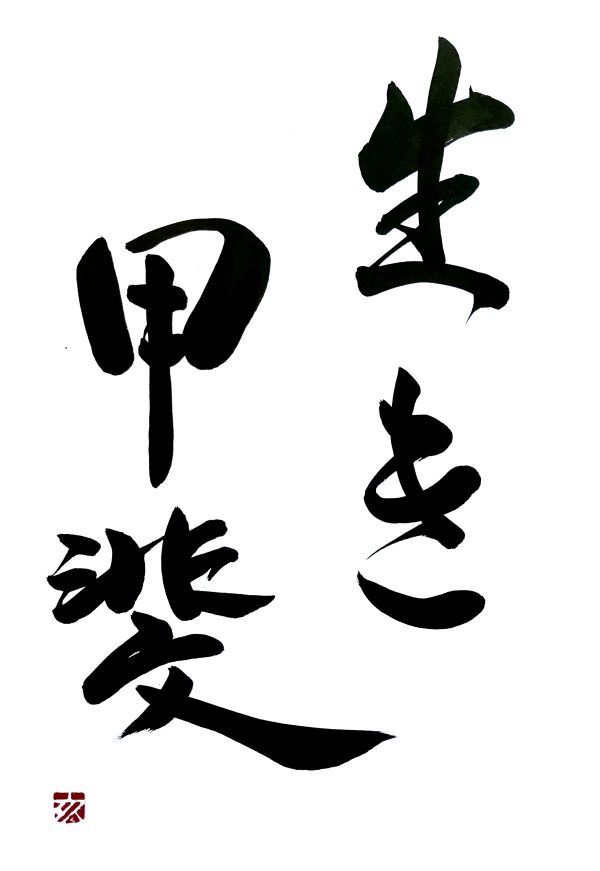
Now in the Oxford English Dictionary, “Ikigai” is defined as “a motivating force; something or someone that gives a person a sense of purpose or a reason for living” Whilst this concept has existed in Japanese culture for a long time, it was popularised by a Japanese psychiatrist Mieko Kamiya in the 1960s. More recently it hasContinueContinue reading “生き甲斐 (iki-gai) “reason for living””
無心 (mu-shin) “no-mind” or “nothingness mind”
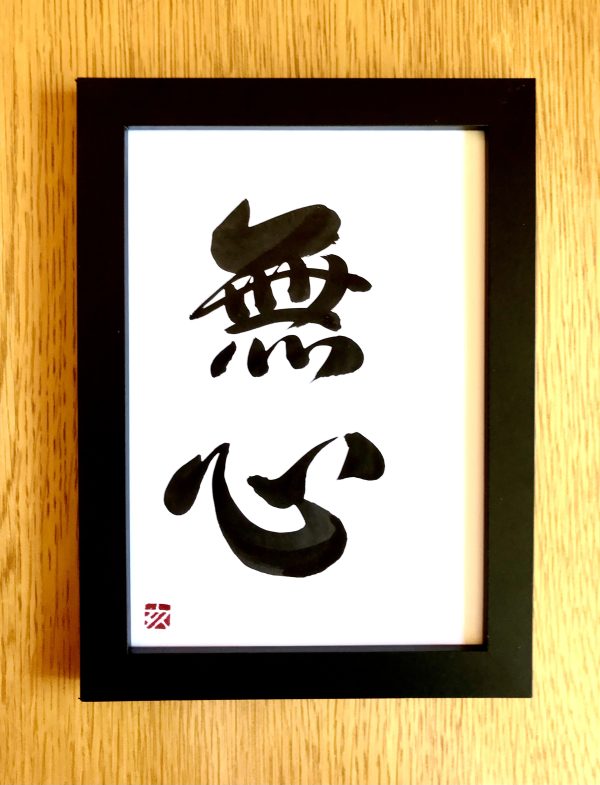
An important concept in meditation and martial arts. If you have mu-shin, your mind is free from thoughts, desires and assumptions. As the Buddhist nun Reverend Jiyu-Kennett once said: “It’s nothing… but it’s the fullest kind of nothing there ever was!” When your mind is clear, and you are free from ego and can actContinueContinue reading “無心 (mu-shin) “no-mind” or “nothingness mind””
龍 (ryū) “dragon”
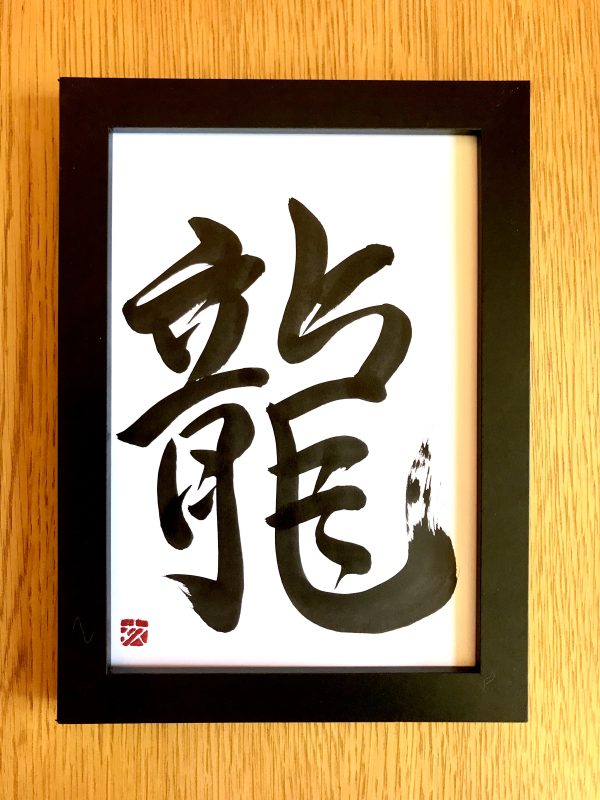
If you visit a shrine or temple in Japan, make sure to look up at the ceiling of the main room. Often there will be a painting of a dragon. One reason is that dragons represent the virtue of courage. Another, more superstitious reason is that dragons are associated with the element of water, andContinueContinue reading “龍 (ryū) “dragon””
外柔内剛 (gai-jū-nai-go) “Soft outside, hard inside”
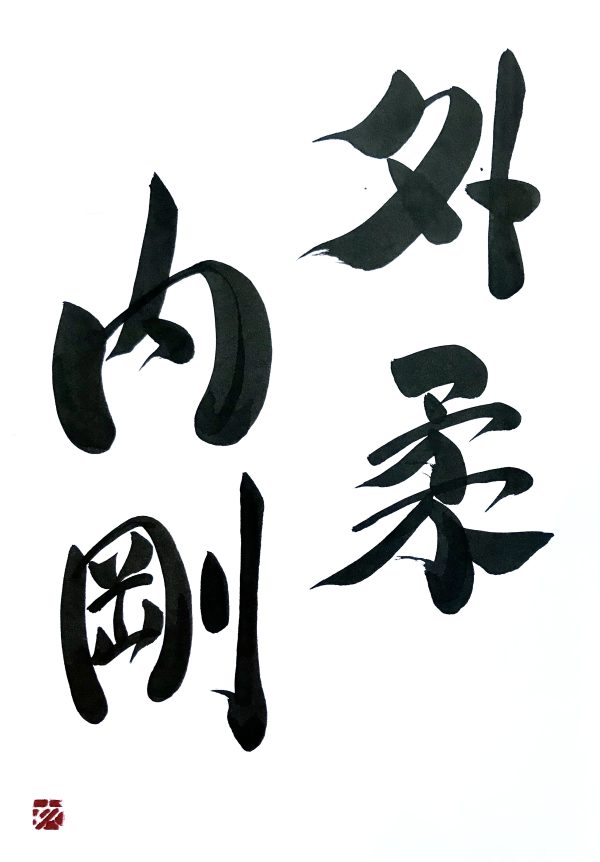
This expression refers to someone who is soft and gentle on the outside, but inwardly tough and resilient. Similar to the English expression “steel in a velvet glove”. This is a special kind of Japaneses idiom known as a 四字熟語 (よじじゅくご、yo-ji-juku-go), or 4-character idiom. As the name suggests, these are idiomatic phrases made of 4ContinueContinue reading “外柔内剛 (gai-jū-nai-go) “Soft outside, hard inside””
粋 (iki) “understated elegance”
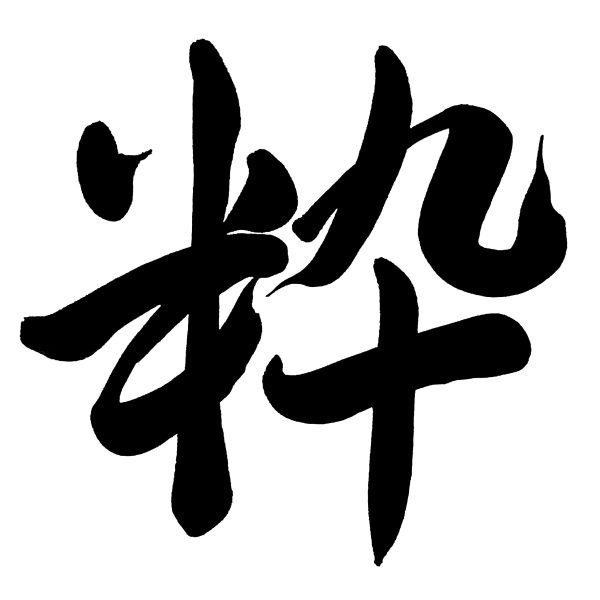
“Iki” is a Japanese aesthetic ideal. It refers to subtle elegance and sophistication. One of the aspects of iki is caring about the sensibilities of others. What you wear should make others feel comfortable, and wearing stylish clothing is a way of respecting those around you. This doesn’t mean that you can’t wear what youContinueContinue reading “粋 (iki) “understated elegance””
菖蒲華 (Ayame hana saku) “Irises bloom”
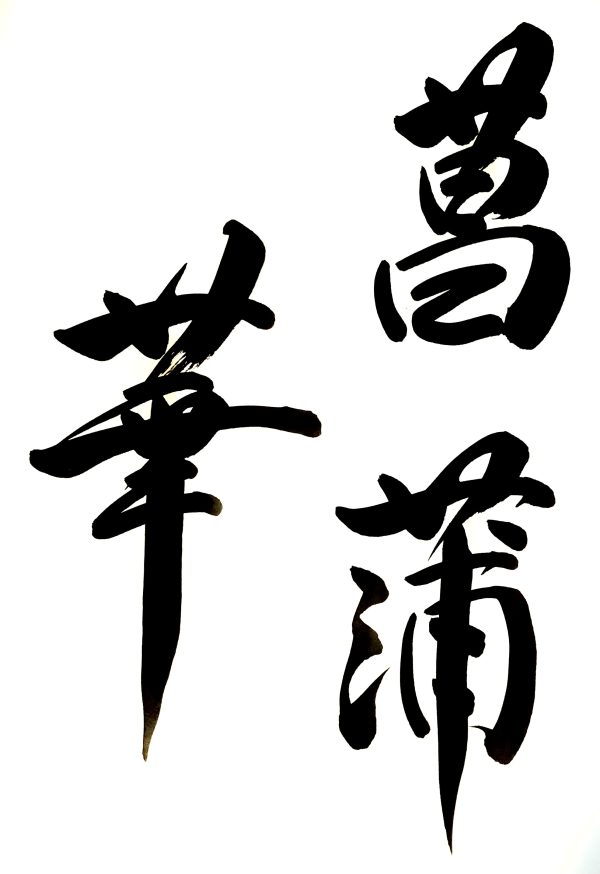
In ancient times Japanese people divided the year into 72 “micro-seasons”. These seasons were based on natural events such as the weather and appearance of various flora and fauna. Later this month it will be 菖蒲華, marking period when irises begin to bloom. You can find out more about Japanese micro-seasons here.
 Calligraphy by Vicky