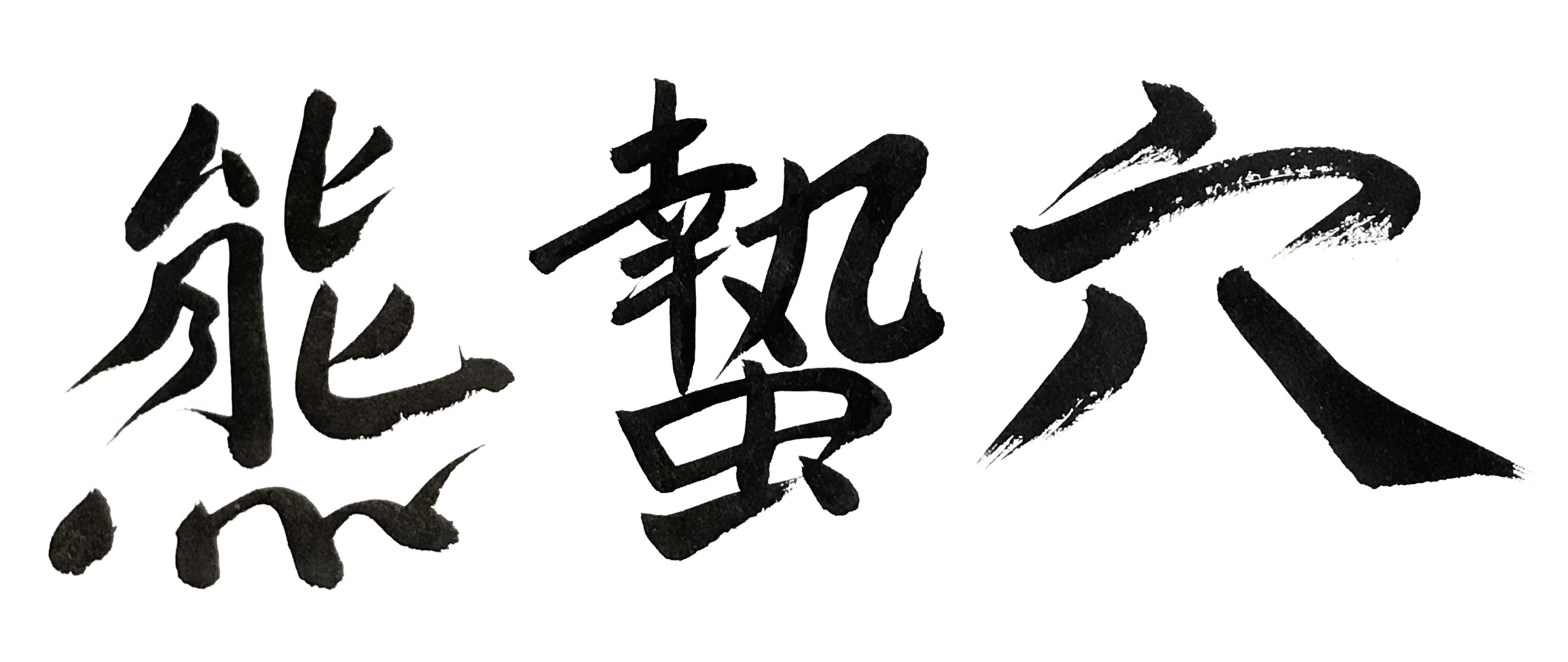
In ancient times Japanese people divided the year into 72 “micro-seasons”. These seasons were based on natural events such as the weather and appearance of various flora and fauna. Today marks the start of 熊蟄穴熊 = bear蟄 = hibernation. (It traditionally refers to the hibernation of insects; the more common word for animal hibernation isContinueContinue reading “熊蟄穴 When bears begin to hibernate”
Tag Archives: Japanese words
七転八起 “fall 7 times, get up 8 times” or “never give up!”

七 = seven 転 = fall down 八 = eight 起 = get up In other words, “fall down seven times, get up eight times”, or “even if you fail a lot, don’t give up!” 七転八起 is a special kind of Japaneses idiom known as a 四字熟語 (よじじゅくご、yo-ji-juku-go), or 4-character idiom. As the name suggests,ContinueContinue reading “七転八起 “fall 7 times, get up 8 times” or “never give up!””
師走 (shiwasu) “December” (archaic)

Like many countries, Japan uses a 12-month calendar. The names are very simple. January is literally “Month one” 一月, February is “Month two” 二月, etc. However, before the Meiji Restoration (mid-1800s) it was common to use an older 12-month system. These months’ names referenced the weather and the seasons (similar to the French Revolutionary calendar).ContinueContinue reading “師走 (shiwasu) “December” (archaic)”
粋 (iki) “understated elegance”
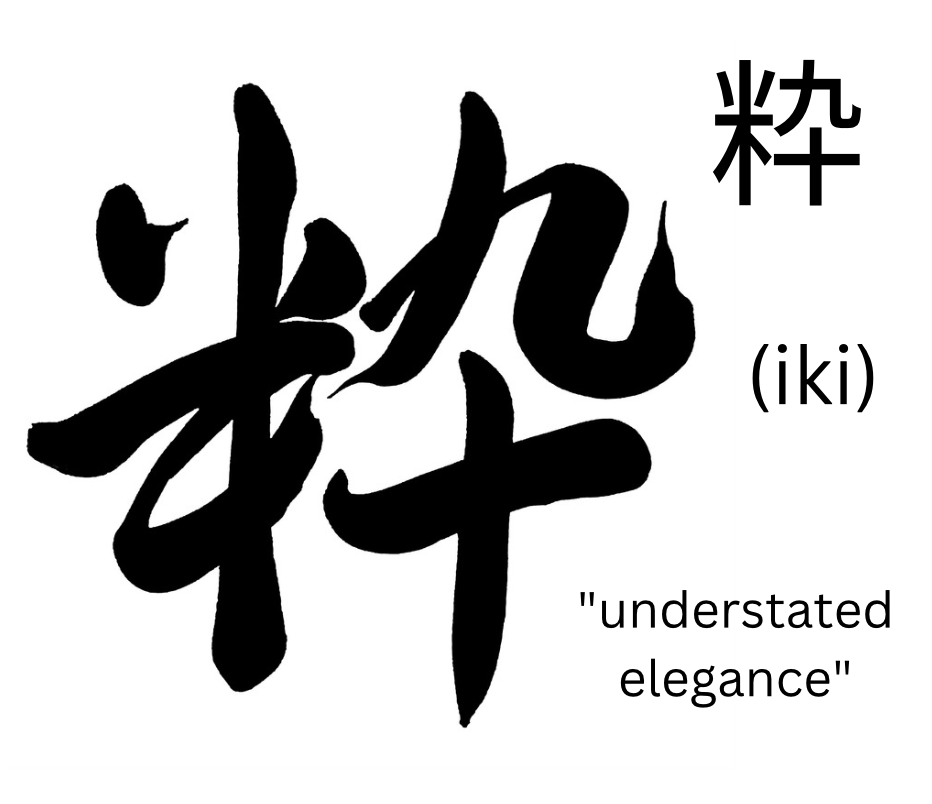
“Iki” is a Japanese aesthetic ideal. It refers to subtle elegance and sophistication. One of the aspects of iki is caring about the sensibilities of others. What you wear should make others feel comfortable, and wearing stylish clothing is a way of respecting those around you. This doesn’t mean that you can’t wear what youContinueContinue reading “粋 (iki) “understated elegance””
幸 Happiness
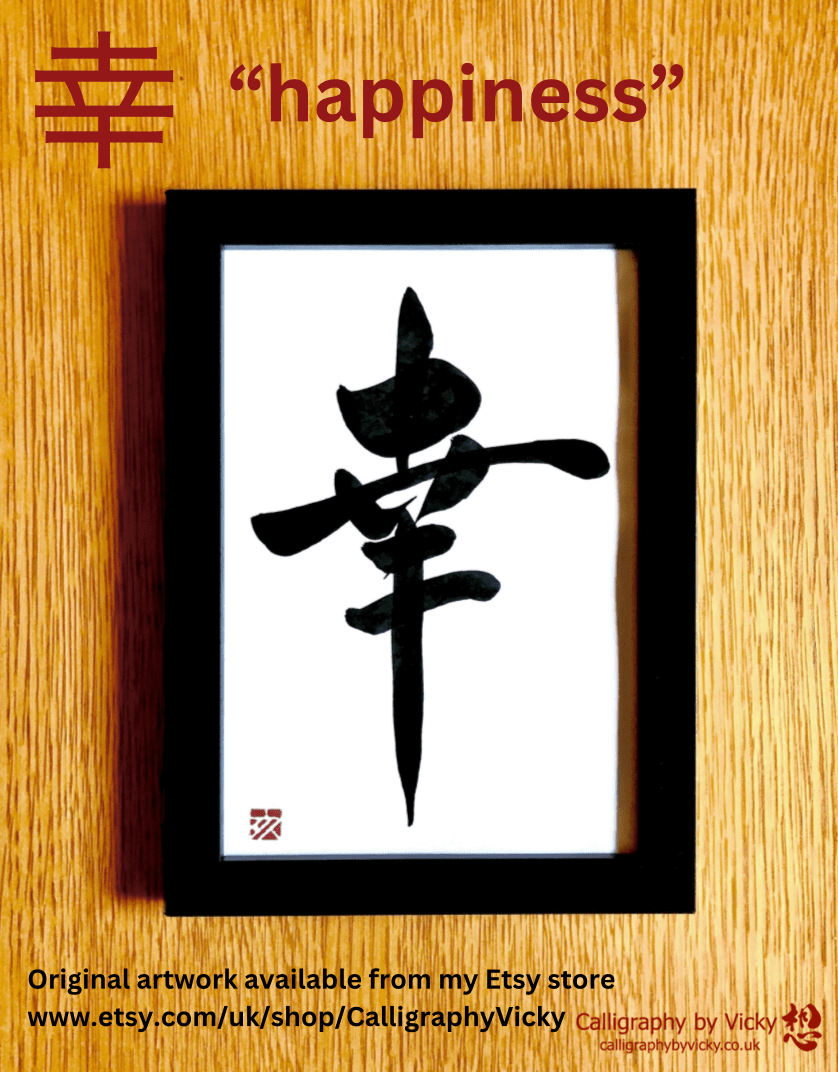
This original Japanese calligraphy artwork is available on my Etsy store
栄 “prosperity”
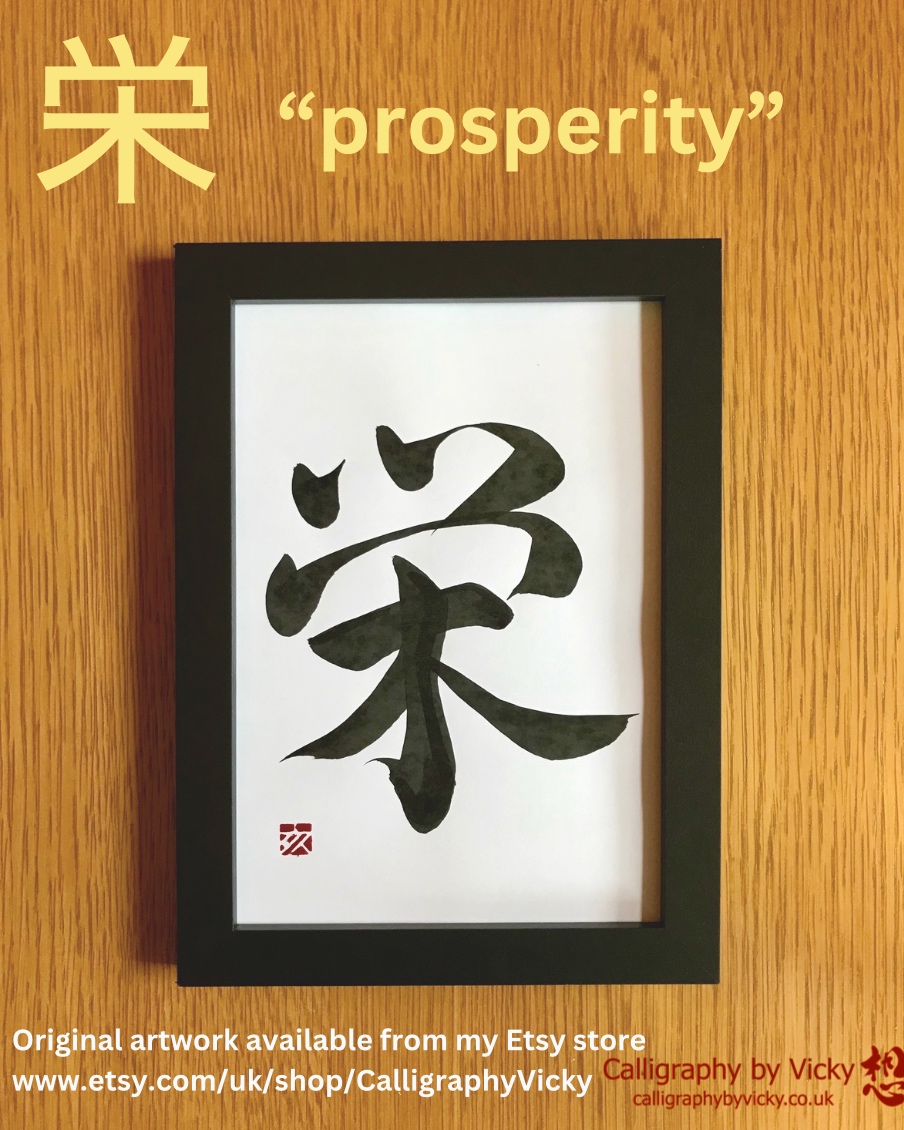
This original artwork is available from my Etsy site
寿 “congratulations”
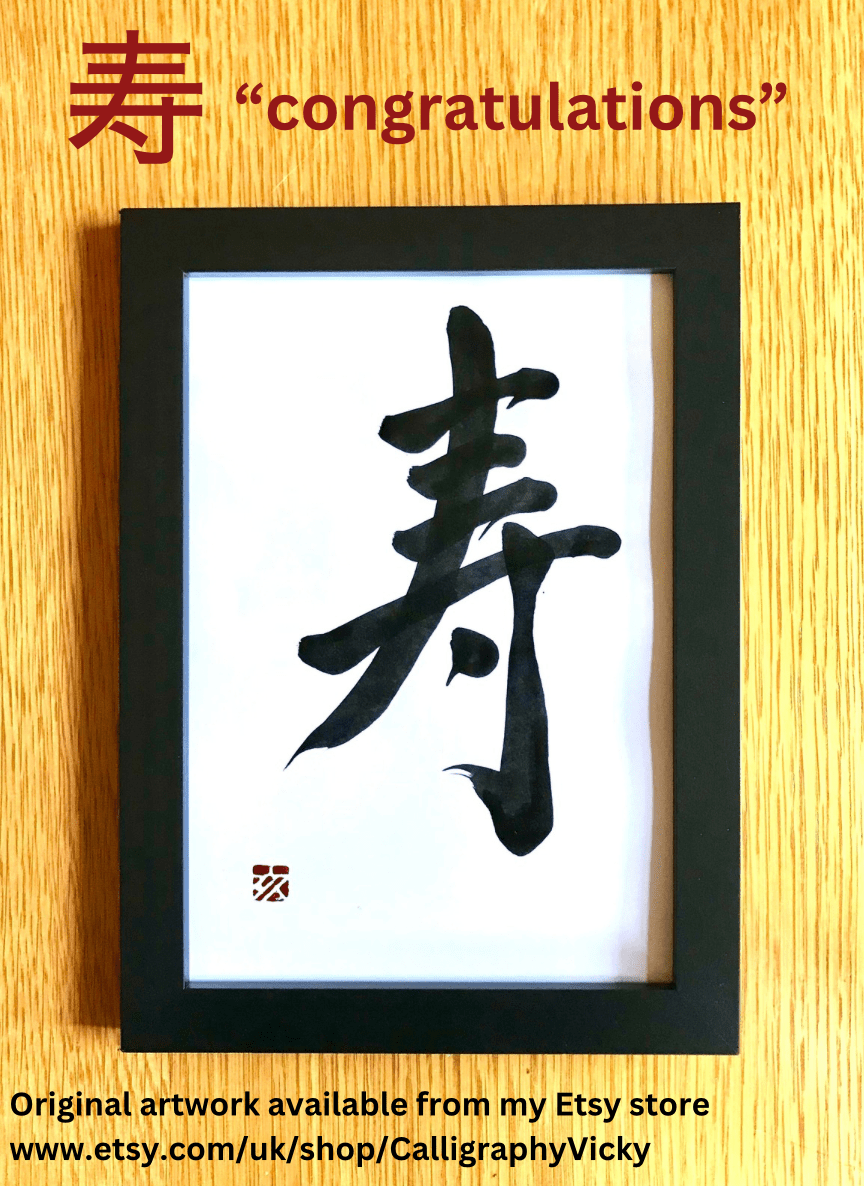
This kanji is often found on Japanese greetings cards, and also on those fancy paper envelopes you put money in when you go to a wedding. It means “congratulations”. It can also mean “long life”. It is also the first kanji in the most common way to write sushi -(寿司). This kanji is used for “sushi” not becauseContinueContinue reading “寿 “congratulations””
霜月 (shimotsuki) “November” (archaic) (literally “the month of frost”)
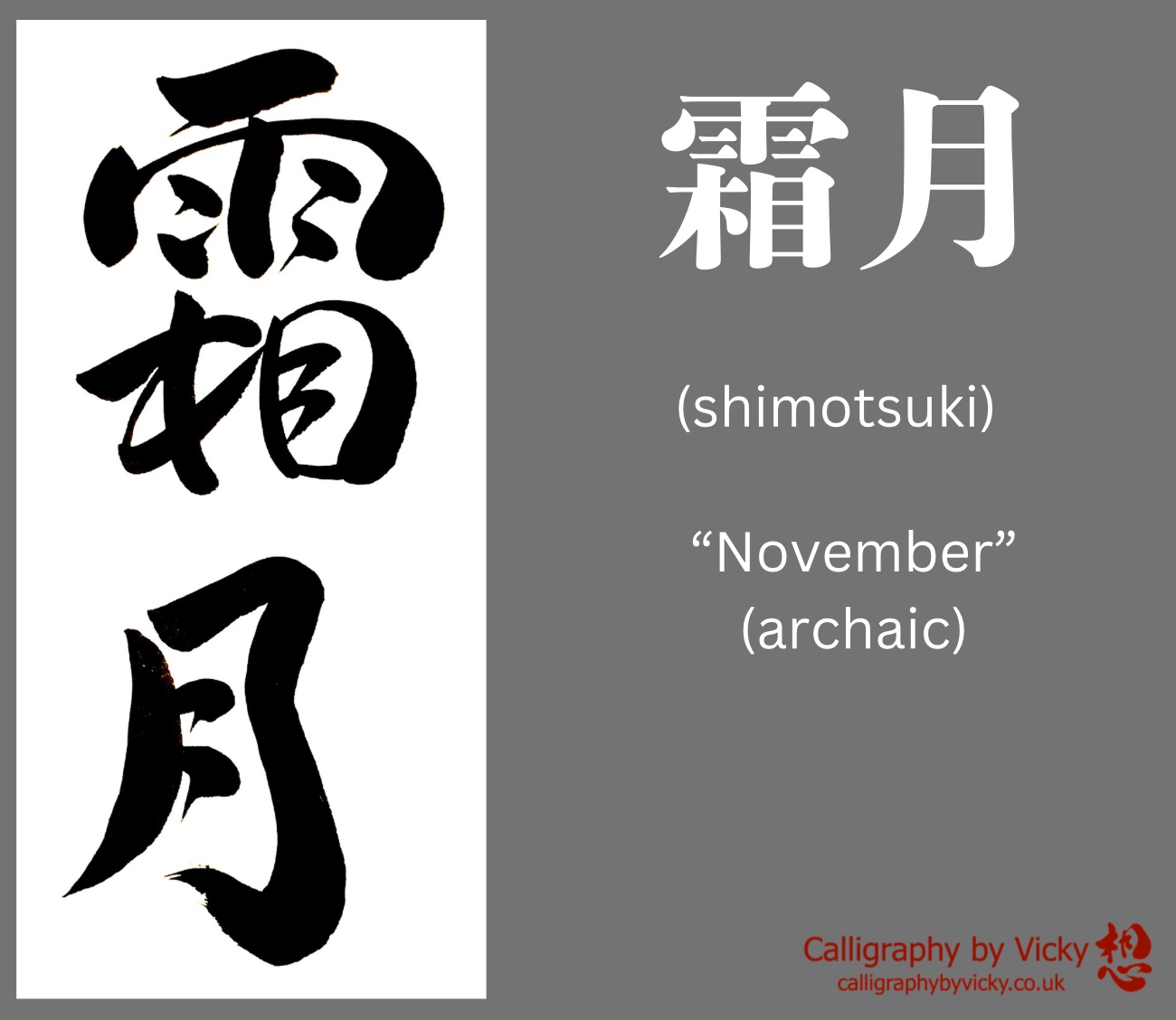
Like many countries, Japan uses a 12-month calendar. The names are very simple. January is literally “Month one”, February is “Month two”, etc: 一月 = January 二月 = February However, before the Meiji Restoration (mid-1800s) it was common to use an older 12-month system. These months’ names referenced the weather and the seasons (similar toContinueContinue reading “霜月 (shimotsuki) “November” (archaic) (literally “the month of frost”)”
花火(hanabi) “fireworks”
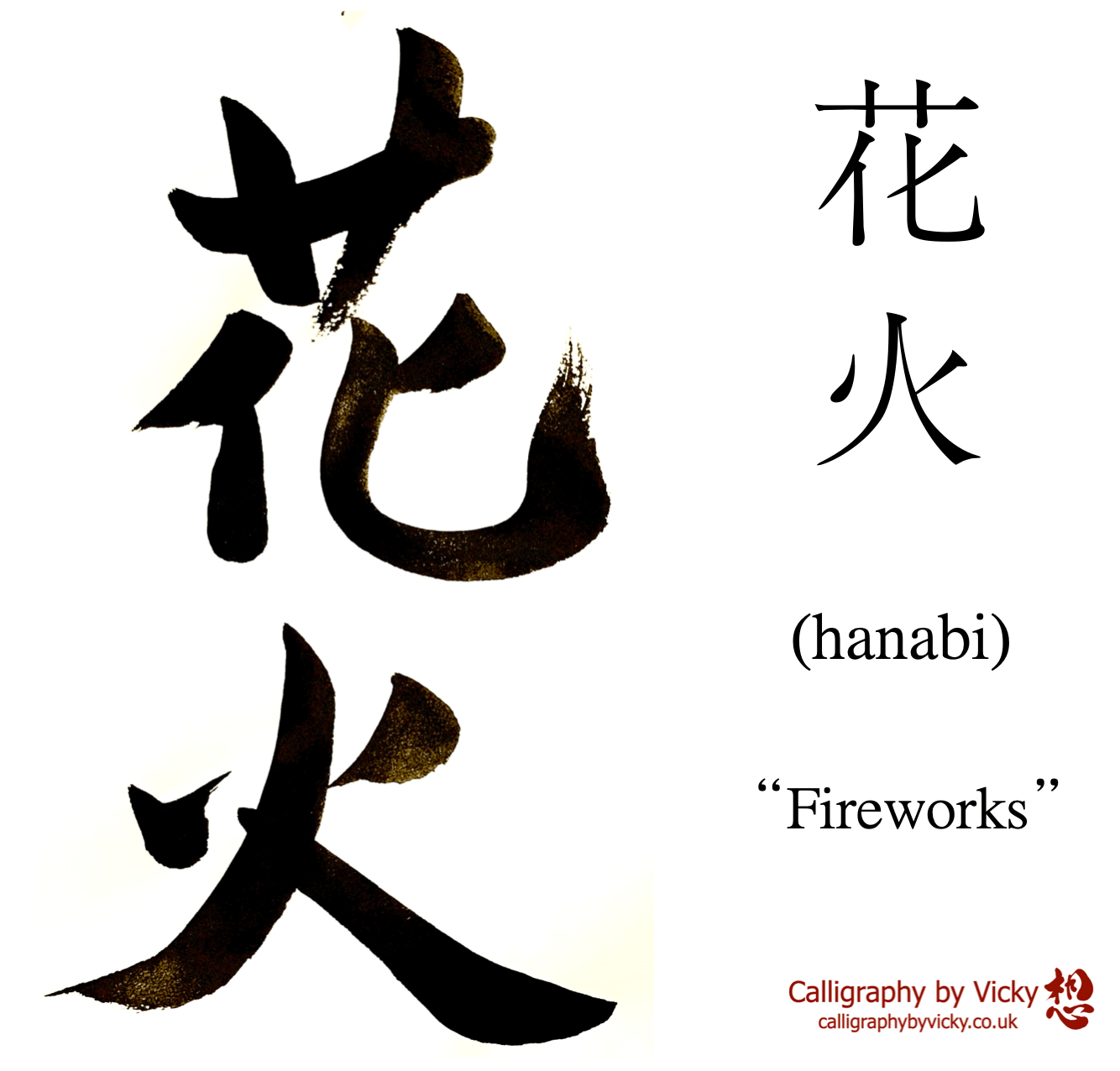
Like many celebrations across the world, fireworks often play a part in Japanese festivities. In Japan, they are most commonly associated with the summer festival. I chose to write this word because in my home country of the UK it will soon be Bonfire Night (Guy Fawkes’ Night) , a time for making fires andContinueContinue reading “花火(hanabi) “fireworks””
愛は勝つ (ai wa katsu) “love wins”
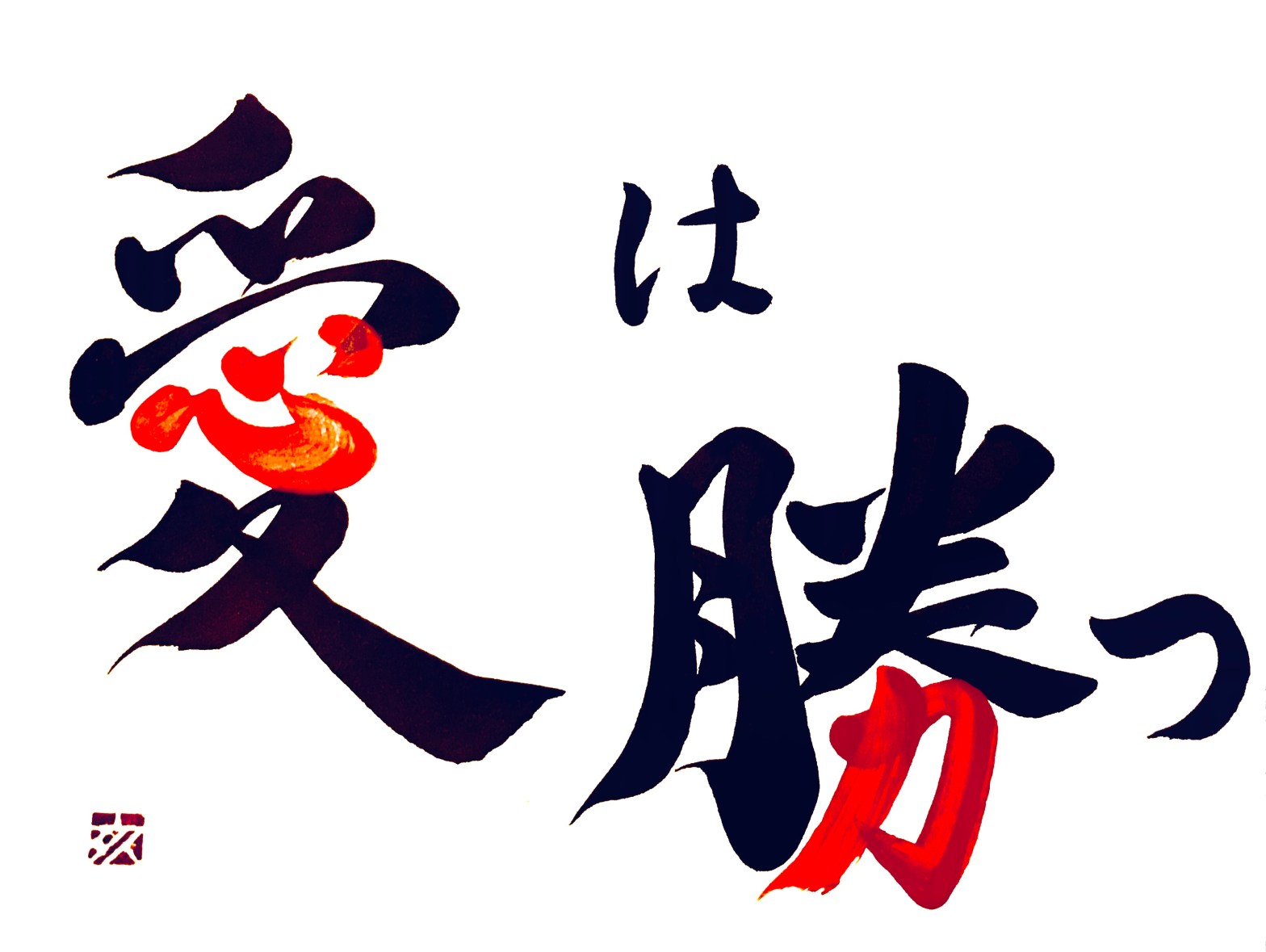
I created this as a commission for a friend who wanted to give it as part of a gift. Before writing, I double checked the Japanese with my Japanese teacher to make sure it sounded natural (I *always* do this – it saves embarrassing mistakes!). She said that as well as sounding natural, it isContinueContinue reading “愛は勝つ (ai wa katsu) “love wins””
 Calligraphy by Vicky