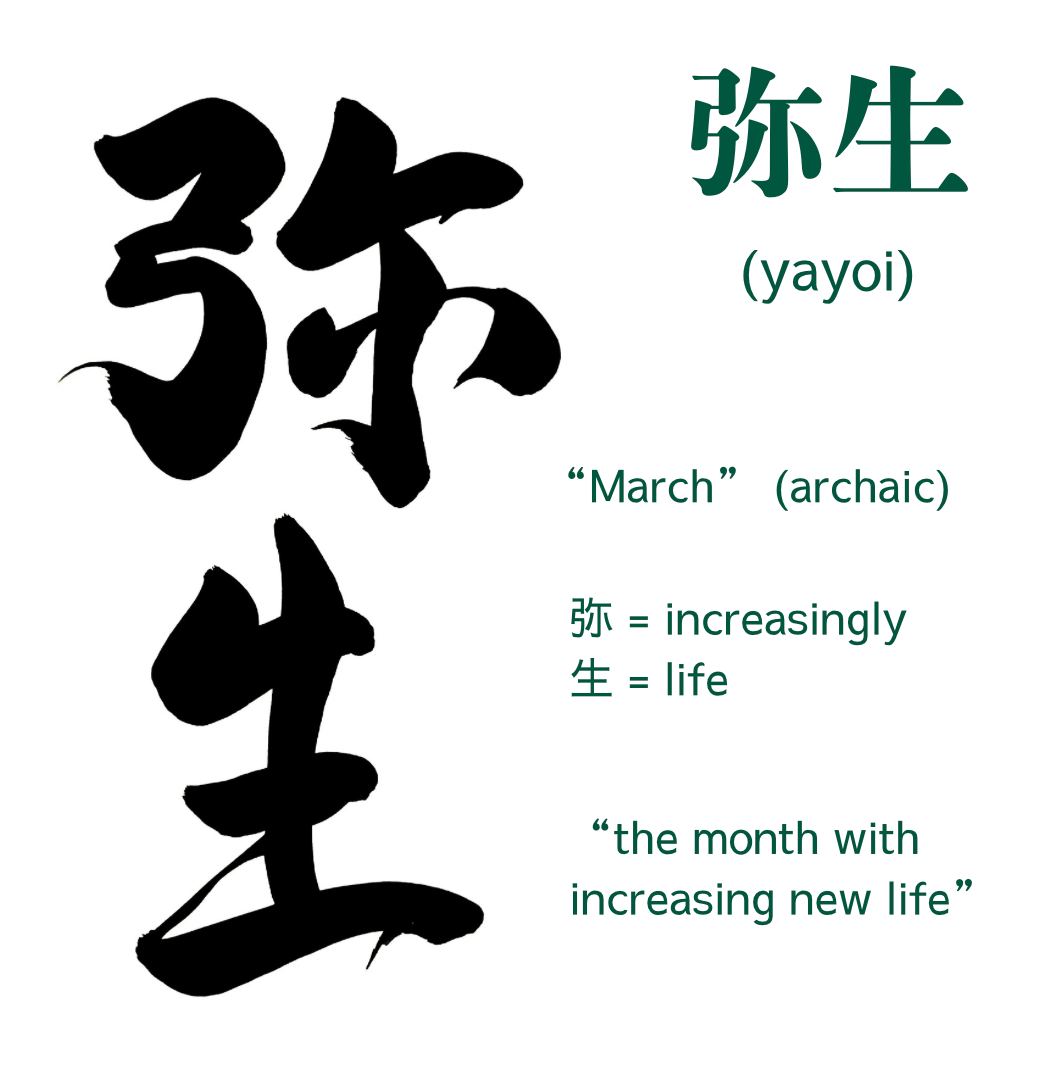
Like many countries, Japan uses a 12-month calendar. The names are very simple. January is literally “Month one”, February is “Month two”, etc. However, before the Meiji Restoration (mid-1800s) it was common to use an older 12-month system. These months’ names referenced the weather and the seasons (similar to the French Revolutionary calendar). March is:ContinueContinue reading “弥生 (yayoi) “March” (archaic)”
Tag Archives: Japanese history
金 (kin) “gold” / “money”
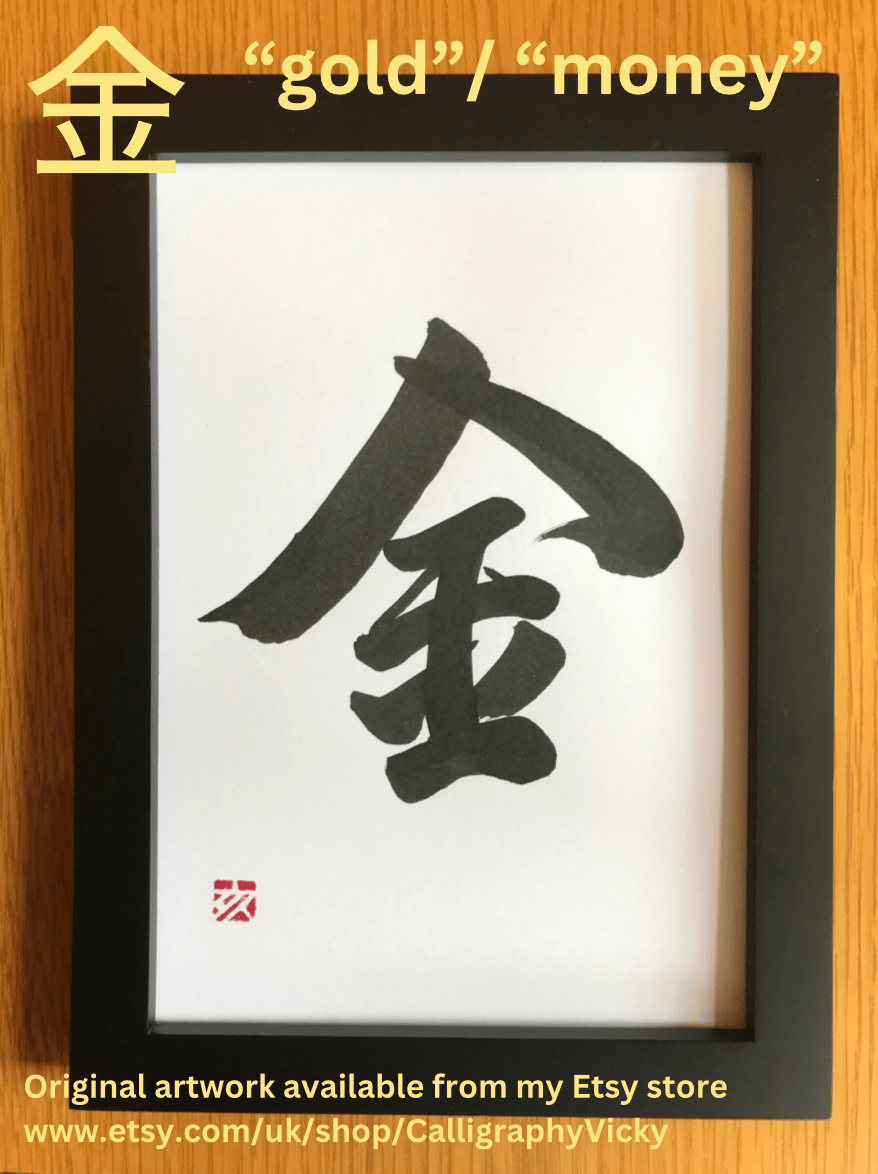
At the end of each year, Japan chooses a “Kanji of the Year”. 2024’s winner was 金, meaning “gold” or “money”. One reason is that 2024 was the year of the Paris Olympics and Paralympics, in which Japan won gold medals. 金メダル (kin medaru) = gold medal On a less positive note, Japanese economic newsContinueContinue reading “金 (kin) “gold” / “money””
如月 (kisaragi) “February” (archaic)
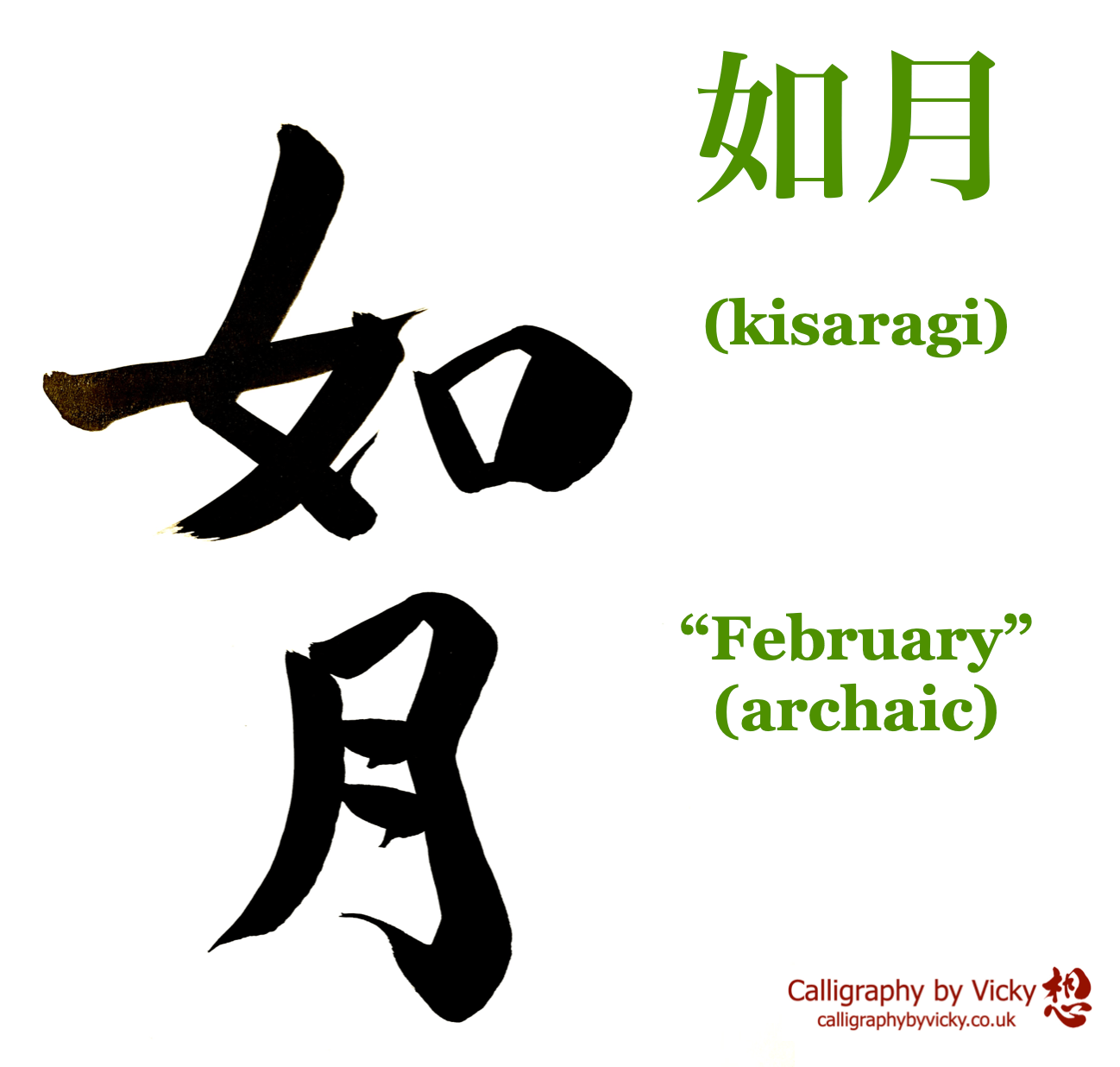
Like many countries, Japan uses a 12-month calendar. The names are very simple. January is literally “Month One”, February is “Month Two”, etc: 一月 = January 二月 = February However, before the Meiji Restoration (mid-1800s) it was common to use an older 12-month system. These months’ names referenced the weather and the seasons (similar toContinueContinue reading “如月 (kisaragi) “February” (archaic)”
悟 (Satori) “enlightenment”
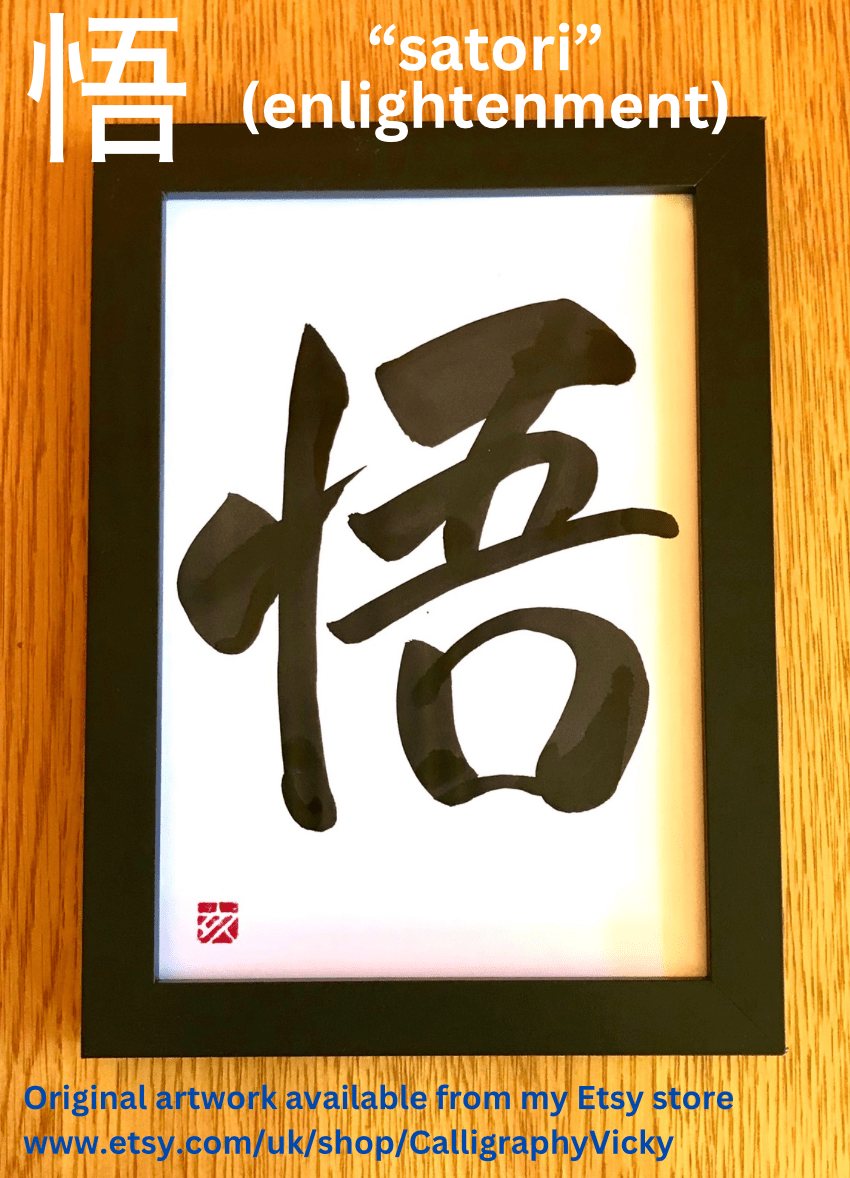
“Enlightenment is when a wave realises it is the ocean.” Thich Nhat Hanh The original artwork in the above photo is available on my Etsy store here.
師走 (shiwasu) “December” (archaic)

Like many countries, Japan uses a 12-month calendar. The names are very simple. January is literally “Month one” 一月, February is “Month two” 二月, etc. However, before the Meiji Restoration (mid-1800s) it was common to use an older 12-month system. These months’ names referenced the weather and the seasons (similar to the French Revolutionary calendar).ContinueContinue reading “師走 (shiwasu) “December” (archaic)”
栄 “prosperity”
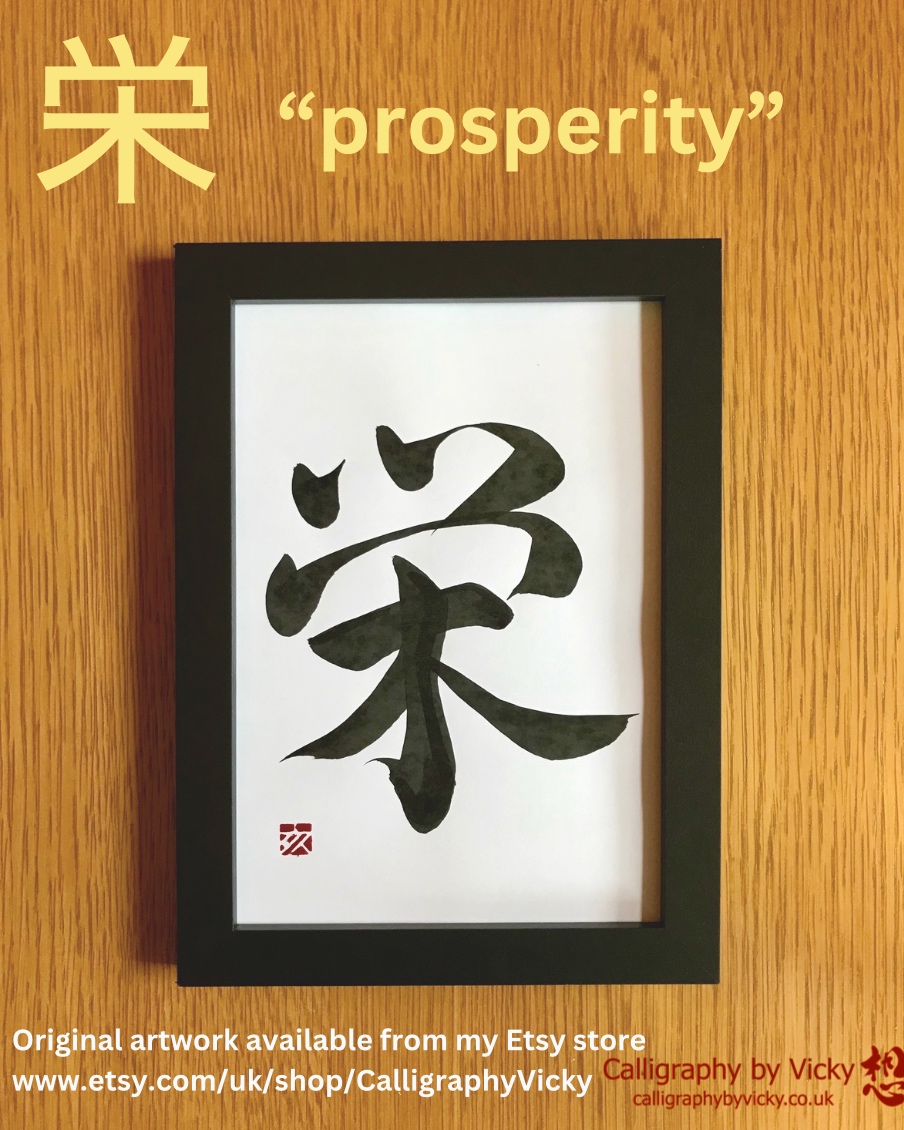
This original artwork is available from my Etsy site
霜月 (shimotsuki) “November” (archaic) (literally “the month of frost”)
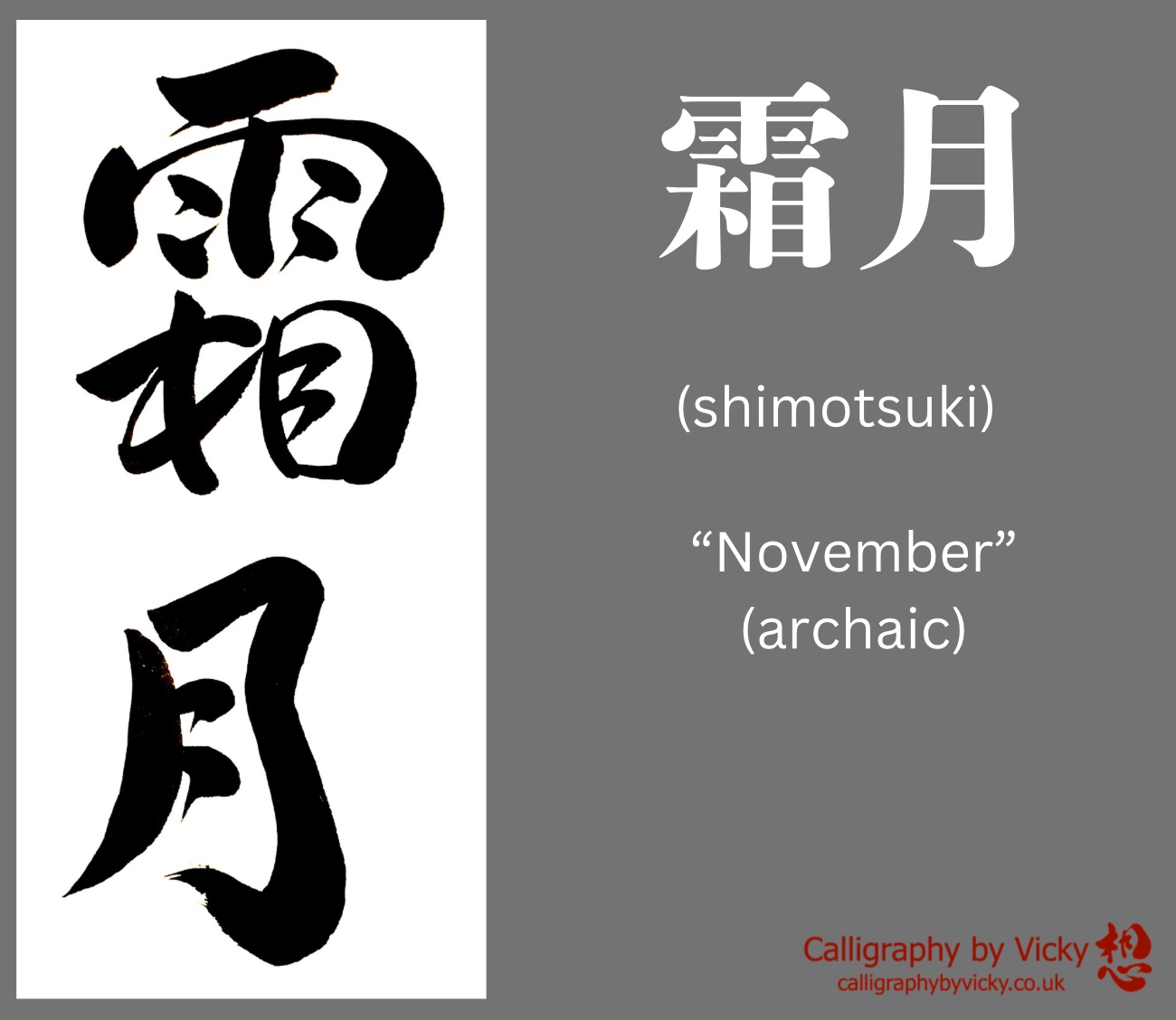
Like many countries, Japan uses a 12-month calendar. The names are very simple. January is literally “Month one”, February is “Month two”, etc: 一月 = January 二月 = February However, before the Meiji Restoration (mid-1800s) it was common to use an older 12-month system. These months’ names referenced the weather and the seasons (similar toContinueContinue reading “霜月 (shimotsuki) “November” (archaic) (literally “the month of frost”)”
無心 (mu-shin) “no-mind” or “nothingness mind”
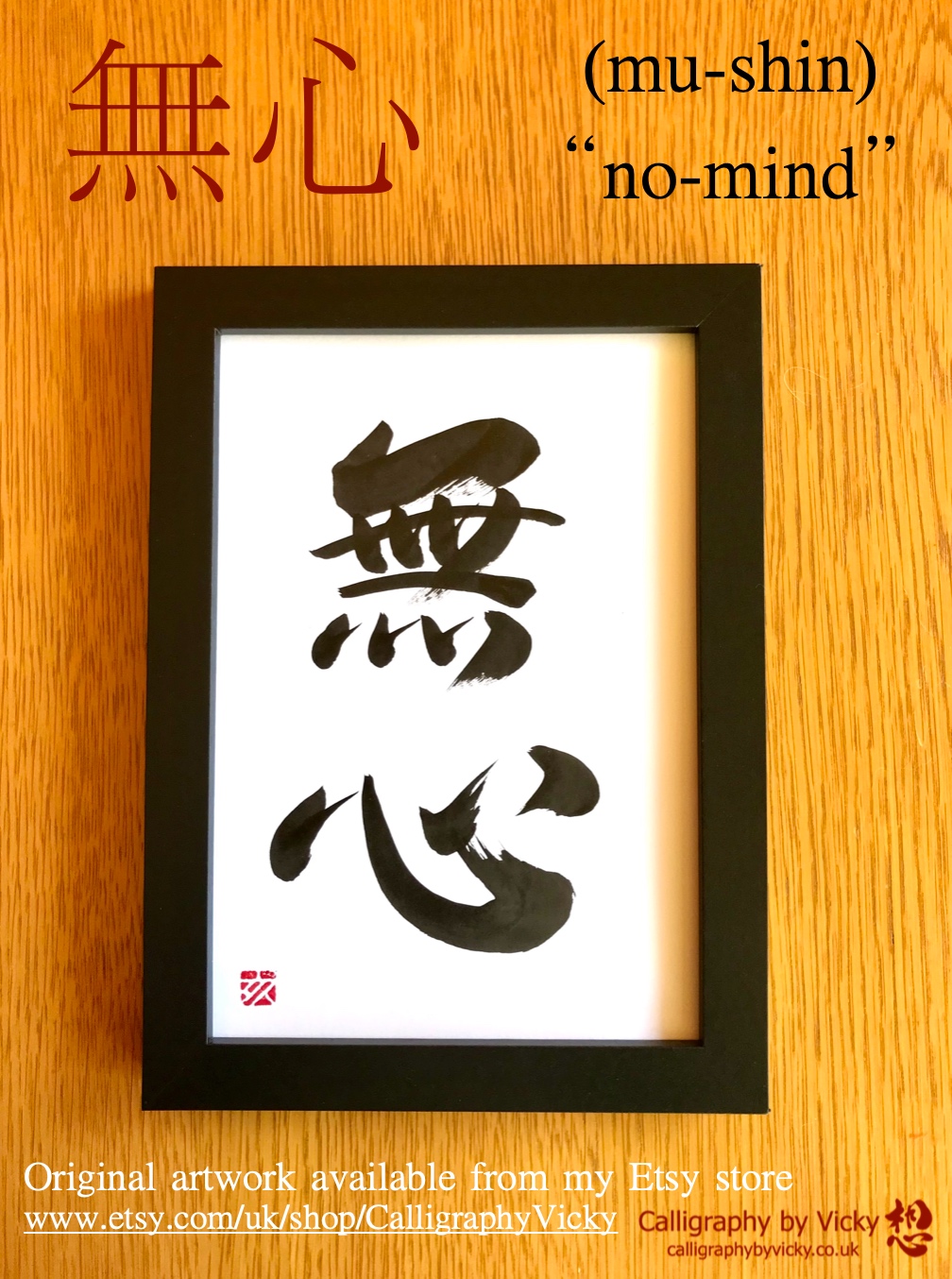
An important concept in meditation and martial arts. If you have mu-shin, your mind is free from thoughts, desires and assumptions. The Buddhist nun Reverend Jiyu-Kennett once said: “It’s nothing… but it’s the fullest kind of nothing there ever was!” When your mind is clear, and you are free from ego and can act naturallyContinueContinue reading “無心 (mu-shin) “no-mind” or “nothingness mind””
無常 (mu-jō) “impermanence”
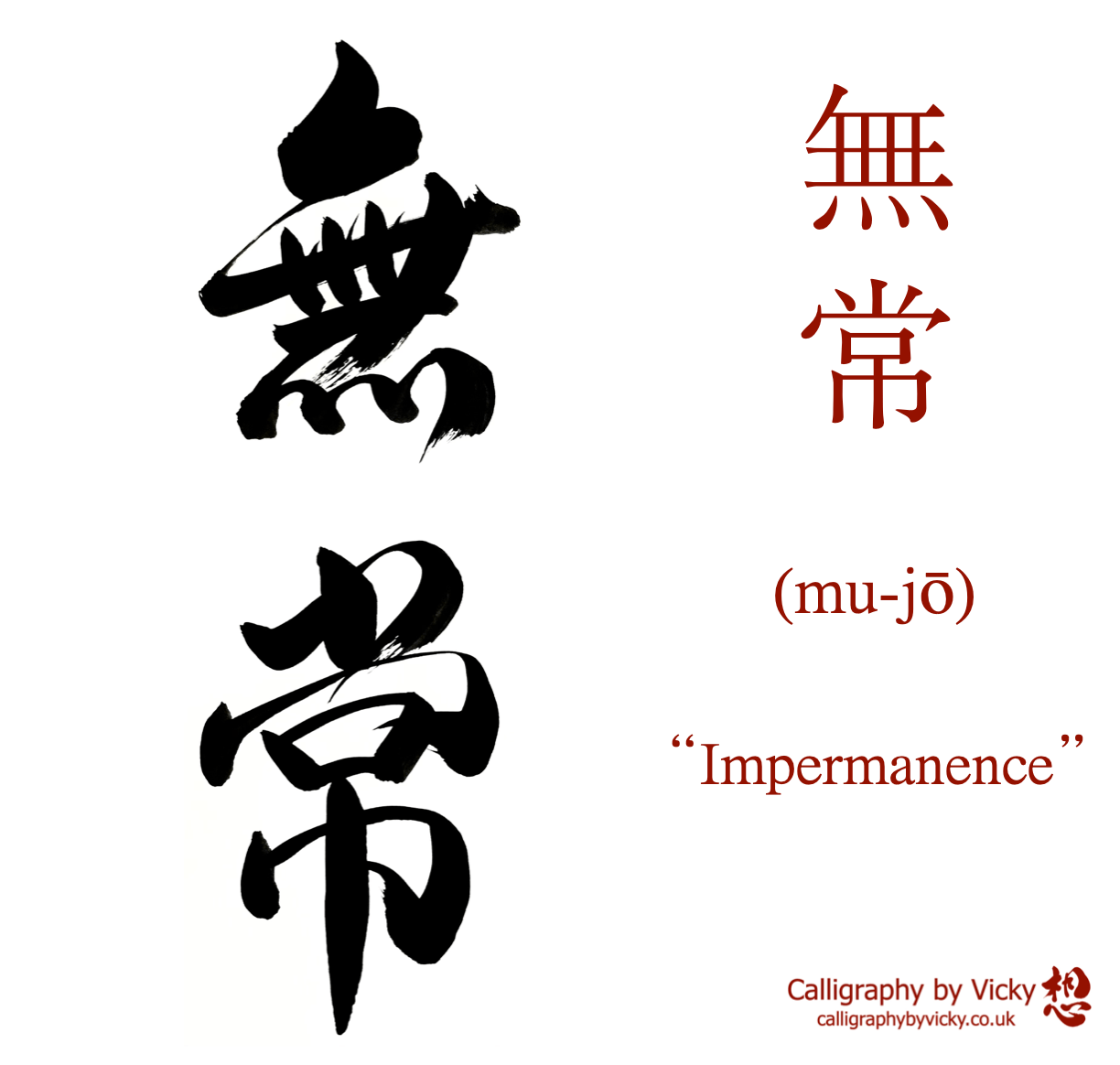
“Western aesthetics is sometimes familiar with simplicity, asymmetry and suggestion, but the idea that beauty lies in its own vanishing is an idea much less common. Perishability remains, however, what [Donald] Keene has called the ‘the most distinctively Japanese aesthetic ideal’. It is certainly among the earliest, being based on the Buddhist concept of “mujō”…ContinueContinue reading “無常 (mu-jō) “impermanence””
悟 (Satori) “enlightenment”

Satori is the Japanese word for the buddhist concept of enlightenment. It is said that once one has experienced satori, one’s perspective on life is forever changed. The artwork in the above photo is one of my original one-offs. You can own it by purchasing it from my Etsy store here.
 Calligraphy by Vicky