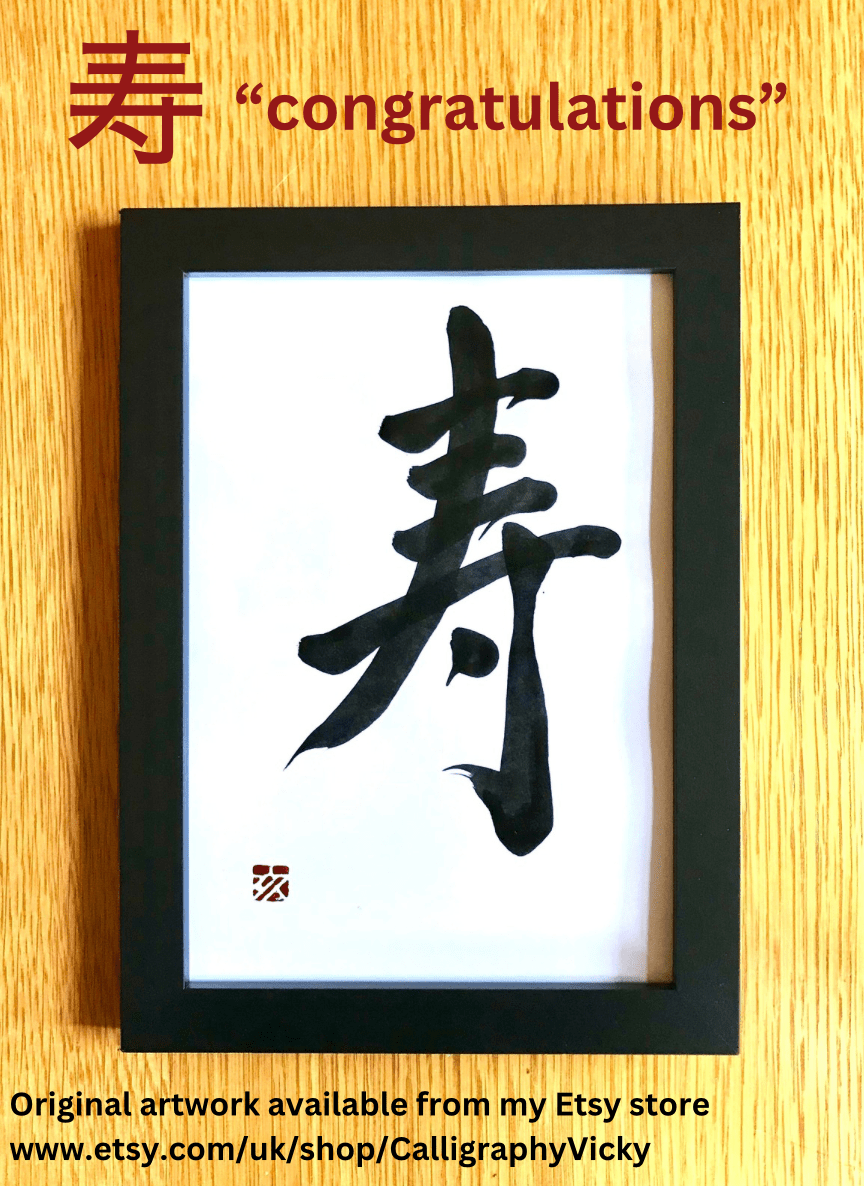
This kanji is often found on Japanese greetings cards, and also on those fancy paper envelopes you put money in when you go to a wedding. It means “congratulations”. It can also mean “long life”. It is also the first kanji in the most common way to write sushi -(寿司). This kanji is used for “sushi” not becauseContinueContinue reading “寿 “congratulations””
Tag Archives: japanese culture
霜月 (shimotsuki) “November” (archaic) (literally “the month of frost”)
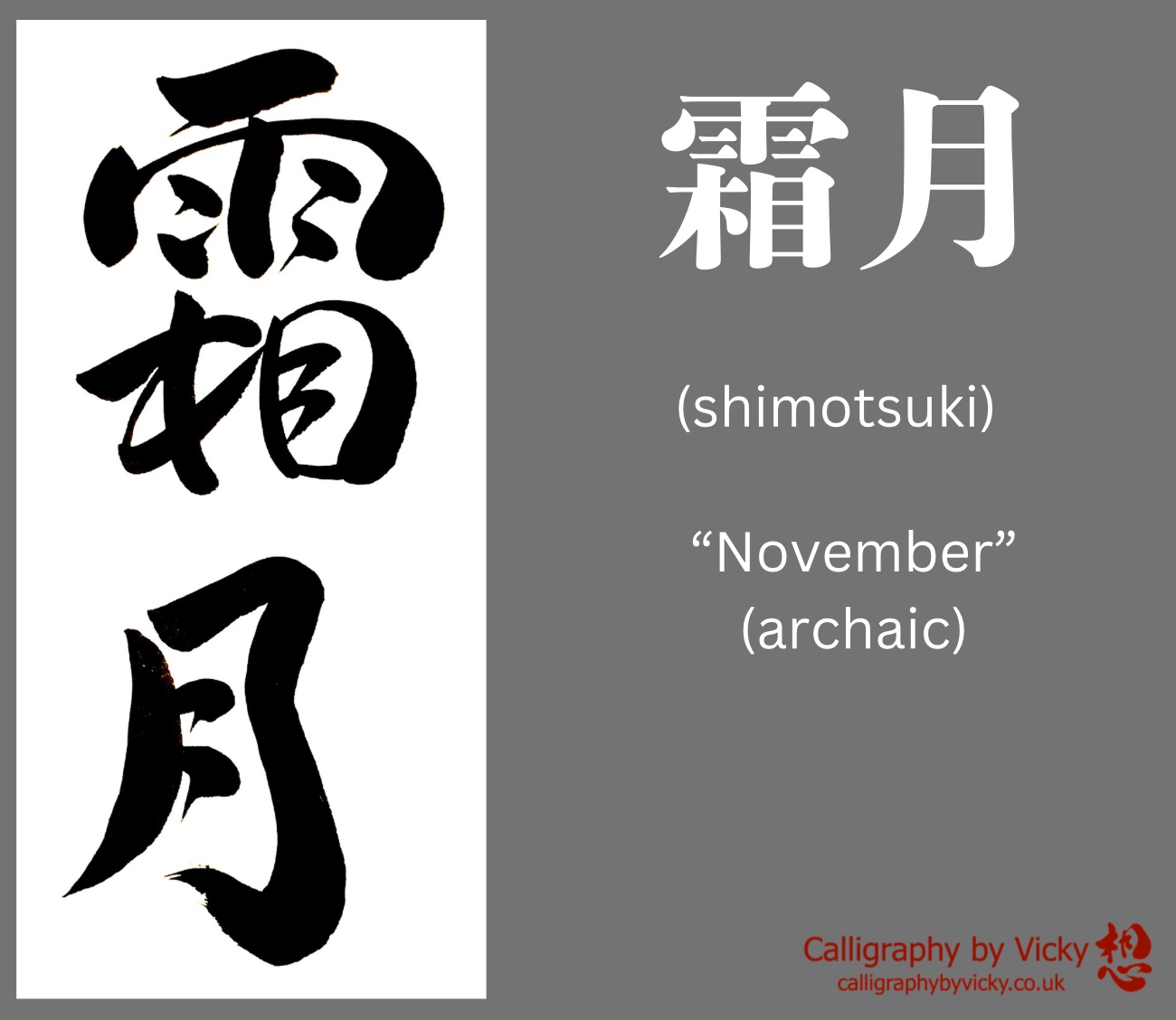
Like many countries, Japan uses a 12-month calendar. The names are very simple. January is literally “Month one”, February is “Month two”, etc: 一月 = January 二月 = February However, before the Meiji Restoration (mid-1800s) it was common to use an older 12-month system. These months’ names referenced the weather and the seasons (similar toContinueContinue reading “霜月 (shimotsuki) “November” (archaic) (literally “the month of frost”)”
花火(hanabi) “fireworks”
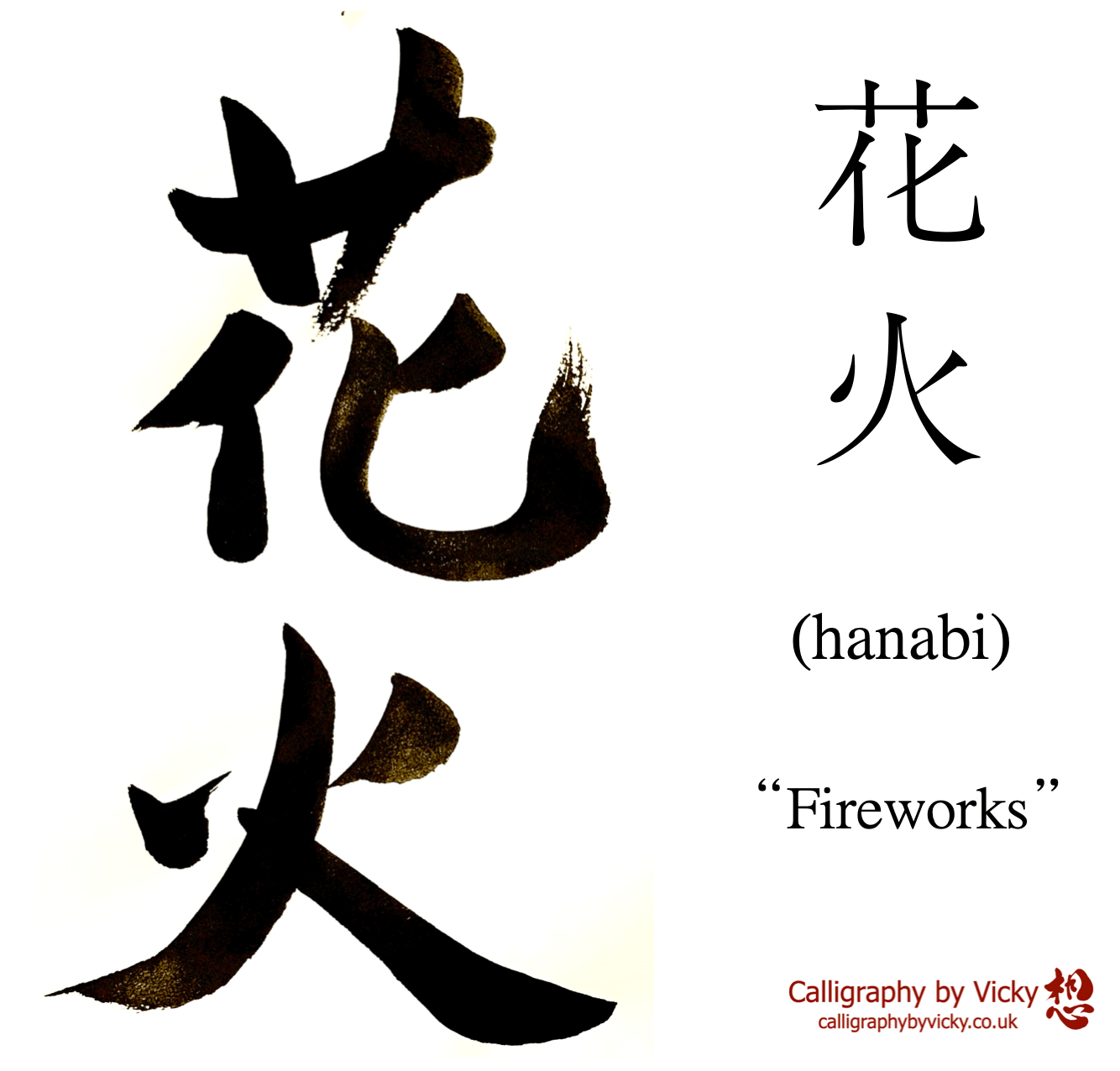
Like many celebrations across the world, fireworks often play a part in Japanese festivities. In Japan, they are most commonly associated with the summer festival. I chose to write this word because in my home country of the UK it will soon be Bonfire Night (Guy Fawkes’ Night) , a time for making fires andContinueContinue reading “花火(hanabi) “fireworks””
愛は勝つ (ai wa katsu) “love wins”
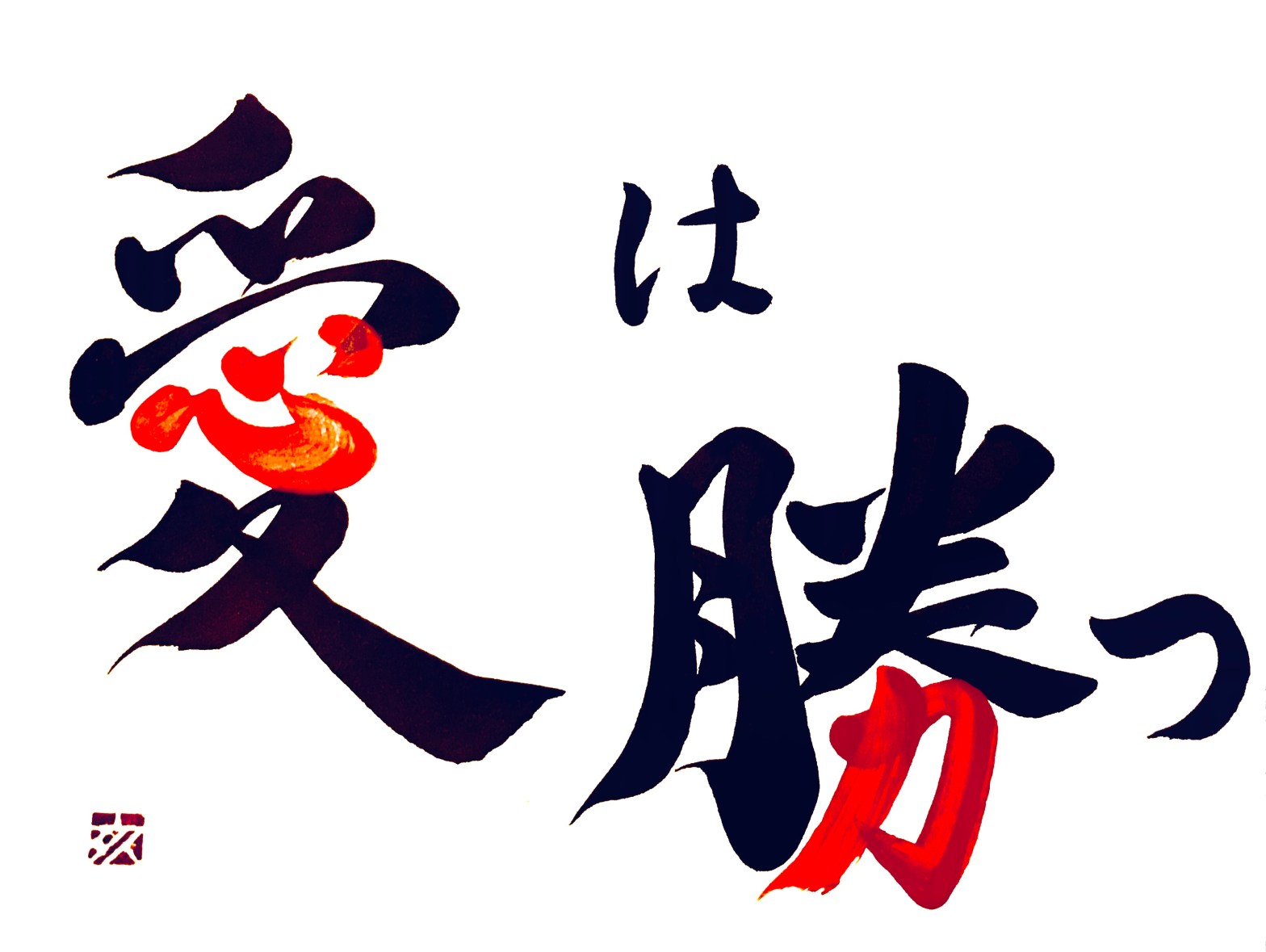
I created this as a commission for a friend who wanted to give it as part of a gift. Before writing, I double checked the Japanese with my Japanese teacher to make sure it sounded natural (I *always* do this – it saves embarrassing mistakes!). She said that as well as sounding natural, it isContinueContinue reading “愛は勝つ (ai wa katsu) “love wins””
龍 (ryuu) “dragon”
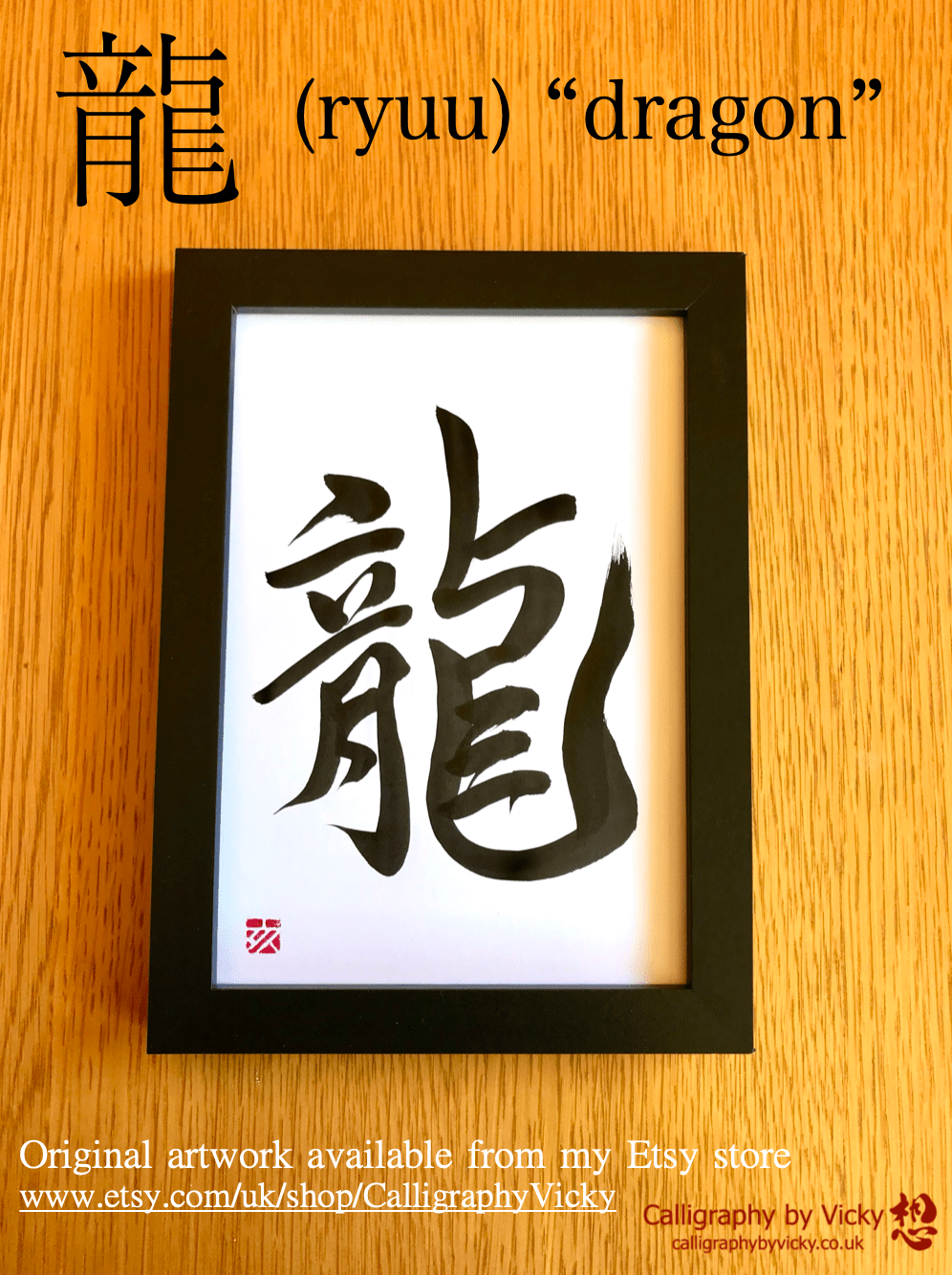
If you visit a shrine or temple in Japan, look up at the ceiling in the main room. Often it will be painted with the image of a dragon. One reason for this is that dragons represent the virtue of courage. However there is also a more superstitious reason: dragons are associated with the elementContinueContinue reading “龍 (ryuu) “dragon””
恩 (on) “favour, gratitude, obligation”

“On” is the concept of having received a great favour, feeling grateful, and knowing that you owe somebody a lot. The way it is used in Japanese makes it seem like less of a subjective feeling, and more of a tangible object, like a thing that you now possess because somebody helped you greatly. InContinueContinue reading “恩 (on) “favour, gratitude, obligation””
無心 (mu-shin) “no-mind” or “nothingness mind”
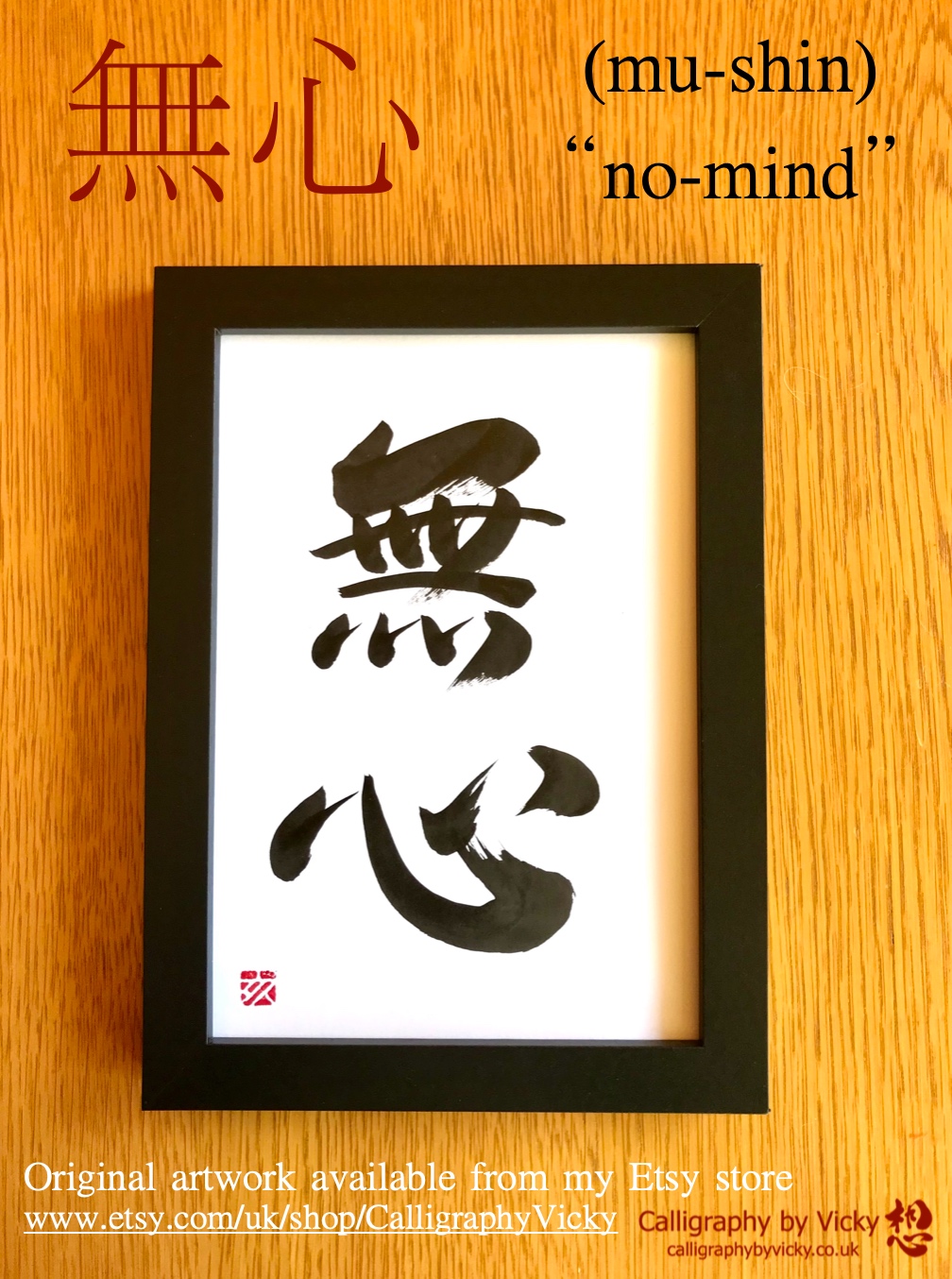
An important concept in meditation and martial arts. If you have mu-shin, your mind is free from thoughts, desires and assumptions. The Buddhist nun Reverend Jiyu-Kennett once said: “It’s nothing… but it’s the fullest kind of nothing there ever was!” When your mind is clear, and you are free from ego and can act naturallyContinueContinue reading “無心 (mu-shin) “no-mind” or “nothingness mind””
無常 (mu-jō) “impermanence”
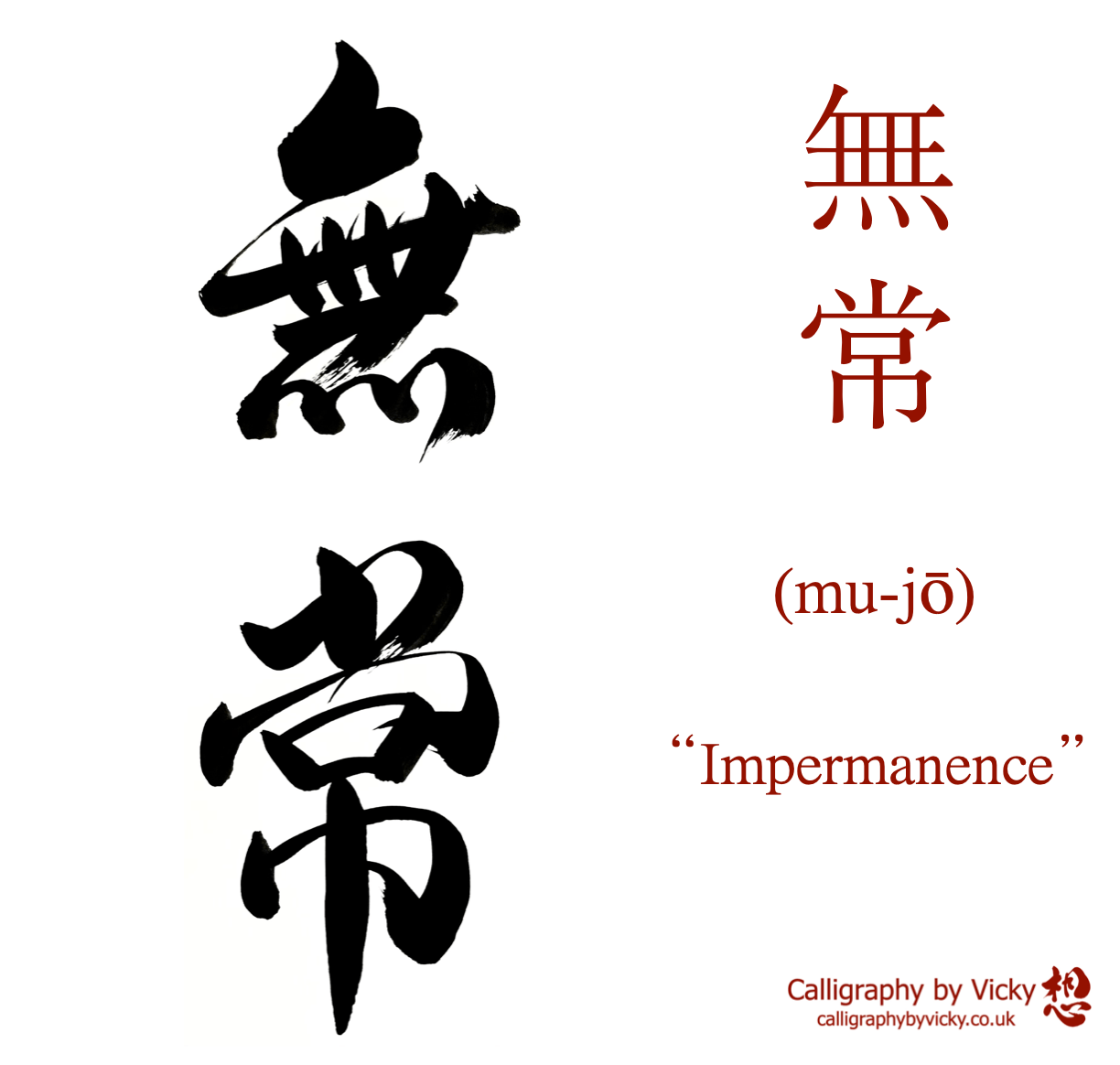
“Western aesthetics is sometimes familiar with simplicity, asymmetry and suggestion, but the idea that beauty lies in its own vanishing is an idea much less common. Perishability remains, however, what [Donald] Keene has called the ‘the most distinctively Japanese aesthetic ideal’. It is certainly among the earliest, being based on the Buddhist concept of “mujō”…ContinueContinue reading “無常 (mu-jō) “impermanence””
言霊 (kotodama) “word-spirit”

Kotodama refers to the traditional belief that mystical powers dwell in words and names. Just like martial arts practitioners giving out a shout when they make a strike (“ki-ai” – literally “meeting of spirit”) it is believed that sounds can affect our body, mind and souls.
悟 (Satori) “enlightenment”

Satori is the Japanese word for the buddhist concept of enlightenment. It is said that once one has experienced satori, one’s perspective on life is forever changed. The artwork in the above photo is one of my original one-offs. You can own it by purchasing it from my Etsy store here.
 Calligraphy by Vicky