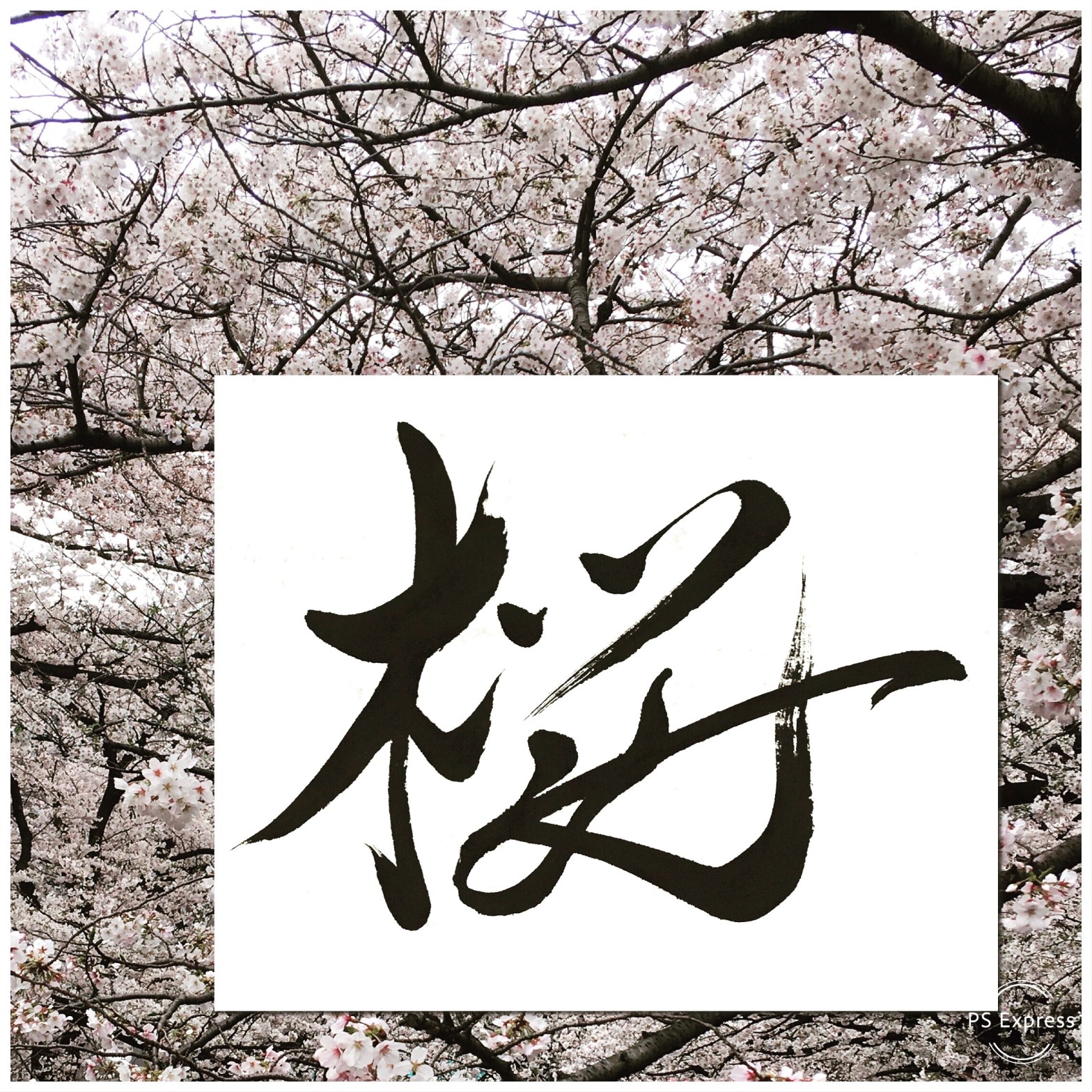
桜 (sakura) = cherry blossom 🌸🌸🌸 It’s cherry blossom season! 🌸🌸🌸
Category Archives: Uncategorized
梅 (umé) PLUM BLOSSOM

It’s blossom season in Japan! Cherry blossoms are by far the most famous of Japanese flowers. They’re also the national flower, and appear on the 100 yen coin. However, they’re not the first spring flower to bloom. Plum blossom season usually starts earlier than cherry blossom season, with the first blossoms appearing as early asContinueContinue reading “梅 (umé) PLUM BLOSSOM”
脱俗 (datsuzoku) “break from routine”
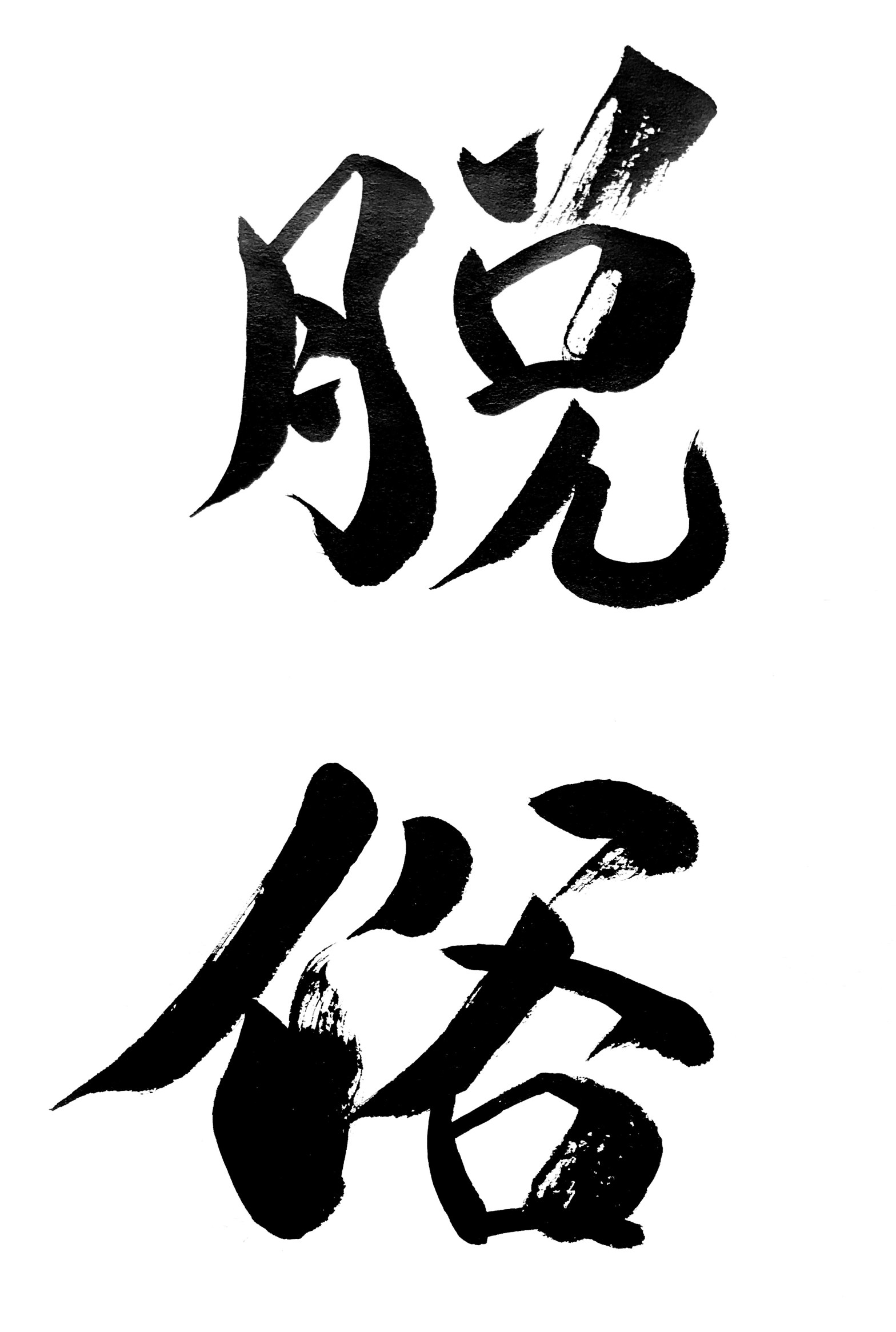
脱 = remove, get rid of (this kanji is also used to describe undressing) 俗 = customs, manners 脱俗 refers to a break from one’s daily routine or habit, or freedom from the commonplace. It involves a feeling of transcending the ordinary and conventional. If you take regular timeouts and consciously break well-worn patterns, youContinueContinue reading “脱俗 (datsuzoku) “break from routine””
恵 (megumi) “blessed”
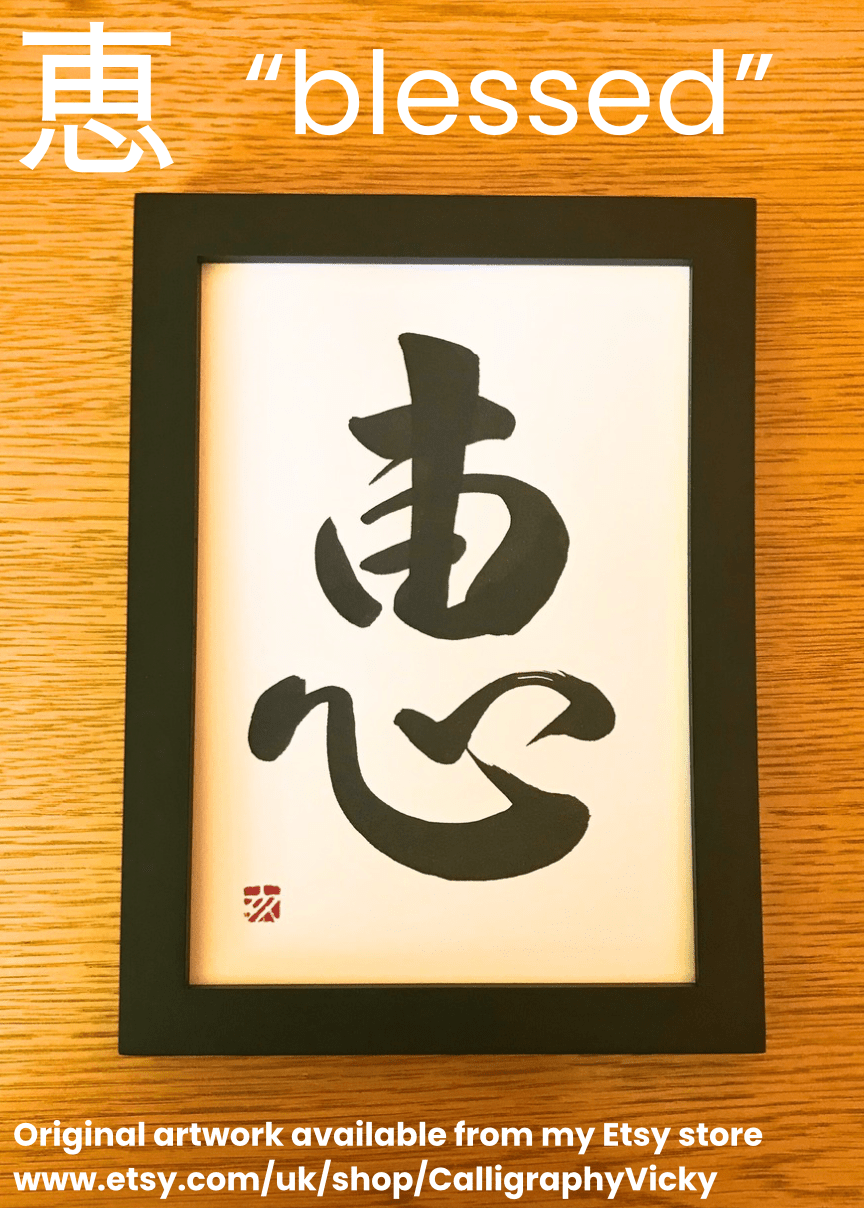
⭐️ “Megumi” is used to describe a situation that is full of something positive. 🌺 For example, “a field full of flowers” could be said like this: 「花に恵まれたこの野」 Literally, “a field blessed with flowers”. 👧 It’s also a fairly common girls’ name. The original artwork in the photo is available from my Etsy store here.
改善 (kai-zen) “continuous improvement”
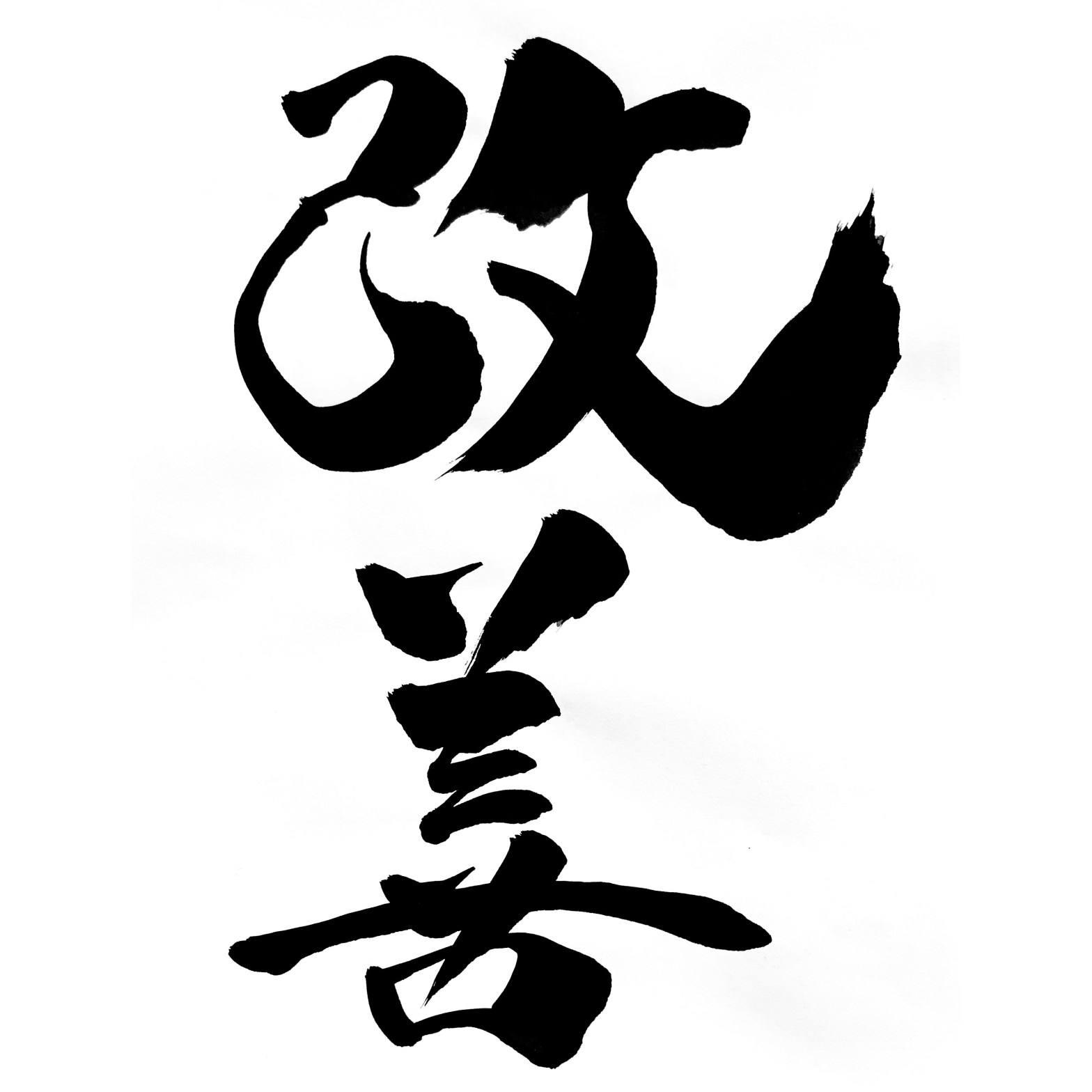
Kaizen is a Japanese term meaning “change for the better” or “continuous improvement.” It is the Japanese business philosophy of continuously improving operations. Kaizen sees improvement in productivity as a gradual and methodical process. The kaizen concept asserts that there is no perfect end. Everything can be improved upon, and all employees must strive toContinueContinue reading “改善 (kai-zen) “continuous improvement””
金 (kin) “gold” / “money”
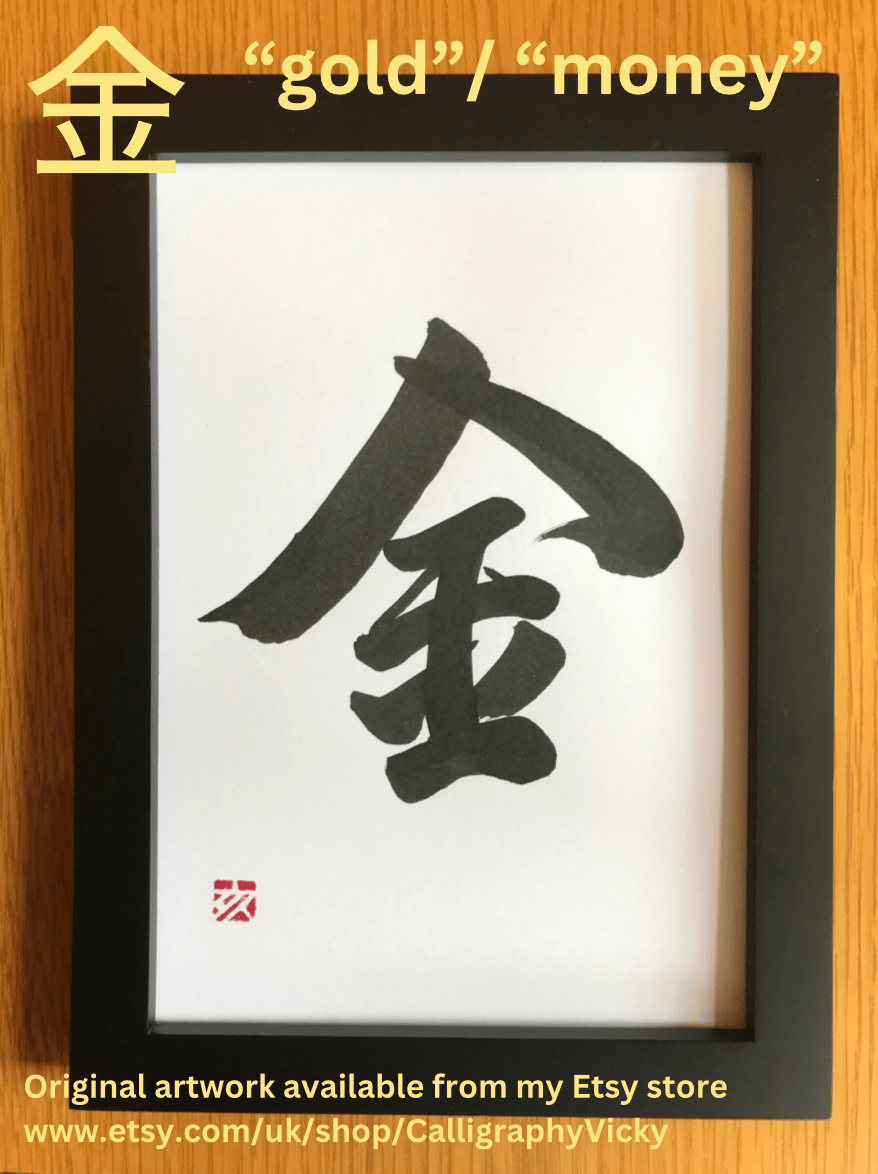
At the end of each year, Japan chooses a “Kanji of the Year”. 2024’s winner was 金, meaning “gold” or “money”. One reason is that 2024 was the year of the Paris Olympics and Paralympics, in which Japan won gold medals. 金メダル (kin medaru) = gold medal On a less positive note, Japanese economic newsContinueContinue reading “金 (kin) “gold” / “money””
如月 (kisaragi) “February” (archaic)
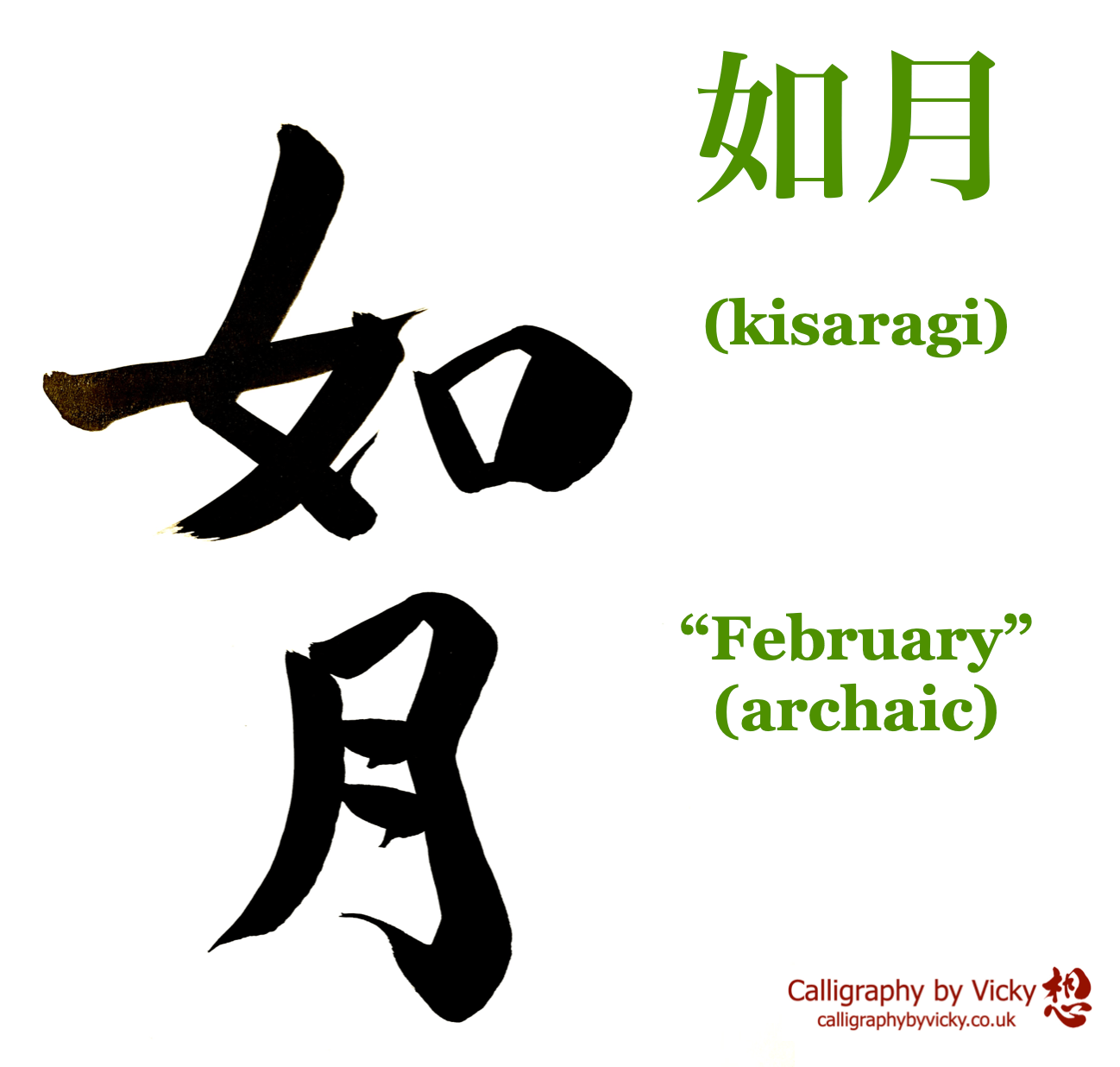
Like many countries, Japan uses a 12-month calendar. The names are very simple. January is literally “Month One”, February is “Month Two”, etc: 一月 = January 二月 = February However, before the Meiji Restoration (mid-1800s) it was common to use an older 12-month system. These months’ names referenced the weather and the seasons (similar toContinueContinue reading “如月 (kisaragi) “February” (archaic)”
鬼 (oni) “Demon”
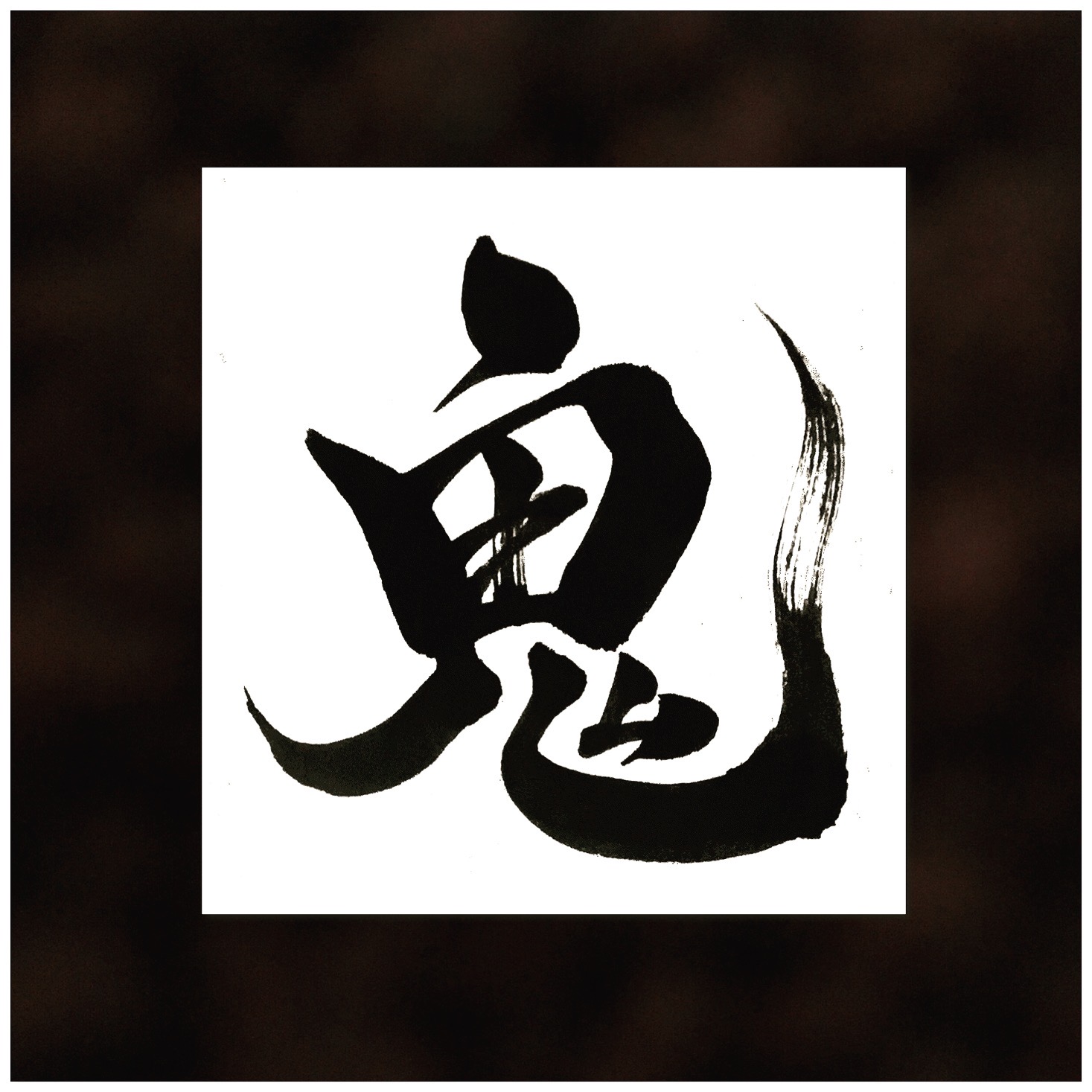
Sometimes translated as “demon”, “devil” or “ogre”, an oni is a traditional Japanese monster typically depicted as wearing a tiger pelt and carrying an iron club. They usually have red or blue skin and horns. They are popular characters in Japanese fairy tales and legends. In early February the annual bean-throwing festival is practiced toContinueContinue reading “鬼 (oni) “Demon””
悟 (Satori) “enlightenment”
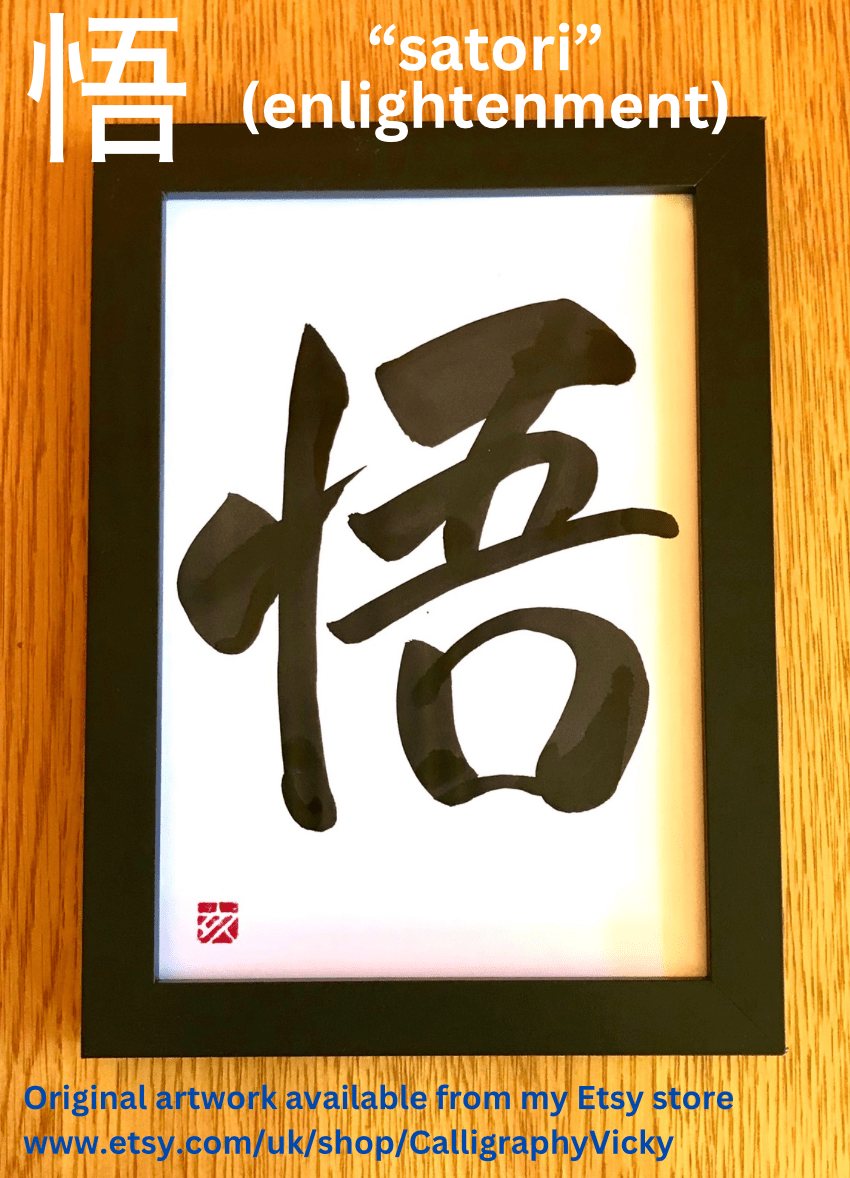
“Enlightenment is when a wave realises it is the ocean.” Thich Nhat Hanh The original artwork in the above photo is available on my Etsy store here.
書初め (kakizomé) The First Calligraphy of the New Year
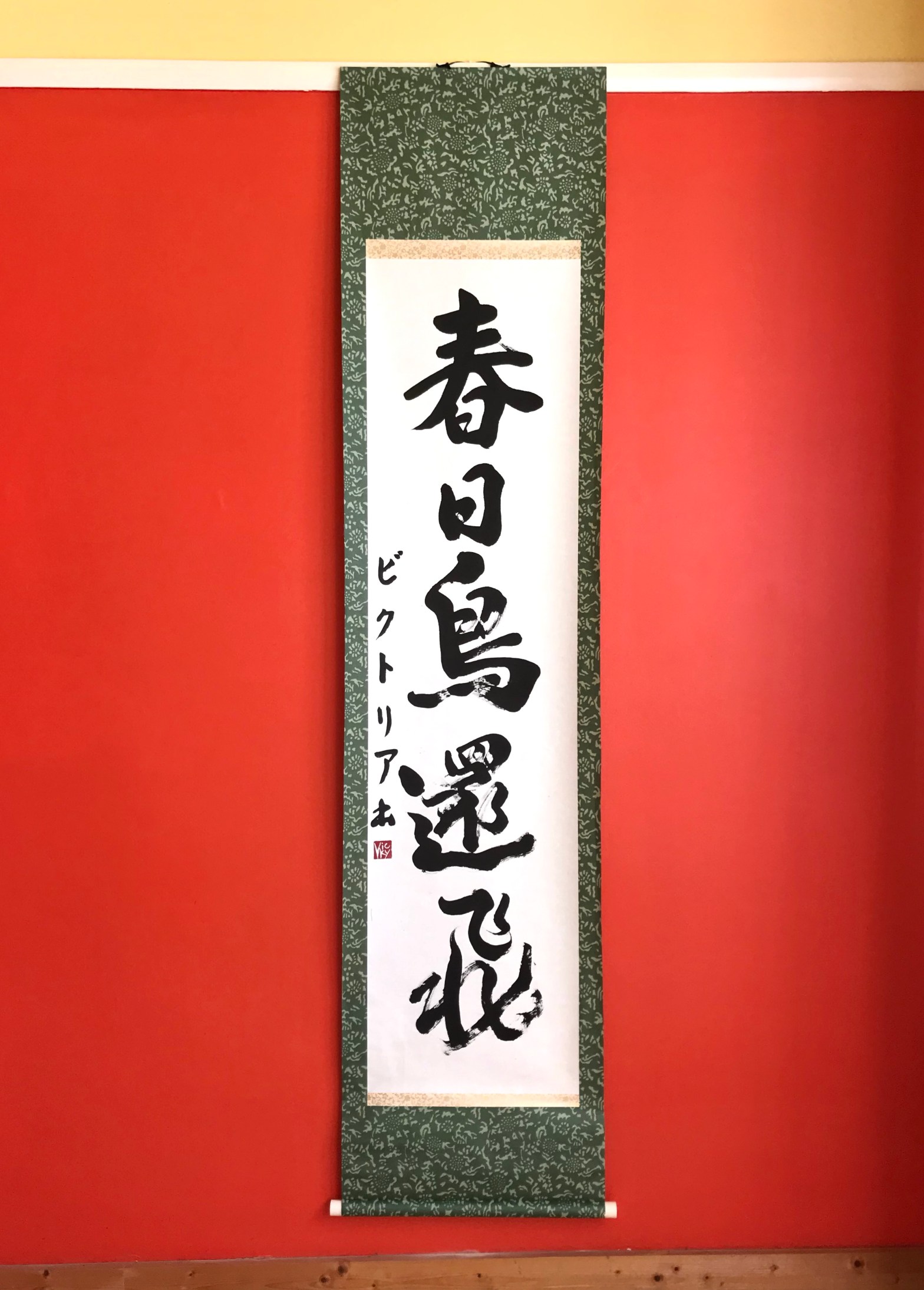
New Year’s is the biggest festival in Japan. As a time for new beginnings, it is often observed by doing activities “for the first time in the new year”. The first calligraphy of the new year is called 書初め (kakizomé). 書 = writing (as in 書道 – Japanese calligraphy, or “the way of writing”) 初ContinueContinue reading “書初め (kakizomé) The First Calligraphy of the New Year”
 Calligraphy by Vicky