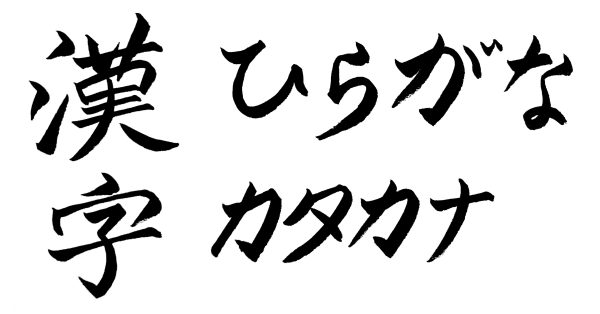
When you begin learning Japanese, chances are you’ll find yourself coming up against not only one writing system, but multiple.
The text below is taken from Wikipedia’s entry on kanji. I’ve coloured each of the writing systems in a different colour:
また、英語圏やフランス語圏で「Kanji」と言う場合は、日本の漢字、狭義では新字体を指す。
As you can see, four writing systems are used.
They are:
Each of these writing systems has its own purpose and place within the written Japanese language. (There is also a secret fifth one!)
In this article I give a very brief overview of each of the Japanese writing systems, and explain how they combine together in a sentence.
1) 漢字 Kanji
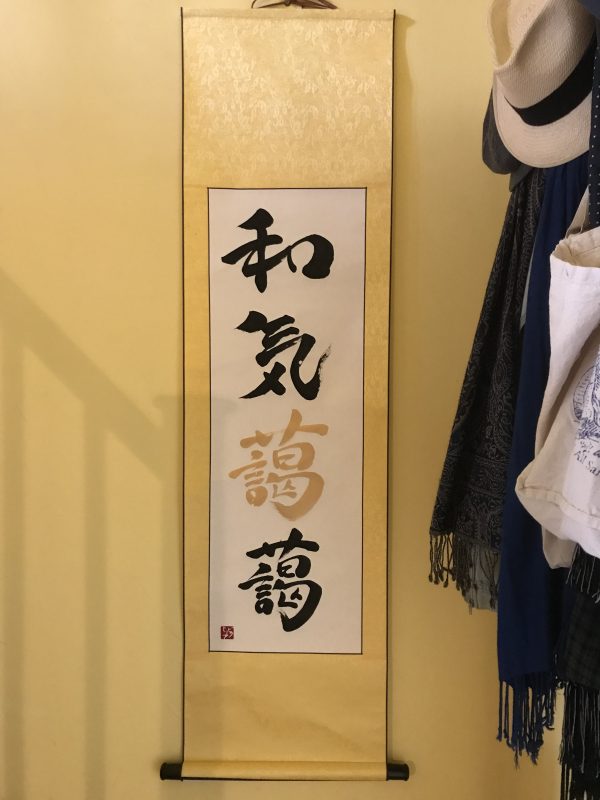
Kanji are logographic characters; each one is like a little picture.
Kanji represent objects and concepts. They are the building blocks of the Japanese writing system. They usually represent meaning-rich content words such as nouns, verbs, adjectives, etc.
Sometimes they look a little like what they represent, for example:
鳥 = bird
馬 = horse
川 = river
上 = up
下 = down
Most Japanese words are comprised of one or two kanji.
If you know the individual kanji that make up a word, you can sometimes guess the meaning. For example:
馬 = horse
子 = baby, child
子馬 = baby horse
There are a lot of kanji. To be considered literate in Japanese, you are expected to be able to read and write about 2,000 government-designated “everyday use” kanji.
2) ひらがな Hiragana
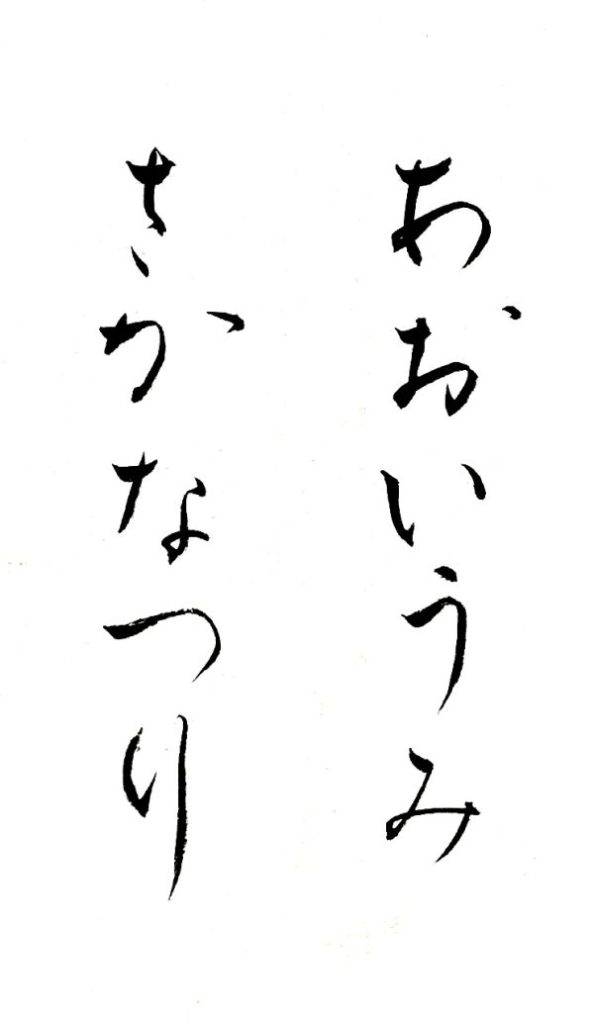
Hiragana are a set of 46 phonetic characters. They represent not meaning, but sounds.
Each one represents a syllable (strictly a mora, but that’s a topic for another article).
If kanji are the building blocks of written Japanese, hiragana are the cement.
Whereas kanji tend to be used for “content words” (such as nouns, adjectives, and verbs), hiragana are generally used for the functional parts of language – the prepositions (such as the English to, for, in) and the conjunctions (such as the English and, but, or).
Hiragana are also used for verb conjugations, for example:
食べる (“ta–be–ru”) = eat
食べた (“ta–be–ta”) = ate
食 is the kanji for the verb “to eat”.
When the hiragana べる are added to this kanji, it becomes simple present tense “eat”.
When the hiragana べた are added to this kanji, it becomes simple past tense “ate”.
(These hiragana also conjugate the verb to make it affirmative and of a neutral politeness level, but that’s a topic for another article.)
3) カタカナ Katakana
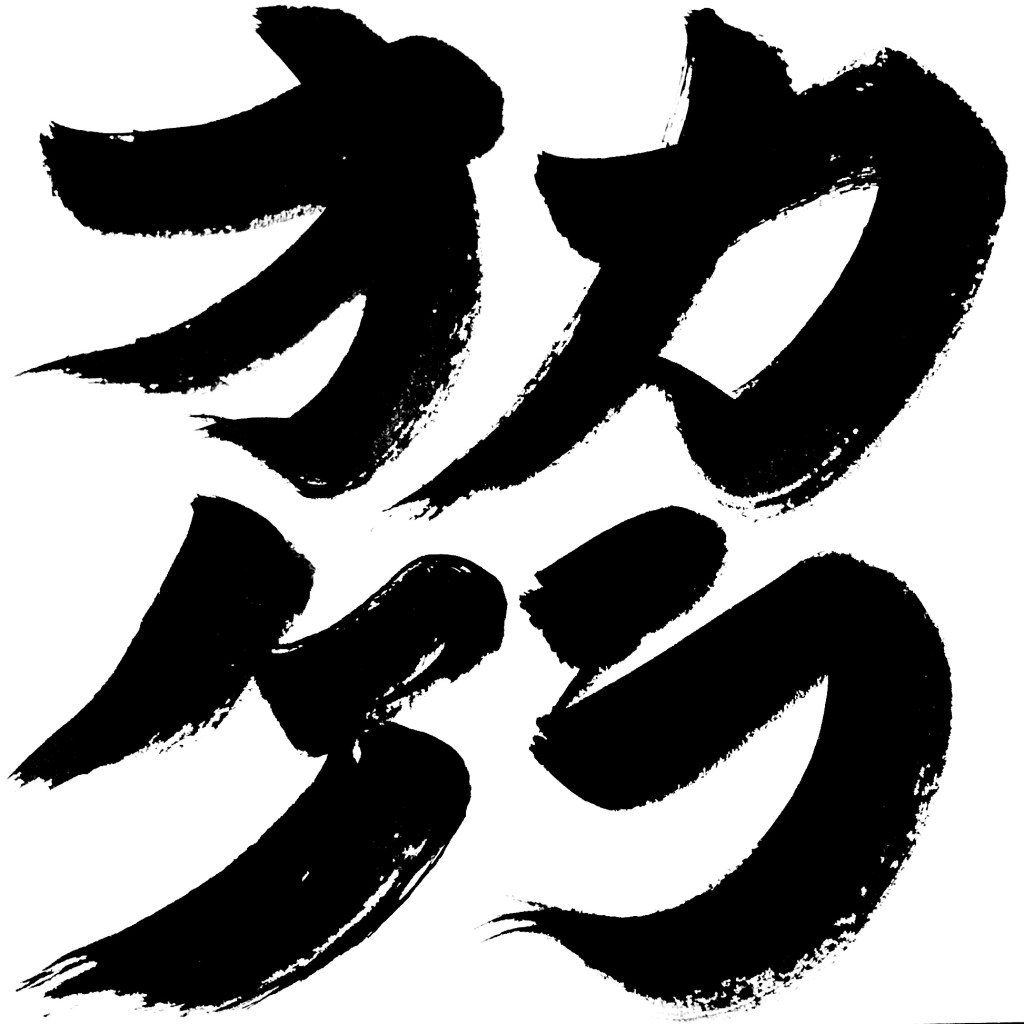
Like hiragana, katakana are a set of 46 phonetic characters. They represent the same syllables (technically moras) as the hiragana characters.
Katakana are mostly used for foreign names and words, for example:
ゴルフ “go–ru–fu” = golf
パン “pan” = bread (from the Portuguese “pão”)
ビクトリア “bi–ku–to–ri–a” = Victoria (my name)
カラオケ “ka–ra–o–ke” = karaoke
(The “o-ke” in “ka–ra–o–ke” comes from the first two syllables of the English “orchestra”).
A good rule of thumb is that katakana are used in situations where English uses italics. Besides foreign words and names, this also includes:
- Onomatopoeia
- Scientific names
- Emphasis
4) ローマ字 Rōmaji
The Latin alphabet is called “rōmaji” in Japanese, after the city of Rome. It’s not strictly a Japanese writing system, but I’ve included it in this article because it is often used for company logos, product names, shop signs, and acronyms. As you might expect, some of these are of foreign origin; however others are completely Japanese. Its use is often somewhat “decorative” or “stylish” rather than solely semantic.
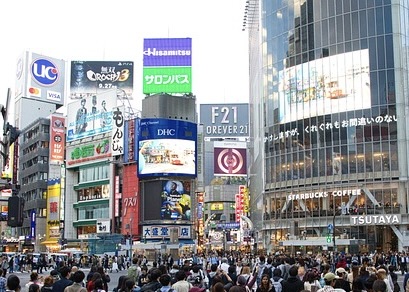
In the above photo of the famous crosswalk in Shibuya, Tokyo, rōmaji signs are visible for Starbucks, Tsutaya (a DVD and CD rental shop), Forever 21, Hisamitsu (a pharmaceutical manufacturer), and DHC (a health and beauty products manufacturer).
5) 絵文字 Emoji
A Japanese invention, emoji were created in the late 1990s by the Japanese telecommunications companies DoCoMo and SoftBank.
In the early days of mobile phones the amount of characters that could be sent via message was seriously limited. As well as adding some human feeling to digital messages, emoji were an efficient space-saving device.
For a period lasting a little over a decade, emoji were used and developed solely in Japan. The current standard emoji set still contains many kanji as well as images representing typical Japanese customs and traditions:
🈲 = forbidden
㊙️ = confidential
🍱 = a bentō lunch box
🎎 = Girls’ Day dolls
🎏 = fish-shaped flags for Boys’ Day
Although predominantly used in casual online communication, emojis’ ubiquitousness in everyday life both in Japan and abroad earns them a mention here.
Putting it all together!
In the sentence below all 5 writing systems are used together:
ジョンとKFCで🍗を食べた。
From left to right:
- ジョン is how the English name John is written in katakana.
- とis a hiragana preposition meaning “with”.
- KFC is an American company; the store signs are in rōmaji.
- で is a hiragana preposition meaning “at”.
- 🍗 is the chicken leg emoji.
- を is a hiragana grammatical particle, attaching the noun (🍗) to the verb (食べた).
- 食べた= “ate”. The root of the verb “to eat” 食 is kanji, and the simple past tense conjugation べた is hiragana.
Putting it all together =
(I) ate chicken with John at KFC.
In summary:
- Japanese uses 5 writing systems (if you include the Latin alphabet and emoji).
- Kanji are used for concepts such as nouns and verbs.
- Hiragana are the cement that hold the kanji together.
- Katakana are mostly used for foreign words and names.
- Rōmaji (the Latin alphabet) is mostly used for company names and logos.
- Emoji were invented by Japanese telecommunications companies as a digital space-saving device.
 Calligraphy by Vicky
One thought on “How many writing systems does the Japanese language use?”