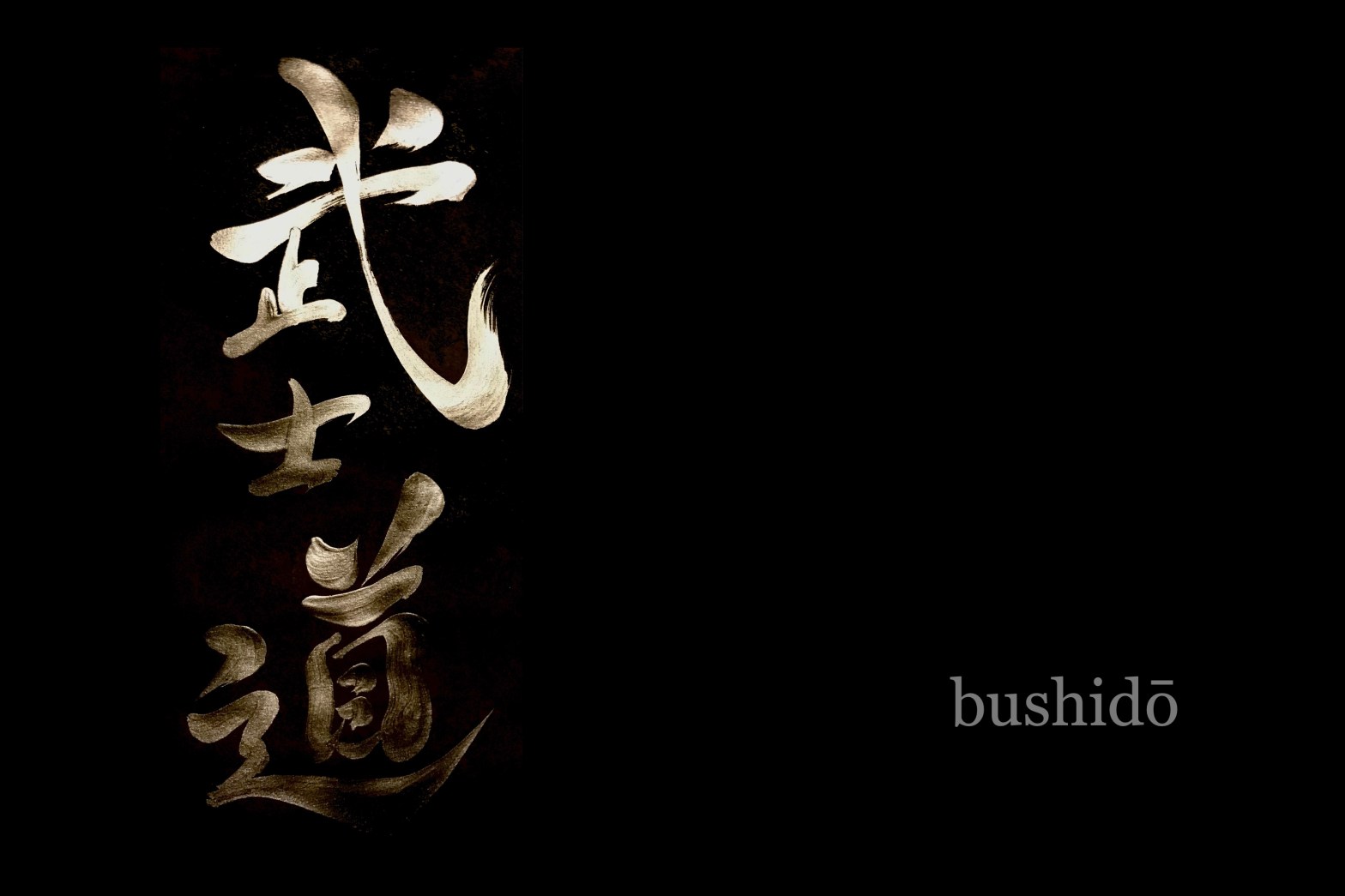
All the images on this page were all created by me using a calligraphy brush and metallic paint. They are available as 9-image packs of digital images for use as backgrounds on phones, tablets and monitors.
To purchase from Etsy, click here.
For more information, click here.
Bushidō. Often referred to as “the samurai code of chivalry”, it stirs up images of noble and fearless warriors, fiercely loyal to their comrades, living and dying by the sword, choosing death over dishonour.
There is no doubt that the way of the samurai continues to have a hold on the public imagination. But what exactly was bushidō?
Whilst researching this (mostly for inspiration for my next shodō (Japanese calligraphy) project), I came across countless motivational articles exalting the samurai as the pinnacle of manly strength and dignity, almost super-human in their abilities and presence of mind. Apparently they followed a strict moral code, bushidō, which the aforementioned motivational articles suggest adopting in order to better oneself. This moral code conveniently comes with a list of eight key virtues which one can follow in order to lead a noble and successful life. Sounds pretty good, right?
After a little more research a rather different picture began to emerge. There were signs that these key virtues might be a misinterpretation or even a modern invention.
Indeed, there were signs that the entire concept of bushidō itself might be fake.
So does bushidō have roots in historical fact, or was it a modern invention? Where does the truth end and the myth begin? Was this “samurai code” ever really a thing?
I decided to investigate further. This article is the result of that.
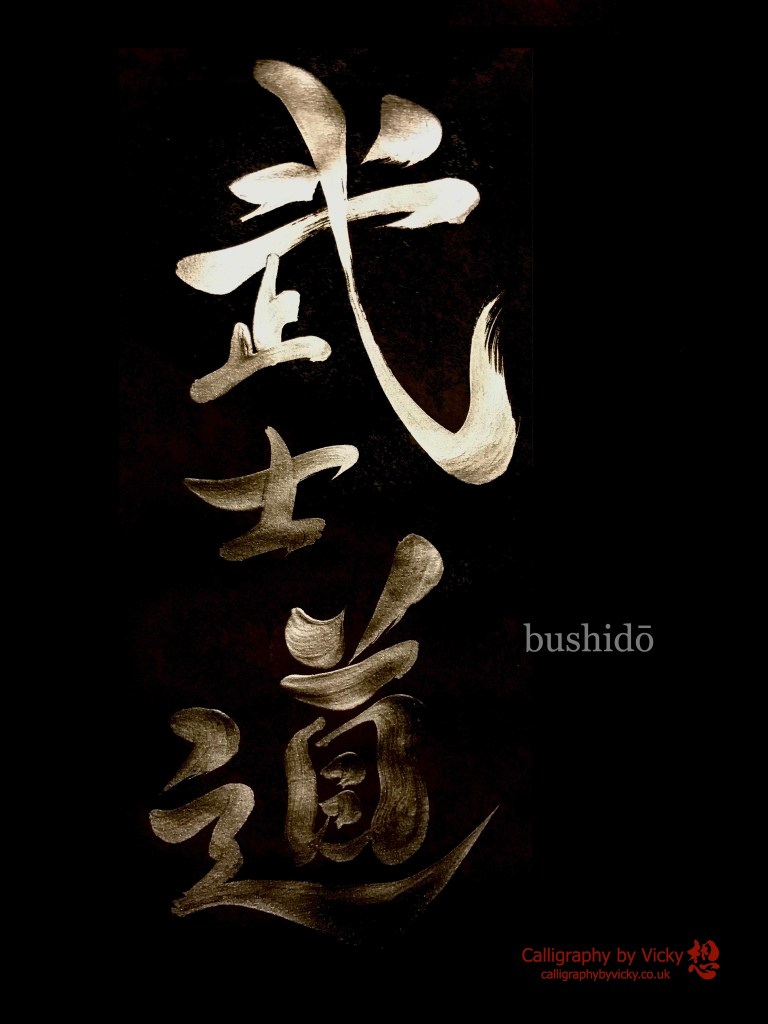
Firstly, “bushidō” is composed of three Japanese characters: 武士道
武士 bushi means “warrior”
道 dō means “path” or “way” (as in jūdō, kendō, shodō, etc)
So bushidō literally means “the way of the warrior”.
According to Wikipedia, it was a philosophy and way of life used to guide samurai into correct action in all aspects of their lives.
Bushidō (Wikipedia continues) is believed to have developed in Japan sometime between the 11th and 14th centuries, and was heavily influenced by other Eastern philosophies such as Chinese Confucianism, Shintoism, and Zen Buddhism. It was formalised during the Edo era (1603 – 1868), a period characterised by civil order and a strict social hierarchy with samurai firmly at the top.
Wikipedia also lists the set of key virtues that I had seen in so many motivational articles. I have listed them below, with my translations.
義 (gi) INTEGRITY
勇 (yū) COURAGE
仁 (jin) COMPASSION
礼 (rei) RESPECT
誠 (makoto) SINCERITY
名誉 (meiyō) REPUTATION
忠義 (chūgi) RESPONSIBILITY
All sources show these same seven virtues. Some sources (including Wikipedia) also list an extra eighth virtue:
自制 (jisei) SELF-DISCIPLINE
So are there seven virtues or eight? More on this later (including the rationale behind my translations).
According to Wikipedia, these virtues were first codified by a chap called Nitobe Inazō who lived during the Meiji period (1868 – 1912). This struck me as odd because this period was well after the samurai hey-day.
Furthermore, being a samurai was essentially made illegal during this period, due to Japan’s desperate attempts to Westernise by discarding the old social hierarchies (which heavily favoured the samurai).
So were these “virtues of bushidō” really a thing? Perhaps they just been dreamt up by some guy nostalgically clinging on to the past, trying to deal with the rapid industrialisation his country was going through, a way to dampen the shock of the new?
Long story short, the article states that the virtues of bushidō, along with the very concept of bushidō itself, were flat-out made up by that Nitobe guy I mentioned just a few paragraphs back.
Nitobe wrote a book titled Bushidō – the Soul of Japan in 1899 (well after the samurai way of life had disappeared). He wrote it in English, for a Western audience, and compared samurai ideals to Christian concepts, in order to make Japanese culture more palatable for Westerners who were just starting to learn about this mysterious Asian country. It’s a highly romanticised account of samurai culture, essentially the Japanese equivalent of Victorian artists and writers idealising the European Medieval period of chivalrous knights and courtly love. It is in this book that these eight samurai virtues are first mentioned.
So, does this mean that bushidō is a load of “bullsh*t”, as the aforementioned article claims?
Yes and no. Whether or not bushidō was historically a thing is debatable. The writer of the article claims that it has no historical roots, and that the term bushidō was invented by Nitobe in his 1899 book.
However, the Wikipedia entry for Nitobe’s book Bushidō – the Soul of Japan states that “Nitobe Inazo did not coin the term bushidō”.
This term had been used before in a couple of books (both of which are mentioned in the “bullsh*t” article):
1. Kokon Bushidō ezukushi (“Images of Bushidō Through the Ages”), by artist Hishikawa Moronobu (1618–1694).
2. Kōyō Gunkan (a record of military exploits of a high-ranking family), published in 1616. In this text, the term bushi no michi is clearly legible. Written in Japanese, bushidō (武士道)and bushi no michi (武士の道)are basically the same. The の is a grammatical particle meaning something like “of” or “ ’s”, so it’s essentially the difference between “The Warrior’s Way” and “The Way of the Warrior”.
What these two examples show is that bushidō was a term that could be understood by the general population. However, it does not prove that bushidō was the overarching philosophy and way of life in that it was purported to be in Nitobe’s Bushidō – the Soul of Japan.
This all suggests that bushidō as a real well-known and widespread moral philosophy doesn’t have genuine historical roots. It is a nostalgic fantasy created via a very romantic and optimistic interpretation of history.
Moreover, the virtues in Nitobe’s book are not part of a well-known “samurai code”. They are merely eight virtues that Nitobe considered important in Japanese society, and that he thought the samurai ought to have lived by. In his book, Nitobe discusses each of these virtues and makes great pains to show that each one has an equivalent in Western Christian tradition. His book is not so much a historical document as a promotion of Japanese values as being congruent with contemporary (i.e. Victorian) Western values. He makes a lot of comparisons with European chivalry, and cites an impressive number of passages from the Bible.
You can read Nitobe’s book Bushidō – the Soul of Japan here at Project Gutenberg.
From reading Nitobe’s book, the reason why some sources list seven virtues and some sources list eight becomes apparent. Nitobe devotes a section to each of these seven virtues:
Rectitude or Justice
Courage, the spirit of Daring and Bearing
Benevolence, the Feeling of Distress
Politeness
Veracity or Truthfulness
Honour
The Duty of Loyalty
Then he talks about samurai education and training, and after this he describes an eighth virtue:
Self-control
Clearly, some readers thought that his talking about education marked the end of the list of virtues, whereas others chose to also include “self-control”.
A further point that ought to be addressed is the fact that Nitobe’s book was originally written in English (which he had studied thoroughly for many years). There were Japanese translations later on (which weren’t particularly well-received), but these eight virtues were originally named by Nitobe in English. This means that when most sources (including Wikipedia) name these virtues, they are giving English translations of Japanese translations of English. This is something I have taken into account in my own “translations” (see below).
Having said all this, regardless of the above criticisms of the historical accuracy of Nitobe’s book, it cannot be denied that this concept of bushidō has greatly influenced modern Japanese society and culture. In business, martial arts, the police force and the modern Japanese National Self Defence Force, many Japanese organisations have utilised the ideals of bushidō to inspire their members to be the best versions of themselves.
When dismissing the historical validity of bushidō, it is important to not throw the baby out with the bathwater. These eight bushidō virtues are all concepts which pretty much anyone can get behind, regardless of their time period or cultural background. Perhaps Nitobe should be congratulated for his creative attempt to promote cross-cultural understanding?
| Original from Nitobe’s book | Japanese | My “translation” |
| Rectitude or Justice | 義 (gi) | INTEGRITY |
| Courage, the spirit of Daring and Bearing | 勇 (yū) | COURAGE |
| Benevolence, the Feeling of Distress | 仁 (jin) | COMPASSION |
| Politeness | 礼 (rei) | RESPECT |
| Veracity or Truthfulness | 誠 (makoto) | SINCERITY |
| Honour | 名誉 (meiyō) | REPUTATION |
| The Duty of Loyalty | 忠義 (chūgi) | RESPONSIBILITY |
| Self-control | 自制 (jisei) | SELF-DISCIPLINE |
In the next part of the article I briefly discuss each of Nitobe’s virtues, including the reasons for my English “translations”. Essentially I have tried to make these virtues as applicable to modern Western culture as possible, whilst still keeping true to their Japanese roots. Many people, both Japanese and Western, find these virtues useful and inspiring, which is why the code of bushidō (however historically accurate it is) is still influential to this day.
THE EIGHT VIRTUES
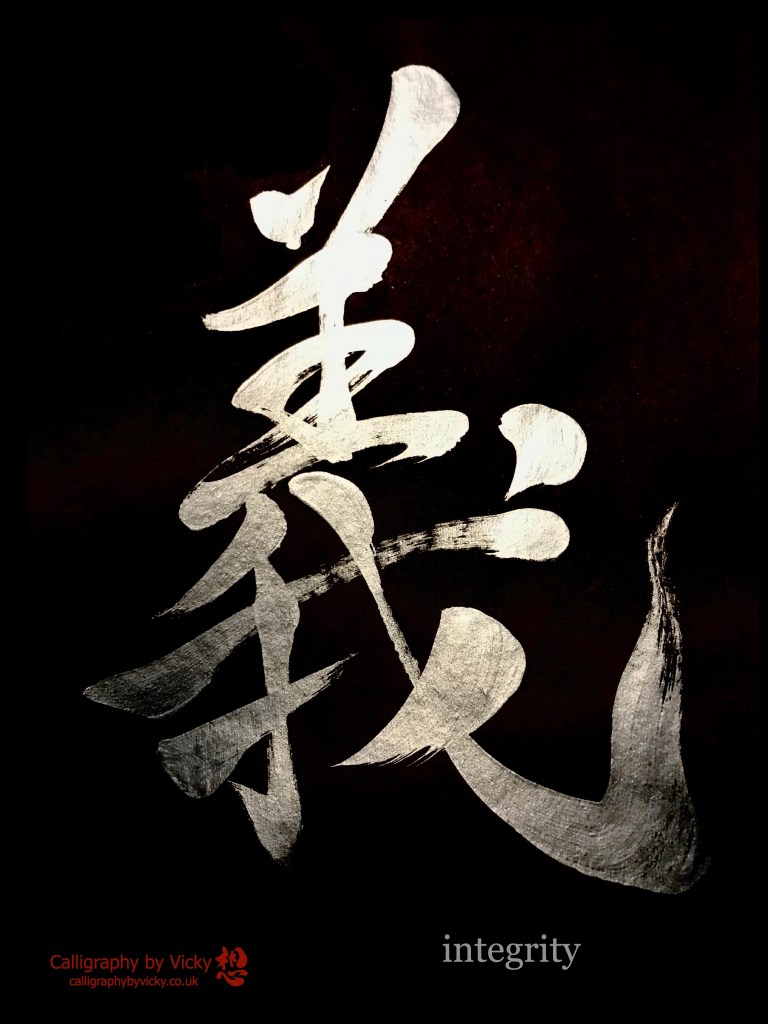
1.
Original: “Rectitude or Justice”
Japanese: 義 (gi)
My “translation”: INTEGRITY
Historically in Japan, opinion on what was “right” or “moral” was fairly uniform.
In modern Western countries, people of many different cultures and backgrounds live side by side, so it is neither possible nor desirable for individuals to always look to their societal norms for moral guidance.
These days what is considered “right” is often something that one must decide for oneself.
However, the ideal of sticking to one’s values even when it is difficult is still considered a virtue: that of having personal integrity.
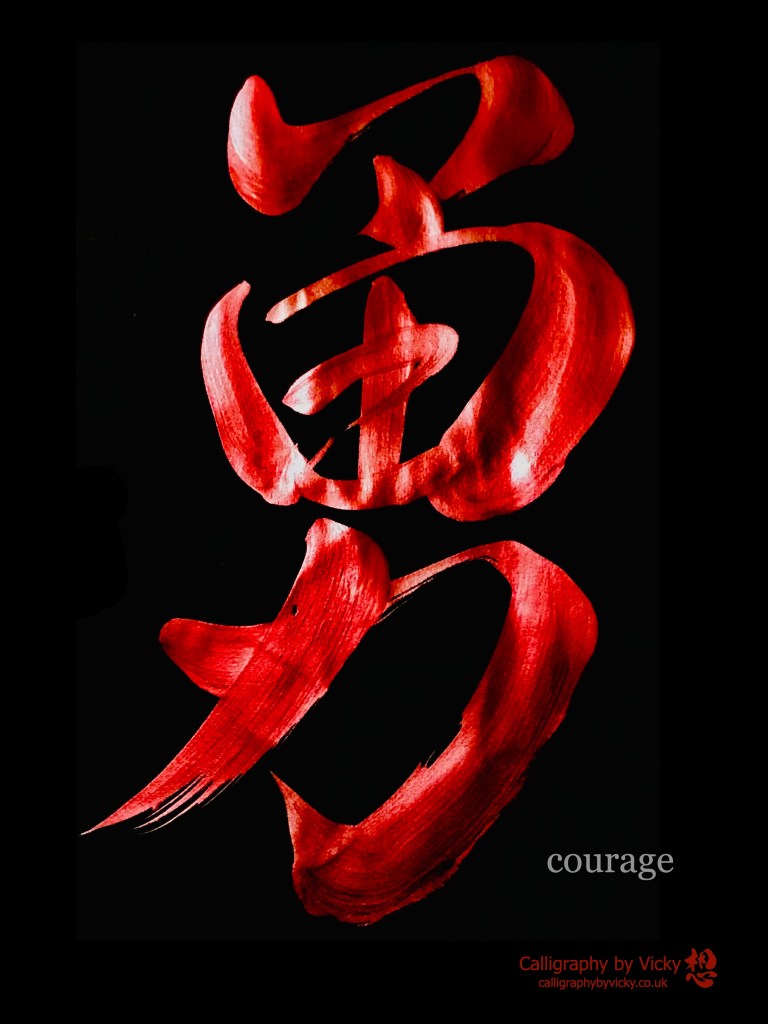
2.
Original: “Courage, the spirit of Daring and Bearing”
Japanese: 勇 (yū)
My “translation”: COURAGE
Nitobe mentions “bearing” as well as “daring”, which suggests that courage has a broader meaning than merely courage in battle; it also includes enduring difficult situations.
He goes on to say: “Courage was scarcely deemed worthy to be counted among virtues, unless it was exercised in the cause of Righteousness.” This implies that true courage comes from knowing what is right, having the clear-sightedness to understand one’s own values and to hold by them, whatever the situation. It is necessary for courage to be informed by 義 (gi) integrity (see the above entry).
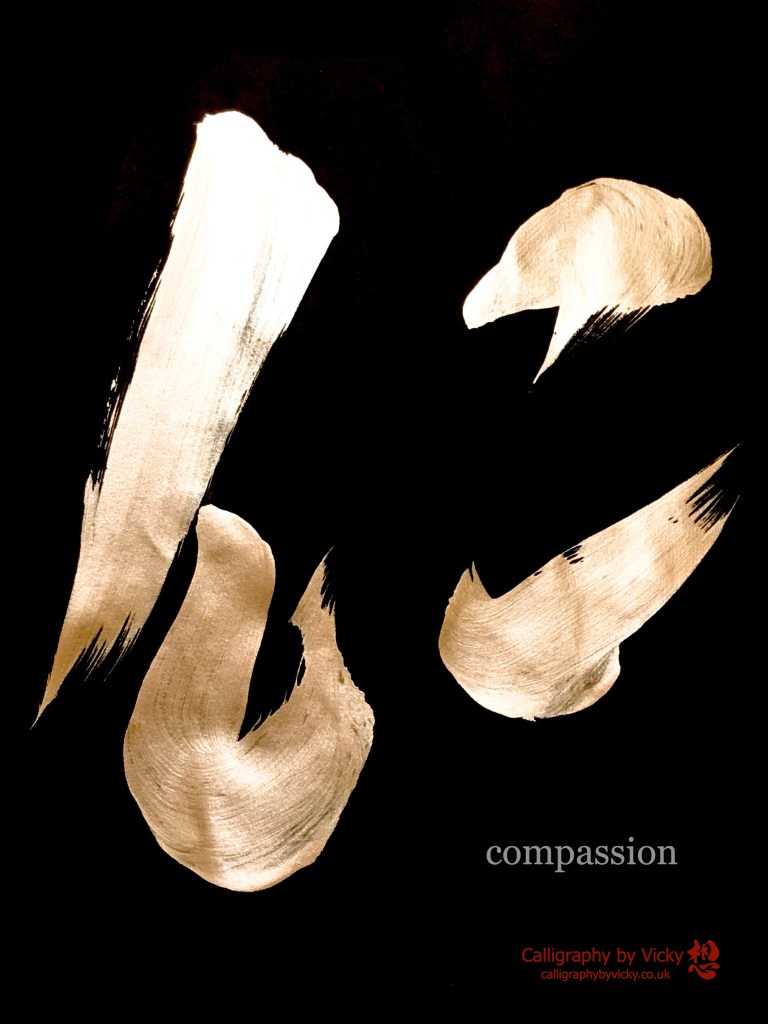
3.
Original: “Benevolence, the Feeling of Distress”
Japanese: 仁 (jin)
My “translation”: COMPASSION
Nitobe writes: “Benevolence to the weak, the downtrodden or the vanquished, was ever extolled as peculiarly becoming to a samurai.” He illustrates this by recounting an event from the 12th century in which a warrior slays an adolescent (he’s pretty much compelled to because if he doesn’t do it, his comrades will), and feels so bad about it afterwards that he becomes a wandering monk.
Make of this what you will, but it does illustrate that “benevolence” is more complex than mere kindness. For this reason I have translated this virtue as “compassion”, which is more than kindness; it also requires seeing the “larger picture”, and understanding the world from others’ points of view.
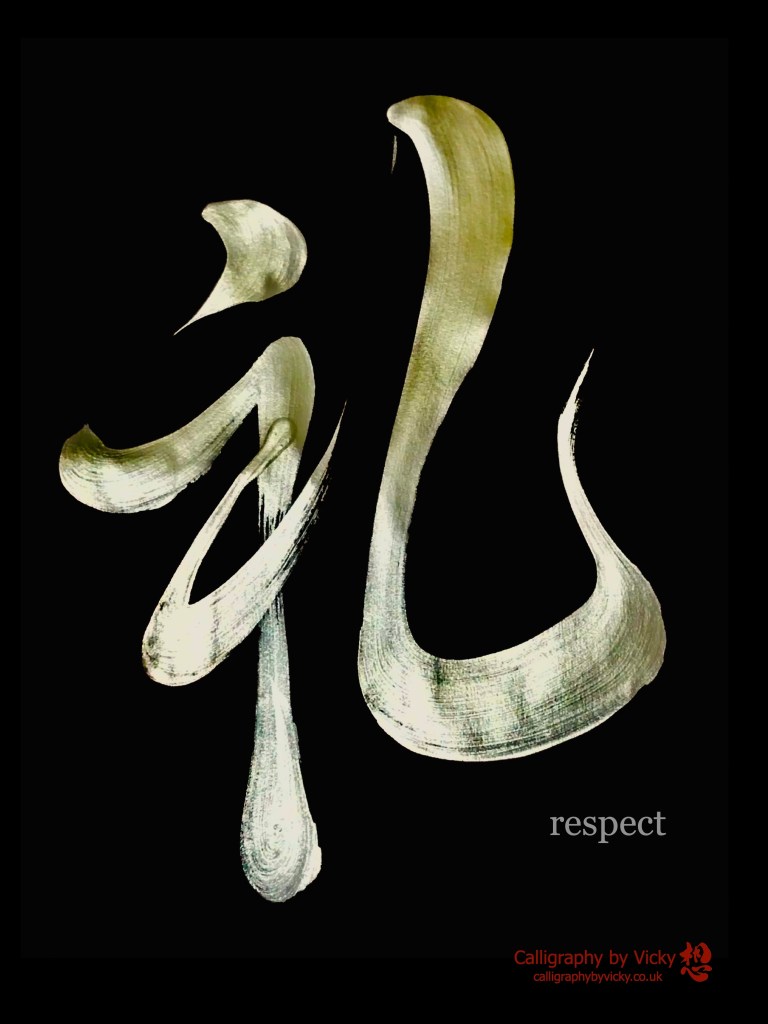
4.
Original: “Politeness”
Japanese: 礼 (rei)
My “translation”: RESPECT
Nitobe states that the “courtesy and urbanity of manners which has been noticed by every foreign tourist as a marked Japanese trait” is often criticised by foreigners as “absorbing too much of our thought and in so far a folly to observe strict obedience to it.”
He defends his countrymen by asserting that “Politeness will be a great acquisition, if it does no more than impart grace to manners; but its function does not stop here. For propriety, springing as it does from motives of benevolence and modesty, and actuated by tender feelings toward the sensibilities of others, is ever a graceful expression of sympathy.”
Hence, “politeness” is considered a way of showing sympathy and 仁 (jin) compassion (see the above entry). In modern Western society, this would be termed “respect”, and indeed Nitobe says “Modesty and complaisance, actuated by respect for others’ feelings, are at the root of politeness”. (Italics mine).
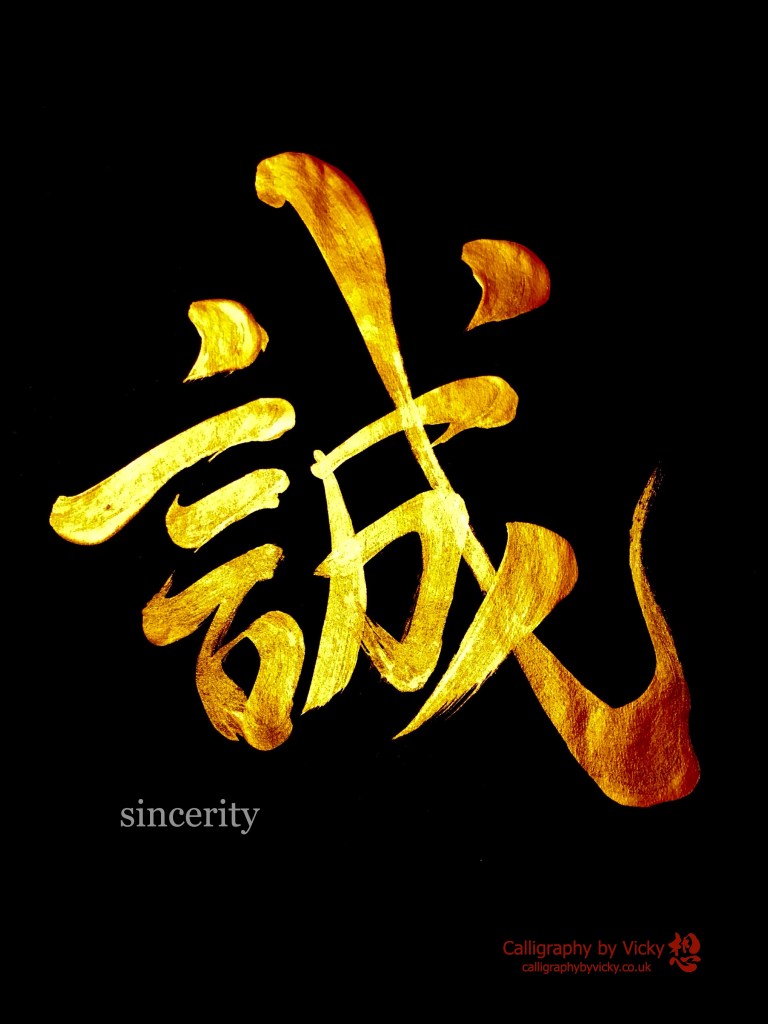
5.
Original: “Veracity or Truthfulness”
Japanese: 誠 (makoto)
My “translation”: SINCERITY
Nitobe writes: “Lying or equivocation were deemed equally cowardly…. Bushi no ichi-gon—the word of a samurai…. was sufficient guaranty of the truthfulness of an assertion. His word carried such weight with it that promises were generally made and fulfilled without a written pledge, which would have been deemed quite beneath his dignity.”
I have “translated” this as “sincerity”, which has the nuance of not only being honest per se but also of having honest intentions. Living so honestly that “keeping your word” is not even an issue requires consciously acting with sincerity. In this way all of your words and actions are coloured with 礼 (rei) respect (see the above entry).
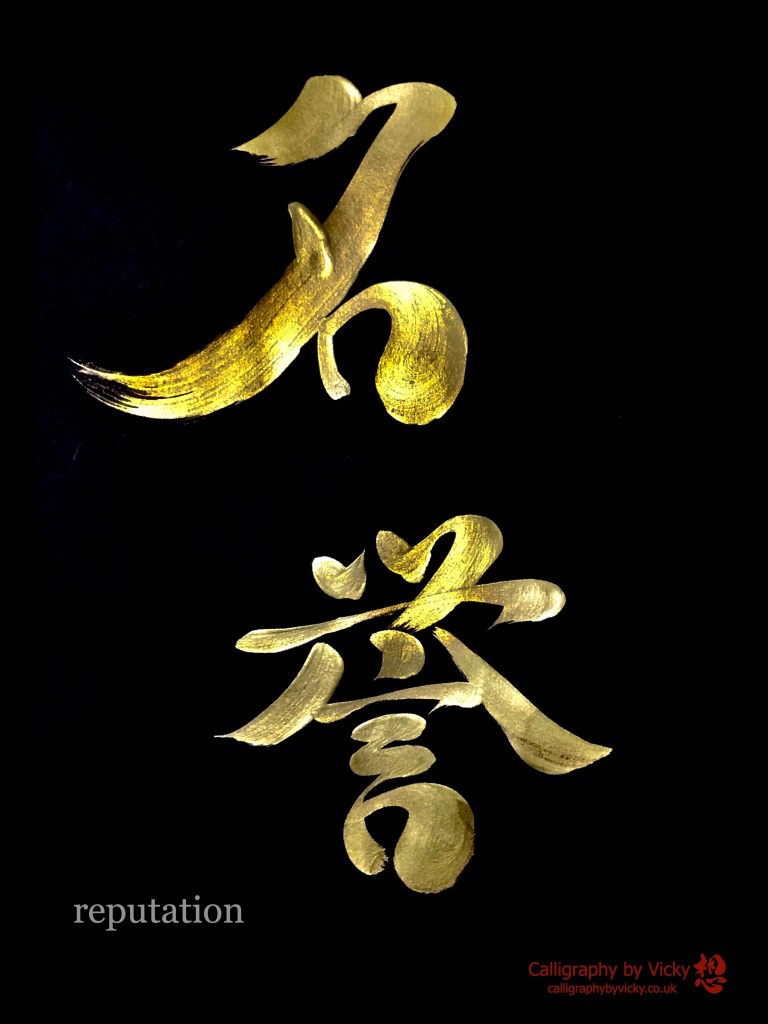
6.
Original: “Honour”
Japanese: 名誉 (meiyō)
My “translation”: REPUTATION
In popular fiction, samurai value honour over life itself. If a samurai was captured in battle, the story goes, he was expected to kill himself rather than suffer the shame of defeat.
Even in modern Western societies, how we are viewed in the eyes of others is integral for successful friendships, business relationships, and other types of human connection.
I have “translated” this virtue as “reputation”, because this is more realistic and nuanced than dividing actions into either “honourable” or “shameful”.
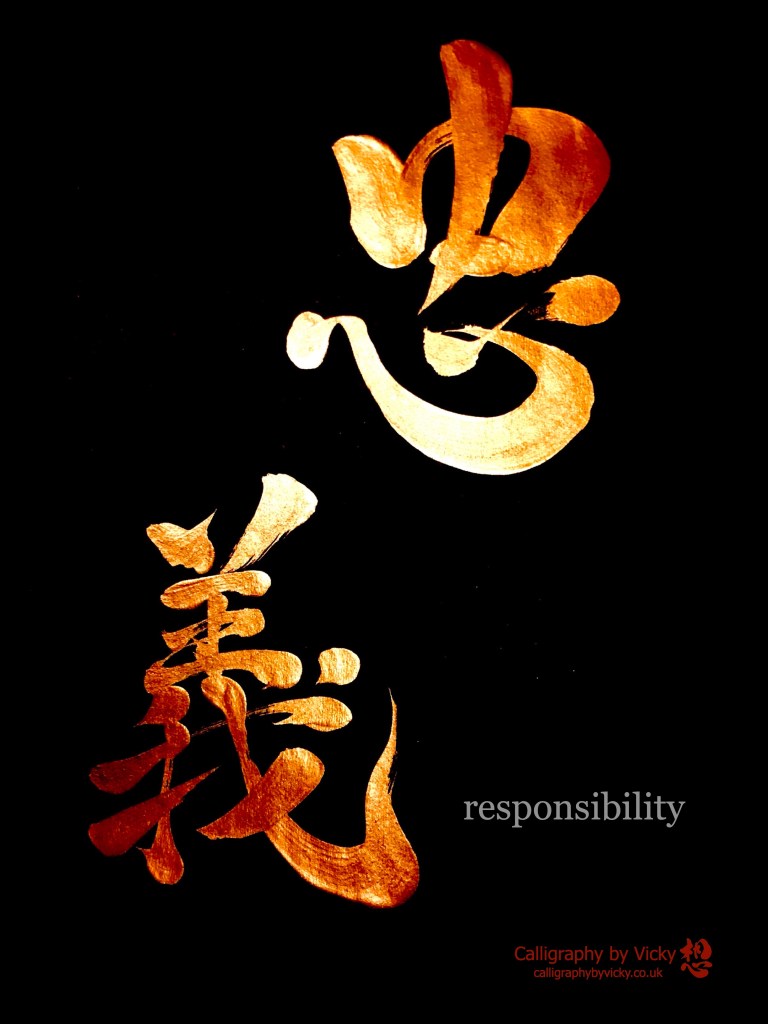
7.
Original: “The Duty of Loyalty”
Japanese: 忠義 (chūgi)
My “translation”: RESPONSIBILITY
In its simplest form, “the Duty of Loyalty” refers to the fierce loyalty that samurai had to their lords and their clan.
I have translated this as “responsibility” because this implies far more than just standing by one’s superiors and coworkers.
We are all part of something bigger than ourselves, be it a family group, a company, or wider society. We all have responsibilities to others. “Responsibility” also means being responsible to oneself and any projects or undertakings that one has agreed to.
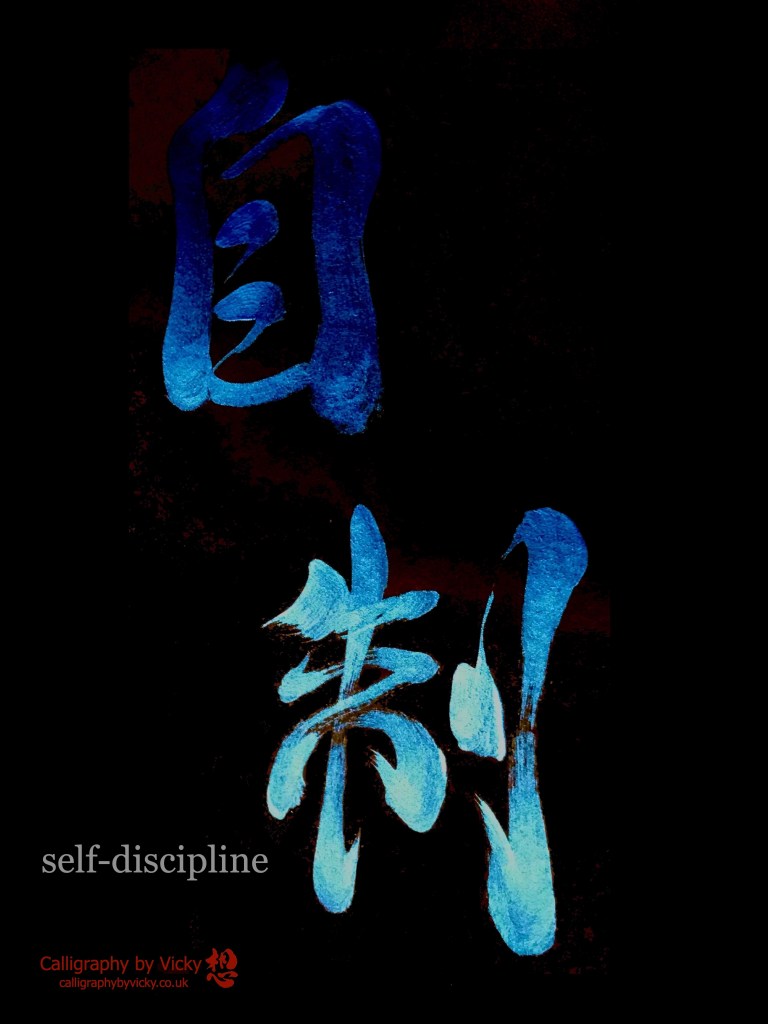
8.
Original: “Self-Control”
Japanese: 自制 (jisei)
My “translation”: SELF-DISCIPLINE
When introducing “self-control”, Nitobe brings together previous virtues: “The discipline of fortitude (勇 (yū) courage) on the one hand, inculcating endurance without a groan (名誉 (meiyō) reputation), and the teaching of politeness (礼 (rei) respect) on the other, requiring us not to mar the pleasure or serenity of another by manifestations of our own sorrow or pain, combined to engender a stoical turn of mind.”
Nitobe makes it clear that this “stoical” behaviour was considered a virtue: “It was considered unmanly for a samurai to betray his emotions on his face… The most natural affections were kept under control.”
Such strict “control” of one’s emotions may seem excessive and unnecessary to a modern Western audience, which is why I have “translated” this virtue as “self-discipline”. With the previous seven virtues as a guide, one can use discipline to make a conscious effort to guide one’s life in a positive direction.
Whether or not bushidō has historically accurate roots, there is no denying that legends of samurai have a vivid hold on the public imagination even to this day. In Japan, kabuki plays usually feature samurai, and TV dramas and manga about samurai are popular with all ages and demographics. Outside Japan, the image of the samurai is well-known, and has been featured in countless popular books and movies from Shōgun to The Last Samurai.
Perhaps one reason for their continuing popularity is that although they were human just like us, the ideals of bushidō elevate samurai to something higher.
Whether the virtues of bushidō are historically factual (as Nitobe attests), or total bullsh*t (as the Tofugu article claims) these ideals give us something to aim at, something that we can believe might make us better people; something that might guide us to live our best lives. It is for this reason that they have endured.
 Calligraphy by Vicky
All well and good up to a point, which taken to the extreme (which happened) led to militarization and invasion of Korea then Manchuria and Pearl Harbor.
LikeLike
Excellent point! A lot of crazy stuff happened in the name of “bushido”.
I had originally planned to mention this in my article; but decided against it because it was in danger of becoming way too long.
LikeLike