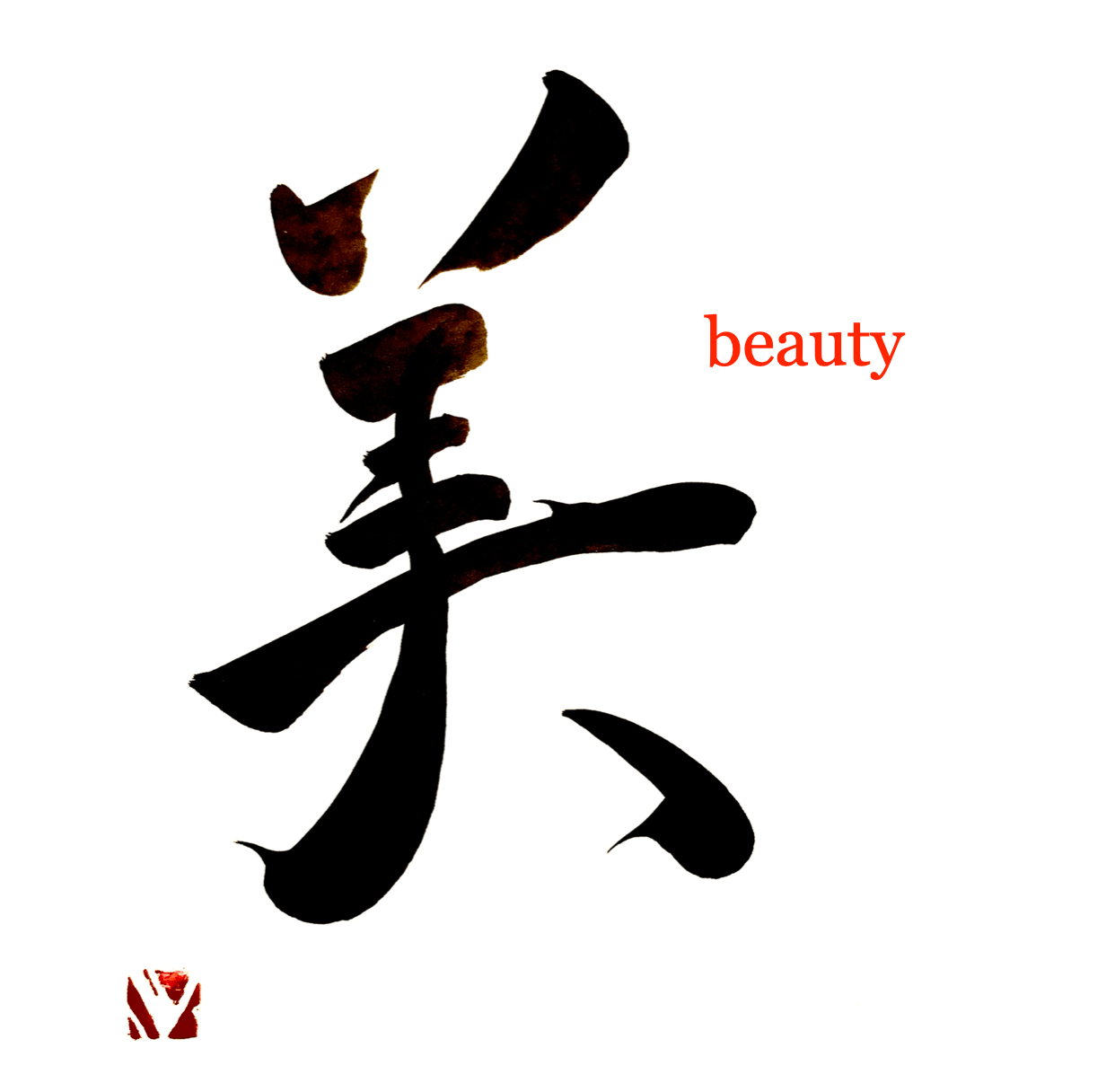
The original of this work is available to purchase here on my Etsy site. WordPress users get 15% off with this code: WPCODE15 In Japan, calligraphy works of meaningful characters or phrases are displayed in homes, offices, temples and dōjōs as decoration and to provide inspiration. If you would like to own some Japanese calligraphy artworkContinueContinue reading “美 (bi) “beauty””
Tag Archives: 書道アート
悟 (satori) “enlightenment”
Satori (enlightenment) is often described as a sudden and profound realisation that goes beyond ordinary knowledge or understanding. It is a state of consciousness in which the individual transcends the limits of the ego and experiences a deep sense of oneness with the universe. Satori is not a fixed or permanent state, but rather aContinueContinue reading “悟 (satori) “enlightenment””
絆 (ki-zu-na) “bonds”
“Kizuna” can refer to any kind of bond, but it usually refers to the bonds that structure human relationships. Although the term “bond” sounds inflexible and unforgiving, in Japan it usually has a positive nuance when used to describe human relationships. Even if the nature of a human relationship leads to a reduction in humanContinueContinue reading “絆 (ki-zu-na) “bonds””
春分 (shun-bun) spring equinox
In Japan, 春分 (shun-bun) spring equinox is a national holiday. The week which contains spring equinox is called “o-higan”. This has connections with Buddhism, and on this day many people visit spend time with their families and visit their family grave. “Bota-mochi” (rice cake covered in sweet bean paste) is traditionally eaten on this day.
縁 (en) “destiny”
Although en can refer to destiny in general, it often has romantic connotations…. something like star-crossed lovers, destined to be together for all eternity. One of the most important Shinto shrines in Japan is Izumo Grand Taisha in Shimane Prefecture. As well as being considered the “meeting place of the gods” it has a reputationContinueContinue reading “縁 (en) “destiny””
禅 Zen
The original of this work is available to purchase here on my Etsy site. WordPress users get 15% off with this code: WPCODE15 In Japan, calligraphy works of meaningful characters or phrases are displayed in homes, offices, temples and dōjōs as decoration and to provide inspiration. If you would like to own some Japanese calligraphy artwork to displayContinueContinue reading “禅 Zen”
夢 (yu-mé) “dream”
In comparison to the soul, life is comparable to a dream. Your dreams are temporary, like your life. The original of this work is available to purchase here. In Japan, calligraphy works of meaningful characters or phrases are displayed in homes, offices, temples and dōjōs as decoration and to provide inspiration. If you would like to own some Japanese calligraphy artworkContinueContinue reading “夢 (yu-mé) “dream””
改善 (kai-zen) “continuous improvement”
Kaizen is a Japanese term meaning “change for the better” or “continuous improvement.” It is the Japanese business philosophy of continuously improving operations. Kaizen sees improvement in productivity as a gradual and methodical process. The kaizen concept asserts that there is no perfect end. Everything can be improved upon, and all employees must strive toContinueContinue reading “改善 (kai-zen) “continuous improvement””
放 (hanasu) “let go”
Freedom is found in letting go of desires, attachments, opinions, and other burdens which no longer serve us. The more we let go into grace, the more we gain. Living freely, without grasping. Each moment is enough, just as it is.
幽玄 (yuu-gen) “beauty in the unseen”
Beauty can be found not only in what is shown directly, but also in what is unseen, half-seen or suggested. It’s the hidden meaning in a haiku poem, the elusive figure only half visible in a Hiroshige woodblock print, the subtle line in a calligraphy work, or the faint shape of Fuji-san just visible throughContinueContinue reading “幽玄 (yuu-gen) “beauty in the unseen””
 Calligraphy by Vicky