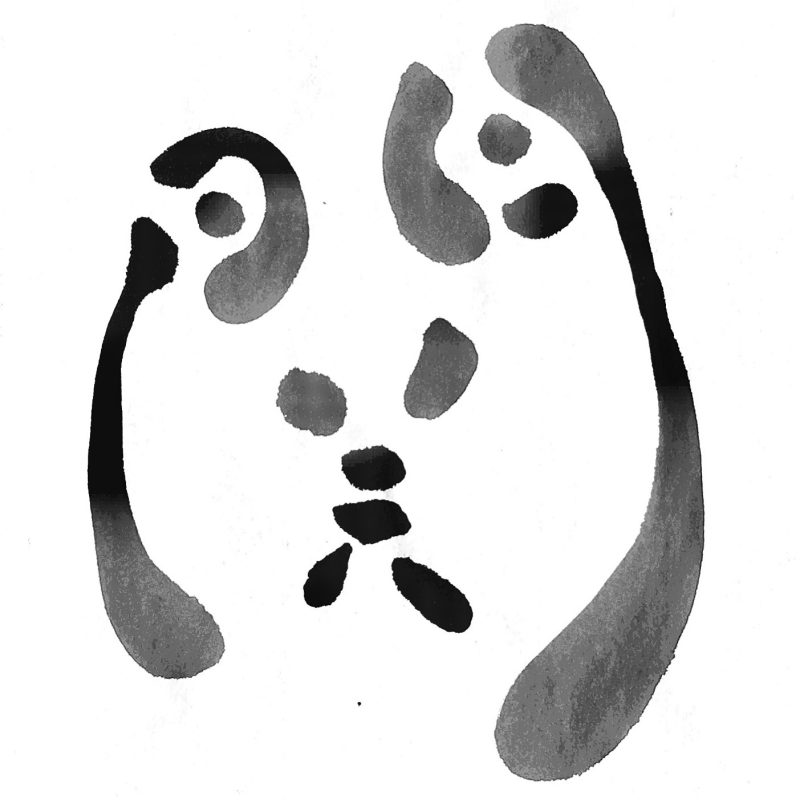
Rarely used on its own, this kanji is often found used in combination.
Arguably the most famous examples are 関西 (Kansai) and 関東 (Kanto).
Since ancient times there has been a road from Tokyo (the current capital) to Kyoto (the former capital). At the mid-way point there used to be a large barrier. This led to people thinking of places in Japan as being either “West of the barrier” 関西 (Kansai), or “East of the barrier” 関東 (Kanto). To this day, the distinction still exists, and there is still a fair amount of good-natured East-side/West-side rivalry.
Although this character refers to a barrier, it is found in words related to “connection” such as 関係 “relationship” and 関心 “concern/interest”.
It seems as if, as far as the Japanese language is concerned, a boundary is not only something that can form a barrier between two things, but also something which can connect two previously unrelated things.
 Calligraphy by Vicky