The New Year’s holiday is one of the most important times for Japanese people. It’s a time to clean the house, make resolutions, forget the old year, and make a clean start.
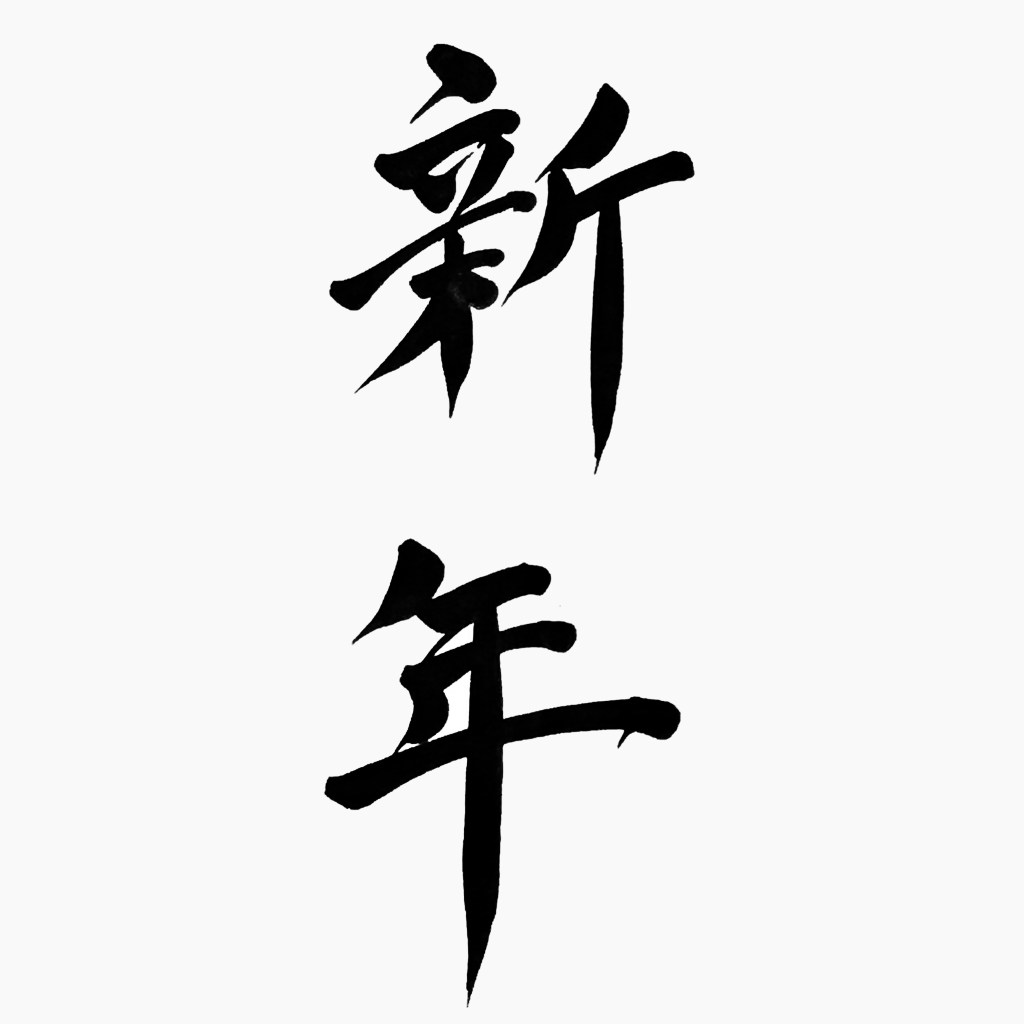
The kanji should be pretty easy for Japanese learners:
新 = new (pronounced “a-ta-ra-shi-i” by itself, and “shin” when in conjunction with other kanji)
年 = year (pronounced “toshi” by itself, and “nen” when in conduction with other kanji)
Some other New Years vocabulary:
大晦日 = New Year’s Eve (o-o-mi-so-ka)
元日 = New Year’s Day (gan-ji-tsu)
元旦 = New Year’s morning (gan-tan).
These last two are often confused, even by native Japanese speakers because they look so similar. A good way to distinguish them is to remember that 日 means “sun”. The kanji for new year’s morning contains 旦 which looks like a sun just coming over the horizon.
 Calligraphy by Vicky