
Japanese calligraphy
書道 (shodō) – literally “the way of writing” – is the name given to Japanese calligraphy. It is an ancient art which is deeply connected to many aspects of Japanese culture such as tea ceremony and Zen Buddhism.
In Japan, calligraphy works of meaningful characters or phrases are displayed in homes, offices, temples and dōjōs as decoration and to provide inspiration.
Creating calligraphy works
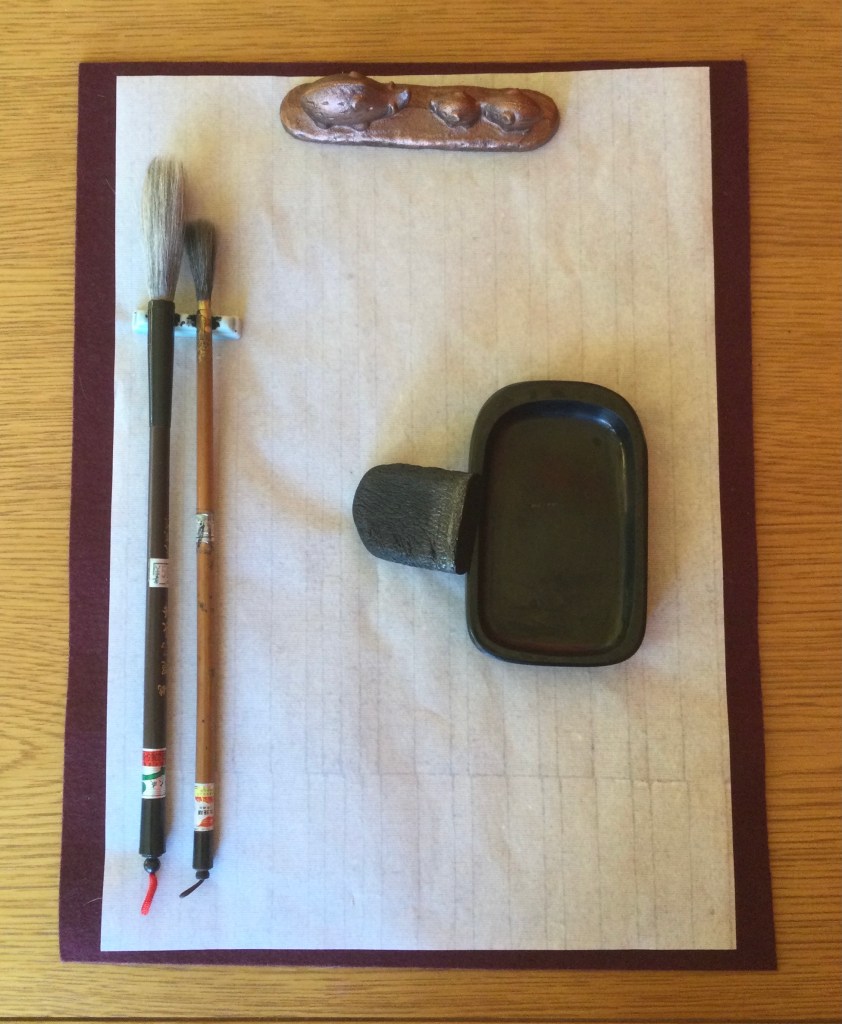
Brush, ink, paper, and an inkstone – collectively known as the “four treasures” – are used to create Japanese calligraphy works.
Traditional calligraphy ink is black, however grey tones can be achieved by adding water.
Proof of originality
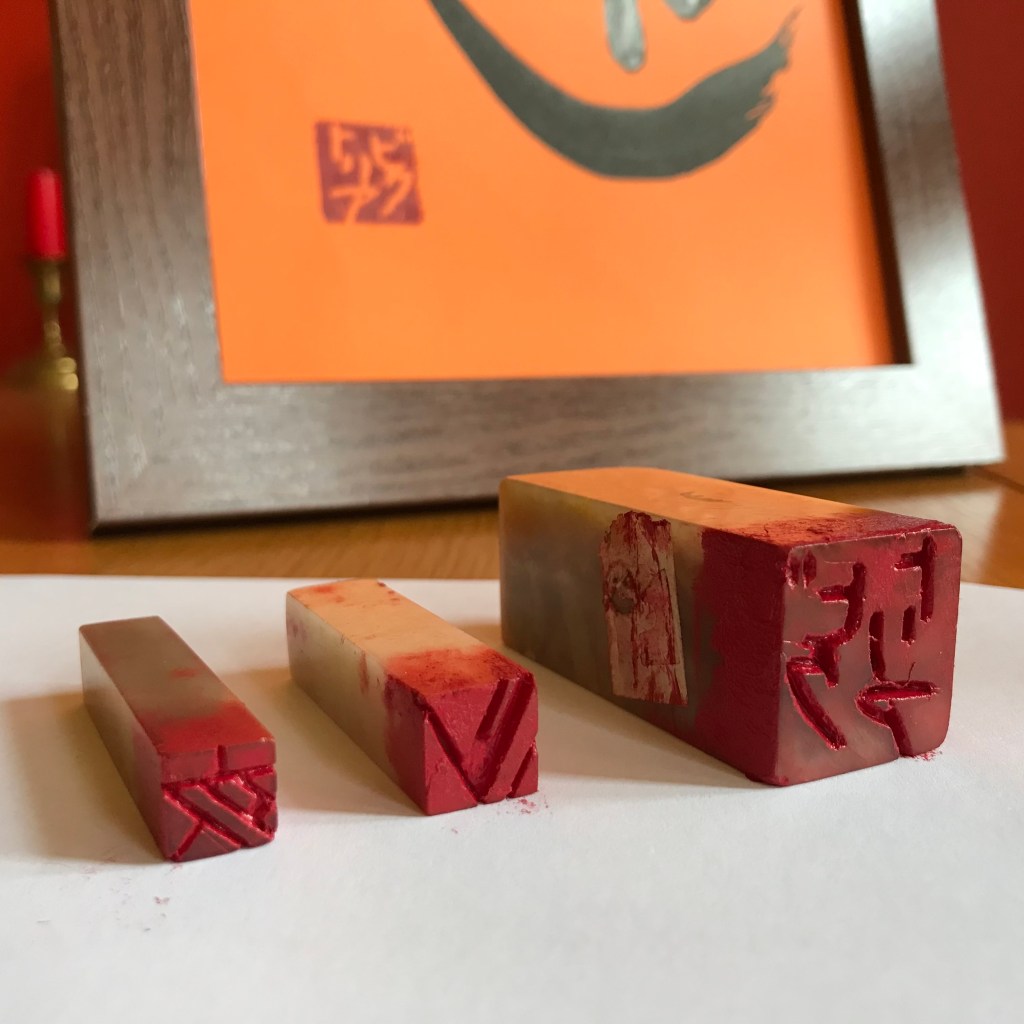
All my works are stamped with one of my unique, hand-carved personal seals, known as a rakkan. The seal ink is created in China according to a secret recipe.
Japanese writing
The Japanese language uses three writing systems: kanji, hiragana, and katakana.
Kanji are logograms – each character has a specific meaning. Kanji originated in China and were altered to fit the Japanese language over a thousand years ago.
Hiragana and katakana are syllabaries – each character represents a single syllable sound rather than a meaning.
Kanji is the most often used writing system in Japanese calligraphy. Calligraphy pieces with only one or two characters are popular, conveying basic yet profound thoughts. 4-kanji works are also frequent, particularly in the case of well-known proverbs and idioms. A combination of more than one writing system is sometimes used.
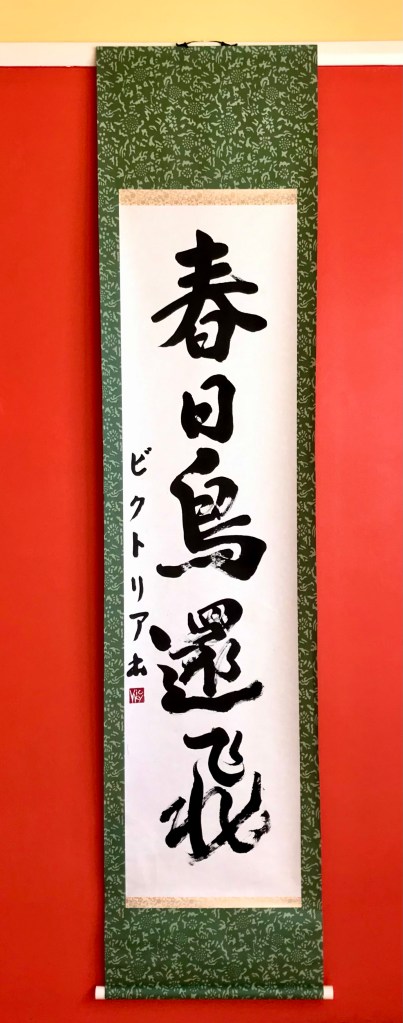
The work on the hanging scroll contains 5 kanji characters: 春 (spring) 日 (sun) 鳥 (bird) 還 (return) 飛 (fly). My name is written in katakana on the left side of the work: ビクトリア.
 Calligraphy by Vicky