Whether it’s the obscenely punctual public transport systems, the super-efficient customer service, the health system that really works, or the eponymous convenience stores, Japan is rightfully famous for taking convenience to a whole other level.
Unfortunately, nowhere is perfect. Even Japan can be inconvenient at times. In this article I’m going to introduce four ways in which Japan is especially inconvenient for foreign travellers, along with advice on how to deal with these inconveniences to make your trip to Japan go more smoothly.
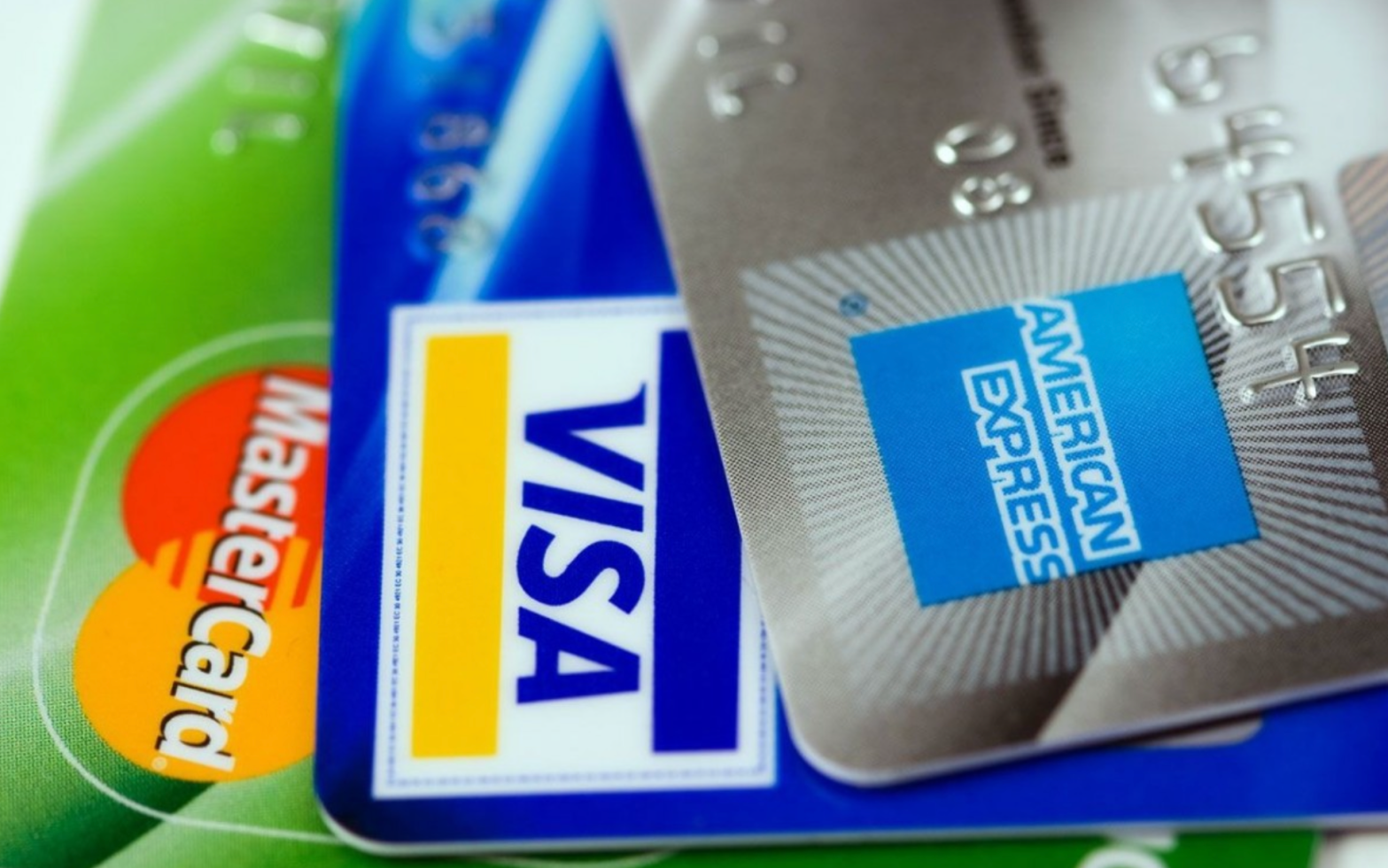
1. Shops and ATMs might not accept your credit card
You find an ATM in a convenience store which has the logo of your credit card company on it. No problem, right?
Not necessarily! Unlike other countries in which foreign credit cards are widely accepted, Japanese ATMs often only accept credit cards issued domestically.
The same can sometimes be true of shops. You will almost certainly be able to use your card in hotels, and most likely in larger stores in tourist areas, but in smaller stores you’re safer using cash.
Advice: The ATMs in 7-Eleven convenience stores seem to accept most well-known foreign credit cards. In large urban areas these convenience stores are usually open 24 hours. Japan Post Office ATMs reliably accept foreign credit cards too, however post offices usually shut at 5pm. In some popular tourist areas you might find special “corners” filled with ATMs which accept foreign credit cards.
Don’t be afraid to carry a lot of cash with you. Japan has one of the lowest crime rates in the world. Even if you lose your wallet, there is a high chance it will be returned quickly with nothing missing.
One more thing to remember is that not all Japanese ATMs operate 24 hours. Although increasingly becoming a thing of the past, you may come across an ATM that is only operational during banking hours.
2. The Tokyo Metro System in rush hour is not for the faint-hearted
You’ve all heard about rush hour in Tokyo. The reports are not exaggerated. There really are staff members whose job it is to literally push commuters onto the over-packed trains.
On one occasion a Tokyo Metro train was so packed that the windows cracked. The staff taped up the windows, and the train continued.
Advice: For the love of God, if you can possibly help it, DO NOT take the train in Tokyo on a weekday between 7am to 9am. If you absolutely must, take a local train rather than an express train; you’ll reach your destination more slowly, but you’ll at least be able to breathe.
There is also an evening rush hour which starts at about 5pm. The trains get gradually less crowded as the night goes on, with the exception of the last train, which is always full of stupid drunk people.
Even in Tokyo, Japanese trains don’t run 24-hour. In large cities the last train will probably be somewhere between midnight and 1am.
3. Your phone is (maybe) of no use here!
As I mentioned in my article on the Japanese origins of emojis, Japanese phone networks developed independently of those of every other country. Even now, your smartphone may not work in Japan. It depends what kind of handset you have, and whether or not it is unlocked. This article from Japan-Guide.com has more information.
Even if you can’t get access to a network, you can still access wifi… sometimes! Wifi coverage can be patchy, even in large cities such as Tokyo.
Advice:
For free wifi, go to:
- Your hotel.
- Any Tokyo Metro station (although this can be weak, especially in stations and lines which are deep underground).
- Starbucks. (Many other large chain coffee shops also have wifi. Independent coffee shops can be hit or miss.)
- Some convenience stores. (They nearly all used to offer free wifi, although 7-Eleven and Family Mart stopped this service recently.)
- Any internet cafe. (Obviously you have to pay to use the cafe, but if you’re going there anyway, one of the benefits is strong, reliable wifi.)
If you’re going to be in Japan for a while, consider renting a phone or portable wifi.
4. The address system is so complex that only post office staff and delivery workers can understand it
Many countries use an address system consisting of named roads with numbered buildings. Japan uses something else entirely, which I’m not going to explain here because it’s way beyond the scope of this article. If you’re interested, check out the wikipedia entry.
Advice: If you can get Internet access (see point 3), use a map app. If this isn’t an option there are usually maps of the local area in and around most train stations. Failing this, ask at a kōban (police box). These are very common, usually located near train stations, and police officers are well-practised at giving directions. If you can’t find a police box, try asking for directions at a train station or convenience store.
If you’re looking for a particular bar or a restaurant in an urban area, look up! Many buildings in urban areas have different businesses on different floors. It’s entirely possible, for example, for a 10-floor building to have a different bar on each floor (making it the world’s easiest pub crawl). Each business will be clearly advertised.
So that’s four ways in which Japan can be inconvenient for foreign travellers. Can you think of any more? If so, let me know in the comments.
 Calligraphy by Vicky
2 thoughts on “Four Ways in which Japan is Really Inconvenient for Foreign Travellers”