What emojis can reveal about Japanese history, language and culture
Quick question: what does this emoji mean?
♨️
As everyone who has been to Japan will know, it’s a hot spring.
Even before emojis were created, this symbol was commonly used in Japan on maps and tourist guides to represent the relaxing hot water facilities so beloved by the Japanese.
However, many non-Japanese understand it to mean a barbecue, stove, or some kind of cooking device. Others interpret it as water boiling in a pot.
These alternative interpretations became so common that as part of the preparations for the most recent Tokyo Olympics, the Japanese government even considered changing the official hot spring symbol.
In the end, the government decided to stick with the original symbol. Unfortunately due to the pandemic, the number of visitors to Tokyo was far fewer than originally expected, thus greatly reducing the chances of disappointed tourists finding a bath when they really wanted a steak.
However, when it comes to the potential for misinterpretation, ♨️ is just the tip of the emoji iceberg.
This is because although emojis are now used globally, they were originally created in Japan. Many of them refer to ideas and objects that are uniquely Japanese.
For this reason, emojis are a fantastic insight into Japanese history, language and culture.
How much do you know about Japan? Take the emoji quiz below to find out!
But first, a short history lesson….
The Japanese origins of emoji
絵文字(えもじ, emoji) literally means “picture letters”.
絵 (え, e )= “picture”
文字 (もじ, moji )= “letter / character”
The similarity to the English word “emoticon” is entirely coincidental. (The Japanese version of emoticons are known as 顔文字(かおもじ, kaomoji)literally “face letters”).
Emojis were first developed by the Japanese mobile phone carrier NTT Docomo in 1999. You can find out more about the history of emojis in this Medium article.
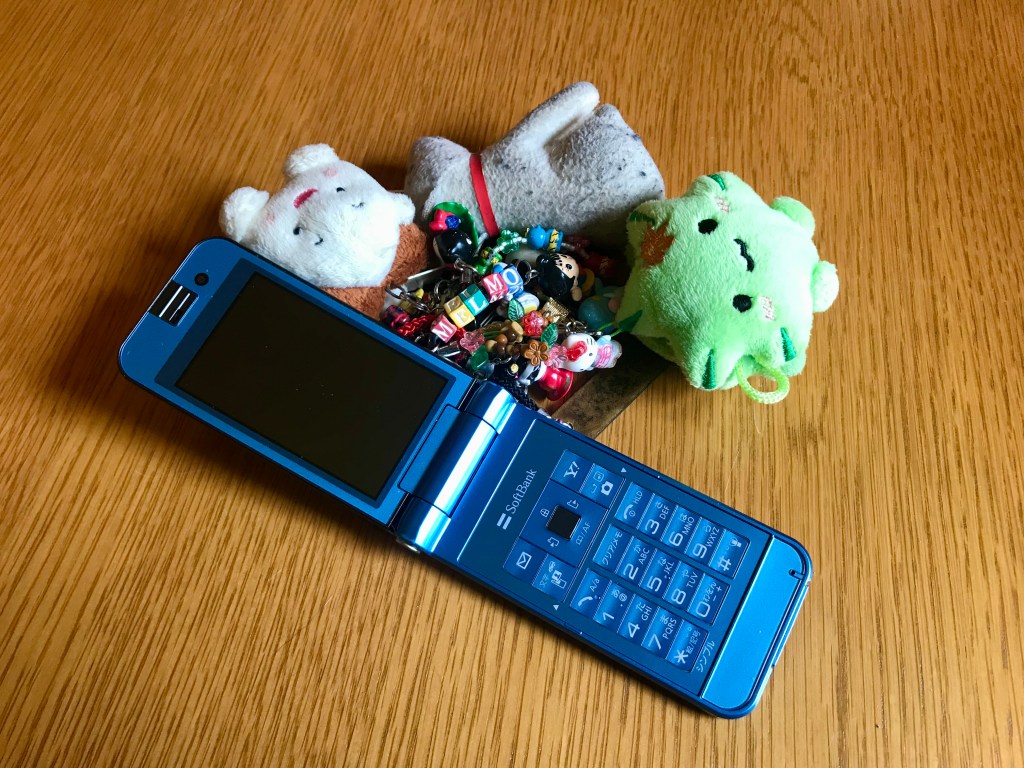
At this time, Japanese phones were only able to operate on Japanese mobile phone networks. If you took them to another country they were completely useless, even if the sim card was changed. Japanese mobile phones and mobile phone culture evolved independently of any other country, much like the flora and fauna on the Galapagos islands, gaining these devices the nickname “Galapagos phones”.
Fast-forward to 2011, and emojis were made available to the rest of the world when an emoji keyboard was added to the iPhone. Since then, new emojis have been added every year, reflecting the diversity of emoji users, advances in technology, and changing cultural and social norms. Emojis are now an international language.
However, since their conception in 1999 and their globalisation in 2011, there was a 12-year period in which emojis were invented, developed and used entirely in Japan. Much like Japan’s famous sakoku period (a period from 1603 to 1868 in which Japan isolated itself almost completely from the international community, resulting in a refinement of its unique culture), in this 12-year “telecommunications sakoku” period, Japan was able to develop and refine its emoji culture, creating many emojis which represent unique Japanese cultural concepts.
These emojis still remain part of the official emoji set, providing a window into Japanese culture, history and language.
Do you know the meaning of these 10 Japanese emoji?
Bonus points if you know how to say them in Japanese!
Answers below!
- 🍱
- 🏩
- 🎑
- 🙈🙉🙊
- 🅰️🅱️🆎🅾️
- 👺
- 📛
- 💢
- 🆗🆖
- 🈲
Answers
- 🍱
弁当 (べんとう, bentō)bento box
A Japanese lunchtime staple. Think of it as the equivalent of a sandwich and a packet of crisps. It’s a box separated into compartments containing various foods, such as rice, meat, fish, pickled vegetables, salad, etc. Parents make them for their kids to eat at school, and ready-made ones can be bought at any convenience store or supermarket. You can also buy them at bullet train stations for eating on the long journey.
Other Japanese food emojis include:
🥟 Gyoza. Small dumplings filled with meat, prawns and vegetables, sometimes known as “pot stickers” in English.
🍥 Naruto-maki. Slices of kamaboko, a type of cured fish cake, known for its decorative pink swirl.
🍡 Dango. Coloured mochi (rice cake) balls on a stick, eaten as a snack.
🍙 Onigiri. Balls of rice with a filling (usually meat, fish, or vegetables), covered in nori seaweed.
🍘 Senbei rice crackers.
🍢 Oden. Various foods (meat, fish, eggs, vegetables, mochi, seriously it’s everything) simmered in fish broth. A winter comfort food.
🍧 Kaki-gori. Shaved ice covered in fruit syrup. Very popular in summer.
🍮 Purin. A Japanese dessert made of thick custard.
🍵 Japanese green tea.
🍶 Sake in a traditional bottle with small sake cup.
2. 🏩
A large building with many rooms, a heart on the front, and an “H”. It must be a ラブホテル (rabuhoteru) love hotel!
A Japanese institution, love hotels are places to take your lover for some intimate time. You can book a room by the night, or by the hour (this is known as “rest time”). Some of them are indistinguishable from regular hotels, others not so much. I used to live near one that looked like a giant cake.
The rooms also vary. Some of them are normal hotel rooms, whereas others are a little more exotic, such as the now legendary Hello Kitty bondage room.
The love hotel is not to be confused with this emoji 🏨 which represents a normal hotel (an “H” but no heart), or this emoji 💒 which represents a church (the heart representing the fact that for many Japanese people at least, a church is primarily a wedding venue).
3. 🎑
A plate of mochi rice cakes, a full moon, and some rice plants; it’s 月見 (つきみ, tsukimi)the moon-viewing festival.
In September, the full moon is said to be especially beautiful (similar to the European concept of a “harvest moon”). In Japan it is traditional to admire the beautiful September full moon whilst eating mochi rice cakes. In China, people eat moon cakes: 🥮.
Other emojis which represent Japanese festivals are the dolls used as decorations for Girls’ Day: 🎎, and carp streamers which are often displayed outside to celebrate Boys’ Day: 🎏.
4. 🙈🙉🙊
The three wise monkeys, aka “see no evil, speak no evil, do no evil”.
This concept is famous worldwide, but why are they monkeys? Why not cats, dogs, fish, parrots, or some other kind of animal?
It’s a play on the Japanese word for monkey, which is 猿(さる, saru).
In samurai-era Japanese, the phrase “see no evil, speak no evil, do no evil” is:
「見ざる聞かざる言わざる」(みざる、きかざる、いわざる)mizaru, kikazaru, iwazaru
As you can see, there are three “saru” (monkeys) in this phrase. (For ease of speaking, “saru” changes to “zaru”).
If you visit Nikko in Japan, you can see these three wise monkeys! Nikko is home to the mausoleum of famous samurai lord Tokugawa Ieasu. On the grounds of the mausoleum there is a carving of these three monkeys, in the same pose as the emojis.
Other emojis that represent Japanese places are:
🗻 Mount Fuji.
⛩ A torii gate, the famous red gates at the entrance of most shrines.
🏯 A Japanese-style castle, such as the famous one at Himeji.
5. 🅰️🅱️🆎🅾️
血液型 (けつえきがた, ketsueki-gata)blood types
We all have blood, so what do blood types have to do with Japanese culture?
Unlike in most Western countries where people generally don’t know their blood type unless they regularly give or receive blood, most Japanese people do know theirs, mostly because of the belief that it affects one’s personality. How seriously this belief is held varies from person to person, but a quick look in the fortune-telling section of any Japanese book shop will reveal many books about how blood type can be used to help one make various life choices, such as choosing a career or marriage partner.
In very broad terms, type-A people are said to be serious and responsible, type-B people are supposed to be creative and passionate, type-Os are friendly and confident, and type-ABs are a mixture of type-A and type-B.
6. 👺
天狗の面 (てんぐのめん, tengu-no-men) tengu mask
Why, what did you think it was? 😉
A tengu is a Japanese mythical creature. They are humanoid and often have the characteristics of birds, such as beaks and wings. Sometimes they look more human-like and have very long and (let’s be honest here) rather phallic noses.
Masks of these creatures are sometimes worn in traditional Japanese noh theatre.
The alternative interpretation of this emoji was born when a Japanese erotic artwork featuring a tengu mask was shared on the Internet. This image features two women in a state of undress, one of whom is wearing a tengu mask in a very imaginative place.
One thing led to another, many people assumed that this was the mask’s original function, and the emoji gained a whole new meaning, especially within the lesbian community.
If you’re interested, you can see the (NSFW) image in this Medium article here.
7. 📛
It’s a block of tofu on fire!
Just kidding; it’s a 名札(なふだ, nafuda)name badge. In Japanese kindergartens kids often wear name badges, which are traditionally shaped like flowers.
Other emoji related to school are this ink stamp 💮, which says 「大変(たいへん)よくできました。」(“You did really well”) and this abacus 🧮, which reflects the fact that although Japan is a very technologically advanced nation, abacus skills are respected and are often still taught to young children.
8. 💢
Have you ever been so enraged that your blood is visibly throbbing in the blood vessels in your forehead? That’s what this anger symbol 怒りマーク(いかりマーク, ikari-māk) is supposed to depict. It’s often found in anime and manga.
9. 🆗🆖
“OK” is self-explanatory. “NG” stands for “not good”, a commonly used acronym in Japan.
The fact that this acronym is not used by native English speakers is a good example of how Japan adopts English words and uses them in its unique own ways:
サラリーマン “sarariiman” (salaryman) = a businessman
モーニングセット “mōningu-setto” (morning set) = a set breakfast served at coffee shops
マグカップ “magu-cappu” (mug-cup) = a mug (or a cup!)
リーマンショック “rīman-shokku” (Lehman shock) = the financial crisis of 2008
ライブハウス “raibu-hausu” (live house) = a concert venue
10. 🈲 = 禁止(きんし, kin-shi)forbidden
Near the end of the official emoji set you’ll find a bunch of kanji (Japanese characters borrowed from China) emojis.
There are far too many to list in this article, but you can find an explanation of most of them here: https://www.wikihow.com/What-Do-the-Chinese-Emojis-Mean
Besides 🈲 , some of these emojis that might be worth learning for your trip to Japan are:
🈳 = Vacant. If a taxi is displaying this sign, it’s not in use.
🈵 = Full / not vacant.
🈯️ = Reserved. If you see this sign next to a bullet train door, it’s the reserved seating car.
🈹 = Discount. Often seen on stickers on supermarket products. 1割 is a 10% discount, 2割 is a 20% discount, etc.
🉐 = bargain. Often used on shop signs advertising sales.
That’s the end of the quiz. Did you correctly identify the meaning of these emojis?
Actually, scratch that. Perhaps that’s not the right question to ask.
As previously mentioned, since their introduction to smartphones in 2011, emojis have become a global language.
Like any language, they belong to everyone who uses them. Their meanings and usage will naturally evolve over time, taking on new meanings and nuances, and eventually coming to mean whatever their millions of international users understand them to mean.
If someone uses ♨️ to mean a barbecue, and their readers understand this, where’s the harm? This is how language works.
And just like any other language, an etymological examination of emojis’ structure reveals a lot about their cultural and historical roots.
Although used and understood by everyone, emojis’ roots are wholly Japanese.
Do you have a favourite “misunderstood” emoji? If so, let me know in the comments 🙂
 Calligraphy by Vicky
One thought on “Do you Know the Meaning of these 10 Emojis?”